
George H. Smith (1) (1949–2022)
Author of Atheism: The Case Against God
For other authors named George H. Smith, see the disambiguation page.
About the Author
George H. Smith is the author of Atheism: The Case Against God: Atheism, Ayn Rand, and Other Heresies. Why Atheism?; and The System of Liberty: Themes in the History of Classical liberalism. He also writes the weekly essay series "Excursions into the History of Libertarian Thought" for the Canto show more Institute. show less
Image credit: International Society for Individual Liberty
Works by George H. Smith
Tagged
Common Knowledge
- Canonical name
- Smith, George H.
- Legal name
- Smith, George Hamilton
- Birthdate
- 1949-02-10
- Date of death
- 2022-04-08
- Gender
- male
- Education
- University of Arizona
- Occupations
- author
editor
lecturer - Organizations
- Cato Institute
Institute for Humane Studies
Forum for Philosophical Studies
Knowledge Products - Short biography
- George H. Smith was formerly Senior Research Fellow for the Institute for Humane Studies, a lecturer on American History for Cato Summer Seminars, and Executive Editor of Knowledge Products.
- Nationality
- USA
- Birthplace
- Japan
- Places of residence
- Tucson, Arizona, USA
Los Angeles, California, USA
Bloomington, Illinois, USA - Place of death
- Bloomington, Indiana, USA
- Associated Place (for map)
- USA
Members
Reviews
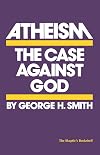
Yes, I am an atheist, and was before I ever opened this book. I guess the reason I rate this book so highly is because it's a philosophical approach dealing with the various arguments for a God. Too often what I've seen dubbed "The New Atheism" comes across as hectoring, shrill, even, dare I say, evangelical, with all the sophistication of a three-year-old stamping their feet and screaming "Religion sucks."
There are a couple of chapters on the consequences and "sins" of religion, yes, but show more at the very end--it's not where the emphasis of the book lies. Part One, "Atheism and God" defines atheism and treats the whole concept of "God." Part Two, "Reason, Faith, and Revelation" deals with why reason and faith are opposed. And finally, in Part Three, "The Arguments for God" Smith refutes the most common arguments for God, the Cosmological and Design arguments. A third, the Ontological (that God by his nature as a perfect being must exist) is in a way dealt with in the early chapter about the unintelligibility of the very concept of God.
I was exposed to all these arguments for God in my Catholic high school and Jesuit College--so I believe Smith does cover all the bases and presents the arguments for God fairly--and demolishes the idea that religion has any intellectual respectability. show less
There are a couple of chapters on the consequences and "sins" of religion, yes, but show more at the very end--it's not where the emphasis of the book lies. Part One, "Atheism and God" defines atheism and treats the whole concept of "God." Part Two, "Reason, Faith, and Revelation" deals with why reason and faith are opposed. And finally, in Part Three, "The Arguments for God" Smith refutes the most common arguments for God, the Cosmological and Design arguments. A third, the Ontological (that God by his nature as a perfect being must exist) is in a way dealt with in the early chapter about the unintelligibility of the very concept of God.
I was exposed to all these arguments for God in my Catholic high school and Jesuit College--so I believe Smith does cover all the bases and presents the arguments for God fairly--and demolishes the idea that religion has any intellectual respectability. show less
During the last couple of decades there has been a whole succession of loud books on this subject—if you want to read Hitchens or Dawkins you just stroll into the nearest library or bookshop—but Smith’s is less well-known and harder to track down. Which is a shame, because it’s far better and very different in tone.
There are four parts: first, ‘God’ considered in the abstract, purely as a concept; second, two ways of looking at life—reason and faith—compared and show more contrasted; third, an analysis of historical attempts at using reason to prove the existence of God; and finally, the effects of organised religion on morality and behaviour. This is very much a philosophy book; it’s about ideas (there’s relatively little here about the Bible for example) and also lacks the outright hostility, the polemics, of those more recent works. This one is as detached, observant and analytical as a diagnosis, as meticulous as a dissection, as solemn as a burial. For me, one of its more surprising details was how much it changed my view of the two words ‘agnosticism’ and ‘scepticism’, both of which I see in a different light since reading this. Smith only falters near the end, in a short section dealing with ethics; I don’t know what happened there—it’s almost as if someone else stepped in and wrote that part—because it’s suddenly woolly and indecisive. That does, though, only serve to point up the sheer clarity—both of the writing itself and the mind behind it—of the rest.
In fact, this is the best thing I’ve read on the subject: no duff logic, just clear thinking expressed in such crystal-clear language I wish all philosophy books, on all philosophical subjects, could be like this. show less
There are four parts: first, ‘God’ considered in the abstract, purely as a concept; second, two ways of looking at life—reason and faith—compared and show more contrasted; third, an analysis of historical attempts at using reason to prove the existence of God; and finally, the effects of organised religion on morality and behaviour. This is very much a philosophy book; it’s about ideas (there’s relatively little here about the Bible for example) and also lacks the outright hostility, the polemics, of those more recent works. This one is as detached, observant and analytical as a diagnosis, as meticulous as a dissection, as solemn as a burial. For me, one of its more surprising details was how much it changed my view of the two words ‘agnosticism’ and ‘scepticism’, both of which I see in a different light since reading this. Smith only falters near the end, in a short section dealing with ethics; I don’t know what happened there—it’s almost as if someone else stepped in and wrote that part—because it’s suddenly woolly and indecisive. That does, though, only serve to point up the sheer clarity—both of the writing itself and the mind behind it—of the rest.
In fact, this is the best thing I’ve read on the subject: no duff logic, just clear thinking expressed in such crystal-clear language I wish all philosophy books, on all philosophical subjects, could be like this. show less
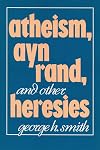
I've read this author before, and he is lucid and interesting most of the time. The problem with this book isn't the writing, it's the thinking. The section on atheism was okay, mostly just things constantly being rehashed and not particularly original. Then he moves into the territory of Ayn Rand, and things fall apart quickly. A reader might be forgiven for thinking he said some things that are really meaningful and profound; his style of righting lends it that dignity. But most of the show more things he discussed in the final two sections of the book were just libertarian dogma, posited as though it is everyone else who is engaging in dogma (and, of course, a lot of us are, and most of us probably don't know it). The thing is, all the examples he uses to make his point about Ayn Rand not being dogmatic, and his points about libertarianism, if read carefully, demonstrate clearly the depauperate nature of the theories, and the dogmatism of Rand. His answers to critics of Rand is mostly, in the end, a sort of "I don't THINK so!", without much evidence. His evidence consists of quoted passages from his books, which mostly sound the opposite of what he is interpreting them as. His section on Herbert Spencer is more of the same, and his excoriation of the ideas of public schools was...disturbing. Chilling. Not consistent with a healthy society. Of course, if you want no government at all, and you believe your only moral guide should be what is best for you, you probably don't want a healthy society. Not highly recommended, unless you are a truly careful reader and thinker, since there really are things that will make you think, even if only because they sound so wrong... show less
Heresy, Smith defines in his preface, is the rejection of the orthodox, and heresies are considered a threat to the established social order once the dogma of the institution (be it religious or otherwise) has become aligned with the power of the state or political force. The state, holding the reins of power, uses force, instead of persuasion, to enforce the orthodoxy. The Founding Fathers, most practicing Deists, itself a form of heretical thought, understood this and insisted on the show more separation of church and state, thus preventing the establishment of an official religion, preventing, they hoped, official heresies as well. Orthodoxy itself is not dangerous, only its alliance with political power. The central theme of Smith's book is the "crucial difference between the voluntary orthodoxy of organizations and the politicized orthodoxy of governments. "A free society, complete with orthodoxies and prejudices, is the best of all worlds for the heretic. Liberty permits the heretic to pit his beliefs against those of the orthodox majority." The paradox for the heretic is whether if and when his view becomes the dominant - to politicize the new orthodoxy or to permit liberty, which enabled the heretic to conquer ideologically, to possibly undermine the new orthodoxy?
Smith is unapologetically atheist; belief in God for Smith is simply unreasonable and irrational. Asked to prove the nonexistence of God, Smith's answer is simply that one cannot prove a negative and that the person who asserts the existence of something bears the burden of proof. He asserts that to believe in faith or to rely on faith is to "defy and abandon the judgment of one's mind. Faith conflicts with reason. It cannot give you knowledge; it can only delude you into believing that you know more than you really do. Faith is intellectually dishonest, and it should be rejected by every person of integrity.
The book is a loosely connected series of essays that discuss a variety of Christian and social heresies. He begins with his own philosophic journey to atheism. He is certainly a libertarian, and the essays on public education and the War on Drugs reflect that philosophy. But the reason I began this book was to discover his writing about Ayn Rand. He devotes two substantial chapters to her and the Objectivist philosophy.
Rand evokes fierce passions, both pro and con. "Accounts of Objectivism written by Rand's admirers are frequently eulogistic and uncritical, whereas accounts written by her antagonists are often hostile and what is worse, embarrassingly inaccurate." The situation has been made worse by her appointed heir to the throne, Leonard Peikoff, who has declared Objectivism to be a "closed" philosophy, i.e., no critical analysis will be tolerated; one must accept it as he says it is and that's that. Whether Objectivism will survive such narrow-mindedness remains to be seen. It's a classic case of the true believer "unwilling to criticize the deity. Thinking for oneself is hard work so true believers recite catechisms and denounce heretics instead." Typically, this was contrary to Rand's philosophy of individualism and critical, rational thinking where "truth or falsehood must be one's sole concern and the sole criterion of judgment -- not anyone's approval or disapproval." show less
Smith is unapologetically atheist; belief in God for Smith is simply unreasonable and irrational. Asked to prove the nonexistence of God, Smith's answer is simply that one cannot prove a negative and that the person who asserts the existence of something bears the burden of proof. He asserts that to believe in faith or to rely on faith is to "defy and abandon the judgment of one's mind. Faith conflicts with reason. It cannot give you knowledge; it can only delude you into believing that you know more than you really do. Faith is intellectually dishonest, and it should be rejected by every person of integrity.
The book is a loosely connected series of essays that discuss a variety of Christian and social heresies. He begins with his own philosophic journey to atheism. He is certainly a libertarian, and the essays on public education and the War on Drugs reflect that philosophy. But the reason I began this book was to discover his writing about Ayn Rand. He devotes two substantial chapters to her and the Objectivist philosophy.
Rand evokes fierce passions, both pro and con. "Accounts of Objectivism written by Rand's admirers are frequently eulogistic and uncritical, whereas accounts written by her antagonists are often hostile and what is worse, embarrassingly inaccurate." The situation has been made worse by her appointed heir to the throne, Leonard Peikoff, who has declared Objectivism to be a "closed" philosophy, i.e., no critical analysis will be tolerated; one must accept it as he says it is and that's that. Whether Objectivism will survive such narrow-mindedness remains to be seen. It's a classic case of the true believer "unwilling to criticize the deity. Thinking for oneself is hard work so true believers recite catechisms and denounce heretics instead." Typically, this was contrary to Rand's philosophy of individualism and critical, rational thinking where "truth or falsehood must be one's sole concern and the sole criterion of judgment -- not anyone's approval or disapproval." show less
Lists
You May Also Like


Associated Authors
Statistics
- Works
- 17
- Members
- 1,104
- Popularity
- #23,284
- Rating
- 3.9
- Reviews
- 14
- ISBNs
- 60
- Languages
- 1
- Favorited
- 5