

Ayn Rand (1905–1982)
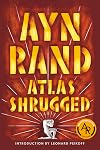
Author of Atlas Shrugged
About the Author
Ayn Rand, 1905 - 1982 Novelist and philosopher Ayn Rand was born Alice Rosenbaum on February 2, 1905 in St. Petersburg, Russia. She graduated with highest honors in history from the University of Petrograd in 1924, and she came to the United States in 1926 with dreams of becoming a screenwriter. In show more 1929, she married actor Charles "Frank" O'Connor. After arriving in Hollywood, Rand was spotted by Cecil B. DeMille standing at the gate of his studio and gave her a job as an extra in King of Kings. She also worked as a script reader and a wardrobe girl and, in 1932, she sold Red Pawn to Universal Studios. In the 1950's, she returned to New York City where she hosted a Saturday night group she called "the collective." It was also during this time that Rand received a fan letter from a young man, Nathaniel Branden. She was impressed with his letter, and she wrote him back. Her correspondence with him eventually led to an affair that lasted over a decade. He became her chief spokesperson and codified the principles of her novels into a strict philosophical system (objectivism) and founded an institute bearing his name. Their affair ended in 1968 when Branden got involved with another one of Rand's disciples. According to Rand, people are inherently selfish and act only out of personal interest making a selfish act, a rational one. It is from this belief that her characters play out their lives. Rand's first novel was "We the Living" (1936) and was followed by "Anthem" (1938), "The Fountainhead" (1943), and "Atlas Shrugged" (1957). All four of her novels made the top ten of the controversial list of the 100 Best Novels of the 20th Century. On March 6, 1982, Ayn Rand died in her New York City apartment. (Bowker Author Biography) show less
Series
Works by Ayn Rand
Capitalism: The Unknown Ideal, with Additional Articles By Nathaniel Branden, Alan Greenspan, and Robert Hessen (1967) — Author — 1,343 copies, 10 reviews
The Romantic Manifesto: A Philosophy of Literature (second revised edition, 1975) (1975) 981 copies, 11 reviews
The Fountainhead [1949 film] (2003) — Screenwriter/Original novel; Original book — 60 copies, 2 reviews
Ayn Rand's Marginalia : Her Critical Comments on the Writings of over Twenty Authors (1995) 47 copies, 2 reviews
Textbook of Americanism 8 copies
In defense of Capitalism: Newspaper Commentary from the Ayn Rand Institute 1996-2000 (2000) 6 copies
The Meaning of Money [excerpt] 3 copies
Conservatism: An Obituary 3 copies
The Objectivist: Vol. 9, No. 11 (November 1970) — Editor — 3 copies
Global Balkanization 3 copies
The Objectivist: Vol. 9, No. 12 (December 1970) — Editor — 3 copies
The Moral Factor 3 copies
The Objectivist: Vol. 9, No. 6 (June 1970) — Editor — 3 copies
The Objectivist: Vol. 9, No. 7 (July 1970) — Editor — 3 copies
This is John Galt Speaking [excerpt] 2 copies
The Objectivist: Vol. 6, No. 5 (May 1967) — Editor — 2 copies
The Fascist New Frontier 2 copies
The Objectivist: Vol. 6, No. 7 (July 1967) — Editor — 2 copies
[Title missing] 2 copies
Cultural Update 2 copies
Is Atlas Shrugging? 2 copies
The Objectivist: Vol. 6, No. 1 (January 1967) — Editor — 2 copies
The Objectivist: Vol. 9, No. 8 (August 1970) — Editor — 2 copies
The Objectivist: Vol. 7, No. 7 (July 1968) — Editor — 2 copies
The Objectivist: Vol. 10, No. 2 (February 1971) — Editor — 1 copy
Interview with Ayn Rand 1 copy
Fiction Writing Excerpt Tape 1 copy
The Brain Drain - Side A 1 copy
Sanction of the Victims 1 copy
The Objectivist: Vols. 8-10 (1969-1971) — Editor — 1 copy
The Objectivist: Vols. 5-7 (1966-1968) — Editor — 1 copy
objec 1 copy
The Objectivist: Vol. 7, No. 10 (October 1968) — Editor — 1 copy
Escort 1 copy
Think Twice 1 copy
The Husband I Bought 1 copy
Good Copy 1 copy
We the Living, Volume 2 of 2 1 copy
Atlas Shruggged [abridged] 1 copy
Her Second Career 1 copy
Complete Works, Volume 2 1 copy
Ayn Rand Letter, the Volumes I-IV 1971-1976 — Editor — 1 copy
The Objectivist: Vol. 9, No. 2 (February 1970) — Editor — 1 copy
The Objectivist: Vol. 9, No. 9 (September 1970) — Editor — 1 copy
The Objectivist: Vol. 9, No. 10 (October 1970) — Editor — 1 copy
The Objectivist: Vol. 9, No. 5 (May 1970) — Editor — 1 copy
The Objectivist: Vol. 9, No. 1 (January 1970) — Editor — 1 copy
The Objectivist: Vol. 9, No. 3 (March 1970) — Editor — 1 copy
The Objectivist: Vol. 10, No. 1 (January 1971) — Editor — 1 copy
The Objectivist: Vol. 10, No. 8 (August 1971) — Editor — 1 copy
The Objectivist: Vol. 10, No. 9 (September 1971) — Editor — 1 copy
The Objectivist: Vols. 7-8 (1968-1969) — Editor — 1 copy
The Objectivist: Vols. 5-6 (1966-1967) — Editor — 1 copy
The Objectivist: Vol. 10, No. 7 (July 1971) — Editor — 1 copy
The Objectivist: Vol. 10, No. 6 (June 1971) — Editor — 1 copy
Enduring Questions Dupl. 1 copy
The Roots of War 1 copy
The Rational Faculty 1 copy
The Objectivist: Vol. 10, No. 5 (May 1971) — Editor — 1 copy
The Objectivist: Vol. 10, No. 4 (April 1971) — Editor — 1 copy
Associated Works
The Moral Life: An Introductory Reader in Ethics and Literature (1999) — Contributor — 202 copies, 2 reviews
Tagged
Common Knowledge
- Legal name
- Rosenbaum, Alisa Zinov'yevna
Розенбаум, Алиса Зиновьевна
O'Connor, Ayn Rand - Other names
- Rosenbaum, Alice
- Birthdate
- 1905-02-02
- Date of death
- 1982-03-06
- Gender
- female
- Education
- University of Petrograd (Certificate of Graduation | history | philology | law)
State Institute for Cinema Arts - Occupations
- novelist
screenwriter
playwright
philosopher - Organizations
- Motion Picture Alliance for the Preservation of American Ideals
- Relationships
- O'Connor, Frank (spouse)
- Cause of death
- heart failure
- Nationality
- Russia (birth)
USA (naturalized) - Birthplace
- Saint Petersburg, Russian Empire
- Places of residence
- St. Petersburg, Russia
New York, New York, USA
Hollywood, California, USA
Crimea
Chicago, Illinois, USA - Place of death
- New York, New York, USA
- Burial location
- Kensico Cemetery, Valhalla, New York, USA
- Map Location
- USA
Members
Discussions
Ayn Rand in Legacy Libraries (July 2014)
Christian Randians? in Pro and Con (August 2012)
Ayn Rand in Political Conservatives (May 2012)
Isd Atlas Shrugged the Bible of the Republican Party in Pro and Con (July 2009)
Reviews
Na het lezen van 'Economie van goed en kwaad', dacht ik dat het een mooi plan was om een gerenommeerd boek te lezen van iemand die het niet met Tomáš Sedláček eens is. Iemand die wel denkt, dat meer vrije markt en minder overheid per definitie meer goed oplevert.
Ayn Rand was zo iemand. Zij heeft onder andere het boek Atlas Shrugged geschreven. Nog iemand die zo denkt is Alan Greenspan, hoofdman van de wereldbank. Hij heeft zelf geen boek geschreven. Maar hij is niet te beroerd om toch te show more vertellen welke boeken zijn wereldbeeld hebben gevormd: de bijbel en Atlas Shrugged. Dat belooft wat. De bijbel had ik al eens gelezen. De Bijbel leidt bij mij en Sedláček tot andere conclusies. Het geheim zal dus waarschijnlijk aan mij onthuld worden bij het openslaan van Atlas Shrugged. Ongeduldig begon ik te lezen.
Ongeduld bleek mijn eerste fout. Alan Greenspan houdt van dikke boeken. Atlas Shrugged heeft het formaat van de bijbel, inclusief apocriefe boeken. Dat lees ik niet in een namiddag door.
We kunnen kort zijn over de schrijfstijl. Die helpt je niet om geboeid te blijven en door te lezen. Twee voorbeelden: "De regen stroomt als een vraagteken van de ramen naar beneden." Hier weet ik toevallig iets van, ik ben een niet onverdienstelijke hydroloog. Ik heb nog nooit regen in de vorm van een vraagteken zien stromen. Zelfs niet als ik de wanhoop en besluiteloosheid van een persoon wil uitdrukken in flitsende beeldtaal. Het tweede voorbeeld: "De rijdende trein maakte het geluid als van het denken dat nodig was om dit spoor te realiseren." Ik heb nog nooit denken gehoord, en ik ben er vrij zeker van dat Ayn Rand hier niet probeert duidelijk te maken dat de trein geruisloos voortdenderd. Een andere heftige teleurstelling was de diepgang van de karakters. Die zijn zo plat als het papier dik is. Goed is goed, slecht is slecht. Onduidelijke motieven heeft niemand. Het is wel zo, dat de slechterikken niet durven zeggen wat hun motieven zijn, maar het is duidelijk dat hun motieven slecht zijn.
Goed, dit overziend moet de waardering van Greenspan voor dit boek ergens anders liggen dan bij de Shakespeariaanse vertelwijze van Ayn Rand of de levensechte herkenbare maar toch absurde en dus boeiende John Irving achtige karakters. Wat er overblijft, is plot en boodschap. Wat heeft Ayn Rand daarvan gemaakt? Het plot is origineel. We volgen een aantal op geld en succes beluste industriëlen (de goeden), die op een walgelijke wijze worden dwarsgezeten door de regering en andere industriëlen, die hun mond vol hebben over de zwakken helpen en eerlijke kansen voor iedereen (de slechten). Daarnaast zijn er ook nog goeden en slechten in alle andere takken van onze menselijke activiteiten, zoals: muziekanten, filosofen en wetenschappers. Er bestaan alleen geen goede ambtenaren, hoewel het boek wel een bekeerling kent.
Het boek begint met het ontdekken en ter gelde maken van een nieuw metaal en een nieuwe spoorlijn. Daarna volgt de vernietiging van dat alles door allerlei idiote regelgeving en achterkamerafspraakjes, die door de slechteriken worden bedacht. De goeden verdwijnen één voor één volledig van de aardbodem. Voordat ze vertrekken, vernietigen ze wel eerst hun fabriek of goudmijn of bank of wat dan ook.
Wat gebeurt hier? Nou, al de goeden trekken zich terug in een vallei waar ze allemaal lekker hun gang kunnen gaan. Dat betekent hard werken, goede producten maken, je hoofd gebruiken, laten zien dat je beter aan de vraag van de klanten kunt voldoen dan iemand anders. En als je dat niet kunt, ander werk zoeken. Kortom, je eigen boontjes doppen. Je mag natuurlijk niet zomaar dit Utopia in, waar ieder krijgt wat hij verdient en niemand mag eisen wat hij niet verdient. Voordat je wordt toegelaten, moet je eerst het volgende met volle overtuiging kunnen zeggen: "I swear, by my life and my love of it, that I will never live for the sake of another man, nor ask another man to live for mine.” Eind goed al goed. Alle goeden (op drie na) halen Utopia. Alle slechten en de rest van de laffe mensen raken dus hun initiatiefrijke knappe koppen kwijt. Het wordt een zooitje: treinen gaan stuk, gebouwen storten in, er is eten te kort. Kortom, een hemel voor de goeden, een hel voor de slechten.
Wat wilde Ayn Rand ons eigenlijk uitleggen met dit ultra dikke boek gevuld met ultra dunne karakters in een origineel maar te overzichtelijk plot? De meningen in mijn lees-/vriendenclub zijn verdeeld, net als op internet. U zult het met mijn mening moeten doen in deze review. Een mening overigens die tot mijn grote trots bleek gesteund door wat citaten die ik van haar vond via Wikipedia.
Het eerste wat me opviel, was dat het extreme kapitalisme wat het boek verdedigt, niet haar belangrijkste boodschap was. Dat is opvallend, omdat ik begrepen had, dat het boek daar wel over ging en daarom had ik het ook geselecteerd. Het kapitalisme in het boek is volgens Ayn Rand een logisch gevolg van haar filosofie, die ze “Obejectivisme” noemt. Ze voelde zich ook helemaal niet begrepen als iemand haar boek "Atlas Shrugged" begreep als een verdediging van kapitalisme. Dan werd ze boos. Ayn Rand is heel vaak boos geweest.
Ik onttrek me graag aan de toorn van Ayn Rand, ik zal haar daarom citeren: "I am not primarily an advocate of capitalism, but of egoism; and I am not primarily an advocate of egoism, but of reason. If one recognizes the supremacy of reason and applies it consistently, all the rest follows." Deze boodschap vind je ook in haar boek Atlas Shrugged. Maar je moet goed lezen. Het staat er wel, zelfs wel duidelijk. Maar de basis van haar filosofie verstikt onder honderden pagina's kapitalisme, individualisme en onnodige plottoevoegingen.
Ondertussen verzand ik zelf in het euvel waarvan ik Ayn Rand beschuldig. Inmiddels hebben we twee kantjes tekst en u weet nog steeds niet wat het boek precies vertelt en of het mij heeft overgehaald de weg van Sedláček te verlaten om samen met Alan Greenspan de voetsporen van Ayn Rand te volgen. Ik ben nog steeds bang voor de toorn van Ayn Rand (en het beleid van Alan Greenspan). Daarom opnieuw een citaat, dat volgens mij het boek van Ayn Rand en volgens haarzelf haar filosofie goed samenvat: "the concept of man as a heroic being, with his own happiness as the moral purpose of his life, with productive achievement as his noblest activity, and reason as his only absolute." Ze had daarom geen goed woord over voor religie, wat volgens haar op openbaring is gebaseerd en dus een autoriteit buiten jezelf. Dat mag niet van Ayn Rand, je mag alleen je eigen waarnemingen en denkvermogen vertrouwen.
Wat is nu mijn mening over dit alles? Het mag duidelijk zijn, dat ik het boek als spannende roman aan niemand aan zal raden. Ook denk ik, dat haar filosofie alleen goed werkt in een wereld, die werkelijk zo simplistisch is als het Amerika dat ze in haar boek beschrijft. Maar helaas, ik denk dat er goede aanwijzingen zijn om te geloven dat er meer nodig is dan hard werken en logisch nadenken om te kunnen bereiken wat je wilt bereiken. Ayn Rand gelooft dat ook: zij geeft de overheid en haar regels hiervan de schuld. Ik denk, dat er meer aan de hand is. Ik zou nu graag een aantal punten opnoemen waarover ik het met haar eens ben, maar het lukt me niet. Dat is niet, omdat ze geen goede punten heeft, maar omdat het haar aan nuance ontbreekt. Ik vind haar standpunt dat je je waarneming moet vertrouwen en je eigen verstand meedogenloos moet gebruiken, een waardevolle overtuiging die ik deel. Maar niet zo bot als zij. Ik geloof niet, dat iedereen, die dit niet doet een boef is, die het leven niet waardeert. Ik geloof ook niet, dat mijn denken en mijn waarnemingen altijd kloppen. Ik vind haar standpunt om mensen te belonen naar aanleiding van hun resultaten in plaats van hun inzet of hun behoefte in principe ook een goed plan. Wie niet werkt zal ook niet eten.. Maar helaas is er niet altijd sprake van luiheid of een keuze. Sommige mensen zijn de dupe van pech of onderdrukkers. Die mensen zijn serieus de klos in de wereld van Ayn Rand. Dat is waarschijnlijk ook de reden, dat die mensen in haar boek niet bestaan. Helaas bestaan ze in het echt wel en dat is niet alleen de schuld van de overheid.
Ayn Rand, een boeiende vrouw, die streng leefde volgens haar eigen principes. Principes, die in de kern allemaal echt niet zo slecht zijn als ze lijken, maar die helaas alleen zullen werken in een wereld waarin pech en onderdrukking niet bestaan. Die wereld hebben we niet. show less
Ayn Rand was zo iemand. Zij heeft onder andere het boek Atlas Shrugged geschreven. Nog iemand die zo denkt is Alan Greenspan, hoofdman van de wereldbank. Hij heeft zelf geen boek geschreven. Maar hij is niet te beroerd om toch te show more vertellen welke boeken zijn wereldbeeld hebben gevormd: de bijbel en Atlas Shrugged. Dat belooft wat. De bijbel had ik al eens gelezen. De Bijbel leidt bij mij en Sedláček tot andere conclusies. Het geheim zal dus waarschijnlijk aan mij onthuld worden bij het openslaan van Atlas Shrugged. Ongeduldig begon ik te lezen.
Ongeduld bleek mijn eerste fout. Alan Greenspan houdt van dikke boeken. Atlas Shrugged heeft het formaat van de bijbel, inclusief apocriefe boeken. Dat lees ik niet in een namiddag door.
We kunnen kort zijn over de schrijfstijl. Die helpt je niet om geboeid te blijven en door te lezen. Twee voorbeelden: "De regen stroomt als een vraagteken van de ramen naar beneden." Hier weet ik toevallig iets van, ik ben een niet onverdienstelijke hydroloog. Ik heb nog nooit regen in de vorm van een vraagteken zien stromen. Zelfs niet als ik de wanhoop en besluiteloosheid van een persoon wil uitdrukken in flitsende beeldtaal. Het tweede voorbeeld: "De rijdende trein maakte het geluid als van het denken dat nodig was om dit spoor te realiseren." Ik heb nog nooit denken gehoord, en ik ben er vrij zeker van dat Ayn Rand hier niet probeert duidelijk te maken dat de trein geruisloos voortdenderd. Een andere heftige teleurstelling was de diepgang van de karakters. Die zijn zo plat als het papier dik is. Goed is goed, slecht is slecht. Onduidelijke motieven heeft niemand. Het is wel zo, dat de slechterikken niet durven zeggen wat hun motieven zijn, maar het is duidelijk dat hun motieven slecht zijn.
Goed, dit overziend moet de waardering van Greenspan voor dit boek ergens anders liggen dan bij de Shakespeariaanse vertelwijze van Ayn Rand of de levensechte herkenbare maar toch absurde en dus boeiende John Irving achtige karakters. Wat er overblijft, is plot en boodschap. Wat heeft Ayn Rand daarvan gemaakt? Het plot is origineel. We volgen een aantal op geld en succes beluste industriëlen (de goeden), die op een walgelijke wijze worden dwarsgezeten door de regering en andere industriëlen, die hun mond vol hebben over de zwakken helpen en eerlijke kansen voor iedereen (de slechten). Daarnaast zijn er ook nog goeden en slechten in alle andere takken van onze menselijke activiteiten, zoals: muziekanten, filosofen en wetenschappers. Er bestaan alleen geen goede ambtenaren, hoewel het boek wel een bekeerling kent.
Het boek begint met het ontdekken en ter gelde maken van een nieuw metaal en een nieuwe spoorlijn. Daarna volgt de vernietiging van dat alles door allerlei idiote regelgeving en achterkamerafspraakjes, die door de slechteriken worden bedacht. De goeden verdwijnen één voor één volledig van de aardbodem. Voordat ze vertrekken, vernietigen ze wel eerst hun fabriek of goudmijn of bank of wat dan ook.
Wat gebeurt hier? Nou, al de goeden trekken zich terug in een vallei waar ze allemaal lekker hun gang kunnen gaan. Dat betekent hard werken, goede producten maken, je hoofd gebruiken, laten zien dat je beter aan de vraag van de klanten kunt voldoen dan iemand anders. En als je dat niet kunt, ander werk zoeken. Kortom, je eigen boontjes doppen. Je mag natuurlijk niet zomaar dit Utopia in, waar ieder krijgt wat hij verdient en niemand mag eisen wat hij niet verdient. Voordat je wordt toegelaten, moet je eerst het volgende met volle overtuiging kunnen zeggen: "I swear, by my life and my love of it, that I will never live for the sake of another man, nor ask another man to live for mine.” Eind goed al goed. Alle goeden (op drie na) halen Utopia. Alle slechten en de rest van de laffe mensen raken dus hun initiatiefrijke knappe koppen kwijt. Het wordt een zooitje: treinen gaan stuk, gebouwen storten in, er is eten te kort. Kortom, een hemel voor de goeden, een hel voor de slechten.
Wat wilde Ayn Rand ons eigenlijk uitleggen met dit ultra dikke boek gevuld met ultra dunne karakters in een origineel maar te overzichtelijk plot? De meningen in mijn lees-/vriendenclub zijn verdeeld, net als op internet. U zult het met mijn mening moeten doen in deze review. Een mening overigens die tot mijn grote trots bleek gesteund door wat citaten die ik van haar vond via Wikipedia.
Het eerste wat me opviel, was dat het extreme kapitalisme wat het boek verdedigt, niet haar belangrijkste boodschap was. Dat is opvallend, omdat ik begrepen had, dat het boek daar wel over ging en daarom had ik het ook geselecteerd. Het kapitalisme in het boek is volgens Ayn Rand een logisch gevolg van haar filosofie, die ze “Obejectivisme” noemt. Ze voelde zich ook helemaal niet begrepen als iemand haar boek "Atlas Shrugged" begreep als een verdediging van kapitalisme. Dan werd ze boos. Ayn Rand is heel vaak boos geweest.
Ik onttrek me graag aan de toorn van Ayn Rand, ik zal haar daarom citeren: "I am not primarily an advocate of capitalism, but of egoism; and I am not primarily an advocate of egoism, but of reason. If one recognizes the supremacy of reason and applies it consistently, all the rest follows." Deze boodschap vind je ook in haar boek Atlas Shrugged. Maar je moet goed lezen. Het staat er wel, zelfs wel duidelijk. Maar de basis van haar filosofie verstikt onder honderden pagina's kapitalisme, individualisme en onnodige plottoevoegingen.
Ondertussen verzand ik zelf in het euvel waarvan ik Ayn Rand beschuldig. Inmiddels hebben we twee kantjes tekst en u weet nog steeds niet wat het boek precies vertelt en of het mij heeft overgehaald de weg van Sedláček te verlaten om samen met Alan Greenspan de voetsporen van Ayn Rand te volgen. Ik ben nog steeds bang voor de toorn van Ayn Rand (en het beleid van Alan Greenspan). Daarom opnieuw een citaat, dat volgens mij het boek van Ayn Rand en volgens haarzelf haar filosofie goed samenvat: "the concept of man as a heroic being, with his own happiness as the moral purpose of his life, with productive achievement as his noblest activity, and reason as his only absolute." Ze had daarom geen goed woord over voor religie, wat volgens haar op openbaring is gebaseerd en dus een autoriteit buiten jezelf. Dat mag niet van Ayn Rand, je mag alleen je eigen waarnemingen en denkvermogen vertrouwen.
Wat is nu mijn mening over dit alles? Het mag duidelijk zijn, dat ik het boek als spannende roman aan niemand aan zal raden. Ook denk ik, dat haar filosofie alleen goed werkt in een wereld, die werkelijk zo simplistisch is als het Amerika dat ze in haar boek beschrijft. Maar helaas, ik denk dat er goede aanwijzingen zijn om te geloven dat er meer nodig is dan hard werken en logisch nadenken om te kunnen bereiken wat je wilt bereiken. Ayn Rand gelooft dat ook: zij geeft de overheid en haar regels hiervan de schuld. Ik denk, dat er meer aan de hand is. Ik zou nu graag een aantal punten opnoemen waarover ik het met haar eens ben, maar het lukt me niet. Dat is niet, omdat ze geen goede punten heeft, maar omdat het haar aan nuance ontbreekt. Ik vind haar standpunt dat je je waarneming moet vertrouwen en je eigen verstand meedogenloos moet gebruiken, een waardevolle overtuiging die ik deel. Maar niet zo bot als zij. Ik geloof niet, dat iedereen, die dit niet doet een boef is, die het leven niet waardeert. Ik geloof ook niet, dat mijn denken en mijn waarnemingen altijd kloppen. Ik vind haar standpunt om mensen te belonen naar aanleiding van hun resultaten in plaats van hun inzet of hun behoefte in principe ook een goed plan. Wie niet werkt zal ook niet eten.. Maar helaas is er niet altijd sprake van luiheid of een keuze. Sommige mensen zijn de dupe van pech of onderdrukkers. Die mensen zijn serieus de klos in de wereld van Ayn Rand. Dat is waarschijnlijk ook de reden, dat die mensen in haar boek niet bestaan. Helaas bestaan ze in het echt wel en dat is niet alleen de schuld van de overheid.
Ayn Rand, een boeiende vrouw, die streng leefde volgens haar eigen principes. Principes, die in de kern allemaal echt niet zo slecht zijn als ze lijken, maar die helaas alleen zullen werken in een wereld waarin pech en onderdrukking niet bestaan. Die wereld hebben we niet. show less
So setting aside the moral philosophy for a second --which is hard to do with this book, as it's essentially just a vehicle for Rand's philosophy-- I'll talk about what I liked and didn't like about the writing itself. Interestingly it feels weird to critique this book as Rand seems to go out of her way to trash nearly every occupation that might say something critical about it (anyone left wing, students, the general public, government leaders, etc...)-- it seems oddly defensive, though I show more guess it makes sense given how much outrage it can evoke.
Pros:
-It's really remarkable from a story telling perspective that you can make your main characters sympathetic merely by having them struggle against a faceless incompetent bureaucracy. While I would describe most of the main characters as unsympathetic, it really is a testament to how much people love fighting the good fight, and how much they dislike ridiculous government regulations and red tape.
-It's quite a novel perspective to read a about unashamedly rich and selfish people who are supposed to be the good guys.
-For the most part I liked the style of writing for maybe the first half or so (exceptions outlined below).
Cons:
-The characters are incredibly caricatureized-- the "good" industrialists are all shinning Grecian gods with perfect posture, beautiful faces, and brilliant fashion sense. Conversely the "bad" politicians/hangers on/general public/ and everyone else are all hideous monsters, who hate truth and beauty and only want to make the world ugly and despoiled. While it's an effective storytelling technique in that you immediately identify the "good" character, and on some subconscious level it makes you like them more (truth is beauty and beauty is truth and all that) it grows very tired after the first few hundred pages, and comes off as a child's idea of morality.
-There were many passages where characters were forced to abruptly end their conversations so as not to give away key plot points. Eddy never asks his friend in the cafeteria what his name is; Dr. Stadler doesn't bother telling Dagny that he taught Galt, Fransisco and Ragnar; Fransisco isn't able to finish convincing Rearden to leave; etc... it was all just a little too much in terms of convenient interruptions which prevented key information from being shared, which would have cleared up key plot points a lot sooner.
-Rand can be painfully repetitive at points- and tends to repeat things we've already heard, symbols, or little points of comparison to death.
-The philosophy of the book can make it a chore to read.
-It's too long-- the book as a whole starts to drag a lot after the first half or three quarters, and at one point her main character gives 3 hour speech over the radio-- that's 3 hours of just reading his speech where he's essentially just chewing out the world for not thinking, or being thankful for the industrialists enough.
-The book is weirdly racist in parts, particularly against people from India and 'the orient'.
Now coming back to the philosophy:
-I really don't understand why conservatives glom onto this book so much-- Rand is extremely critical of the Washington types who come up with bail-outs for companies or are beholden to lobbyists of any kind.
-At one point Ragnar (a pirate) presents Rearden (an industrialist) with a block of gold worth the amount in income taxes that he has paid over the last 12 years, as a way of "paying him back for the money that the government has stolen from him". All the industrialists describe themselves as traders in this book, so I guess Rearden just didn't feel it was necessary to pay for his share of the roads, utilities, hospitals, defense, police, firemen, and education systems that allowed him and his factory full of workers to be in the position where they are today-- which in my opinion makes him a pretty shitty trader.
-The philosophy of the book essentially boils down to "I don't owe anyone in this world any help unless they are willing to give me something in return". This is the philosophy of a psychopath, and the characters clearly exhibit psychopathic tenancies-- Dagny closes a rail line and watches emotionlessly from her private car as the people in the towns along the line try to buy tickets to get on her train but there are none to be had, could she delay it a day, or let them use her private car to hold the extra passengers? Probably. But she does nothing instead. Later she murders a guard who can't decide if he should get out of her way, or stop her; Rearden spends a long time telling Dagny she's a whore for sleeping with him; Galt goes about the systematic destruction of a government which will result in millions of deaths, because he doesn't want to pay taxes. If you don't see anything wrong with being a psychopath then maybe this philosophy is good for you.
-If you stand by the statement that trades made at the end of a gun aren't valid then it's a little hard to swallow when you describe what the native Americans did with the colonists as 'trading', which means you don't have any rights to any of the lands that you're currently occupying.
-There's a lot of weird sub dom sex stuff dressed up as a testament to a celebration of being. Kind of strange.
-The main thing that the industrialists want in this book is a country where the only money you pay goes to supporting the military (to protect you from other countries), the police (to protect you from other people), and judges (to adjudicate disagreements). They emphatically insist that the government should not have the right to institute any rule which would negatively impact business. If you honestly believe that companies should be entrusted to regulate themselves in terms of the treatment of their workers, the harvesting of natural resources and environmental regulations then I hope you want to live in a world that's a smoking crater devoid of life where you work in a sweat shop because that is the logical outcome of that system.
-This book makes a lot more sense if you think of Rand growing up in communist Russia and seeing her father's store seized as state property. Applying it to your basic left of center person who just believes that it's wrong to let poor people die in the gutter, and that businesses should experience some level of government oversight is insane. I've read this book and I understand Rand's philosophy, but throughout it she makes it clear that she doesn't understand the other side.
Miscellaneous:
-This book would be a lot less controversial if the first part was a prologue about evil mind controlling aliens coming to earth and sapping people's will to live / decision making ability . show less
Pros:
-It's really remarkable from a story telling perspective that you can make your main characters sympathetic merely by having them struggle against a faceless incompetent bureaucracy. While I would describe most of the main characters as unsympathetic, it really is a testament to how much people love fighting the good fight, and how much they dislike ridiculous government regulations and red tape.
-It's quite a novel perspective to read a about unashamedly rich and selfish people who are supposed to be the good guys.
-For the most part I liked the style of writing for maybe the first half or so (exceptions outlined below).
Cons:
-The characters are incredibly caricatureized-- the "good" industrialists are all shinning Grecian gods with perfect posture, beautiful faces, and brilliant fashion sense. Conversely the "bad" politicians/hangers on/general public/ and everyone else are all hideous monsters, who hate truth and beauty and only want to make the world ugly and despoiled. While it's an effective storytelling technique in that you immediately identify the "good" character, and on some subconscious level it makes you like them more (truth is beauty and beauty is truth and all that) it grows very tired after the first few hundred pages, and comes off as a child's idea of morality.
-There were many passages where characters were forced to abruptly end their conversations so as not to give away key plot points. Eddy never asks his friend in the cafeteria what his name is; Dr. Stadler doesn't bother telling Dagny that he taught Galt, Fransisco and Ragnar; Fransisco isn't able to finish convincing Rearden to leave; etc... it was all just a little too much in terms of convenient interruptions which prevented key information from being shared, which would have cleared up key plot points a lot sooner.
-Rand can be painfully repetitive at points- and tends to repeat things we've already heard, symbols, or little points of comparison to death.
-The philosophy of the book can make it a chore to read.
-It's too long-- the book as a whole starts to drag a lot after the first half or three quarters, and at one point her main character gives 3 hour speech over the radio-- that's 3 hours of just reading his speech where he's essentially just chewing out the world for not thinking, or being thankful for the industrialists enough.
-The book is weirdly racist in parts, particularly against people from India and 'the orient'.
Now coming back to the philosophy:
-I really don't understand why conservatives glom onto this book so much-- Rand is extremely critical of the Washington types who come up with bail-outs for companies or are beholden to lobbyists of any kind.
-At one point Ragnar (a pirate) presents Rearden (an industrialist) with a block of gold worth the amount in income taxes that he has paid over the last 12 years, as a way of "paying him back for the money that the government has stolen from him". All the industrialists describe themselves as traders in this book, so I guess Rearden just didn't feel it was necessary to pay for his share of the roads, utilities, hospitals, defense, police, firemen, and education systems that allowed him and his factory full of workers to be in the position where they are today-- which in my opinion makes him a pretty shitty trader.
-The philosophy of the book essentially boils down to "I don't owe anyone in this world any help unless they are willing to give me something in return". This is the philosophy of a psychopath, and the characters clearly exhibit psychopathic tenancies-- Dagny closes a rail line and watches emotionlessly from her private car as the people in the towns along the line try to buy tickets to get on her train but there are none to be had, could she delay it a day, or let them use her private car to hold the extra passengers? Probably. But she does nothing instead. Later she murders a guard who can't decide if he should get out of her way, or stop her; Rearden spends a long time telling Dagny she's a whore for sleeping with him; Galt goes about the systematic destruction of a government which will result in millions of deaths, because he doesn't want to pay taxes. If you don't see anything wrong with being a psychopath then maybe this philosophy is good for you.
-If you stand by the statement that trades made at the end of a gun aren't valid then it's a little hard to swallow when you describe what the native Americans did with the colonists as 'trading', which means you don't have any rights to any of the lands that you're currently occupying.
-There's a lot of weird sub dom sex stuff dressed up as a testament to a celebration of being. Kind of strange.
-The main thing that the industrialists want in this book is a country where the only money you pay goes to supporting the military (to protect you from other countries), the police (to protect you from other people), and judges (to adjudicate disagreements). They emphatically insist that the government should not have the right to institute any rule which would negatively impact business. If you honestly believe that companies should be entrusted to regulate themselves in terms of the treatment of their workers, the harvesting of natural resources and environmental regulations then I hope you want to live in a world that's a smoking crater devoid of life where you work in a sweat shop because that is the logical outcome of that system.
-This book makes a lot more sense if you think of Rand growing up in communist Russia and seeing her father's store seized as state property. Applying it to your basic left of center person who just believes that it's wrong to let poor people die in the gutter, and that businesses should experience some level of government oversight is insane. I've read this book and I understand Rand's philosophy, but throughout it she makes it clear that she doesn't understand the other side.
Miscellaneous:
-This book would be a lot less controversial if the first part was a prologue about evil mind controlling aliens coming to earth and sapping people's will to live / decision making ability . show less

There is a lot to marvel at in this 1000+ page novel. It is immense and at times seems like it will just go on forever. Yes, there were moments when I just wanted to throw the book aside and say "so what...I no longer care". But, I persisted.
I get that Ayn Rand was a vehement anti-communist. She is clear about that. I suppose I give her a pass on much of this as she was probably imagining a likely or conceivable outcome of the wrong side perhaps winning the Cold War. She was afraid and show more raised some crimson-red flags.
Ayn is all in with Capitalism and the work-ethic in which it flourishes. Rand believes you should love your work, do it well, do it often and the world will be better for it. She is not a fan of community support. She is not a fan of welfare, food stamps or government assistance. She believes it best if government stays out of the way of the men and women who work. She doesn’t believe in Christian principles of helping your neighbor, a rising tide helping all boats or any other ideas of dependency. The phrase “service to humanity” is an expletive to be deleted. Solo into the world we are born, and solo through the world we must travel. Find yourself a gig and perform max speed, max duration.
As I was reading this book, I was reminded of those old Jack Chick tracts about hell, with burning hellfires and horned, hooved demons. Everything is comic-book like. NYC is like Gotham City in the first Tim Burton Batman movie. Just unbelievable caricatures but sturdy enough to serve as a straw man for Rand’s polemic.
There’s an enormous amount of entitlement in Atlas Shrugged, masquerading as a pull-yourself-up-by-the-bootstraps kind of message. Dagny is from a rich family, inherited her position. Francisco as well. Maybe Hank has a rags-to-riches story….maybe John Galt. We don’t get much about that only that they deserve their success and everyone else tries to mooch off of them. It is an unconvincing position. I don’t buy it. At its heart, Atlas Shrugged is an elitist fantasy novel. Galt’s Gulch sounds like a Peter Thiel sea-steading venture and one can sense the disdain for the “demo-“ in democracy from every word from Rand. This world of hers can only exist within an authoritarian structure. If there is more than one national political entity on Earth, there will be conflict and I suppose Rand means for one of these elitist to rise to the top and command.
Rand’s characters are somehow invariable; they are so consistent as to be boring. They don’t change much or vary much and so can seem predictable, even uninteresting. Does Dagny ever NOT look calm and in control? Does Hank ever not look completely in control and level-headed? Does JG? This world that Rand has created is certainly interesting but it is not compelling. Reading Atlas Shrugged is like putting on a virtual headset and being dropped in a static 3D creation of an absurdist artist.
Rand paints this comic-book, Gotham-esque dystopia that has no room for politics as we know it. There will be coal shortages because of bureaucratic mismanagement but no politicians loudly blame bureaucrats or government agencies or try to rally the public. Doesn't anyone want to get elected? No one seems capable of instituting policies to address shortfalls. Rand, as a means of fixing the disintegration, comically introduces this Kremlin-style Politburo of a planning committee, the Unification Board, that we are supposed to fear. To me, it was not authentic. It was convenient plot stupidity.
Having said all this, I followed along for the millennia of pages out of curiosity. I wanted to see how this wrapped up; how does hell become heaven again. I had heard and read enough about this novel to want to make it through. I was never disappointed. The "speech" is a landmark. 3-hours in the novel's world, but probably 3 days in mine. I took my time. I took it in. There are decent missives here and valuable structures for building a personal philosophy that I'll not dismiss; I can see their attraction and their value. But it seems more like a reactionary philosophy that might work in a vacuum but not in most realities. Francisco says “An honest man is one who knows that he can't consume more than he has produced.” Yeah, okay, but in the REAL world that won't fly. In the Darwinian only-the-strong-shall-survive world...maybe. But, who wants to live THERE?
So, I liked the book despite my initial prejudices against it. I would have given the book three stars. However, as I was prepared to hate it but didn't, it gets an extra star for that! show less
I get that Ayn Rand was a vehement anti-communist. She is clear about that. I suppose I give her a pass on much of this as she was probably imagining a likely or conceivable outcome of the wrong side perhaps winning the Cold War. She was afraid and show more raised some crimson-red flags.
Ayn is all in with Capitalism and the work-ethic in which it flourishes. Rand believes you should love your work, do it well, do it often and the world will be better for it. She is not a fan of community support. She is not a fan of welfare, food stamps or government assistance. She believes it best if government stays out of the way of the men and women who work. She doesn’t believe in Christian principles of helping your neighbor, a rising tide helping all boats or any other ideas of dependency. The phrase “service to humanity” is an expletive to be deleted. Solo into the world we are born, and solo through the world we must travel. Find yourself a gig and perform max speed, max duration.
As I was reading this book, I was reminded of those old Jack Chick tracts about hell, with burning hellfires and horned, hooved demons. Everything is comic-book like. NYC is like Gotham City in the first Tim Burton Batman movie. Just unbelievable caricatures but sturdy enough to serve as a straw man for Rand’s polemic.
There’s an enormous amount of entitlement in Atlas Shrugged, masquerading as a pull-yourself-up-by-the-bootstraps kind of message. Dagny is from a rich family, inherited her position. Francisco as well. Maybe Hank has a rags-to-riches story….maybe John Galt. We don’t get much about that only that they deserve their success and everyone else tries to mooch off of them. It is an unconvincing position. I don’t buy it. At its heart, Atlas Shrugged is an elitist fantasy novel. Galt’s Gulch sounds like a Peter Thiel sea-steading venture and one can sense the disdain for the “demo-“ in democracy from every word from Rand. This world of hers can only exist within an authoritarian structure. If there is more than one national political entity on Earth, there will be conflict and I suppose Rand means for one of these elitist to rise to the top and command.
Rand’s characters are somehow invariable; they are so consistent as to be boring. They don’t change much or vary much and so can seem predictable, even uninteresting. Does Dagny ever NOT look calm and in control? Does Hank ever not look completely in control and level-headed? Does JG? This world that Rand has created is certainly interesting but it is not compelling. Reading Atlas Shrugged is like putting on a virtual headset and being dropped in a static 3D creation of an absurdist artist.
Rand paints this comic-book, Gotham-esque dystopia that has no room for politics as we know it. There will be coal shortages because of bureaucratic mismanagement but no politicians loudly blame bureaucrats or government agencies or try to rally the public. Doesn't anyone want to get elected? No one seems capable of instituting policies to address shortfalls. Rand, as a means of fixing the disintegration, comically introduces this Kremlin-style Politburo of a planning committee, the Unification Board, that we are supposed to fear. To me, it was not authentic. It was convenient plot stupidity.
Having said all this, I followed along for the millennia of pages out of curiosity. I wanted to see how this wrapped up; how does hell become heaven again. I had heard and read enough about this novel to want to make it through. I was never disappointed. The "speech" is a landmark. 3-hours in the novel's world, but probably 3 days in mine. I took my time. I took it in. There are decent missives here and valuable structures for building a personal philosophy that I'll not dismiss; I can see their attraction and their value. But it seems more like a reactionary philosophy that might work in a vacuum but not in most realities. Francisco says “An honest man is one who knows that he can't consume more than he has produced.” Yeah, okay, but in the REAL world that won't fly. In the Darwinian only-the-strong-shall-survive world...maybe. But, who wants to live THERE?
So, I liked the book despite my initial prejudices against it. I would have given the book three stars. However, as I was prepared to hate it but didn't, it gets an extra star for that! show less

It is hard to rate this book. It is an epic novel without nuance, written to illustrate a particular philosophical point. It is exactly what the author intended. I have never read another author who succeeded so well at her endeavor, so in that sense it deserves 5 stars. However, the premise of economic Darwinism = heroism is so far from reality that I just shake my head. Dagny Taggart did not get where she is by her own efforts. Neither did half the other characters. Success in a show more capitalistic system requires access to capital. If you don't have access, it doesn't matter how "productive" you are. Rich industrialists like to pretend that "they did it all on their own." In reality, companies piggyback on research funded by the government, infrastructure built and maintained by the government, law and order and emergency services provided by the government, education provided by the government, and also on the health and prosperity of their employees.
(The whole system relies on a consumer base with enough money to buy goods and services. Industrialists to not exist in a vaccuum. If there were ten billionaires and a million poor people in the system, who would the industrialists sell their goods and services to? Capitalism really only works when everyone has enough resources to buy stuff. So it is in a company's best long-term interests to pay their employees well. Unfortunately, no one seems to realize this, because capitalism is based on a scarcity mindset.)
When you start equating poor people with worthlessness, then there is a problem. Economic value and absolute value have nothing to do with each other. One life = one life, period. By Rand's reckoning, a serial killer who also owns a steel mill is more valuable than a poor person who helps others.
The success of any individual organism is tied to the success of the species, and vice versa. A species which destroys its own environment is doomed to be unsuccessful, no matter how "heroic" a particular individual is. In evolutionary terms, it is better for a whole species to thrive than for any particular individual of that species.
Getting back to Rand, her ideas just don't make sense in the real world. Plus, her beliefs about love and sex are creepy AF. show less
(The whole system relies on a consumer base with enough money to buy goods and services. Industrialists to not exist in a vaccuum. If there were ten billionaires and a million poor people in the system, who would the industrialists sell their goods and services to? Capitalism really only works when everyone has enough resources to buy stuff. So it is in a company's best long-term interests to pay their employees well. Unfortunately, no one seems to realize this, because capitalism is based on a scarcity mindset.)
When you start equating poor people with worthlessness, then there is a problem. Economic value and absolute value have nothing to do with each other. One life = one life, period. By Rand's reckoning, a serial killer who also owns a steel mill is more valuable than a poor person who helps others.
The success of any individual organism is tied to the success of the species, and vice versa. A species which destroys its own environment is doomed to be unsuccessful, no matter how "heroic" a particular individual is. In evolutionary terms, it is better for a whole species to thrive than for any particular individual of that species.
Getting back to Rand, her ideas just don't make sense in the real world. Plus, her beliefs about love and sex are creepy AF. show less
Lists
Read These Too (1)
Very Very Bad (1)
1930s (1)
Cult Classics (1)
Awful Books (1)
Favourite Books (1)
1950s (1)
1940s (1)
Nifty Fifties (1)
el (1)
Best Dystopias (2)
BitLife (2)
Female Author (2)
Shelf 101 (2)
Unread books (3)
2017 Goal (1)
Overdue Podcast (1)
My wishlist (1)
Awards


You May Also Like


Associated Authors
Statistics
- Works
- 179
- Also by
- 12
- Members
- 76,425
- Popularity
- #163
- Rating
- 3.7
- Reviews
- 1,144
- ISBNs
- 1,090
- Languages
- 30
- Favorited
- 291


