On This Page
Description
In this sequel to author L. M. Montgomery's beloved novel The Story Girl, Beverley picks up the narrative where it left off in the previous story and fills readers in on all that transpires when the original crew of cousins and friends begins to leave childhood behind in favor of grown-up pastimes and romances. A nostalgic look back at childhood in a long-past era, The Golden Road is a must-read for anyone who ever whiled away a summer trading tall tales with a tightly knit group of friends..
Tags
Recommendations








Member Reviews
Reading this one directly after The Story Girl is a bit of a different experience than reading this one alone, as I did four years ago. It is definitely more melancholy, what with the death of poor Paddy the cat and the ultimate breakup of the gang, thanks to errant fathers returning for their offspring.
There are a lot of laughs to be had, as well, stories that were mined for the Road to Avonlea TV series: Great Aunt Eliza's visit; caught overnight in a snowstorm at "the witch" Peg Bowen's; the self-same Miss Bowen attending the church in Carlisle and spilling everyone's dirty secrets for all and sundry to hear, right from the King family pew! Both Aunt Olivia and Jasper Dale marry in this volume, albeit not to each other as in the TV show more series.
I'm not sure what I would've thought of Blair Stanley if I'd read this book as a youngster, but as an adult, I was not very impressed with him. Anne Shirley managed to grow up without losing her spirit or imagination, but the same can't really be said for the reckless and irresponsible Blair Stanley. I can definitely understand why his character was reimagined for the TV series.
So, although definitely worth reading and enjoying (if only to see how events were re-imagined for the lovely TV series 90 years in the future), just be aware that the ending is sad, perhaps poignant for those of us who definitely have childhood in the rearview mirror. show less
There are a lot of laughs to be had, as well, stories that were mined for the Road to Avonlea TV series: Great Aunt Eliza's visit; caught overnight in a snowstorm at "the witch" Peg Bowen's; the self-same Miss Bowen attending the church in Carlisle and spilling everyone's dirty secrets for all and sundry to hear, right from the King family pew! Both Aunt Olivia and Jasper Dale marry in this volume, albeit not to each other as in the TV show more series.
I'm not sure what I would've thought of Blair Stanley if I'd read this book as a youngster, but as an adult, I was not very impressed with him. Anne Shirley managed to grow up without losing her spirit or imagination, but the same can't really be said for the reckless and irresponsible Blair Stanley. I can definitely understand why his character was reimagined for the TV series.
So, although definitely worth reading and enjoying (if only to see how events were re-imagined for the lovely TV series 90 years in the future), just be aware that the ending is sad, perhaps poignant for those of us who definitely have childhood in the rearview mirror. show less
"Once upon a time we all walked on the golden road", begins Montgomery in her foreword, and all those who retain some appreciation for the enchantment of childhood, who can still recall walking the "golden road" themselves, are sure to love this lyrical sequel to The Story Girl. Like its predecessor, it relates the adventures and misadventures of a group of young children on Prince Eward Island, and is by turns poignant and hilarious.
Narrated by Bev King, looking back from his adulthood, The Golden Road returns readers to the village of Carlisle, where Bev and his brother Felix are staying with their King cousins, Felicity, Dan and Cecily. Together with hired boy Peter Craig, neighbor girl Sara Ray, and Sara Stanley - another cousin, show more whose extraordinary gifts as a storyteller have earned her the moniker, "The Story Girl" - the children form a close-knit community of their own, sharing in the joy and sorrow of growing up.
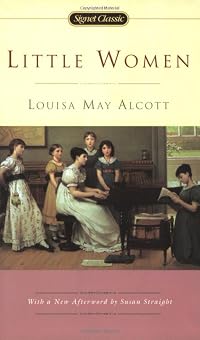
Whether they're entertaining "Great Aunt Eliza" (who turns out to be the governor's wife), or sheltering with the old "witch," Peg Bowen, during a terrible winter storm, the children seem always to be together. Their earnest work on their home-produced Our Magazine reminded me of the March girls' "newspaper" in Little Women, just as the foreshadowing of Cecily's early death (never depicted in the book), seemed to recall Alcott's depiction of Beth March. I wasn't sure whether to lay this at the door of conscious imitation on Montgomery's part, or to simply attribute it to the conventions of a genre that both authors mastered.
However that may be, the similarity was not unwelcome, and I found that these echoes of another beloved classic, whether humorous or melancholy, only added to my appreciation. Montgomery's understanding of the magic of youth, her own gifts as a storyteller, and her beautiful prose, all combine to make The Golden Road (together with its predecessor), one of those classics that truly speak for childhood. show less
Narrated by Bev King, looking back from his adulthood, The Golden Road returns readers to the village of Carlisle, where Bev and his brother Felix are staying with their King cousins, Felicity, Dan and Cecily. Together with hired boy Peter Craig, neighbor girl Sara Ray, and Sara Stanley - another cousin, show more whose extraordinary gifts as a storyteller have earned her the moniker, "The Story Girl" - the children form a close-knit community of their own, sharing in the joy and sorrow of growing up.
Whether they're entertaining "Great Aunt Eliza" (who turns out to be the governor's wife), or sheltering with the old "witch," Peg Bowen, during a terrible winter storm, the children seem always to be together. Their earnest work on their home-produced Our Magazine reminded me of the March girls' "newspaper" in Little Women, just as the foreshadowing of Cecily's early death (never depicted in the book), seemed to recall Alcott's depiction of Beth March. I wasn't sure whether to lay this at the door of conscious imitation on Montgomery's part, or to simply attribute it to the conventions of a genre that both authors mastered.
However that may be, the similarity was not unwelcome, and I found that these echoes of another beloved classic, whether humorous or melancholy, only added to my appreciation. Montgomery's understanding of the magic of youth, her own gifts as a storyteller, and her beautiful prose, all combine to make The Golden Road (together with its predecessor), one of those classics that truly speak for childhood. show less
I read the previous book in this two-book series (The Story Girl) two years ago for the books of 1911, but I had forgotten the characters and never really caught up to speed. It’s about a group of children who are friends, one of whom is the narrator. The narration was weirdly Jamesian (complicated, obfuscating) and actually kind of made me think of books with a group narrator like The Virgin Suicides—not what you expect for a children’s book. It didn’t help that two of the children are named Sara—I know there were fewer names a century ago, but still. My favorite parts were a case of mistaken identity in which the children thought a visitor was deaf but she wasn’t; when they were forced to stay overnight with a witch; and show more when their cat went missing. The children wrote a newspaper about their doings, which was a tiny bit boring. I felt there was an over-reliance on the children accidentally using the wrong product with disastrous results, in baking and so forth. This device was so effective in Anne of Green Gables when Anne dyed her hair green and got her best friend drunk but has now gotten a bit over-done. I think L.M. Montgomery was a bit bored by the book too, because at the end almost all the characters had moved away or were soon to die of consumption, so there’s no possibility of a sequel except in fan fiction. The nicest thing about this novel was its depiction of the last days of childhood and how precious it is when you can actually see it about to slip away from you. Overall I would recommend the Anne or Emily books before this one. show less
The ongoing adventures of the King cousins as they spend another year together, start a newspaper, get into various scrapes, and face the changes that come with growing up.
Charming as ever, I remained interested to see the differences between this book and The Road to Avonlea series, which took this and the previous book as its source material. Montgomery's ability to paint a landscape remains as beautiful as ever, although there were a few passages that felt a bit too much even for this fan. Nevertheless, there's plenty to delight here and it was just the reliably good read I needed.
Charming as ever, I remained interested to see the differences between this book and The Road to Avonlea series, which took this and the previous book as its source material. Montgomery's ability to paint a landscape remains as beautiful as ever, although there were a few passages that felt a bit too much even for this fan. Nevertheless, there's plenty to delight here and it was just the reliably good read I needed.
L. M. Montgomery's The Golden Road is the sequel to The Story Girl, and my review for that pretty much covers both of them. The golden road refers to the children's youth as they travel on toward adulthood, and their future paths become clearer in this installment.
There were three things I didn't love about this novel: 1.) Jasper Dale's love story is just a little creepy once you come out from under the spell of Montgomery's poetic prose, 2.) the foreshadowing of Cecily's young death (which, thankfully, falls outside the time of the story) is a bit heavy handed, and 3.) Blair Stanley's speeches, while lovely in themselves, grated on me because I couldn't help but partake of some of the King family disapproval of him.
This will never be show more a favorite, but with all the wonderful novels Montgomery has given us, she's still one of my favorite authors. show less
There were three things I didn't love about this novel: 1.) Jasper Dale's love story is just a little creepy once you come out from under the spell of Montgomery's poetic prose, 2.) the foreshadowing of Cecily's young death (which, thankfully, falls outside the time of the story) is a bit heavy handed, and 3.) Blair Stanley's speeches, while lovely in themselves, grated on me because I couldn't help but partake of some of the King family disapproval of him.
This will never be show more a favorite, but with all the wonderful novels Montgomery has given us, she's still one of my favorite authors. show less
'The Story Girl' entertained us with the shenanigans of Beverley King and his cousins and friends, including a contest to see who could give the best sermon (with hilarious results) This book is no less funny as the children band together to create their own newspaper, 'Our Magazine' with some pretty funny articles and Q&A's. The story ends on a bittersweet note as the children are growing up, but is nonetheless worth reading.
LM Montgomery is one of my favorite authors, and this is one of her masterpieces. The continuation of the Story Girl, The Golden Road continues the imaginative and rich tapestry. Recommended for old and young alike!
 This review was written for LibraryThing Early Reviewers.
Members
- Recently Added By
Published Reviews
ThingScore 100
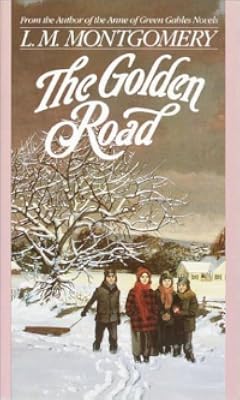
I loved the cover of this new edition! It makes me want to update my previous books by LM Montgomery. I have re-read Anne of Green Gables several times but this is my first revisit of The Story Girl. The scenery is evocatively described. The stories range from the real sorrows that can occur in childhood to flights of fancy and the small dramas. This book was provided to me for free but the show more opinions on this review are mine. show less
added by cosypumpkin
Lists

Best L.M. Montgomery novels
20 works; 8 members

The Best of Canadian Literature
235 works; 33 members

Books Read in 2016
4,666 works; 197 members

Children's Literature 1900 - 1950 in order
413 works; 8 members
Author Information

385+ Works 159,929 Members
One of the best-loved children's/young adult authors, Lucy Maud Montgomery was born on November 30, 1874 in Clifton, Prince Edward Island, Canada, the daughter of Hugh John and Clara Woolner. After attending Prince of Wales College and Dalhouse College in Halifax, she became a certified teacher, eventually teaching in Bideford, Prince Edward show more Island. She also served as an assistant at the post office and as a writer for the local newspaper, The Halifax Daily Echo. Best known for her Anne of Avonlea and Anne of Green Gables books, Montgomery received many high honors. She was named a Fellow of the Royal Society of Arts in 1923 and a Canadian stamp commemorates Montgomery and Anne of Green Gables. In addition, various museums dedicated to the book series and Montgomery's life dot Prince Edward Island. The books in the Anne series follow the growth and adventures of a red-haired, spritely, high-spirited and imaginative orphan named Anne who lives on Prince Edward Island. The success of these books rested in Montgomery's ability to vividly recollect childhood and her easy storytelling ability. They are tremendously popular to this day and have been translated into more than 35 languages and adapted as movies and PBS television productions. On July 5, 1911, L.M. Montgomery married Ewan Macdonald, a Presbyterian minister, and the marriage produced three children. She died on April 24, 1942. (Bowker Author Biography) show less
Some Editions
Series

Belongs to Publisher Series
Corticelli [Mursia] (192)
Work Relationships
Common Knowledge
- Canonical title
- The Golden Road
- Original title
- The Golden Road
- Original publication date
- 1913
- People/Characters
- Beverly King; Felix King; Sara Stanley (Story Girl); Felicity King; Dan King; Cecily King (show all 7); Sara Ray
- Important places
- Carlisle, Prince Edward Island, Canada; Prince Edward Island, Canada
- Epigraph
- "Life was a rose-lipped comrade
With purple flowers dripping from her fingers."
—The Author. - Dedication
- TO
THE MEMORY OF
Aunt Mary Lawson
WHO TOLD ME MANY OF THE TALES
REPEATED BY THE
STORY GIRL - First words
- Once upon a time we all walked on the golden road.
- Last words
- (Click to show. Warning: May contain spoilers.)The Story Girl was gone.
- Original language*
- Inglese
*Some information comes from Common Knowledge in other languages. Click "Edit" for more information.
Classifications
Statistics
- Members
- 1,439
- Popularity
- 16,440
- Reviews
- 23
- Rating
- (3.81)
- Languages
- 7 — English, Finnish, French, Hungarian, Italian, Polish, Portuguese (Portugal)
- Media
- Paper, Audiobook, Ebook
- ISBNs
- 111
- ASINs
- 33
