On This Page
Description
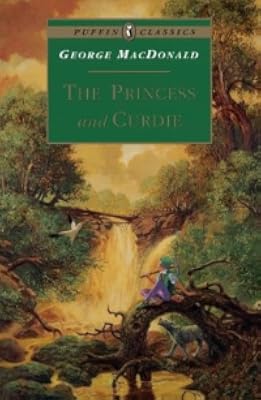
The Princess and Curdie are back in this sequel to The Princess and the Goblin. Princess Irene and Curdie are a year or two older, and must overthrow a set of corrupt ministers who are poisoning Irene's father, the king. Irene's grandmother is also back and she gives Curdie a strange gift and a monster called Lina to help him on his quest. A wonderful tale of adventure and courage.Tags
Recommendations









Member Reviews
Not nearly so well known or beloved as The Princess and the Goblin, The Princess and Curdie is nonetheless well worth the read. I would argue it is the better work, if less accessible. The writing is much more mature, with better crafted prose, a heavier use of symbolism and a strong theme of how the condition of the soul can very often contrast the outward appearance.
The Princess and the Goblin is very much a children's book. The story of The Princess and Curdie is still often child-like, but is slightly more wordy and features some darker content (the ending, in particular, is abruptly bleak). Compared to the former, which is quite explicit as a fairy tale, the fantasy here has more of a parabolic quality, and at times the show more theological parallels are far too heavy handed and dense to be digestible for a young reader. Older readers will likely get more out of it.
If I have a criticism, it is chiefly of the finale and the unreal lack of judgement on the part of the king toward those that are practically portrayed as demonic. There is mercy and there is negligence, and I would posit that the wrist slaps made in response to repetetive treason are likely reflective of MacDonald's universalism. show less
The Princess and the Goblin is very much a children's book. The story of The Princess and Curdie is still often child-like, but is slightly more wordy and features some darker content (the ending, in particular, is abruptly bleak). Compared to the former, which is quite explicit as a fairy tale, the fantasy here has more of a parabolic quality, and at times the show more theological parallels are far too heavy handed and dense to be digestible for a young reader. Older readers will likely get more out of it.
If I have a criticism, it is chiefly of the finale and the unreal lack of judgement on the part of the king toward those that are practically portrayed as demonic. There is mercy and there is negligence, and I would posit that the wrist slaps made in response to repetetive treason are likely reflective of MacDonald's universalism. show less
The Princess and the Goblin was one of my favorite childhood books, My copy was read and re-read for the dreamlike sense of magic and wonder of the rooms at the top of the tower; the gritty terror of the goblins under the mountain.
I suppose one can read religious allegory into the story if one tries (and the same goes for the poignancy of The Light Princess), but in those cases the message never got in the way of the story.
Such is not the case with The Princess and Curdie. From page one to the end, the characters (there is nothing in particular to identify them with the characters of The Princess & the Goblin save for the names) walk through their roles woodenly in order to illustrate MacDonald's religious and social beliefs. It's show more unbelievably preachy - and most modern readers will find MacDonald's ideas rather peculiar. His worldview is naively idealistic, verging on offensively classist. (Servants have a duty to serve honestly, a good child should have nothing to keep from his parents, drinking is bad (except if you're a king; then it is wholesome), sophistication is bad, rustic naiivete is good, poverty is a privilege (!!!!).... the list goes on.
If you're looking for a fantasy with the beauty of the Princess and The Goblin, with that fairytale quality to it, try something by Patricia McKillip instead of this "sequel." show less
I suppose one can read religious allegory into the story if one tries (and the same goes for the poignancy of The Light Princess), but in those cases the message never got in the way of the story.
Such is not the case with The Princess and Curdie. From page one to the end, the characters (there is nothing in particular to identify them with the characters of The Princess & the Goblin save for the names) walk through their roles woodenly in order to illustrate MacDonald's religious and social beliefs. It's show more unbelievably preachy - and most modern readers will find MacDonald's ideas rather peculiar. His worldview is naively idealistic, verging on offensively classist. (Servants have a duty to serve honestly, a good child should have nothing to keep from his parents, drinking is bad (except if you're a king; then it is wholesome), sophistication is bad, rustic naiivete is good, poverty is a privilege (!!!!).... the list goes on.
If you're looking for a fantasy with the beauty of the Princess and The Goblin, with that fairytale quality to it, try something by Patricia McKillip instead of this "sequel." show less
Now that I’ve reread both of George MacDonald’s novels featuring the little princess and the intrepid miner boy, I understand why they are often referred to as the “Curdie books,” and almost never the “Princess books” or “Irene books.” While these two characters share the spotlight pretty equally in The Princess and the Goblin, The Princess and Curdie barely involves the Princess at all.
The story opens a couple years after the terrible adventure in which the goblins tried to carry off Irene. All of the nasty creatures have either perished or fled, and Irene herself is living with her father in his far-off city. Curdie is still living with his parents on the mountain, and mining in the caves beneath it. He sometimes show more doubts the truth of his previous adventures, and is beginning to grow rather dull and ordinary, until the princess’ great-great grandmother brings him to his senses by allowing him to accidentally shoot one of her doves. She then sends him on a quest for the king’s city, and chooses as his companion a fearsome, horrible-looking beast named Lina. He does not even know what he is to do when he is to get there, except that he is meant to serve his old friends in some way.
The Princess and Curdie was written a whole decade after its predecessor, and it’s easy to see that the author’s style matured greatly over time, although whether it was for the better or the worse is up to the reader. If I were to liken each to pieces of art, the first book would be a light and airy sketch, stretching from the pinnacles of the mountains down to the bowels where its cartoonish inhabitants live; any variation of hue would be provided by the gentle application of watercolors. The second, on the other hand, would be an elaborate oil painting with layer dabbed upon layer, until the canvas is heavy with colors both rich and dark.
As a result, there are some moments in this book that are absolutely beautiful, for instance this description, which points tellingly to the aesthetic MacDonald tried to achieve in his adult fantasy works:
A mountain is a strange and awful thing. In old times, without knowing so much of their strangeness and awfulness as we do, people were yet more afraid of mountains. But then somehow they had not come to see how beautiful they are as well as awful, and they hated them—and what people hate they must fear. Now that we have learned to look at them with admiration, perhaps we do not always feel quite awe enough of them. To me they are beautiful terrors.
A bit confused in places perhaps, but the phrase “beautiful terrors” is definitely a key one for MacDonald’s oeuvre. And then there is this passage, by far my favorite from either Curdie book:
There is a difference between the growth of some human beings and that of others: in the one case it is a continuous dying, in the other a continuous resurrection. One of the latter sort comes at length to know at once whether a thing is true the moment it comes before him; one of the former class grows more and more afraid of being taken in, so afraid of it he takes himself in altogether, and comes at length to believe in nothing but his dinner: to be sure of a thing with him is to have it between his teeth.
At the beginning of the book, Curdie is in a fair way towards becoming one of this latter sort, but his remorse at killing one of the old princess’ doves brings him back to himself, and leads him on the path of “continuous resurrection.” MacDonald’s characterization is here at its best, and Curdie seems somehow older in these opening chapters than he does in the rest of the book: it’s rather disappointing to read on, for in certain ways the style and characterization become more childish as the book continues, although they always remain distinctly “older” than they were in The Princess and the Goblin.
As another downside, it must be admitted that the “heaviness” I spoke of in reference to the tone of this book fully applies to the allegorical (or, to be more accurate, spiritual) elements. When I first read it as a young boy, the magical elements here struck me as infinitely odder than those found in The Princess and the Goblin. Now I can see the symbolism behind the magic, and I know that Lina, for instance, represents the possibility for every human—no matter how beastlike—to undergo spiritual regeneration. With MacDonald, you really can’t get away from that universal salvation theme, no matter how hard you try.
An odd book, quite fragmented and made up of disparate parts, less entertaining than The Princess and the Goblin but more thought provoking—I recommend it to older children who enjoyed the first book but are thirsting for something more. show less
The story opens a couple years after the terrible adventure in which the goblins tried to carry off Irene. All of the nasty creatures have either perished or fled, and Irene herself is living with her father in his far-off city. Curdie is still living with his parents on the mountain, and mining in the caves beneath it. He sometimes show more doubts the truth of his previous adventures, and is beginning to grow rather dull and ordinary, until the princess’ great-great grandmother brings him to his senses by allowing him to accidentally shoot one of her doves. She then sends him on a quest for the king’s city, and chooses as his companion a fearsome, horrible-looking beast named Lina. He does not even know what he is to do when he is to get there, except that he is meant to serve his old friends in some way.
The Princess and Curdie was written a whole decade after its predecessor, and it’s easy to see that the author’s style matured greatly over time, although whether it was for the better or the worse is up to the reader. If I were to liken each to pieces of art, the first book would be a light and airy sketch, stretching from the pinnacles of the mountains down to the bowels where its cartoonish inhabitants live; any variation of hue would be provided by the gentle application of watercolors. The second, on the other hand, would be an elaborate oil painting with layer dabbed upon layer, until the canvas is heavy with colors both rich and dark.
As a result, there are some moments in this book that are absolutely beautiful, for instance this description, which points tellingly to the aesthetic MacDonald tried to achieve in his adult fantasy works:
A mountain is a strange and awful thing. In old times, without knowing so much of their strangeness and awfulness as we do, people were yet more afraid of mountains. But then somehow they had not come to see how beautiful they are as well as awful, and they hated them—and what people hate they must fear. Now that we have learned to look at them with admiration, perhaps we do not always feel quite awe enough of them. To me they are beautiful terrors.
A bit confused in places perhaps, but the phrase “beautiful terrors” is definitely a key one for MacDonald’s oeuvre. And then there is this passage, by far my favorite from either Curdie book:
There is a difference between the growth of some human beings and that of others: in the one case it is a continuous dying, in the other a continuous resurrection. One of the latter sort comes at length to know at once whether a thing is true the moment it comes before him; one of the former class grows more and more afraid of being taken in, so afraid of it he takes himself in altogether, and comes at length to believe in nothing but his dinner: to be sure of a thing with him is to have it between his teeth.
At the beginning of the book, Curdie is in a fair way towards becoming one of this latter sort, but his remorse at killing one of the old princess’ doves brings him back to himself, and leads him on the path of “continuous resurrection.” MacDonald’s characterization is here at its best, and Curdie seems somehow older in these opening chapters than he does in the rest of the book: it’s rather disappointing to read on, for in certain ways the style and characterization become more childish as the book continues, although they always remain distinctly “older” than they were in The Princess and the Goblin.
As another downside, it must be admitted that the “heaviness” I spoke of in reference to the tone of this book fully applies to the allegorical (or, to be more accurate, spiritual) elements. When I first read it as a young boy, the magical elements here struck me as infinitely odder than those found in The Princess and the Goblin. Now I can see the symbolism behind the magic, and I know that Lina, for instance, represents the possibility for every human—no matter how beastlike—to undergo spiritual regeneration. With MacDonald, you really can’t get away from that universal salvation theme, no matter how hard you try.
An odd book, quite fragmented and made up of disparate parts, less entertaining than The Princess and the Goblin but more thought provoking—I recommend it to older children who enjoyed the first book but are thirsting for something more. show less
This sequel to "The Princess and the Goblin" starts a little oddly (though the discussion of the mountains is beautiful), but it develops into a wonderful and rich tale."The Princess and Curdie" picks up about a year after the events of "The Princess and the Goblin." It starts a new adventure, while remaining firmly a part of the story of the first book. I read the second book immediately after finishing the first, so I can't quite imagine appreciating it as much without the history I feel with the characters, the places, the mythology, and the themes that "The Princess and the Goblin" gave me.Remember that MacDonald wrote allegorically. These, as well as many of his other fictional works, were intended to be appreciated not only for show more the sake of the story itself, but also for the moral, philosophical, and even theological lessons the story promotes. Remembering that will explain, for example, why "The Princess and Curdie" ends the way it does. Part of the ending I loved and anticipated eagerly (I won't spoil it) and part disappointed me. But no doubt MacDonald intended the reader to be disappointed. It's instructional and will be clear when you finish.I don't give out many five-star ratings. That is how much I enjoyed this book! show less
In the sequel to The Princess and the Goblin, Curdie has continued to work in the king's mines after the departure of Princess Irene to the palace. But when a threat emerges to kingdom, Irene's great-great-grandmother calls Curdie to her, and after bestowing him with a gift, sends him to the king's palace where he works to correct the evils that have befallen the kingdom.
MacDonald's novel is an allegory first and foremost. While the plot is intriguing and Curdie's development as an individual is interesting, it is MacDonald's exploration of morality that makes the book a worthwhile reading experience. Of course, the narrative itself has the distinct feel of a fairy tale and would appeal to children, but it does have language that shows show more the book's age. The descriptions however, are delightfully rich. A read that is fun as an intellectual exercise but also a delightful children's novel. However, be warned that the last page and a half gives the book a distinctly unhappy ending, after the expected happy ending for the characters. show less
MacDonald's novel is an allegory first and foremost. While the plot is intriguing and Curdie's development as an individual is interesting, it is MacDonald's exploration of morality that makes the book a worthwhile reading experience. Of course, the narrative itself has the distinct feel of a fairy tale and would appeal to children, but it does have language that shows show more the book's age. The descriptions however, are delightfully rich. A read that is fun as an intellectual exercise but also a delightful children's novel. However, be warned that the last page and a half gives the book a distinctly unhappy ending, after the expected happy ending for the characters. show less
The second of MacDonald's books about Curdie the Miner and Irene the Princess. Curdie is sent out by the Princess' grandmother on an errand - he does not know what it is, but only that he must go to the King and do what is needed when he gets there. Like all MacDonald's books it is steeped in Christian imagery and meaning, the main theme here being faith.
When I read it as a child I remember being very struck by the gift that Curdie is granted of being able to fell the true shape of a person's soul by taking their hand in his. Thus: his mother's work worn hand seems like that of a lady; the scheming courtiers are revealed as a snake and a bird of prey; and the dishonest servants as various creatures associated with stupidity or theft. show more It strikes me still as an arresting idea. The explanation for his gift is this:"Since it is always what they do, whether in their minds of their bodies, that makes men go down to be less than men, that is, beasts, the change always come first in their hands...they do not know it of course; for a beast does not know that he is a beast, and the nearer a man gets to being a beast the less he knows it....To such a person there is in general no insult like the truth. He cannot endure it, not because he is growing a beast, but because he is ceasing to be a man. It is the dying man in him that makes him uncomfortable, and he trots, or creeps, or swims or flutters out of its way - calls it a foolish feeling, a whim, an old wives' fable, a bit of priests' humbug, an effete superstition, and so on....Many a lady, so delicate and nice that she can bear nothing coarser than the finest linen to touch her body, if she had a mirror that could show her the animal she is growing to, as it lies waiting within the fair skin and the fine linen and the silk and the jewels, would receive a shock that might possibly wake her up."
MacDonald is too preachy for most modern tastes, but he tells hard spiritual truths, and mixes them in with a good yarn and some beautiful language. show less
When I read it as a child I remember being very struck by the gift that Curdie is granted of being able to fell the true shape of a person's soul by taking their hand in his. Thus: his mother's work worn hand seems like that of a lady; the scheming courtiers are revealed as a snake and a bird of prey; and the dishonest servants as various creatures associated with stupidity or theft. show more It strikes me still as an arresting idea. The explanation for his gift is this:"Since it is always what they do, whether in their minds of their bodies, that makes men go down to be less than men, that is, beasts, the change always come first in their hands...they do not know it of course; for a beast does not know that he is a beast, and the nearer a man gets to being a beast the less he knows it....To such a person there is in general no insult like the truth. He cannot endure it, not because he is growing a beast, but because he is ceasing to be a man. It is the dying man in him that makes him uncomfortable, and he trots, or creeps, or swims or flutters out of its way - calls it a foolish feeling, a whim, an old wives' fable, a bit of priests' humbug, an effete superstition, and so on....Many a lady, so delicate and nice that she can bear nothing coarser than the finest linen to touch her body, if she had a mirror that could show her the animal she is growing to, as it lies waiting within the fair skin and the fine linen and the silk and the jewels, would receive a shock that might possibly wake her up."
MacDonald is too preachy for most modern tastes, but he tells hard spiritual truths, and mixes them in with a good yarn and some beautiful language. show less
Summary: After the goblin's evil plans have been defeated, the king takes Princess Irene away from the mountains, where Curdie is left behind to tend the mines with his father. Irene's magical great-great-grandmother stays behind, however, and soon sets Curdie on a path towards the city, for something is going horribly wrong in the kingdom... something that only Curdie can set right.
Review: Meh. This book followed more of a straightforward storyline than did the first book - essentially a standard adventure-quest story. But it lacked some of the charm of the first book, and it didn't grab my attention in the way that I hoped it would. I think part of my problem was in its strangely inconsistent morality, especially in regards to show more violence. Curdie, with his miner's mattock, does a fair amount of damage to people, animals and property, and Lina, the strange ugly semi-dog that he picks up as a companion, is pretty vicious in parts. There's a fair amount of leg-breaking, and finger-biting-off, and even killing by the protagonists, which is treated as a-okay, because Curdie is pure of heart (as heroes are wont to be), so it's right and proper that he subdue the bad guys however he must. The ending is similarly strange; giving us the expected fairy-tale happy ending... and then continuing for an additional page about how things turned to crap and corruption after the happy ending. I guess I couldn't get a handle on when (if ever) the story was being tongue-in-cheek, and if it was being serious, what point it was trying to make. 2 out of 5 stars.
Recommendation: Most of the action is independent of the events of The Princess and the Goblin, so it could be read independently, but on its own merits I wouldn't rank it very high on anybody's must-read list, unless Victorian children's lit is a particular passion of theirs. show less
Review: Meh. This book followed more of a straightforward storyline than did the first book - essentially a standard adventure-quest story. But it lacked some of the charm of the first book, and it didn't grab my attention in the way that I hoped it would. I think part of my problem was in its strangely inconsistent morality, especially in regards to show more violence. Curdie, with his miner's mattock, does a fair amount of damage to people, animals and property, and Lina, the strange ugly semi-dog that he picks up as a companion, is pretty vicious in parts. There's a fair amount of leg-breaking, and finger-biting-off, and even killing by the protagonists, which is treated as a-okay, because Curdie is pure of heart (as heroes are wont to be), so it's right and proper that he subdue the bad guys however he must. The ending is similarly strange; giving us the expected fairy-tale happy ending... and then continuing for an additional page about how things turned to crap and corruption after the happy ending. I guess I couldn't get a handle on when (if ever) the story was being tongue-in-cheek, and if it was being serious, what point it was trying to make. 2 out of 5 stars.
Recommendation: Most of the action is independent of the events of The Princess and the Goblin, so it could be read independently, but on its own merits I wouldn't rank it very high on anybody's must-read list, unless Victorian children's lit is a particular passion of theirs. show less
Members
- Recently Added By
Lists

Favorite Childhood Books
1,651 works; 519 members

Elevenses
316 works; 87 members

Books with Noble Titles
179 works; 11 members

Childhood Favorites
427 works; 24 members

Princess Tales
130 works; 4 members

Literature of Honor for Boys
91 works; 3 members

CCE 1000 Good Books List
1,033 works; 12 members
Honey For a Child's Heart
1,152 works; 25 members
Ambleside Books
459 works; 18 members

Before Austen Comes Aesop
318 works; 9 members

Books Read in 2015
3,299 works; 126 members

Book Titles Mentioned In Newberry Medal And Honor Books
884 works; 3 members

Books We Loved As Children
610 works; 254 members

Favorite Fairy Tales
269 works; 104 members
Author Information

384+ Works 38,928 Members
George MacDonald was born on December 10, 1824 in Huntley, Aberdeenshire, Scotland. He attended University in Aberdeen in 1840 and then went on to Highbury College in 1848 where he studied to be a Congregational Minister, receiving his M. A. After being a minister for several years, he became a lecturer in English literature at Kings College in show more London before becoming a full-time writer. He wrote fiction, non-fiction, and poetry. In 1955, he wrote his first important original work, a long religious poem entitled Within and Without. He is best known for his fantasy novels Phantastes, The Princess and the Goblin, At the Back of the North Wind, and Lilith and fairy tales including The Light Princess, The Golden Key, and The Wise Woman. In 1863, he published David Eiginbrod, the first of a dozen novels that were set in Scotland and based on the lives of rural Scots. He died on September 18. 1905. (Bowker Author Biography) show less
Some Editions
Series

Belongs to Publisher Series
Work Relationships
Is contained in
At the Back of the North Wind, The Princess and the Goblin, The Princess and Curdie by George MacDonald (indirect)
The George McDonald Treasury: Princess and the Goblin, Princess and Curdie, Light Princess, Phantastes, Giant's Heart, At the Back of the North Wind, Golden Key, and Lilith by George MacDonald (indirect)
Has the adaptation
Common Knowledge
- Canonical title
- The Princess and Curdie
- Original publication date
- 1883
- People/Characters
- Princess Irene; Curdie Peterson; Lina; Joan Peterson (Curdie's mother); Peter Peterson (Curdie's father); Derba
- First words
- Curdie was the son of Peter the miner.
- Last words
- (Click to show. Warning: May contain spoilers.)All around spreads a wilderness of wild deer, and the very name of Gwyntystorm has ceased from the lips of men.
Classifications
Statistics
- Members
- 2,548
- Popularity
- 7,541
- Reviews
- 24
- Rating
- (3.96)
- Languages
- English, German, Norwegian, Spanish
- Media
- Paper, Audiobook, Ebook
- ISBNs
- 155
- ASINs
- 67