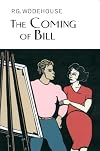
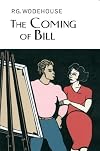
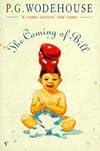
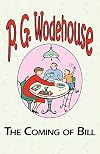
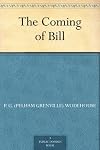
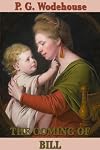
The Coming of Bill
by P. G. Wodehouse
On This Page
Description
When you're in the mood for classic humor writing, nothing can hold a candle to the work of P.G. Wodehouse. This novel fallows the madcap adventures of a young family who have recently welcomed their first child. Any parent who has attempted to navigate the pitfalls of childrearing will appreciate this hilarious and all-too-accurate depiction..
Tags
Recommendations




















Member Reviews
A surprising Wodehouse that deviates heavily from the well-known mould of light romantic music-hall comedy, with a rather serious drama unfolding over several years and taking in failure, death and a much less jocular take on relationship breakdown that is usual.
Wodehouse touches on the long-term consequences of our influence on others, and casts an unusually critical eye at that monied and whimsical class of idler who so often decorate the pages of his books. Would such a character really be a comfortable husband? He allows the idler's flaws to manifest and have consequences that feel more genuinely corrosive and less farcical than usual, remaining at the same time sympathetic. The spontaneous matrimony common in other stories is also show more critically reviewed. That being said, the solution to their woes is typically simplistic and efficacious, and that jarred.
The touches of humour were still there and recognisable, and some characters felt familiar, but it felt a significant departure from his usual work. Had I known in advance I might not have picked it for a bus journey, and I probably won't re-read it, but I'm glad I have read it. show less
Wodehouse touches on the long-term consequences of our influence on others, and casts an unusually critical eye at that monied and whimsical class of idler who so often decorate the pages of his books. Would such a character really be a comfortable husband? He allows the idler's flaws to manifest and have consequences that feel more genuinely corrosive and less farcical than usual, remaining at the same time sympathetic. The spontaneous matrimony common in other stories is also show more critically reviewed. That being said, the solution to their woes is typically simplistic and efficacious, and that jarred.
The touches of humour were still there and recognisable, and some characters felt familiar, but it felt a significant departure from his usual work. Had I known in advance I might not have picked it for a bus journey, and I probably won't re-read it, but I'm glad I have read it. show less
This book was originally published in 1920, before the stock market crash and the Lindbergh kidnapping; things become less humorous when they really happen. It is very different from all the other Wodehouse books I've read. As in another Wodehouse story, kidnapping a young child seems to be the perfect way to unite a couple, but, in this case, it is to re-unite them, not bring them together in the first place.
Two people who have fallen in love at first sight marry near the beginning of the story instead of at the end. The second half of the book centers around their baby, Bill. There are marital problems, characters with speaking parts actually die, a child is kidnapped, and more---including a failed expedition to find gold! I was show more reminded of some of the 1930s movies where the young man marries, only to discover that his wife is not what he thought she was; in these movies, however, he realizes that another woman, who has been a good friend all along, is his true soulmate and they live happily ever after. Aha! What's different about this book is that the two main characters change and grow!
There is a boxing coach who acts as an Elijah character: he recommends that the young couple marry before her father can forbid the marriage and is the mastermind behind the kidnapping scheme. The realization at the end that hard work is better than riches is rather like Candide's saying, we must cultivate our garden. show less
Two people who have fallen in love at first sight marry near the beginning of the story instead of at the end. The second half of the book centers around their baby, Bill. There are marital problems, characters with speaking parts actually die, a child is kidnapped, and more---including a failed expedition to find gold! I was show more reminded of some of the 1930s movies where the young man marries, only to discover that his wife is not what he thought she was; in these movies, however, he realizes that another woman, who has been a good friend all along, is his true soulmate and they live happily ever after. Aha! What's different about this book is that the two main characters change and grow!
There is a boxing coach who acts as an Elijah character: he recommends that the young couple marry before her father can forbid the marriage and is the mastermind behind the kidnapping scheme. The realization at the end that hard work is better than riches is rather like Candide's saying, we must cultivate our garden. show less
A sentimental tale, not what you expect from Wodehouse, but certainly written in his style. Set in New York City some years before the Wall Street crash it is the story of a pleasant young aspiring artist, Kirk Winfield. His independent means remove the need to work at his art and his generous nature provides him with an agreeable coterie of hangers on to keep him amused. An accident to his English manservant leads him to meet the alarming Mrs Lora Delane Porter, a writer and enthusiast for eugenics and physical fitness with a morbid fear of germs and very firm views on child-rearing. She sees in Kirk, despite his unsuitable occupation, a perfect physical match for her neice, Ruth, the highly eligible daughter of a millionaire show more financier. The couple meet and, fortunately for Mrs Porter's plans, instantly - in a rather typical Wodehouseian manner - recognise each other as soul mates. They marry, against Ruth's father's wishes, are cut off from any of his money and set up in a self-sufficient way in Kirk's studio where they soon have a child - Bill of the title.
When troubles come, they come not as single spies but in battallions. The stock that provides Kirk's adequate income crashes, he finds that his dilettante approach to painting has left him with little earning capacity and the solution offered by a pal is to leave his family and go to South America to mine gold. Things do not turn out well and when he returns he finds his wife changed by her inheritance of riches from her late father and his son being cared for in an aseptic white-tiled 'nursery' according to the precepts of Aunt Lora which include regular sponging of Bill and all contacts with a dilute solution of boric acid.
Things have to change to reach the expected happy ending and, with the help of Kirk's personal trainer and friend, Steve and a blind eye or two from butler Keggs they do. Steve is a typical Wodehouse character, a Lower East Side plug-ugly with a heart of gold and great common sense, as is Keggs, a stately figure above stairs but his own man below, particularlly after a glass or two of the amber nectar. Aunt Lora is cut from the same cloth as most other Wodehouse aunts and maintains her dignity to the end.
There are many other PGW books which will give more enjoyment than this but it is well crafted and not without humour. show less
When troubles come, they come not as single spies but in battallions. The stock that provides Kirk's adequate income crashes, he finds that his dilettante approach to painting has left him with little earning capacity and the solution offered by a pal is to leave his family and go to South America to mine gold. Things do not turn out well and when he returns he finds his wife changed by her inheritance of riches from her late father and his son being cared for in an aseptic white-tiled 'nursery' according to the precepts of Aunt Lora which include regular sponging of Bill and all contacts with a dilute solution of boric acid.
Things have to change to reach the expected happy ending and, with the help of Kirk's personal trainer and friend, Steve and a blind eye or two from butler Keggs they do. Steve is a typical Wodehouse character, a Lower East Side plug-ugly with a heart of gold and great common sense, as is Keggs, a stately figure above stairs but his own man below, particularlly after a glass or two of the amber nectar. Aunt Lora is cut from the same cloth as most other Wodehouse aunts and maintains her dignity to the end.
There are many other PGW books which will give more enjoyment than this but it is well crafted and not without humour. show less
Having noted how the reviews for this work, along with the product synopsis, all stress that this is the closest P. G. Wodehouse came to writing a serious book, I suspected that this would be a weak offering. As it happens, it turned out to be one of the author’s strongest novels.
Yes, there are numerous scenes of a serious nature, but they succeeded in adding worth to the story. Humour is still very much in evidence, making this a well-plotted tale, featuring some quality characters. The author’s depiction of the little boy is funny and fantastic!
Yes, there are numerous scenes of a serious nature, but they succeeded in adding worth to the story. Humour is still very much in evidence, making this a well-plotted tale, featuring some quality characters. The author’s depiction of the little boy is funny and fantastic!
A book I downloaded a while ago from Project Gutenberg. Classic Wodehouse exaggerated characters including an aunt into eugenics and sterile environments for children. Essentially the novel is a love story between the daughter of a millionaire and a bohemian artist, with some conflict and an eventual positive conclusion.
Some amusing phrasing that made me smile, but also a bit long-winded in places. Great to read once, recommended to fans of Wodehouse, but not as an introduction to this author.
Longer review here: https://suesbookreviews.blogspot.com/2022/11/the-coming-of-bill-by-pg-wodehouse....
Some amusing phrasing that made me smile, but also a bit long-winded in places. Great to read once, recommended to fans of Wodehouse, but not as an introduction to this author.
Longer review here: https://suesbookreviews.blogspot.com/2022/11/the-coming-of-bill-by-pg-wodehouse....
Maybe 3.5 stars. While I enjoyed this early Wodehouse, it was more realistic satire than the zaniness I am used to in his more famous books! The tongue-in-cheek commentary about love versus money would make a great film I think (and Wodehouse did write some good Hollywood scripts).
While I own this Kindle book, I actually listened to it via the Librivox recording.
While I own this Kindle book, I actually listened to it via the Librivox recording.
A pleasant piece of Wodehouse - no Jeeves here, it's the love story between a rich young woman and a struggling artist and the complications caused by a meddling aunt and sudden wealth. The "Bill" of the title is their son and I was reminded very much of Nancy Mitford's (superior) work "The Blessing", although Bill is too young to be as manipulative as dear Sigi! Very enjoyable, light read.
Members
- Recently Added By
Lists

Books Read in 2023
5,547 works; 145 members
Author Information

656+ Works 110,533 Members
P. G. Wodehouse was born in Guildford, United Kingdom on October 15, 1881. After completing school, he spent two years as a banker at the Hong Kong and Shanghai Bank in London and then took a job as a sports reporter and columnist for the Globe newspaper. His first novel, The Pothunters, was published in 1902. He wrote over 100 novels and short show more story collections during his lifetime including A Perfect Uncle, Love Among the Chickens, The Swoop, P. Smith in the City, Meet Mr. Milliner, Doctor Sally, Quick Service, The Old Reliable, Uneasy Money, A Damsel in Distress, Jill the Reckless, The Adventures of Sally, A Pelican at Blandings, The Girl in Blue, and Aunts Aren't Gentlemen. His most famous characters, Bertie Wooster and his manservant, Jeeves, appeared in books such as Much Obliged, Jeeves. He also wrote lyrics for musical comedies and worked as screenwriter in Hollywood in the 1930s. In 1939, he bought a villa in Le Touquet on the coast of France. He remained there when World War II started in 1939. The following year, the Germans appropriated the villa, confiscated property, and arrested him. He was detained in various German camps for almost one year before being released in 1941. He went to Berlin and spoke of his experience in five radio talks to be broadcast to America and England. The talks themselves were completely innocuous, but he was charged with treason in England. He was cleared, but settled permanently in the United States. He became a citizen in 1955. He was made a Knight Commander of the Order of the British Empire in 1975. He died from a heart attack after a long illness on February 14, 1975 at the age of 93. (Bowker Author Biography) show less
Some Editions
Series
Belongs to Publisher Series
Common Knowledge
- Canonical title
- The Coming of Bill
- Original title
- The Coming of Bill
- Alternate titles
- Their Mutual Child
- Original publication date
- 1920-07-01 (Herbert Jenkins, UK) (Herbert Jenkins, UK)
- People/Characters
- Kirk Winfield (an artist); Ruth Bannister; Mrs. Lora Delane Porter (an aunt); Steve Dingle (a former boxer); Keggs (a butler); Bailey Bannister (a financier) (show all 7); William Bannister Winfield (The White Hope)
- Important places
- New York, New York, USA; rural Conneticut
- First words
- Mrs Lora Delane Porter dismissed the hireling who had brought her automobile around from the garage and seated herself at the wheel.
- Last words
- (Click to show. Warning: May contain spoilers.)"I'm the richest man in the world."
- Disambiguation notice
- Published in the USA as "Their mutual child"
Classifications
Statistics
- Members
- 326
- Popularity
- 97,171
- Reviews
- 12
- Rating
- (3.66)
- Languages
- English, Spanish
- Media
- Paper, Audiobook, Ebook
- ISBNs
- 61
- ASINs
- 18