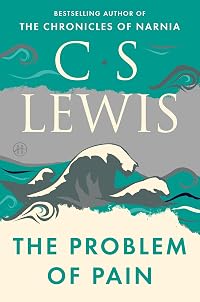
The Problem of Pain
by C. S. Lewis
On This Page
Description
Why must we suffer? "If God is good and all-powerful, why does he allow his creatures to suffer pain?" And what of the suffering of animals, who neither deserve pain nor can be improved by it? The greatest Christian thinker of our time sets out to disentangle this knotty issue. With his signature wealth of compassion and insight, C. S. Lewis offers answers to these crucial questions and shares his hope and wisdom to help heal a world hungering for a true understanding of human nature.Tags
Recommendations



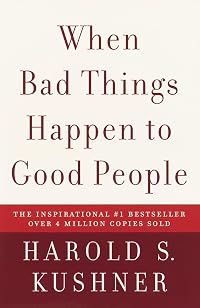
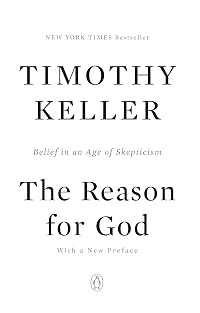
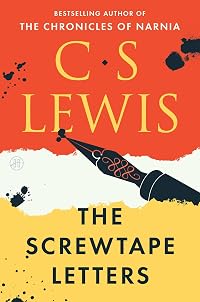
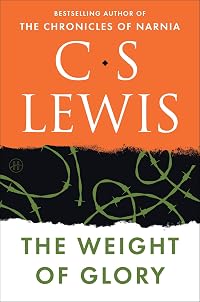






Member Reviews
Summary: Lewis's classic work exploring the existence of suffering and pain and how this is possible in a world made and sustained by a good and omnipotent God.
There is some sense a reviewer has when reviewing books like this to feel the mere "poser" and to be simply tempted to say, "read Lewis!" But that would be a very short review! So what I might do is simply suggest a few reasons why we might read Lewis on this subject.
One is that while the experience of suffering, even as Lewis acknowledges, requires of us fortitude when we ourselves face it and supportive sympathy when we walk along side friends in the midst of this, there are other times when we must take the larger view and ask "why pain and suffering?" And here, Lewis begins show more to help us because he observes that this is alike a question for the theist and the materialist. Particularly as we witness both the ravages of disease and the inhumanity of people against each other, it seems that this is a monstrous assault on our sense of the good. The fact that the central figure of Christianity suffered at the hand of evil himself is not in itself an answer to this question but only poses another--why this death?
Some of what Lewis does that is quite helpful is define terms. Omnipotence does not mean that God is able to do what is impossible because of who he is or what he has decreed, to do. For God to be good does not require that he make us happy. We must at least allow that suffering may not be contrary to a God who loves us and seeks our ultimate good.
He also helps us take a hard, and uncomfortable look at human wickedness, in itself, the source of much suffering and pain. We are fallen creatures, not simply by the fault of another but by our own active perversity. We often minimize the "crooked timber" of our own lives even as we displace the focus onto God. Pain, at least has the function of shattering our illusions that all is well, and we are sufficient in ourselves. It also calls us into the belief that holds onto God when there is no benefit in doing so.
He takes on the idea of hell, and perhaps most helpfully says that his aim is not to make the doctrine tolerable, for it is not, but to show that it may be moral, despite the objections raised. He observes that most of us do want to see retributive punishment and that we would find great offense in God forgiving one who remains unrepentant in great wickedness. He notes that eternal may be something different than an endlessly prolonged time. He also cautions against literal interpretations of vivid imagery.
His final chapters consider the question of animal pain and heaven. On animal pain, he cautions that there is much that we do not know about this, nor for that matter the ultimate destiny of animals. On heaven, Lewis observes that whereas hell is privation, heaven is the fulfillment of those deepest longings that we reach for and never quite grasp, that filling of a place in us that nothing has ever filled that being in the presence of God at last fills utterly and beyond measure.
The group with which I discussed this book had one quibble with Lewis. He states that when we reach the maximum of pain, the pain of another does not add to the sum total of the pain. While this may be true at a physical level, we did wonder about the emotional pain we experience when we witness the sufferings to others, particularly those inflicted by human cruelty. It also raises a question about the suffering of Christ. Was the pain he experienced as sin-bearer of humanity (if we believe this) any greater than bearing the sins of just one person? There was something in the way Lewis framed this that was unsatisfying, even if logically true.
This summer, the group I mentioned will probably be reading A Grief Observed, where all of Lewis's ideas are tested in the crucible of the loss of his wife Joy. It will be interesting to see if this changed his thinking in any way, or to what extent his ideas helped him. Stay tuned! show less
There is some sense a reviewer has when reviewing books like this to feel the mere "poser" and to be simply tempted to say, "read Lewis!" But that would be a very short review! So what I might do is simply suggest a few reasons why we might read Lewis on this subject.
One is that while the experience of suffering, even as Lewis acknowledges, requires of us fortitude when we ourselves face it and supportive sympathy when we walk along side friends in the midst of this, there are other times when we must take the larger view and ask "why pain and suffering?" And here, Lewis begins show more to help us because he observes that this is alike a question for the theist and the materialist. Particularly as we witness both the ravages of disease and the inhumanity of people against each other, it seems that this is a monstrous assault on our sense of the good. The fact that the central figure of Christianity suffered at the hand of evil himself is not in itself an answer to this question but only poses another--why this death?
Some of what Lewis does that is quite helpful is define terms. Omnipotence does not mean that God is able to do what is impossible because of who he is or what he has decreed, to do. For God to be good does not require that he make us happy. We must at least allow that suffering may not be contrary to a God who loves us and seeks our ultimate good.
He also helps us take a hard, and uncomfortable look at human wickedness, in itself, the source of much suffering and pain. We are fallen creatures, not simply by the fault of another but by our own active perversity. We often minimize the "crooked timber" of our own lives even as we displace the focus onto God. Pain, at least has the function of shattering our illusions that all is well, and we are sufficient in ourselves. It also calls us into the belief that holds onto God when there is no benefit in doing so.
He takes on the idea of hell, and perhaps most helpfully says that his aim is not to make the doctrine tolerable, for it is not, but to show that it may be moral, despite the objections raised. He observes that most of us do want to see retributive punishment and that we would find great offense in God forgiving one who remains unrepentant in great wickedness. He notes that eternal may be something different than an endlessly prolonged time. He also cautions against literal interpretations of vivid imagery.
His final chapters consider the question of animal pain and heaven. On animal pain, he cautions that there is much that we do not know about this, nor for that matter the ultimate destiny of animals. On heaven, Lewis observes that whereas hell is privation, heaven is the fulfillment of those deepest longings that we reach for and never quite grasp, that filling of a place in us that nothing has ever filled that being in the presence of God at last fills utterly and beyond measure.
The group with which I discussed this book had one quibble with Lewis. He states that when we reach the maximum of pain, the pain of another does not add to the sum total of the pain. While this may be true at a physical level, we did wonder about the emotional pain we experience when we witness the sufferings to others, particularly those inflicted by human cruelty. It also raises a question about the suffering of Christ. Was the pain he experienced as sin-bearer of humanity (if we believe this) any greater than bearing the sins of just one person? There was something in the way Lewis framed this that was unsatisfying, even if logically true.
This summer, the group I mentioned will probably be reading A Grief Observed, where all of Lewis's ideas are tested in the crucible of the loss of his wife Joy. It will be interesting to see if this changed his thinking in any way, or to what extent his ideas helped him. Stay tuned! show less
C. S. Lewis’ The Problem of Pain is a layman’s look at how Christians reconcile the existence of pain with the belief in God’s goodness. How can a good God allow His creatures to suffer?
I have several issues with Lewis’ theology and presuppositions. I’m going to outline these before discussing the parts of the book that I thought were excellent. One of the big things wrong with this book is Lewis’ too-ready acceptance of evolution and all the necessary adjustments it requires in the story of the Fall, etc. Lewis makes up his own projected creation/evolution myth, and traces the Fall from it instead of from the biblical account. Making up creation myths is fine, but not in a nonfiction book. His explanation of the Fall and show more the resulting sin and suffering is rather convoluted and complicated because it tries to reconcile everything, when really there is no need to reconcile incorrect views with correct ones.
The second problem I have with Lewis’ theology is his strongly Arminian position. I believe in sovereign grace, and our starting points are so different. Because of this, I find that I strongly disagree with several of Lewis’ logical conclusions, and I believe they proceed from faulty premises. One such passage is found in chapter three, where he writes:
The doctrine of Total Depravity — when the consequence is drawn that, since we are totally depraved, our idea of good is worth simply nothing — may thus turn Christianity into a form of devil worship.
If Lewis can be that harsh on an opposing belief, so can I. He oversimplifies Total Depravity and completely misses its point. It is not that human beings have no sense of right and wrong, but that every part of us is tainted to some extent by the Fall. There is no island of goodness and purity in me; sin has touched every part. That does not mean that I am as bad as I could be. It simply means that though I may have a faint inkling of what is right, my view is never fully clear until the Spirit opens my eyes.
Another reviewer has mentioned Lewis' annihilistic tendencies, and I agree they are problematic in light of Scripture. He doesn't commit himself completely to the notion that the damned will cease to be, but you can tell he wishes it were so, and would like to find a way to logically prove it.
Now for the good points. Lewis made a casual reference to “officious vicarious indignation” on the part of a friend that can hamper the development of patience and grace in a sufferer. I found that very convicting! I tend to be very protective of the people I love, and when a person I care about is wronged and suffers as a result, my righteous indignation is certainly expressed. How new a thought to me that my indignation could actually be impairing what God is working in that life.
I was also very impressed by his reasoning on the need for the self to be conscious of the other in order to have any kind of awareness of self. Lewis writes that this might at first seem to present a problem to theists; how could God know He had a Self if there was nothing and no one else, no other? But the fact of the Trinity explains how God could be self-aware before He created the universe.
I appreciate his explanation of the logical impossibility of doing two opposite things at the same time. God cannot give us freedom without giving us freedom to experience the consequences of our choices. This is not something that limits God or encroaches on His omnipotence.
I thought the chapter on animal pain was also very good — although I’m sure many animal-rights activists would not agree. I think Lewis is right that we project human-like qualities on to animals that they simply don’t have. Can an animal be aware of (and possess) a selfhood? Lewis argues it cannot, and his arguments are convincing. And how can something that is not aware of itself as a self suffer pain? Pain can take place in that body, certainly, but can it be processed and understood as pain by the animal’s mind? Lewis does take into account the higher animals, like dogs and others, that seem to possess human-like qualities, and even talks about his belief that the animals that are part of our lives here on earth will also, in some sense, be present in heaven.
Another thing that struck me as particularly was Lewis’ discussion of heaven. In Revelation it talks about Christ giving each saint a stone with his own name on it, that no one else knows except himself. Lewis speculates on why such a statement would be made, concluding that we will retain our unique identities in heaven, even though we are perfected and united with Christ in blessedness. And each of us can praise a certain aspect of God better than anyone else; we need that individuality to glorify Him. If we didn’t have it, Lewis argues, the church would be like an orchestra in which every instrument played the same note.
There are some wonderful quotes in this book. I’ll give a few:
A man can no more diminish God’s glory by refusing to worship Him than a lunatic can put out the sun by scribbling the word ‘darkness' on the walls of his cell.
When I think of pain—of anxiety that gnaws like fire and loneliness that spreads out like a desert, and the heartbreaking routine of monotonous misery, or again of dull aches that blacken our whole landscape or sudden nauseating pains that knock a man’s heart out at one blow, of pains that already seem intolerable and then are suddenly increased, of infuriating scorpion-stinging pains that startle into maniacal movement a man who seemed half dead with his previous tortures—it ‘quite o’ercrows my spirit.’ If I knew any way of escape I would crawl through sewers to find it. But what is the good of telling you my feelings? You know them already; they are the same as yours.
There have been times when I think we do not desire heaven; but more often I find myself wondering if we have ever desired anything else. You may have noticed that the books you love are bound together by a secret thread. You know very well what is the common quality that makes you love them, though you cannot put it into words: but most of your friends do not see it at all, and often wonder why, liking this, you should like that… We cannot tell each other about it. It is the secret signature of each soul, the incommunicable and inappeasable want, the thing we desired before we met our wives or made our friends or chose our work, and which we shall still desire on our deathbeds, when the mind no longer knows wife or friend or work. While we are, this is. If we lose this, we lose all.
Though I don't agree with several of Lewis’ conclusions because of our different theological presuppositions, on the whole I found this book to be very insightful. I know I will remember many of the points he made, and of course his writing style is superb. The subjects he raises will make you think long after the last page is turned, for pain is universal. This is an excellent read. show less
I have several issues with Lewis’ theology and presuppositions. I’m going to outline these before discussing the parts of the book that I thought were excellent. One of the big things wrong with this book is Lewis’ too-ready acceptance of evolution and all the necessary adjustments it requires in the story of the Fall, etc. Lewis makes up his own projected creation/evolution myth, and traces the Fall from it instead of from the biblical account. Making up creation myths is fine, but not in a nonfiction book. His explanation of the Fall and show more the resulting sin and suffering is rather convoluted and complicated because it tries to reconcile everything, when really there is no need to reconcile incorrect views with correct ones.
The second problem I have with Lewis’ theology is his strongly Arminian position. I believe in sovereign grace, and our starting points are so different. Because of this, I find that I strongly disagree with several of Lewis’ logical conclusions, and I believe they proceed from faulty premises. One such passage is found in chapter three, where he writes:
The doctrine of Total Depravity — when the consequence is drawn that, since we are totally depraved, our idea of good is worth simply nothing — may thus turn Christianity into a form of devil worship.
If Lewis can be that harsh on an opposing belief, so can I. He oversimplifies Total Depravity and completely misses its point. It is not that human beings have no sense of right and wrong, but that every part of us is tainted to some extent by the Fall. There is no island of goodness and purity in me; sin has touched every part. That does not mean that I am as bad as I could be. It simply means that though I may have a faint inkling of what is right, my view is never fully clear until the Spirit opens my eyes.
Another reviewer has mentioned Lewis' annihilistic tendencies, and I agree they are problematic in light of Scripture. He doesn't commit himself completely to the notion that the damned will cease to be, but you can tell he wishes it were so, and would like to find a way to logically prove it.
Now for the good points. Lewis made a casual reference to “officious vicarious indignation” on the part of a friend that can hamper the development of patience and grace in a sufferer. I found that very convicting! I tend to be very protective of the people I love, and when a person I care about is wronged and suffers as a result, my righteous indignation is certainly expressed. How new a thought to me that my indignation could actually be impairing what God is working in that life.
I was also very impressed by his reasoning on the need for the self to be conscious of the other in order to have any kind of awareness of self. Lewis writes that this might at first seem to present a problem to theists; how could God know He had a Self if there was nothing and no one else, no other? But the fact of the Trinity explains how God could be self-aware before He created the universe.
I appreciate his explanation of the logical impossibility of doing two opposite things at the same time. God cannot give us freedom without giving us freedom to experience the consequences of our choices. This is not something that limits God or encroaches on His omnipotence.
I thought the chapter on animal pain was also very good — although I’m sure many animal-rights activists would not agree. I think Lewis is right that we project human-like qualities on to animals that they simply don’t have. Can an animal be aware of (and possess) a selfhood? Lewis argues it cannot, and his arguments are convincing. And how can something that is not aware of itself as a self suffer pain? Pain can take place in that body, certainly, but can it be processed and understood as pain by the animal’s mind? Lewis does take into account the higher animals, like dogs and others, that seem to possess human-like qualities, and even talks about his belief that the animals that are part of our lives here on earth will also, in some sense, be present in heaven.
Another thing that struck me as particularly was Lewis’ discussion of heaven. In Revelation it talks about Christ giving each saint a stone with his own name on it, that no one else knows except himself. Lewis speculates on why such a statement would be made, concluding that we will retain our unique identities in heaven, even though we are perfected and united with Christ in blessedness. And each of us can praise a certain aspect of God better than anyone else; we need that individuality to glorify Him. If we didn’t have it, Lewis argues, the church would be like an orchestra in which every instrument played the same note.
There are some wonderful quotes in this book. I’ll give a few:
A man can no more diminish God’s glory by refusing to worship Him than a lunatic can put out the sun by scribbling the word ‘darkness' on the walls of his cell.
When I think of pain—of anxiety that gnaws like fire and loneliness that spreads out like a desert, and the heartbreaking routine of monotonous misery, or again of dull aches that blacken our whole landscape or sudden nauseating pains that knock a man’s heart out at one blow, of pains that already seem intolerable and then are suddenly increased, of infuriating scorpion-stinging pains that startle into maniacal movement a man who seemed half dead with his previous tortures—it ‘quite o’ercrows my spirit.’ If I knew any way of escape I would crawl through sewers to find it. But what is the good of telling you my feelings? You know them already; they are the same as yours.
There have been times when I think we do not desire heaven; but more often I find myself wondering if we have ever desired anything else. You may have noticed that the books you love are bound together by a secret thread. You know very well what is the common quality that makes you love them, though you cannot put it into words: but most of your friends do not see it at all, and often wonder why, liking this, you should like that… We cannot tell each other about it. It is the secret signature of each soul, the incommunicable and inappeasable want, the thing we desired before we met our wives or made our friends or chose our work, and which we shall still desire on our deathbeds, when the mind no longer knows wife or friend or work. While we are, this is. If we lose this, we lose all.
Though I don't agree with several of Lewis’ conclusions because of our different theological presuppositions, on the whole I found this book to be very insightful. I know I will remember many of the points he made, and of course his writing style is superb. The subjects he raises will make you think long after the last page is turned, for pain is universal. This is an excellent read. show less
This one goes on the reread list as it has insights than I could absorb after a single reading. A few notable highlights from my first reading:
On divine omnipotence—“You may attribute miracles to Him, but not nonsense.”
On divine goodness—“Love is something more stern and splendid than mere kindness.”
On the unique relation between Creator and created—“He makes, we are made: He is original, we are derivative.”
On heaven—“Heaven offers nothing that a mercenary soul can desire. It is safe to tell the pure in heart that they shall see God, for only the pure in heart want to. . . Love, by definition, seeks to enjoy its object.”
On divine omnipotence—“You may attribute miracles to Him, but not nonsense.”
On divine goodness—“Love is something more stern and splendid than mere kindness.”
On the unique relation between Creator and created—“He makes, we are made: He is original, we are derivative.”
On heaven—“Heaven offers nothing that a mercenary soul can desire. It is safe to tell the pure in heart that they shall see God, for only the pure in heart want to. . . Love, by definition, seeks to enjoy its object.”
show more 既然上帝存在,为什么人和动物还会遭遇痛苦?无论你持有什么样的人性哲学,当你经受痛苦时,你的人生哲学必将经受考验。C.S.路易斯用饱含同情的笔触和丰富的洞见解开了这个谜题。这是一部真正的杰作,充满了希望、智慧和对人性的真实认识。
路易斯在完成《痛苦的奥秘》一书时(该书初版于一九四零年二次世界大战爆发之际),在前言中,他解释其目的是为谈谈一些有关痛苦的知性方面的问题,更高一层的目的是教导读者如何获得坚韧不拔的毅力和耐心,不过,在这一点上,作者说他从未愚蠢地认为自己具备资格,对于他的读者们,除了阐明痛苦与生俱来之外,别无他言,微小的勇气胜过丰厚的知识,些许同情胜过豪勇,神的一丝关爱胜过一切。 show less
路易斯在完成《痛苦的奥秘》一书时(该书初版于一九四零年二次世界大战爆发之际),在前言中,他解释其目的是为谈谈一些有关痛苦的知性方面的问题,更高一层的目的是教导读者如何获得坚韧不拔的毅力和耐心,不过,在这一点上,作者说他从未愚蠢地认为自己具备资格,对于他的读者们,除了阐明痛苦与生俱来之外,别无他言,微小的勇气胜过丰厚的知识,些许同情胜过豪勇,神的一丝关爱胜过一切。 show less
Thoughtful, succinct writing about the theology of suffering and pain. Chapters on wickedness, omniscience, human and animal pain, and heaven. Thought-provoking and very well-written, if a little heavy in places. Recommended.
After re-reading six years later: I reached the end of the book with a great deal to think about, yet I’m really not sure that Lewis actually answered the question about why pain is such a part of our lives. He gives examples of people brought to an awareness of their wickedness or frailty due to pain, which brought them closer to God; yet he also acknowledges that there are some whose pain - or that of their loved ones - turns them further away from God.
He doesn’t touch on the problem of pain in children, show more particularly those in developing countries, but nor does he present the practical point of view that, in many cases, physical pain is a warning system that keeps us safe from harming ourselves more seriously.
Overall, I thought this worth reading, but a bit long-winded; and I had the sense that Lewis himself had a problem with the idea of pain, and was trying to convince himself as much as his readers.
Perhaps three-and-a-half stars would be fairer than three. show less
After re-reading six years later: I reached the end of the book with a great deal to think about, yet I’m really not sure that Lewis actually answered the question about why pain is such a part of our lives. He gives examples of people brought to an awareness of their wickedness or frailty due to pain, which brought them closer to God; yet he also acknowledges that there are some whose pain - or that of their loved ones - turns them further away from God.
He doesn’t touch on the problem of pain in children, show more particularly those in developing countries, but nor does he present the practical point of view that, in many cases, physical pain is a warning system that keeps us safe from harming ourselves more seriously.
Overall, I thought this worth reading, but a bit long-winded; and I had the sense that Lewis himself had a problem with the idea of pain, and was trying to convince himself as much as his readers.
Perhaps three-and-a-half stars would be fairer than three. show less
Review was first posted on Booklikes:
http://brokentune.booklikes.com/post/703121/the-problem-of-pain
I first read The Problem of Pain when I was an impressionable teenager in search of the meaning of life. How I got to C.S. Lewis, however, is a long story that I'll reserve for another post/review.
Anyway, I loved the The Problem of Pain when I first read it. I couldn't put it down.
When I started clearing my bookshelves last year in attempt to de-clutter, I came across my old and dusty copy of the book again and started to re-read.
What I love about The Problem of Pain - actually, all of Lewis' books I've read - is his use of language and his use of similes, which make it easy to follow his argument.
In The Problem of Pain, Lewis show more elaborates on the meaning of divine goodness, human pain, animal pain, heaven, hell - not necessarily in this order, though - and tries to explain from his Christian point of view what divine love is, what pain is, why humans can feel pain, and that there is a divine purpose to suffering.
When I first read this almost twenty years ago, I could accept the possibility that there may be a substance to the arguments he puts forward. Having re-read this now, I still admire Lewis' use of language and the elegance of his argument but I find it very difficult to be persuaded by it. Now, the argument that there is a purpose to suffering that allows the individual to grow or improve spiritually seems little more than wishful thinking.
Of course, my take on this may sound rather pessimistic. However, where Lewis draws from Thomas Aquinas and other sources of formal religious Christian teaching, I feel much more aligned with other schools of thought that would choose kindness towards living beings over the particular form of patriarchal tyranny of divine love that Lewis describes.
(Sidenote: Btw Jack, how dare you say that the newt has no self! For all we know, he might.
Seriously, I'm not impressed by an argument that starts with the notion that we cannot know what God's intentions are or indeed know anything that is outside of the human experience, and which then categorically denies that non-human living beings have a notion of the "self". ) show less
http://brokentune.booklikes.com/post/703121/the-problem-of-pain
I first read The Problem of Pain when I was an impressionable teenager in search of the meaning of life. How I got to C.S. Lewis, however, is a long story that I'll reserve for another post/review.
Anyway, I loved the The Problem of Pain when I first read it. I couldn't put it down.
When I started clearing my bookshelves last year in attempt to de-clutter, I came across my old and dusty copy of the book again and started to re-read.
What I love about The Problem of Pain - actually, all of Lewis' books I've read - is his use of language and his use of similes, which make it easy to follow his argument.
In The Problem of Pain, Lewis show more elaborates on the meaning of divine goodness, human pain, animal pain, heaven, hell - not necessarily in this order, though - and tries to explain from his Christian point of view what divine love is, what pain is, why humans can feel pain, and that there is a divine purpose to suffering.
When I first read this almost twenty years ago, I could accept the possibility that there may be a substance to the arguments he puts forward. Having re-read this now, I still admire Lewis' use of language and the elegance of his argument but I find it very difficult to be persuaded by it. Now, the argument that there is a purpose to suffering that allows the individual to grow or improve spiritually seems little more than wishful thinking.
Of course, my take on this may sound rather pessimistic. However, where Lewis draws from Thomas Aquinas and other sources of formal religious Christian teaching, I feel much more aligned with other schools of thought that would choose kindness towards living beings over the particular form of patriarchal tyranny of divine love that Lewis describes.
(Sidenote: Btw Jack, how dare you say that the newt has no self! For all we know, he might.
Seriously, I'm not impressed by an argument that starts with the notion that we cannot know what God's intentions are or indeed know anything that is outside of the human experience, and which then categorically denies that non-human living beings have a notion of the "self". ) show less
I think I mostly missed the forest for the trees when reading this work by Lewis--understandable, since I haven't wrestled greatly with the problem of pain. But what I mean is I don't think I got the ultimate point or argument (probably because I already know it and accept it implicitly), and I started enjoying the book only when I paid more attention to smaller insightful points Lewis makes in support of his argument.
Some of the many quotations that struck me:
A few things I learned about Lewis's particular Christian theology:
Some of the many quotations that struck me:
"[W]e are not to think of God arguing, as we do, from an end...to the conditions involved in it, but rather of a single utterly self-consistent act of creation..."show more
"'It would be better for me not to exist'--in what sense 'for me'? How should I, if I did not exist, profit by not
existing?"
"The Holiness of God is something more and other than moral perfection..."
"I think we all sin by needlessly disobeying the apostolic command to 'rejoice' as much as by anything else."
"The idea of sin presupposes a law to sin against."
"They wanted, as we say, 'to call their souls their own.' But that means to live a lie, for our souls are not, in fact, our own."
"A new species, never made by God, had sinned itself into existence. The change which man had undergone was not parallel to the development of a new habit; it was a radical alteration of his constitution, a disturbance between the relation of his component parts, and a perversion of one of them."
"If all animals had been herbivorous...they would mostly starve as a result of their own multiplication."
"God has had me for but forty-eight hours and then only by dint of taking everything else away from me. Let him but sheathe that sword for a moment and I behave like a puppy when the hated bath is over--I shake myself as dry as I can and race off to reacquire my comfortable dirtiness, if not in the nearest manure heap, at least in the nearest flower bed. And that is why tribulations cannot cease until God either sees us remade or sees that our remaking is now hopeless."
"[T]he doors of hell are locked on the inside."
"[U]nion exists only between distincts; and, perhaps, from this point of view, we catch a momentary glimpse of the meaning of all things. Pantheism is a creed not so much false as hopelessly behind the times. Once, before creation, it would have been true to say that everything was God. But God created: He caused things to be other than Himself that, being distinct, they might learn to love him, and achieve union instead of mere sameness."
A few things I learned about Lewis's particular Christian theology:
Lewis was apparently a theistic evolutionist. In this book, he does not take the story of Adam and Eve and the Fall literally, explicitly claims God created humans from animals, and says the Fall may or may not have involved the eating of fruit.show less
Lewis did not believe in the Calvinist Christian concept of total depravity. (I have no opinion on that, as I barely uunderstand total depravity myself.) He thought there were logical grounds for rejecting it.
Members
- Recently Added By
Lists

Books Read in 2019
4,052 works; 110 members

Books Read in 2020
4,379 works; 124 members

Recommendations by Peter Kreeft
45 works; 4 members
Author Information

535+ Works 523,961 Members
C. S. (Clive Staples) Lewis, "Jack" to his intimates, was born on November 29, 1898 in Belfast, Ireland. His mother died when he was 10 years old and his lawyer father allowed Lewis and his brother Warren extensive freedom. The pair were extremely close and they took full advantage of this freedom, learning on their own and frequently enjoying show more games of make-believe. These early activities led to Lewis's lifelong attraction to fantasy and mythology, often reflected in his writing. He enjoyed writing about, and reading, literature of the past, publishing such works as the award-winning The Allegory of Love (1936), about the period of history known as the Middle Ages. Although at one time Lewis considered himself an atheist, he soon became fascinated with religion. He is probably best known for his books for young adults, such as his Chronicles of Narnia series. This fantasy series, as well as such works as The Screwtape Letters (a collection of letters written by the devil), is typical of the author's interest in mixing religion and mythology, evident in both his fictional works and nonfiction articles. Lewis served with the Somerset Light Infantry in World War I; for nearly 30 years he served as Fellow and tutor of Magdalen College at Oxford University. Later, he became Professor of Medieval and Renaissance English at Cambridge University. C.S. Lewis married late in life, in 1957, and his wife, writer Joy Davidman, died of cancer in 1960. He remained at Cambridge until his death on November 22, 1963. (Bowker Author Biography) show less
Some Editions
Awards and Honors
Notable Lists
Series
Belongs to Publisher Series
Work Relationships
Is contained in
The Complete Works: Fantasy & Sci-Fi Novels, Religious Studies, Poetry & Autobiography: Enriched edition. The Chronicles of Narnia, The Space Trilogy, The Screwtape Letters by C. S. Lewis (indirect)
The Abolition of Man / The Great Divorce / Mere Christianity / Miracles / The Problem of Pain / The Screwtape Letters by C. S. Lewis
THE CHRISTIAN COLLECTION. 9 Books including: Mere Christianity; Screwtape Letters; Miracles; The Great Divorce; Pilgrim's Recess; The Problem Of Pain ... (Timeless Wisdom Collection Book 1016) by C. S. Lewis
The C. S. Lewis Signature Classics: An Anthology of 8 C. S. Lewis Titles: Mere Christianity, The Screwtape Letters, Miracles, The Great Divorce, The ... The Abolition of Man, and The Four Loves by C. S. Lewis
Has as a reference guide/companion
Has as a student's study guide
Common Knowledge
- Canonical title*
- Het probleem van het lijden
- Original title
- The Problem of Pain
- Alternate titles
- How Human Suffering Raises Almost Intolerable Intellectual Problems
- Original publication date
- 1940
- People/Characters
- God
- Epigraph
- 'The Son of God suffered unto the death, not that men might not suffer, but that their sufferings might be like His.'
— George MacDonald,
Unspoken Sermons, First Series - Dedication
- To The Inklings
- First words
- Not many years ago when I was an atheist, if anyone had asked me, "Why do you not believe in God?" my reply would have run something like this: "Look at the universe we live in.
[Preface] When Mr Ashley Sampson suggested to me the writing of this book, I asked leave to be allowed to write it anonymously, since, if I were to say what I really thought about pain, I should be forced to make statements ... (show all)of such apparent fortitude that they would become ridiculous if anyone knew who made them. - Last words
- (Click to show. Warning: May contain spoilers.)Their vision fails them and they cover their eyes from the intolerable light of utter actuality, which was and is and shall be, which never could have been otherside, which has no opposite.
(Click to show. Warning: May contain spoilers.)[Preface] Any theologian will see easily enough what, and how little, I have read. - Canonical DDC/MDS
- 231.8
- Canonical LCC
- BT732.7 .L48 2015
*Some information comes from Common Knowledge in other languages. Click "Edit" for more information.
Classifications
Statistics
- Members
- 10,459
- Popularity
- 926
- Reviews
- 74
- Rating
- (3.93)
- Languages
- 16 — Chinese, Czech, Danish, Dutch, English, Finnish, French, German, Italian, Polish, Romanian, Spanish, Swedish, Turkish, Portuguese (Portugal), Portuguese (Brazil)
- Media
- Paper, Audiobook, Ebook
- ISBNs
- 75
- UPCs
- 3
- ASINs
- 82