On This Page
Description
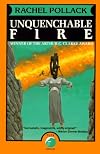
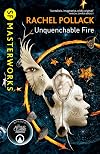
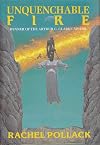
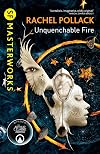
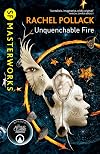
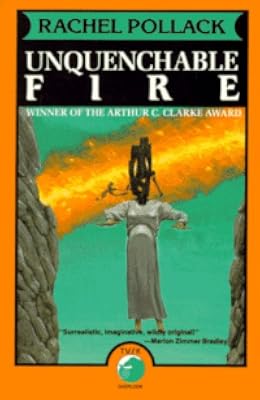
In an America where the miraculous is par for the course, where magic and myths are as real as shopping malls and television game shows, Jennifer Mazdan listens to the modern storytellers recite the tales of the Founders. But when strange things start to happen and Jennie becomes pregnant - from a dream - she enters a struggle which threatens her own life and causes her to question everything she has ever learned. Unquenchable Fire won the Arthur C. Clarke Award in 1989.Tags
Recommendations


















Member Reviews
It was definitely time for some escapist, fantastical fiction, so that’s what I’m reading for the next few books. I can’t remember how I came across ‘Unquenchable Fire’, but given the blurb and the fact it’s in the SF Masterworks a hard sell definitely wasn’t required. I found it to be a unique, fascinating gem with truly fantastic world-building. The setting is an alternate America which had a very different revolution, wholeheartedly embracing magic and mysticism. It reminded me of South American magical realism, yet transformed and transposed to a suburban 20th century American setting. I enjoy juxtapositions of the mythological and mundane, so the tone and setting immediately enchanted me. As well as interjecting whole show more myths, the narrative explains the world with lines like, ‘What else do you do when you get a strange dream, but check it in the catalogue?’ and, ‘The people who lived in Hope in those days after the Revolution would sometimes, on windy days, find themselves coated in other people’s emotions, causing them to run up and down the street acting out long-gone crises’.
‘Unquenchable Fire’ is not a plot-driven novel and events proceed without any great speed. The point of view character is Jennie Mazdan, who is understandably unhappy to find that she has been impregnated without consent by a holy spirit. The narrative follows her struggles with the disruption to her life by mystical forces, especially the implications for her relationships with family, neighbours, and her ex-husband. This meandering and meditative approach provides plenty of space for the reader to consider the socio-cultural roles of religion in the real and fictional worlds. One strong parallel between the two is the constraint of community conventions, be they blood sacrifices or regular churchgoing. Jennie’s experiences also raise questions about fate and free will, as well as the rationalisations and explanations for human suffering. Jennie herself is a convincingly prickly and complex character, who it’s easy to sympathise with while also understanding why others find her difficult. She is not the main character in her own story, though. The setting is undoubtedly the star here, and Pollack creates an densely imagined and very atmospheric alternative history unlike anything I’ve come across before. The slow pace knocked off the fifth star, but the world-building is exemplary and conveys its strangeness with absolute conviction. show less
‘Unquenchable Fire’ is not a plot-driven novel and events proceed without any great speed. The point of view character is Jennie Mazdan, who is understandably unhappy to find that she has been impregnated without consent by a holy spirit. The narrative follows her struggles with the disruption to her life by mystical forces, especially the implications for her relationships with family, neighbours, and her ex-husband. This meandering and meditative approach provides plenty of space for the reader to consider the socio-cultural roles of religion in the real and fictional worlds. One strong parallel between the two is the constraint of community conventions, be they blood sacrifices or regular churchgoing. Jennie’s experiences also raise questions about fate and free will, as well as the rationalisations and explanations for human suffering. Jennie herself is a convincingly prickly and complex character, who it’s easy to sympathise with while also understanding why others find her difficult. She is not the main character in her own story, though. The setting is undoubtedly the star here, and Pollack creates an densely imagined and very atmospheric alternative history unlike anything I’ve come across before. The slow pace knocked off the fifth star, but the world-building is exemplary and conveys its strangeness with absolute conviction. show less
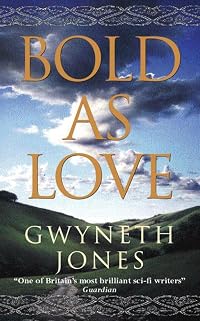
Another Clarke Award book, although this one won the award in 1989. And another book I didn’t get. It’s set in the US, specifically Poughkeepsie, eighty-seven years after some sort of supernatural / spiritual revolution, perhaps even a “rapture”. Jennifer Mazdan moved to Poughkeepsie with her husband, who was from the town, but he later divorced her because, well, she seemed to be the focus of a series of unwarranted events - not “unexplained”, as inexplicable and somewhat surreal events seem to be a feature of post-Revolution USA. These come to a head when Jennifer is waylaid by a… vision? prior to the visit to the town of a famous Teller, and subsequently finds herself pregnant. She doesn’t want to be pregnant, but her show more life now seems to be controlled by what calls “the Agency”. That’s “agency” as in “power”, not “agency” as in “government bureau”. And that’s it, that’s the plot. Jennifer rails against her fate and tries various schemes to prevent it - and Pollack describes her world as she does so. It’s done well, and impressively bizarre - sort of like some weird Christian Right utopia, and yet not at all biblical, as if it shares some aspects of their worldview but combined with something more like an urban fantasy setting. It’s a well-written novel, and very readable, but I have to admit if I’d been on the Clarke jury that year I’d have given the gong to Gwyneth Jones’s Kairos (which happens to be a favourite novel). And I’d perhaps argue that Life During Wartime by Lucius Shepard might have been a better choice, although I find its “US military adventurers in Central America” plot somewhat tired, and I think US authors, perhaps especially Shepard, have over-used those countries as settings for their fiction. Unquenchable Fire: worth a read. show less
Surreal.
I kept thinking of "Hell Is the Absence of God" by [a:Ted Chiang|130698|Ted Chiang|https://images.gr-assets.com/authors/1399023404p2/130698.jpg]. Handling spirituality as alternate history / science fiction isn't tackled all that often, but both this novel and that Chiang story are great examples. The constant casual mention of things both familiar and alien provides an unsettling setting that is used to great effect.
I love the nested stories, particularly because story telling is so integral to the workings of the world of the novel. How the stories relate to the main narrative is revealed slowly and the climax of the novel is unexpected, inevitable and powerful. The last few pages could very well drive the reader to start a show more 2nd reading. show less
I kept thinking of "Hell Is the Absence of God" by [a:Ted Chiang|130698|Ted Chiang|https://images.gr-assets.com/authors/1399023404p2/130698.jpg]. Handling spirituality as alternate history / science fiction isn't tackled all that often, but both this novel and that Chiang story are great examples. The constant casual mention of things both familiar and alien provides an unsettling setting that is used to great effect.
I love the nested stories, particularly because story telling is so integral to the workings of the world of the novel. How the stories relate to the main narrative is revealed slowly and the climax of the novel is unexpected, inevitable and powerful. The last few pages could very well drive the reader to start a show more 2nd reading. show less
http://nwhyte.livejournal.com/2732394.html
I thought this was great. It's set in a near-future world where spiritual forces have taken over, for good and ill, and Jenny from Poughkeepsie becomes pregnant from a dream. It is somewhere between Philip K. Dick and Ted Chiang, though closer to Dick, with a distinct slant of feminist spirituality. There is a lot of vivid language and exploration of the underlying myths (which may be real) of Jenny's world. It's not at all the sort of thing one associates with Arthur C. Clarke's writing (on which more soon) but it is definitely in line with his intellectual interests in later years, and I can see how the judges might have decided to give it the nod.
I thought this was great. It's set in a near-future world where spiritual forces have taken over, for good and ill, and Jenny from Poughkeepsie becomes pregnant from a dream. It is somewhere between Philip K. Dick and Ted Chiang, though closer to Dick, with a distinct slant of feminist spirituality. There is a lot of vivid language and exploration of the underlying myths (which may be real) of Jenny's world. It's not at all the sort of thing one associates with Arthur C. Clarke's writing (on which more soon) but it is definitely in line with his intellectual interests in later years, and I can see how the judges might have decided to give it the nod.
DNF on page 273. I really can't fathom this one - it makes no sense to me. The setting is suburban Poughkeepsie some time after various gods/prophets/supernatural beings have manifested in the US and everyone there has become a fervent religious nut, performing incessant rituals to appease the spirits, and seeing miracles everywhere.
I can't tell if it's meant to be a satire on religion (in which case it's not satirical enough); a commentary on the position of women locked into suburban conformity (if so, not barbed enough); or just a mish-mash of random thoughts thrown together after a night smoking too much weed (seems much more likely to me).
Anyway, I kept reading up until the protagonist started begging her estranged husband to show more return, then my stomach revolted and I DNF it. show less
I can't tell if it's meant to be a satire on religion (in which case it's not satirical enough); a commentary on the position of women locked into suburban conformity (if so, not barbed enough); or just a mish-mash of random thoughts thrown together after a night smoking too much weed (seems much more likely to me).
Anyway, I kept reading up until the protagonist started begging her estranged husband to show more return, then my stomach revolted and I DNF it. show less
I agree with lquilter that the worldbuilding is wonderful. It's one of the most detailed fantasy worlds I have ever encountered. And, boy, is it weird.
However, I really hated the story. The woman in the book is taken over by a magical power pretty early in the tale who directs her every move from then on. The "protagonist" spends the rest of the book kvetching about her fate and not being able to do anything about it. I'm sure it's supposed to be a meditation on free will and the problem of evil, but these are no longer meaningful problems in my life. I was left staring at the beautiful scenery and screaming because nothing was happening in it.
If you like weird fantasy settings, don't mind that the main character is powerless, and enjoy show more discourses on religious questions, you'll love this book. If you can ignore the parts that you're not enjoying and just read for the setting, you will be in awe. If you can't, you might find it worth skimming. show less
However, I really hated the story. The woman in the book is taken over by a magical power pretty early in the tale who directs her every move from then on. The "protagonist" spends the rest of the book kvetching about her fate and not being able to do anything about it. I'm sure it's supposed to be a meditation on free will and the problem of evil, but these are no longer meaningful problems in my life. I was left staring at the beautiful scenery and screaming because nothing was happening in it.
If you like weird fantasy settings, don't mind that the main character is powerless, and enjoy show more discourses on religious questions, you'll love this book. If you can ignore the parts that you're not enjoying and just read for the setting, you will be in awe. If you can't, you might find it worth skimming. show less
What would you do if you had a visitation and unwillingly found yourself pregnant with the Saviour of the World?
Pollack's setting - a modern day America with an animist religion reminds one of Ted Chiang's story 'Hell is the Abscence of God' and T. F. Powys earthy, almost pagan Christianity.
Pollack's setting - a modern day America with an animist religion reminds one of Ted Chiang's story 'Hell is the Abscence of God' and T. F. Powys earthy, almost pagan Christianity.
Members
- Recently Added By
Lists

S.F. Masterworks (Complete)
229 works; 15 members

Recommended Speculative Fiction by Women and People of Color
298 works; 45 members

Arthur C. Clarke Award Winners and Shortlisted Books
219 works; 14 members

SF Masterworks
193 works; 8 members

To Read
37 works; 1 member

Speculative Fiction: Slipstream Literature
166 works; 16 members
Author Information

126+ Works 4,509 Members
Rachel Pollack is considered one of the world's foremost authorities on the modern interpretation of the Tarot. She is a member of the American Tarot Association, the International Tarot Society, and the Tarot Guild of Australia and has taught at the famed Omega Institute for the past fifteen years. She is an award-winning fiction writer and has show more also written twelve books on the Tarot. She lives in New York. show less
Some Editions
Awards and Honors
Awards
Series

Belongs to Publisher Series
SF Masterworks (New design)
Common Knowledge
- Canonical title
- Unquenchable Fire
- Original publication date
- 1988-03-09
- Dedication
- For belief and help and everything else, this book is dedicated to Edith Katz.
- First words
- On the afternoon of the Day of Truth, eighty seven years after the Revolution, Jennifer Mazdan, a server for the Mid-Hudson Energy Board, feel asleep and underwent a strange dream, one not found anywhere in the catalogues.
- Last words
- (Click to show. Warning: May contain spoilers.)We remember the founders.
- Blurbers
- Bradley, Marion Zimmer
Classifications
Statistics
- Members
- 337
- Popularity
- 93,887
- Reviews
- 12
- Rating
- (3.35)
- Languages
- English
- Media
- Paper, Ebook
- ISBNs
- 8
- ASINs
- 2