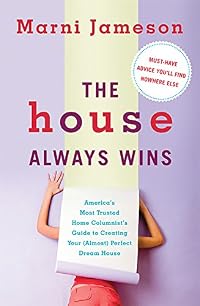
The House Always Wins: Americas Most Trusted Home Columnists Guide to Creating Your (Almost) Perfect Dream House
by Marni Jameson
On This Page
Description
Via her weekly syndicated column, "At Home with Marni Jameson," Jameson is one of the funniest, most eagerly read purveyors of home-improvement advice.The House Always Wins, her compulsively readable, zanily humorous, yet completely practical guide hailed by critics, now has even more moneysaving advice on creating, living in, and even selling a beautiful, livable home.Tags
Recommendations












Member Reviews
This is a great overview of the process that goes into decorating a home from the ground up. Ms. Jameson gives such basic advice as which order to install various elements of decor, and how to make the right choice the first time (or at least not the fiftieth time!). The book has a nice humorous tone. The book is necessarily overly general, but it is good reading for getting started on creating a comfortable home.
I love reading anything that Marni Jameson writes - she has a marvelous sense of humor! I'm not much into home decorating, but I find the things she discusses quite entertaining.
The subtitle is over-ambitious, but the book is entertaining and the author was, at time of writing, on her third "new" house or make-over, with lots of practical advice and horror stories about mistakes to avoid. Consult again for details on selection and installation of products, construction, purposing and cleaning rooms, yard and garden, and just about everything else.
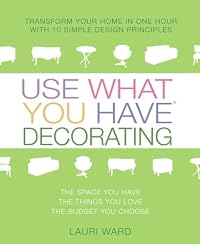
Jameson recommends the "Use What You Have Decorating" book by Laurie Ward, in which a heartily concur.
NOTES:
p. 19: Design should be functional without excess: "comfortable, self-contained, aesthetically pleasing, and superbly functional." "Your home needs to function and absorb your lifestyle...to reflect you...beautifully...to be our haven...where you come to relax show more and recharge"; and do all this "while balancing your family life, career, calendar, and budget."
p. 24: don't mix incompatible styles (a New England colonial home with a Moroccan decorating scheme is a bad match, but a Southern California home can go Mediterranean, Mexican, or Italian).
TIP to determine your personal style: "pick three items in your house that you could not give up because it would break you heart to part with them."
p. 25: Your plan should incorporate your lifestyle, your heritage, and your location.
p. 27: Make a "vision bag" (or box) with files for every room and space, containing, floor plan, furniture layouts (tip from p. 117: make newspaper outlines of furniture and practice the traffic flow), sample of wall colors, flooring, rugs, drapes and other fabrics; inspirational photos, lighting plan, budget and price lists.
p.54: Be sure colors have the same "undertone" (one red might "pull" blue, and another might "pull" orange; they don't go together).
p.45: An 8-pound pad under carpet is best; nylon is most feasible (wool is best), dark colors are better; carpets always look lighter on the floor than in the showroom swatch.
p. 63: "Builders (of new homes) often make 30 percent of their profits on the upgrades (flooring and finishes)." They do this by overestimating amounts needed, using less durable or functional materials than you would have chosen, and have their own installers. You can get better stuff, sometimes cheaper overall. Check with inspectors on what is required to close escrow (kitchen and bath but not carpet in some cases).
p.70: Laurie Ward's tips for arranging furniture and stuff: consider Flow, Focal point, and Friendliness; use pairs of lamps, chairs, or artwork in the same room (not separated); group collections into a unified arrangement; start with a plan but be ready to change it;
p. 117: The key to good decorating design is scale - matching items to the size of the space. Visualize the traffic flow, "test drive" the furniture layout; vary the heights of the furniture within a room, but make sure the backs of chairs suit the height of the ceiling; spread the "visual weight" by imagining a seesaw in the center of the room; mix up shapes (ovals with squares); less is best, especially with accessories; scale accessories to the space.
p.119/122: Blend colors rather than matching them; harmony is better than conformity; go for ambience, not perfection; interest and ambience are created by details (contrasting welts on chair, textured throw on a sofa, the way a drape hangs off its rod), especially "unexpected details that raise a room above the fray"; know your style and stick with it; stay balanced (visual weight); have fewer but finer things; mix old with new, humble with elegant, fancy with plain; use rooms to suit your needs, not a builder's floor plan (e.g., switch the living room and dining room).
p.128: for style glossary see www.HGTV.com
p. 133: How they do it on TV: use paint to transform a room; take everything out - usually, only 10% goes back in because "most stuff doesn't belong or is clutter"; find the focal point, such as a view window or fireplace, or MAKE ONE, such as a waterfall on the wall [my friend Andrea actually did that! - and she paints faux scenes on her walls].
p. 137: for color forecasts, see Color Association of U.S. and the Color Marketing Group.
On furniture --
p. 141: the dining room tables and chairs don't have to match, just look friendly together; leave 3 to 5 feet between the table and the wall.
p. 146: Avoid too many legs in a room and pair either their shapes or styles, textures, or colors; pair leggy furniture with solid or skirted pieces; avoid matching sets especially in bedrooms [not sure I agree totally with that one].
p. 161: magnets stick to solid brass, but not to brass-plate; use a quarter to test a mirror's thickness; look for dove-tails in drawers, rather than staples and glue.
p.183: arrange pictures or art work in the wall where you think they look good, then hand them 3" lower.
p. 196: Ward on decorating with books: if possible, have shelf space 1/3 books, 1/3 art objects, and 1/3 open [hah!]; separate paper and hardcover; front the books; put photos on separate shelves; put art objects beside books, not in front of them.
p. 198: Decorating the kitchen cabinet gap: Use kitchen related items; big and few looks better than small and many; vary color, shape and texture; leave some bare surfaces; raise objects behind moldings on florist's foam blocks; use faux plants.
p. 216: using fabrics: mix pattern categories (grounded with a solid) but not moods (casual vs. luxurious); use two-tone palette (three at most) for background and major pieces;; start with the main, most prominent, fabric; get large samples; reprise patterns and colors in trims and edging.
p. 242: mudroom must-haves are personalized hooks, shelves, benches, cubbies; have doors rather than open shelving; add a key tray or hooks, easy-clean surfaces and floors, including area rug, functional coat closet with extra poles and shelf tower, a bench, message board, and mirror, plus something pretty.
p. 267: good advice on watering trees. show less
Jameson recommends the "Use What You Have Decorating" book by Laurie Ward, in which a heartily concur.
NOTES:
p. 19: Design should be functional without excess: "comfortable, self-contained, aesthetically pleasing, and superbly functional." "Your home needs to function and absorb your lifestyle...to reflect you...beautifully...to be our haven...where you come to relax show more and recharge"; and do all this "while balancing your family life, career, calendar, and budget."
p. 24: don't mix incompatible styles (a New England colonial home with a Moroccan decorating scheme is a bad match, but a Southern California home can go Mediterranean, Mexican, or Italian).
TIP to determine your personal style: "pick three items in your house that you could not give up because it would break you heart to part with them."
p. 25: Your plan should incorporate your lifestyle, your heritage, and your location.
p. 27: Make a "vision bag" (or box) with files for every room and space, containing, floor plan, furniture layouts (tip from p. 117: make newspaper outlines of furniture and practice the traffic flow), sample of wall colors, flooring, rugs, drapes and other fabrics; inspirational photos, lighting plan, budget and price lists.
p.54: Be sure colors have the same "undertone" (one red might "pull" blue, and another might "pull" orange; they don't go together).
p.45: An 8-pound pad under carpet is best; nylon is most feasible (wool is best), dark colors are better; carpets always look lighter on the floor than in the showroom swatch.
p. 63: "Builders (of new homes) often make 30 percent of their profits on the upgrades (flooring and finishes)." They do this by overestimating amounts needed, using less durable or functional materials than you would have chosen, and have their own installers. You can get better stuff, sometimes cheaper overall. Check with inspectors on what is required to close escrow (kitchen and bath but not carpet in some cases).
p.70: Laurie Ward's tips for arranging furniture and stuff: consider Flow, Focal point, and Friendliness; use pairs of lamps, chairs, or artwork in the same room (not separated); group collections into a unified arrangement; start with a plan but be ready to change it;
p. 117: The key to good decorating design is scale - matching items to the size of the space. Visualize the traffic flow, "test drive" the furniture layout; vary the heights of the furniture within a room, but make sure the backs of chairs suit the height of the ceiling; spread the "visual weight" by imagining a seesaw in the center of the room; mix up shapes (ovals with squares); less is best, especially with accessories; scale accessories to the space.
p.119/122: Blend colors rather than matching them; harmony is better than conformity; go for ambience, not perfection; interest and ambience are created by details (contrasting welts on chair, textured throw on a sofa, the way a drape hangs off its rod), especially "unexpected details that raise a room above the fray"; know your style and stick with it; stay balanced (visual weight); have fewer but finer things; mix old with new, humble with elegant, fancy with plain; use rooms to suit your needs, not a builder's floor plan (e.g., switch the living room and dining room).
p.128: for style glossary see www.HGTV.com
p. 133: How they do it on TV: use paint to transform a room; take everything out - usually, only 10% goes back in because "most stuff doesn't belong or is clutter"; find the focal point, such as a view window or fireplace, or MAKE ONE, such as a waterfall on the wall [my friend Andrea actually did that! - and she paints faux scenes on her walls].
p. 137: for color forecasts, see Color Association of U.S. and the Color Marketing Group.
On furniture --
p. 141: the dining room tables and chairs don't have to match, just look friendly together; leave 3 to 5 feet between the table and the wall.
p. 146: Avoid too many legs in a room and pair either their shapes or styles, textures, or colors; pair leggy furniture with solid or skirted pieces; avoid matching sets especially in bedrooms [not sure I agree totally with that one].
p. 161: magnets stick to solid brass, but not to brass-plate; use a quarter to test a mirror's thickness; look for dove-tails in drawers, rather than staples and glue.
p.183: arrange pictures or art work in the wall where you think they look good, then hand them 3" lower.
p. 196: Ward on decorating with books: if possible, have shelf space 1/3 books, 1/3 art objects, and 1/3 open [hah!]; separate paper and hardcover; front the books; put photos on separate shelves; put art objects beside books, not in front of them.
p. 198: Decorating the kitchen cabinet gap: Use kitchen related items; big and few looks better than small and many; vary color, shape and texture; leave some bare surfaces; raise objects behind moldings on florist's foam blocks; use faux plants.
p. 216: using fabrics: mix pattern categories (grounded with a solid) but not moods (casual vs. luxurious); use two-tone palette (three at most) for background and major pieces;; start with the main, most prominent, fabric; get large samples; reprise patterns and colors in trims and edging.
p. 242: mudroom must-haves are personalized hooks, shelves, benches, cubbies; have doors rather than open shelving; add a key tray or hooks, easy-clean surfaces and floors, including area rug, functional coat closet with extra poles and shelf tower, a bench, message board, and mirror, plus something pretty.
p. 267: good advice on watering trees. show less
Ratings
Members
- Recently Added By
Author Information
7 Works 236 Members
Marni Jameson's syndicated home and lifestyle column appears weekly in more than twenty newspapers nationwide, and her Downsizing books have guided tens of thousands of people through just that process. A mom and stepmom to five grown children, she lives in Florida with her husband and three doges.
Classifications
Statistics
- Members
- 44
- Popularity
- 671,247
- Reviews
- 3
- Rating
- (3.45)
- Languages
- English
- Media
- Paper, Ebook
- ISBNs
- 5
- ASINs
- 1