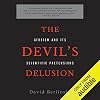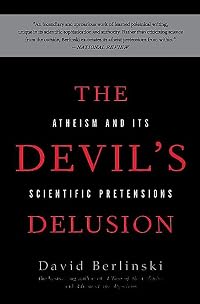
The Devil's Delusion: Atheism and its Scientific Pretensions
by David Berlinski
On This Page
Description
Militant atheism is on the rise. In recent years Richard Dawkins, Sam Harris, Daniel Dennett, and Christopher Hitchens have produced a steady stream of best-selling books denigrating religious belief. These authors are merely the leading edge of a larger movement that includes much of the scientific community.In response, mathematician David Berlinski, himself a secular Jew, delivers a biting defense of religious thought. The Devil's Delusion is a brilliant, incisive, and funny book that show more explores the limits of science and the pretensions of those who insist it is the ultimate to show lessTags
Recommendations





















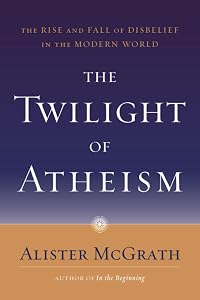

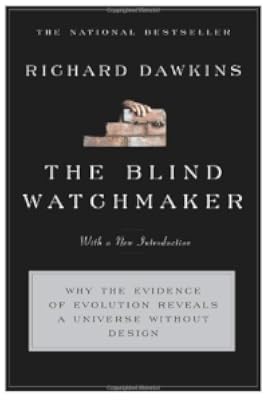
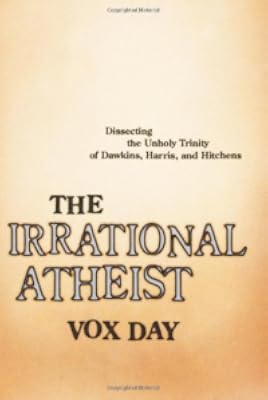
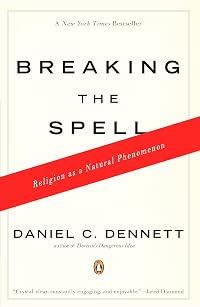















Member Recommendations
Member Reviews
Berlinski totally redeems himself
To post a review of a book on a controversial topic is to invite abuse from one side or the other, so on one level I would have preferred to keep silent, but in fairness to the author I felt I needed to review this book since I gave a (deservedly) negative review to his last book.
I've bought most of the books responding to the "New Atheists", and I've read about half of them so far. In my opinion, while John F. Haught's _God and the New Atheism_ is the most professional of the lot, _The Devil's Delusion_ is the most impressive rhetorically. Someone at National Review Online said that Christopher Hitchens is like the little girl with the curl, in that when he is bad he is horrid, but when he is good, he show more is very, very good; perhaps the same is true of Berlinski. This is not to say that their styles are similar: Hitchens seems quite careful to say exactly what he means (even if what he means to say is wrong), while Berlinski seems willing to sacrifice precision in order to bring a point home, but both can be quite talented polemicists when their hearts are in it and when they can manage to stay focused. Here, Berlinski's armchair-philosopher approach seems effective to me, and it makes this book much more interesting and thought-provoking than some of the other books by like-minded authors.
Oh, there's plenty to criticize about _The Devil's Delusion_, and I'm not saying that he's won the debate (as if it were even possible for this debate to have a winner), but I'm glad I bought and read this book, and I think many of you who can give it a sympathetic reading may also find it worth your time and money. show less
To post a review of a book on a controversial topic is to invite abuse from one side or the other, so on one level I would have preferred to keep silent, but in fairness to the author I felt I needed to review this book since I gave a (deservedly) negative review to his last book.
I've bought most of the books responding to the "New Atheists", and I've read about half of them so far. In my opinion, while John F. Haught's _God and the New Atheism_ is the most professional of the lot, _The Devil's Delusion_ is the most impressive rhetorically. Someone at National Review Online said that Christopher Hitchens is like the little girl with the curl, in that when he is bad he is horrid, but when he is good, he show more is very, very good; perhaps the same is true of Berlinski. This is not to say that their styles are similar: Hitchens seems quite careful to say exactly what he means (even if what he means to say is wrong), while Berlinski seems willing to sacrifice precision in order to bring a point home, but both can be quite talented polemicists when their hearts are in it and when they can manage to stay focused. Here, Berlinski's armchair-philosopher approach seems effective to me, and it makes this book much more interesting and thought-provoking than some of the other books by like-minded authors.
Oh, there's plenty to criticize about _The Devil's Delusion_, and I'm not saying that he's won the debate (as if it were even possible for this debate to have a winner), but I'm glad I bought and read this book, and I think many of you who can give it a sympathetic reading may also find it worth your time and money. show less
This is one of the most important books I've read in scientific literature "for the layman". Written by a secular Jewish scientist and mathematician, this book explores what science really does know and what it does not know. It's an examination of the facts without the philosophical BS that tends to subjectively dilute what little we know. Among the topics are the existence of God and the theory of evolution.
The reason I love this book is because it is incredibly and thoroughly logical. And if it is biased to anything, it is biased to logic itself. Not only does this book discuss the facts in black in white, but you find yourself thinking afterwards of what those facts could mean - without the sticky, oppressive film of an author's show more opinions.
Militant atheistic views are discussed in detail and weighed against themselves to show that there isn't a lot of sense - if any - to them. It's amazing how similar atheism and radial religious thought are so similar: both require a tremendous amount of faith. Though I very rarely re-read books, this will certainly be a book I read several times. There just isn't any way to soak in all of what the author has to say in just one reading. show less
The reason I love this book is because it is incredibly and thoroughly logical. And if it is biased to anything, it is biased to logic itself. Not only does this book discuss the facts in black in white, but you find yourself thinking afterwards of what those facts could mean - without the sticky, oppressive film of an author's show more opinions.
Militant atheistic views are discussed in detail and weighed against themselves to show that there isn't a lot of sense - if any - to them. It's amazing how similar atheism and radial religious thought are so similar: both require a tremendous amount of faith. Though I very rarely re-read books, this will certainly be a book I read several times. There just isn't any way to soak in all of what the author has to say in just one reading. show less
Perspicuous and perspicacious, intelligible and wise, the Devil's Delusion is mandatory reading for anyone with "the vague sense of being treated contemptuously by scientists and biologists." Berlinski masterfully takes matters of theology and atheism from the laboratory and puts them back in the chapel of faith, where they belong. Simply put, science is the faithful practice of physical observation, religion the faithful practice of spiritual observation. But conflate them public figures like Richard Dawkins, Christopher Hitchens, and Ricky Gervais do. And thus the necessity of this book. Berlinski, it should be noted, isn't a believer, but he is intellectually honest and fair. And funny and entertaining. This makes him worth reading.
This review is written with a GPL 4.0 license and the rights contained therein shall supersede all TOS by any and all websites in regards to copying and sharing without proper authorization and permissions. Crossposted at WordPress, Blogspot & Librarything by Bookstooge’s Exalted Permission
Title: The Devil's Delusion: Atheism and its Scientific Pretensions
Series: ----------
Author: David Berlinski
Rating: 4 of 5 Stars
Genre: Non-Fiction
Pages: 258
Format: Digital Edition
Synopsis:
The title really does sum this up. Written as a foil to Dawkin's The God Delusion, Berlinski, a non-practicing Jew, shows just how shaky the ground is, philosophically AND scientifically, that many out-spoken atheists stand on.
Using humor, sarcasm and other rather show more ham handed approaches, Berlinski pokes the High Priests of Scyenze and lets the hot air out of them, much like a balloon. He doesn't approach things form an angle of “They are wrong and I'm right” but more of a “their attitude is untenable given their arrogant, boasting statements about Faith and Religion”.
My Thoughts:
I had a hard time with this. Even while I agreed with much of what Berlinski wrote, I am not a fan of the style he uses, ie, poking the bear with a stick. The problem is, people like Hawkings, Dawkins, Hitchens, Harris, etc, NEED to be poked. They are arrogant, proud, boastful and self-centered and all of their might and effort is put forth proving that God doesn't exist just so that they don't have to kneel before Him. Reading this was like getting a splinter removed with a needle. It was necessary and good but you don't like the process.
I was high lighting sentences left and right on my kindle but I don't care enough to type them all out. Honestly, I don't know if I was the target audience for this or not. Berlinski is an Evolutionist but realizes that the pat “We Have All the Answers” attitude put out by the scientific community as a whole is a bunch of bologna. He pokes and pokes and shows that no, they don't have all the answers. In fact, some of the contortions they must go through make the planetary epicycles of Ptolemy look positively straight!
The biggest thing I got was that most of the people he mentions by name are arrogant blowhards and that Pride shapes how they think and how they approach existence itself. Pride is what led to Satan's fall from grace and Berlinski shows how Pride is still blinding people today, even people of great intellect.
Recommended as a Counter Cultural Argument against the monolithic religion of our day, Scyenze.
★★★★☆ show less
Title: The Devil's Delusion: Atheism and its Scientific Pretensions
Series: ----------
Author: David Berlinski
Rating: 4 of 5 Stars
Genre: Non-Fiction
Pages: 258
Format: Digital Edition
Synopsis:
The title really does sum this up. Written as a foil to Dawkin's The God Delusion, Berlinski, a non-practicing Jew, shows just how shaky the ground is, philosophically AND scientifically, that many out-spoken atheists stand on.
Using humor, sarcasm and other rather show more ham handed approaches, Berlinski pokes the High Priests of Scyenze and lets the hot air out of them, much like a balloon. He doesn't approach things form an angle of “They are wrong and I'm right” but more of a “their attitude is untenable given their arrogant, boasting statements about Faith and Religion”.
My Thoughts:
I had a hard time with this. Even while I agreed with much of what Berlinski wrote, I am not a fan of the style he uses, ie, poking the bear with a stick. The problem is, people like Hawkings, Dawkins, Hitchens, Harris, etc, NEED to be poked. They are arrogant, proud, boastful and self-centered and all of their might and effort is put forth proving that God doesn't exist just so that they don't have to kneel before Him. Reading this was like getting a splinter removed with a needle. It was necessary and good but you don't like the process.
I was high lighting sentences left and right on my kindle but I don't care enough to type them all out. Honestly, I don't know if I was the target audience for this or not. Berlinski is an Evolutionist but realizes that the pat “We Have All the Answers” attitude put out by the scientific community as a whole is a bunch of bologna. He pokes and pokes and shows that no, they don't have all the answers. In fact, some of the contortions they must go through make the planetary epicycles of Ptolemy look positively straight!
The biggest thing I got was that most of the people he mentions by name are arrogant blowhards and that Pride shapes how they think and how they approach existence itself. Pride is what led to Satan's fall from grace and Berlinski shows how Pride is still blinding people today, even people of great intellect.
Recommended as a Counter Cultural Argument against the monolithic religion of our day, Scyenze.
★★★★☆ show less
I don't know what I wanted or expected from this book. From the title and cover, one can see that the author relates Dawkins' God Delusion and instead covers atheism. I suppose being an atheist myself, I would be drawn to the title. "What scientific pretensions?" I thought to myself. So I took it out of the library and well, I hated this book. Although the author makes valid points, I can't help but think he is sneering as he says them. That's just the vibe I get. I suppose it is bias.
The main argument is that science itself relies on faith in some cases, especially when it comes to things that can't be directly observed. This is quite true. We can say that the sky is blue or that protons and neutrons are made up of quarks, but we don't show more know why things are as they are. This point I concede. When you get deep enough into the why of something, it almost becomes metaphysics. Why is everything? Why is the universe the universe? Why isn't it like this? Why is the Earth the perfect distance from the Sun? Why does life exist at all?
Now I don't know the answers to these questions, and neither do many scientists, but I don't need to bring God(Magic Sky Man) into the equation to explain it all away so that I can sleep at night. I just hope that eventually a scientific reason will pop up. I suppose that could be considered faith, in many ways.
The author also speaks of morals and morality, pointing out that it wasn't the Vatican that ordered the Final Solution or created the Atomic Bomb. Now, although I am an atheist I do actually agree with the Golden Rule. I didn't automatically turn to bawdy deviancy and hedonism to get my kicks. Why is that? I don't know. I never felt the need to do so. I certainly haven't felt the influence of Magic Sky Man in any of these times, prodding me to do the right thing.
In any case, the author demonstrates a good deal of knowledge in the subject of physics. As to the Big Bang, he knows the problems inherent in it with the combination of the very large with the incredibly small. This is a very weak point in physics and is considered the "Holy Grail" if I may use the term. Many a physicist would love to find the Grand Unifying theory. However, the Big Bang can be inferred. There is evidence of it all around us. There is the Cosmic Background Radiation, the Red Shift of the Stars and Galaxies and tons of other stuff. I mean, I guess if Magic Sky Man floats your boat, the entirety of creation could be evidence for his existence, but that would require a great deal of proof.
All in all, though he makes many good points, this book didn't really sit well with me. All I got out of it was Cognitive Dissonance. show less
The main argument is that science itself relies on faith in some cases, especially when it comes to things that can't be directly observed. This is quite true. We can say that the sky is blue or that protons and neutrons are made up of quarks, but we don't show more know why things are as they are. This point I concede. When you get deep enough into the why of something, it almost becomes metaphysics. Why is everything? Why is the universe the universe? Why isn't it like this? Why is the Earth the perfect distance from the Sun? Why does life exist at all?
Now I don't know the answers to these questions, and neither do many scientists, but I don't need to bring God(Magic Sky Man) into the equation to explain it all away so that I can sleep at night. I just hope that eventually a scientific reason will pop up. I suppose that could be considered faith, in many ways.
The author also speaks of morals and morality, pointing out that it wasn't the Vatican that ordered the Final Solution or created the Atomic Bomb. Now, although I am an atheist I do actually agree with the Golden Rule. I didn't automatically turn to bawdy deviancy and hedonism to get my kicks. Why is that? I don't know. I never felt the need to do so. I certainly haven't felt the influence of Magic Sky Man in any of these times, prodding me to do the right thing.
In any case, the author demonstrates a good deal of knowledge in the subject of physics. As to the Big Bang, he knows the problems inherent in it with the combination of the very large with the incredibly small. This is a very weak point in physics and is considered the "Holy Grail" if I may use the term. Many a physicist would love to find the Grand Unifying theory. However, the Big Bang can be inferred. There is evidence of it all around us. There is the Cosmic Background Radiation, the Red Shift of the Stars and Galaxies and tons of other stuff. I mean, I guess if Magic Sky Man floats your boat, the entirety of creation could be evidence for his existence, but that would require a great deal of proof.
All in all, though he makes many good points, this book didn't really sit well with me. All I got out of it was Cognitive Dissonance. show less
In recent centuries humanity has undergone a fundamental change in attitude toward existential matters. Science has become increasingly attractive as the only requirement for understanding our universe. The human spirit has become increasingly irrelevant as humanity hurtles toward a materialist view of its existence. Science hasn’t proven the existence of the soul, so why should we need to be aware of it?
To deny the existence of a human spirit is to deny oneself an afterlife. I have a genuine concern for the sanity of those who believe that our current minuscule lifespan will be the sum total of our individual existence.
If humans possess an intangible soul, why is the concept of a benevolent and non-interfering God not possible? A show more God that did not create the universe, but plays an immutable role in the intelligent design of life?
The Devil’s Delusion is a defense against the militant atheism encroaching upon modern human society. Berlinsky is not a creationist as some scientists accuse him of being. He writes as an impartial expert witness, citing copious examples of science’s limitations with precise and withering logic, and an entertaining sense of humor. I am thankful that he has written this book. show less
To deny the existence of a human spirit is to deny oneself an afterlife. I have a genuine concern for the sanity of those who believe that our current minuscule lifespan will be the sum total of our individual existence.
If humans possess an intangible soul, why is the concept of a benevolent and non-interfering God not possible? A show more God that did not create the universe, but plays an immutable role in the intelligent design of life?
The Devil’s Delusion is a defense against the militant atheism encroaching upon modern human society. Berlinsky is not a creationist as some scientists accuse him of being. He writes as an impartial expert witness, citing copious examples of science’s limitations with precise and withering logic, and an entertaining sense of humor. I am thankful that he has written this book. show less
Berlinski recapitulates most of the familiar arguments between atheists and (mostly Christian) believers; I don't think he treads any new ground.
The ten chapters are more like related essays rather than being steps in developing an overall thesis.
It's an accessible introduction to the subject, but not a scholarly exegesis (although Berlinski is a fairly prominent Public Intellectual).
The book lacks a bibliography, footnotes or citations. The index is incomplete and IMO somewhat haphazard (for instance, the Penrose quote on page xv is neither sourced nor indexed).
The ten chapters are more like related essays rather than being steps in developing an overall thesis.
It's an accessible introduction to the subject, but not a scholarly exegesis (although Berlinski is a fairly prominent Public Intellectual).
The book lacks a bibliography, footnotes or citations. The index is incomplete and IMO somewhat haphazard (for instance, the Penrose quote on page xv is neither sourced nor indexed).
Members
- Recently Added By
Lists

Top Five Books of 2020
982 works; 348 members
Author Information

22+ Works 3,415 Members
David Berlinski is an essayist, philosopher, and mathematician. He holds a Ph.D. from Princeton and has spent many years in various academic positions across America and abroad
Common Knowledge
- Blurbers
- Behe, Michael J.; Buckley, William F.; Mansfield, Harvey; Bethell, Tom
Classifications
- Genres
- Religion & Spirituality, Nonfiction, Philosophy, General Nonfiction
- DDC/MDS
- 215 — Religion Philosophy & theory of religion Science and religion
- LCC
- BL240.3 .B46 — Philosophy, Psychology and Religion Religions. Mythology. Rationalism Religions. Mythology. Rationalism Natural theology Religion and science
- BISAC
Statistics
- Members
- 528
- Popularity
- 56,578
- Reviews
- 14
- Rating
- (3.54)
- Languages
- English
- Media
- Paper, Audiobook, Ebook
- ISBNs
- 7
- ASINs
- 3