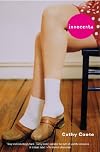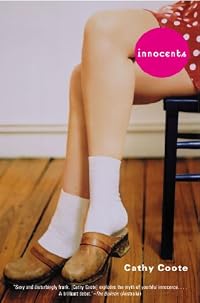
Innocents
by Cathy Coote
On This Page
Description
Written when Cathy Coote was nineteen, Innocents draws readers into the anatomy of an adolescent obsession. We all know that manipulating someone naïve and vulnerable into a sexual relationship to satisfy a twisted desire is wrong-even evil. But when the perpetrator is a sixteen-year-old schoolgirl, is she culpable? And if the victim is her thirty-four-year-old teacher, shouldn't he have known better? When the nameless young narrator of Innocents decides to seduce her teacher, she show more immediately realizes that the power of her sexuality is greater than she ever imagined. She leaves the aunt and uncle who are her guardians and moves in with her teacher; together, they quickly embark on a journey into their darkest desires. Unforgettable, disturbing, and morally complex, Innocents permanently unsettles our notions of innocence, experience, and power. show lessTags
Recommendations





Member Reviews
It's difficult to read "Innocents" without having Vladimir Nabokov's "Lolita" come to mind. Quite honestly, I don't think that the author intends you to. This is, conceptually, a mirror image Nabokov's impossibly beautiful, daring book. Instead of Humbert Humbert as a predator, in "Innocents," we have the Dolores Haze character as shameless manipulator, fully cognizant of what she's doing and what it might get her.
This seems to be a too-easy flip, a book conceived just by moving some numbers to the other side of the equation, but it's not necessarily badly written, and while psychopathy -- of the pro- and anti-social kinds -- seems to be fashionable diagnosis these days, Coote does work hard to try to demonstrate the unfathomable show more chilliness of our female lead's worldview.
But any readers are moved to pick up "Innocents" specifically because they want to read about a certain kind of erotic adventure, perhaps the last one that's still truly taboo in today's society, they're likely to be disappointed. It's not that the book isn't graphic: the female narrator knows how attractive she is to older men, and she lovingly describes her own physical attributes and those of her lover. Their sex scenes are described unblushingly and at length. But this shouldn't be mistaken for a love story: The relationship at the center of this novel is all power exchange. There's very little erotic heat generated here: the narrator confesses to the reader that she never pleasured herself, nor had much interest in that sort of thing. Perceptive and logical to a fault, the book expands into a series of heartless, calculating interlocking power games. She loves to please, but is, in some ways, sexually cold. He submits to her every whim, but she feels a keen emptiness. He gives up much of made up his life and, for much of the book, gets very little in return. The phrase "You complete me" never gets uttered here, but I can't think of a more depressing context to apply it to. Whatever you can say about "Innocents," you can't say, as one of Lolita's translator's said of Nabokov's novel, that it's the only convincing love story of its century.
You might call "Innocents" an intermittently impressive performance: I spent a lot of time trying to figure out if it was a good novel or a very bad one. Coote certainly doesn't lose command of her material. But I imagine that many readers will find "Innocents" rather unpleasant, if not for its subject matter then for its main characters, one of whom may come off as a heartless manipulator while the other plays the love-struck sop. But my biggest problem with this one was its over-reliance on its own structure, which often seems as single-minded and unyielding as the narrator herself. Each element here seems to reflect another, perhaps a bit too perfectly, each attempt to establish something human and genuine seems to rub up against a terrifyingly empty space. You might call Coote's debut impressively constructed, but there were times I just found it claustrophobic, too clever in its design. It's got sex and transgression, but — oh my, am I really going to say this — where's the love? show less
This seems to be a too-easy flip, a book conceived just by moving some numbers to the other side of the equation, but it's not necessarily badly written, and while psychopathy -- of the pro- and anti-social kinds -- seems to be fashionable diagnosis these days, Coote does work hard to try to demonstrate the unfathomable show more chilliness of our female lead's worldview.
But any readers are moved to pick up "Innocents" specifically because they want to read about a certain kind of erotic adventure, perhaps the last one that's still truly taboo in today's society, they're likely to be disappointed. It's not that the book isn't graphic: the female narrator knows how attractive she is to older men, and she lovingly describes her own physical attributes and those of her lover. Their sex scenes are described unblushingly and at length. But this shouldn't be mistaken for a love story: The relationship at the center of this novel is all power exchange. There's very little erotic heat generated here: the narrator confesses to the reader that she never pleasured herself, nor had much interest in that sort of thing. Perceptive and logical to a fault, the book expands into a series of heartless, calculating interlocking power games. She loves to please, but is, in some ways, sexually cold. He submits to her every whim, but she feels a keen emptiness. He gives up much of made up his life and, for much of the book, gets very little in return. The phrase "You complete me" never gets uttered here, but I can't think of a more depressing context to apply it to. Whatever you can say about "Innocents," you can't say, as one of Lolita's translator's said of Nabokov's novel, that it's the only convincing love story of its century.
You might call "Innocents" an intermittently impressive performance: I spent a lot of time trying to figure out if it was a good novel or a very bad one. Coote certainly doesn't lose command of her material. But I imagine that many readers will find "Innocents" rather unpleasant, if not for its subject matter then for its main characters, one of whom may come off as a heartless manipulator while the other plays the love-struck sop. But my biggest problem with this one was its over-reliance on its own structure, which often seems as single-minded and unyielding as the narrator herself. Each element here seems to reflect another, perhaps a bit too perfectly, each attempt to establish something human and genuine seems to rub up against a terrifyingly empty space. You might call Coote's debut impressively constructed, but there were times I just found it claustrophobic, too clever in its design. It's got sex and transgression, but — oh my, am I really going to say this — where's the love? show less
While perusing one of the book communities I was apart of, I came across this book. The promise of intensive sex scenes certainly sparked my interest, but the initial premise of the characters also caught my eye. This book focuses on an age-gap relationship, and coming from such a thing, I was inspired to take on literature regarding this subject matter.
The plot is simple: A 16-year old girl falls for her 34-year old teacher, a la Lolita. But the complexities within the story really help to shape it. Once the book gets into their relationship, it starts to taper off into less fathomable circumstances. But, isn't fiction supposed to be slightly unrealistic?
Coote was only 19 when she wrote this book, but her use of the metaphorical show more language is amazing. What really grabbed me about this book was how easily it was to identify with the nameless narrator. Not just because she was dating an older man (much like I had), but the way she spoke of her relationship as more a game than an actual event struck an all-too-familiar chord. The book plays out as a confessional letter to her ex-lover, explaining bit by bit the details of their relationship. It reminds me of an unsent letter I wrote to an old flame years ago, chronicling our relationship and the unspoken words surrounding it.
On Amazon (since it's my prime source for any book review), this book received mixed reviews. It was criticized, though, for the sexual scenes being too "graphic" and "obscene". They were detailed, but I didn't think they were horrific. It's certainly no Harlequin Romance cheese, but it doesn't use unfruitful language like some four-letter c-words I know every five seconds, either. Or maybe my generation is just numb to those sorts of perverse things. I think the sex scenes really make the meat of the book, since the most character development happens within them.
This book was an enjoyable read mainly because it encouraged me to write a letter of my own. As I began writing the letter, I noticed my style mimicked hers: my paragraphs were short and splotchy, the original topic was dodged with a few irrelevant ones, and my writing took on a second-person narrative. I've always believed the best books are those that inspire you.
I also must commend this book for actually having an ending. Far too often I read books that merely end without much of a conclusion. This story is not for everyone, and I believe many people will have difficulty identifying with the characters, given their eccentricities. I enjoyed it immensely though, and could easily read it again. show less
The plot is simple: A 16-year old girl falls for her 34-year old teacher, a la Lolita. But the complexities within the story really help to shape it. Once the book gets into their relationship, it starts to taper off into less fathomable circumstances. But, isn't fiction supposed to be slightly unrealistic?
Coote was only 19 when she wrote this book, but her use of the metaphorical show more language is amazing. What really grabbed me about this book was how easily it was to identify with the nameless narrator. Not just because she was dating an older man (much like I had), but the way she spoke of her relationship as more a game than an actual event struck an all-too-familiar chord. The book plays out as a confessional letter to her ex-lover, explaining bit by bit the details of their relationship. It reminds me of an unsent letter I wrote to an old flame years ago, chronicling our relationship and the unspoken words surrounding it.
On Amazon (since it's my prime source for any book review), this book received mixed reviews. It was criticized, though, for the sexual scenes being too "graphic" and "obscene". They were detailed, but I didn't think they were horrific. It's certainly no Harlequin Romance cheese, but it doesn't use unfruitful language like some four-letter c-words I know every five seconds, either. Or maybe my generation is just numb to those sorts of perverse things. I think the sex scenes really make the meat of the book, since the most character development happens within them.
This book was an enjoyable read mainly because it encouraged me to write a letter of my own. As I began writing the letter, I noticed my style mimicked hers: my paragraphs were short and splotchy, the original topic was dodged with a few irrelevant ones, and my writing took on a second-person narrative. I've always believed the best books are those that inspire you.
I also must commend this book for actually having an ending. Far too often I read books that merely end without much of a conclusion. This story is not for everyone, and I believe many people will have difficulty identifying with the characters, given their eccentricities. I enjoyed it immensely though, and could easily read it again. show less
If you read the first 30 and last 30 pages you've read the novel. In between are umpteen variations on how our precocious 16-y.o. teases and seduces the older man she has latched onto. It gets a bit boring but I read on to see if there was any development. There wasn't till the very end, and that wasn't convincing.
I liked it. I would see why some people wouldn't. Innocent's really tears the assumption that everything is simple to shreds. A perverted teenager seducing an innocent 30 something year old man? What? Yep. I loved how she wrote it all in letter form to her lover. I loved the acceptance on his part, the unconditional love he had for her. It started getting old how well he treated her....but if you want drama,keep reading. It irked me a little that the girl was such a bitch, and it made her a little less real to me. Lots of metaphors. Lots of big words. Lots of sex. My kind of book. I will say, I hated the end. The end kind of knocks it down a star and a half for me.
Innocents is basically the story of a 16 year girl who seduces her teacher. So enamored by her is he, that he quits his job, rents them a new house and takes her away from her life. They have sex constantly and she's constantly manipulating him.
It's written sort of as a letter. Somewhere in the first 50 pages or so we discover that she's writing down an account of their affair and that this account is being written to her lover / the teacher, at his request. There are many sentences that end with 'darling,' which is never pleasant.
I read this because someone I used to know was scandalized and titillated by it. While 16 year old girls aren't quite my cup of tea, I do have an interest in the darker sides of sexuality. However, it was show more written by a 19 year old. The audience was clearly people who wanted to be scandalized and titillated, without the benefit of actually having to consider alternative sexual lifestyles.
In summation : It bored me and I was not scandalized or titillated. show less
It's written sort of as a letter. Somewhere in the first 50 pages or so we discover that she's writing down an account of their affair and that this account is being written to her lover / the teacher, at his request. There are many sentences that end with 'darling,' which is never pleasant.
I read this because someone I used to know was scandalized and titillated by it. While 16 year old girls aren't quite my cup of tea, I do have an interest in the darker sides of sexuality. However, it was show more written by a 19 year old. The audience was clearly people who wanted to be scandalized and titillated, without the benefit of actually having to consider alternative sexual lifestyles.
In summation : It bored me and I was not scandalized or titillated. show less
This book was almost adorable where it seemed to be attempting at disturbing. It's enjoyable and the ending is not terribly tragic as the abstract would have you believe so don't fear it.
Poor attempt to write a new version of Lolita from the young girl's perspective. The sexual scenes were liberally used throughout the novel and grew monotonous after a while. The writing was fine, but the story just didn't really go anywhere.
Members
- Recently Added By
Author Information
1 Work 174 Members
Common Knowledge
- Canonical title
- Innocents
Classifications
Statistics
- Members
- 174
- Popularity
- 187,316
- Reviews
- 11
- Rating
- (3.14)
- Languages
- Dutch, English
- Media
- Paper, Audiobook, Ebook
- ISBNs
- 5
- ASINs
- 4