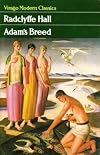
Adam's Breed
by Radclyffe Hall
On This Page
Description
Gian-Luca has a rocky start in life, his mother dying in childbirth, his father unknown, and he is sent to grow up with his grandparents amongst an Italian immigrant community on Old Compton Street. He becomes a waiter, where he learns the value of hard work, and soon lands a promotion to head waiter in a fine-dining restaurant. He excels in this position, and it is not long before he meets Maddelena, to whom he gets married. It seems he has found a happy ending. However, despite his show more marriage to Maddelena and his achievements in his work, he finds he is not happy, after all. Life loses its joy, and he comes to despise those he serves in the restaurant, seeing in the diners the ugly side of society. Disconsolate, he sets out to seek a more fulfilling life, and becomes a hermit, trying to reconnect with nature, and hoping to find peace outside of society. Despite winning awards upon its publication, Adam's Breed sank into obscurity following the censorship of Hall's later novel The Well of Loneliness. An early example of immigrant narratives, yet still relevant today, it is time Gian-Luca's stirring tale found its way back to the canon. show lessTags
Recommendations









Member Reviews
Gian-Luca's mother died in childbirth, leaving her illegitimate son to be raised by his grandparents. Fabio and Teresa live in an Italian community in London; Fabio is a naturalized citizen. Gian-Luca is "English in the eyes of the law." He's different from all the boys in school both because of his ethnic background, and because he has no father. And worse yet, Teresa sees Gian-Luca as the cause of her daughter's death, and is unable to show him any affection. He grows up lonely and searching for love.
Fabio's salumeria is the one source of beauty in Gian-Luca's early life:
The shop! All his life Gian-Luca remembered those first impressions of the shop; the size of it, the smell of it, the dim, mysterious gloom of it -- a gloom from show more which strange objects would continually jump out and try to hit you in the face-- but above all the smell, that wonderful smell that belongs to the Salumeria. The shop smelt of sawdust and cheeses and pickles and olives and sausages and garlic; the shop smelt of oil and cans and Chianti and a little of split peas and lentils; the shop smelt of coffee and sour brown bread and very faintly of vanilla; the shop smelt of people, of Fabio's boot blacking, and of all the boots that went in and out unblacked; it also smelt of Old Compton Street, a dusty, adventurous smell. (p. 27)
When Gian-Luca leaves school, he begins a career as a waiter, and eventually becomes head waiter in The Doric, London's finest restaurant. Gian-Luca is talented and driven, but empty, lacking the emotional and spiritual connections so important to personal well-being. His life is a quest for identity, and for love.
Radclyffe Hall brings the Italian immigrant community to life, with delicious food and a rich supporting cast. I enjoyed getting to know the characters and the early 20th-century restaurant business. But Adam's Breed is a melancholy book that explores themes of love, God, and human nature. By the end it had evolved beyond its initial premise to a moving story of one man's search for self, and meaning. show less
Fabio's salumeria is the one source of beauty in Gian-Luca's early life:
The shop! All his life Gian-Luca remembered those first impressions of the shop; the size of it, the smell of it, the dim, mysterious gloom of it -- a gloom from show more which strange objects would continually jump out and try to hit you in the face-- but above all the smell, that wonderful smell that belongs to the Salumeria. The shop smelt of sawdust and cheeses and pickles and olives and sausages and garlic; the shop smelt of oil and cans and Chianti and a little of split peas and lentils; the shop smelt of coffee and sour brown bread and very faintly of vanilla; the shop smelt of people, of Fabio's boot blacking, and of all the boots that went in and out unblacked; it also smelt of Old Compton Street, a dusty, adventurous smell. (p. 27)
When Gian-Luca leaves school, he begins a career as a waiter, and eventually becomes head waiter in The Doric, London's finest restaurant. Gian-Luca is talented and driven, but empty, lacking the emotional and spiritual connections so important to personal well-being. His life is a quest for identity, and for love.
Radclyffe Hall brings the Italian immigrant community to life, with delicious food and a rich supporting cast. I enjoyed getting to know the characters and the early 20th-century restaurant business. But Adam's Breed is a melancholy book that explores themes of love, God, and human nature. By the end it had evolved beyond its initial premise to a moving story of one man's search for self, and meaning. show less
Not my favorite. To be honest, I was rather bored while I read this book. The beginning drags out, starting with the main character's birth and infancy. Gian Luca is orphaned from the start of his life; his mother dies in delivery, and his father is unknown to all but his silent mother. His grandmother, Teresa, loses her religion, and basically her heart, when her daughter dies. She raises the boy with all the care and sustenance his physical body needs, but with not a drop of love or affection. His grandfather, Fabio, tries to supply all the love the boy is deprived of, but Gian Luca knows something is lacking. He misses maternal love.
An interesting premise, yet after the opening chapter, the author focuses on the infant Gian Luca's show more perspective on growing older and distances the tension that she sets up in the story of Teresa and Fabio and their daughter Olga. Instead, we read about how an infant may perceive the world, the focus on hunger gradually broadening to other interests, the egocentrism that all children possess. While I found these chapters to be technically fascinating, with a point of view that isn't normally done in books, the reading was slow going. Over the next several chapters, Gian Luca grows into a lonely and isolated child, who believes that he has no father and no country. Teresa agrees with him, and teaches him his motto for life, that he has himself and needs nothing else.
About a third of the way into the book, Gian Luca becomes a teenager and quickly passes into adulthood, all while working as a waiter. His grandparents run a salumeria, and since it is a given that Gian Luca will work when he is of that age, being a waiter is an ideal choice. His life has always been centered around food, and that is a huge theme of the book, food that nourishes us and can also harm us, being fed physically and being fed spiritually. Gian Luca is a born server, according to the author, and quickly rises to position of head waiter at the prestigious Doric restaurant. He meets his wife, Maddalena, there, and yet her love for him is still not enough to fill the void in his heart. Much of his time at the Doric is consumed with his tormented inner quest to find himself and understand his spirit. His grandmother's motto, that all he needs is himself, proves to be an illusion that unravels as he ages.
The narrative spurts forward with interesting passages, before dropping again to a plodding pace. I alternated between interest that propelled me through several chapters at a time, to a vague curiosity that lasted a couple of pages before I set it aside. I'm not sure I can explain why I kept feelings lags when I read this book, but I think it falls into that old writer's problem of describing something mundane without being boring in the writing itself. This novel is about Gian Luca's life, and much of it is in the details of the daily grind. Also, a good portion of the novel centers on introspection. None of these are bad in themselves, but the writing needs a spice to liven them so that we want to read about these events. Either a plot device that brings more action, a side plot that ties into the daily life or the philosophy but delivers comic relief or suspense, or a relationship that is full of tension that parallels the inner thoughts - some technique that drives these other aspects of the novel forward. After all, I wouldn't want to sit and watch a person in deep thought, and I don't really want to read it, either, unless more is going on. My interest always perked when the author introduced more action in the plot, such as the war breaking out or Gian Luca meeting Maddalena.
Hall is a good writer. The details are interesting and evocative, and the spiritual quest that Gian Luca pursues is fascinating, with some great symbolism such as the blind child and the blind bird, and ultimately satisfying. If I had expected more of a metaphysical read and less of a novel, I would not have been so disappointed. show less
An interesting premise, yet after the opening chapter, the author focuses on the infant Gian Luca's show more perspective on growing older and distances the tension that she sets up in the story of Teresa and Fabio and their daughter Olga. Instead, we read about how an infant may perceive the world, the focus on hunger gradually broadening to other interests, the egocentrism that all children possess. While I found these chapters to be technically fascinating, with a point of view that isn't normally done in books, the reading was slow going. Over the next several chapters, Gian Luca grows into a lonely and isolated child, who believes that he has no father and no country. Teresa agrees with him, and teaches him his motto for life, that he has himself and needs nothing else.
About a third of the way into the book, Gian Luca becomes a teenager and quickly passes into adulthood, all while working as a waiter. His grandparents run a salumeria, and since it is a given that Gian Luca will work when he is of that age, being a waiter is an ideal choice. His life has always been centered around food, and that is a huge theme of the book, food that nourishes us and can also harm us, being fed physically and being fed spiritually. Gian Luca is a born server, according to the author, and quickly rises to position of head waiter at the prestigious Doric restaurant. He meets his wife, Maddalena, there, and yet her love for him is still not enough to fill the void in his heart. Much of his time at the Doric is consumed with his tormented inner quest to find himself and understand his spirit. His grandmother's motto, that all he needs is himself, proves to be an illusion that unravels as he ages.
The narrative spurts forward with interesting passages, before dropping again to a plodding pace. I alternated between interest that propelled me through several chapters at a time, to a vague curiosity that lasted a couple of pages before I set it aside. I'm not sure I can explain why I kept feelings lags when I read this book, but I think it falls into that old writer's problem of describing something mundane without being boring in the writing itself. This novel is about Gian Luca's life, and much of it is in the details of the daily grind. Also, a good portion of the novel centers on introspection. None of these are bad in themselves, but the writing needs a spice to liven them so that we want to read about these events. Either a plot device that brings more action, a side plot that ties into the daily life or the philosophy but delivers comic relief or suspense, or a relationship that is full of tension that parallels the inner thoughts - some technique that drives these other aspects of the novel forward. After all, I wouldn't want to sit and watch a person in deep thought, and I don't really want to read it, either, unless more is going on. My interest always perked when the author introduced more action in the plot, such as the war breaking out or Gian Luca meeting Maddalena.
Hall is a good writer. The details are interesting and evocative, and the spiritual quest that Gian Luca pursues is fascinating, with some great symbolism such as the blind child and the blind bird, and ultimately satisfying. If I had expected more of a metaphysical read and less of a novel, I would not have been so disappointed. show less
Ratings
Members
- Recently Added By
Lists

I Can't Finish This Book
189 works; 22 members
Author Information

25+ Works 3,918 Members
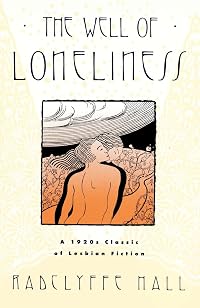
Born Marguerite Radclyffe Hall, the writer called herself John as an adult. Educated at King's College, London, Hall began her career writing poetry set to music and performed prominently before World War I. Under the influence of the socialite Mabel Batten, Hall became devoutly Roman Catholic and met Una, Lady Troubridge, who was to become Hall's show more lifelong companion. The Well of Loneliness (1928), a frank and touching portrayal of lesbian sensibilities, was banned in Britain and America (despite George Bernard Shaw's comment that the novel told of things people should know about), nearly ruining her literary career. Copies of the book were widely confiscated; censors expressed moral outrage, especially because Hall's characters showed no contrition for their "vices" and were portrayed sympathetically. Despite aggressive attempts at censorship, though, audiences clamored for the novel, which attained a strong popularity. Hall wrote of lesbianism as natural and pleaded for tolerance, yet her writing manifests a degree of guilt that in some way affirms her society's widespread prejudice that homosexuality was a deformity. Despite her fierce defense of The Well of Loneliness, none of Hall's later writing explicitly deals with homosexual themes. Still, though Hall was less self-accepting than contemporary gay writers, The Well of Loneliness endures as a relatively rare and valuable documentation of lesbian lives and aesthetics in the early twentieth century. (Bowker Author Biography) show less
Some Editions
Awards and Honors
Series
Belongs to Publisher Series
Common Knowledge
- Canonical title
- Adam's Breed
- Original title
- Adam's Breed
- Original publication date
- 1926
- Important places
- Soho, London, England, UK
- Dedication
- DEDICATED TO OUR THREE SELVES
- First words
- Teresa Boselli stood at the window staring down at Old Compton Street; at the greasy pavements, the greasy roadway, the carts, the intolerable slow-moving vans, those vans, that to Teresa's agonized ears, seemed to rumble mor... (show all)e loudly because of that window. -Chapter 1
- Original language
- English
- Canonical DDC/MDS
- 823.912
- Canonical LCC
- PR6015.A33
Classifications
Statistics
- Members
- 165
- Popularity
- 198,931
- Reviews
- 2
- Rating
- (3.55)
- Languages
- 6 — Danish, English, French, German, Italian, Swedish
- Media
- Paper, Ebook
- ISBNs
- 4
- ASINs
- 8