
Arna Bontemps-Langston Hughes Letters, 1925-1967
by Arna Wendell Bontemps, Langston Hughes
On This Page
Description
The work of Arna Bontemps and Langston Hughes is a celebration of the triumphant creative spirit in African-American life. From the welding of their friendship in 1925 until Hughes's death in 1967, this volume gathers the best of the forty-two years of correspondence between them. The first letters, written in the midst of the Harlem Renaissance, witness the struggle of two young writers searching for a voice and an identity. By 1941, both Bontemps and Hughes had achieved a certain degree of show more success, and had become increasingly involved in racial and social struggles. Finally, in the period between 1959 and 1967, we see them react to the civil rights movement. This fascinating collection makes an invaluable contribution to the understanding of twentieth century American culture and one of its most vital components, the African-American heritage which these two correspondents did so much to create. --From book cover. show lessTags
Recommendations













Member Reviews
This book gets 5 stars for its priceless historical value alone but there is in fact even much more to it. Nothing else in American/African-American history and literature comes even close to this volume because to date it represents the only comprehensive collected correspondence between two giants of African-American literature. That by itself is notable but possibly even more so is the span of time, as indicated in the title, covered. Bontemps and Hughes were both stars of the Harlem Renaissance but these collected letters only begin there and take readers through the writers' first-hand experiences of, and reports on, the Great Depression, life during World War II, and the thunderous rumblings of the 1960s Civil Rights Movement. show more
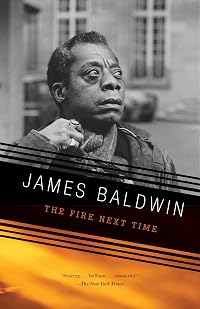
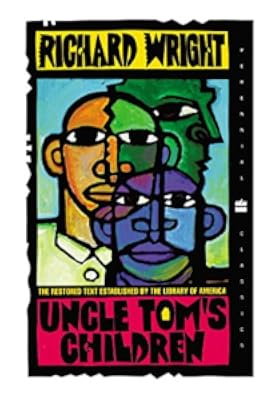
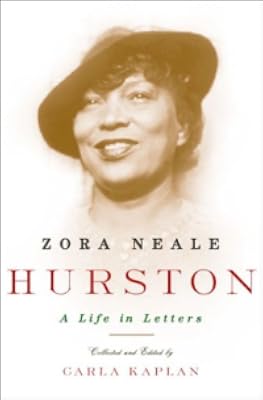
They also contain the kind of shared literary intimacies and insights you hope to find in such books. For example, Hughes writes the following to Bontemps on Feb 18, 1953: "If you'll tell me what Dick Wright's book is like (since I haven't it) I'll tell you about James Baldwin's Go Tell It on the Mountain which I've just finished: If it were written by Zora Hurston with her feeling for the folk idiom, it would probably be a quite wonderful book. Baldwin over-writes and over-poeticizes in images way over the heads of the folks supposedly thinking them--although it might be as the people would think if they could think that way..."
Whether or not you agree with Hughes' or Bontemps' assessments in such instances, the thrill comes from getting their uncensored straight-from-the-gut responses. This is the case whether they are dealing with literature, politics, race relations, mutual acquaintances, the development of various cultural movements, or their everyday struggles to survive and thrive as literary artists. Their voices as presented through these letters are beautifully undiluted but powerfully informed, and therefore an invaluable treasure for anyone who appreciates the idea of literary camaraderie, loves the Harlem Renaissance, or simply enjoys checking out writers at their unscripted best.
by Aberjhani show less
They also contain the kind of shared literary intimacies and insights you hope to find in such books. For example, Hughes writes the following to Bontemps on Feb 18, 1953: "If you'll tell me what Dick Wright's book is like (since I haven't it) I'll tell you about James Baldwin's Go Tell It on the Mountain which I've just finished: If it were written by Zora Hurston with her feeling for the folk idiom, it would probably be a quite wonderful book. Baldwin over-writes and over-poeticizes in images way over the heads of the folks supposedly thinking them--although it might be as the people would think if they could think that way..."
Whether or not you agree with Hughes' or Bontemps' assessments in such instances, the thrill comes from getting their uncensored straight-from-the-gut responses. This is the case whether they are dealing with literature, politics, race relations, mutual acquaintances, the development of various cultural movements, or their everyday struggles to survive and thrive as literary artists. Their voices as presented through these letters are beautifully undiluted but powerfully informed, and therefore an invaluable treasure for anyone who appreciates the idea of literary camaraderie, loves the Harlem Renaissance, or simply enjoys checking out writers at their unscripted best.
by Aberjhani show less
Hughes and Bontemps were lifelong friends and correspondents. The letters are full of wit, warmth, common sense, and resilience.
Ratings
Members
- Recently Added By
Author Information

51+ Works 1,524 Members
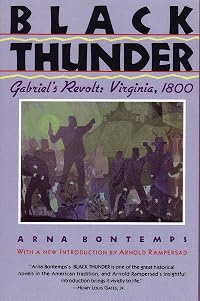
Arna Bontemps was one of many African American writers associated with Fisk University, where he taught for 20 years. He became a visiting professorship at Yale University and returned to Fisk to spend the last years of his life there. Bontemps grew up in the South and wrote of the condition and spirit of the southern black in memoirs and in show more fiction. His historical and topical novel Black Thunder (1936) is perhaps his best known, along with Drums at Dusk (1935). As an active leader in the Harlem Renaissance, however, Bontemps wrote prolifically in all genres and for children as well as adults. He produced several important collections of narratives about enslaved people and African American folk tales. Bontemps was a major anthologizer of Harlem Renaissance work and helped shape the new black writing as theoretician and critic. Bontemps died in 1973. (Bowker Author Biography) show less

253+ Works 14,583 Members
Langston Hughes, February 1, 1902 - May 22, 1967 Langston Hughes, one of the foremost black writers to emerge from the Harlem Renaissance, was born on February 1, 1902, in Joplin, Mo. Hughes briefly attended Columbia University before working numerous jobs including busboy, cook, and steward. While working as a busboy, he showed his poems to show more American poet Vachel Lindsay, who helped launch his career. He soon obtained a scholarship to Lincoln University and had several works published. Hughes is noted for his depictions of the black experience. In addition to the black dialect, he incorporated the rhythms of jazz and the blues into his poetry. While many recognized his talent, many blacks disapproved of his unflattering portrayal of black life. His numerous published volumes include, "The Weary Blues," "Fine Clothes to the Jew," and "Montage of a Dream Deferred." Hughes earned several awards during his lifetime including: a Guggenheim fellowship, an American Academy of Arts and Letters Grant, and a Spingarn Medal from the NAACP. Langston Hughes died of heart failure on May 22, 1967. (Bowker Author Biography) show less

Langston Hughes has a Legacy Library. Legacy libraries are the personal libraries of famous readers, entered by LibraryThing members from the Legacy Libraries group.
All Editions
Classifications
- Genres
- Fiction and Literature, Literature Studies and Criticism
- DDC/MDS
- 818.5209 — Literature & rhetoric American literature in English American miscellaneous writings in English 20th Century 1900-1945 Biography
- LCC
- PS3503 .O474 .Z486 — Language and Literature American literature American literature Individual authors 1900-1960
Statistics
- Members
- 43
- Popularity
- 687,298
- Reviews
- 2
- Rating
- (4.83)
- Languages
- English
- Media
- Paper
- ISBNs
- 2


