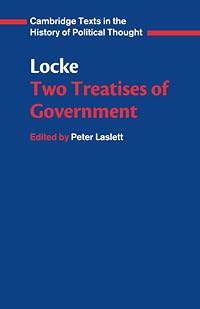
Two Treatises of Government
by John Locke
On This Page
Description
Often considered the foundation of political liberalism, John Locke's Two Treatises of Government was first published anonymously in 1689, in the wake of England's Glorious Revolution. In The First Treatise of Government, Locke refutes the idea of divine monarchy, while The Second Treatise of Government articulates Locke's philosophy of government, which he based upon his theories of natural rights and the social contract. In Locke's view, governments' legitimacy is based upon their show more performance of their proper functions-preservation of the life, liberty, and property rights of their citizens, and protection from those who seek to violate these rights. A radical doctrine at the time of its publication, Locke's theories provided a philosophical basis for many of the principles behind the American Revolution. More than 300 years after the publication of the Two Treatises of Government, Locke's ideas continue to spark debate. A must-listen for anyone interested in the foundations of contemporary political ideology, Locke's hugely influential work will retain its relevance for generations to come. show lessTags
Recommendations

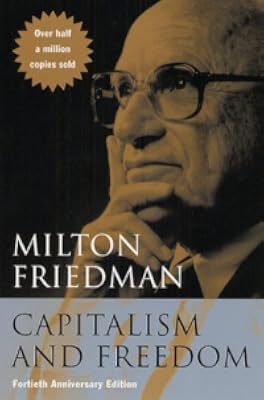
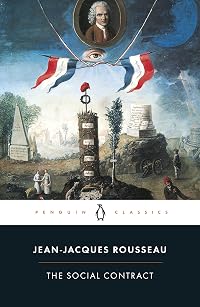
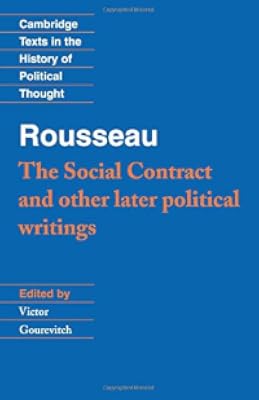
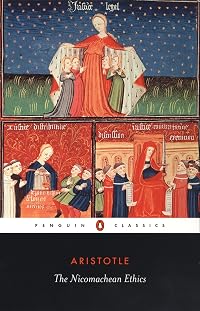

Member Recommendations
M_Clark Graeber's book provides a more anthropological based explanation for the development of money, debt, taxation and government. It paints Locke's ideas about the evolution of government as closer to fantasy.
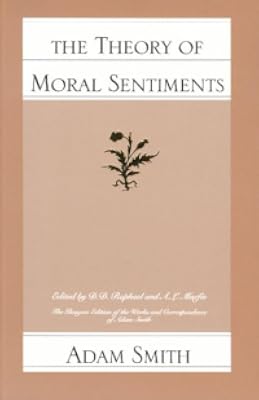
M_Clark Locke's theory of property is based upon the value-add provided to land by the person taking possession. It is therefore interesting to read Stoll's book describe how the land in Appalachia was owned by people that had not even visited it who then threw off the original settlers that had improved the land. One of those absentee landlords was, interestingly enough, George Washington. Of course, all of the European settlers in American used Locke's rational to toss the Indians off of their land since they felt, incorrectly, that the Indians had not done anything to improve the land justifying its takeover by Europeans.
Member Reviews
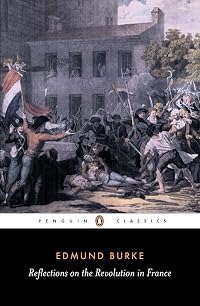
I doubt very much that anyone nowadays is going to quibble with Locke's anti-divine right of kings position. But he has nothing to put in his place but "protection of property" i.e. unfettered global capitalism and that whole filthy liberal project--and when both conservative (Burke) and proto-"reform liberalism" (Mill) thinkers would so easily go him one better in terms of compassion, inspiration, and humanity, that seems a tad feeble. (To say nothing of the religious, Utopian, and revolutionary alternative traditions.) Also he doesn't come to terms at all with the slave trade, at best, and condones it at worst, and elides over the gross exclusionary implications of his focus on poverty with glib talk about social contract v. state of show more war, and I think that's just cowardly. "Right of conquest" my fucking cock, Johnny, and while the yucky seepage of your venal, pedantic ideas into documents like the American Declaration of Independence may have dragged the discourse in a less sanguinary-absolutist direction and we can all appreciate that (and the "right of conquest" is to a certain degree balanced by the "right of revolution"), they also did more than almost any other writing to permit our greed-based society. The word "property" should never appear in anyone's foundational principles, ever. show less
Despite my ambitious plan to at least skim the First Treatise, I only read Locke's Second Treatise.
I was surprised at how much I liked this book, especially since I started out pretty disgusted by Locke's viewpoint. The two main things that irritated me:
1) His opinion that the primary goal of government is to preserve property. This just felt really materialistic to me. I felt better about this one when I read the parenthetical aside in chapter XV that read, "By property I must be understood here, as in other places to mean that property which men have in their persons as well as goods," which I take to mean the intangible qualities of a person as well as the material things he owns. Seems like such an important definition might have show more been placed a little earlier in the book, but I wasn't Locke's editor.
2) His chapter on slavery, in which he asserts that slavery is okay as long as the people taken as slaves first entered into a state of war, thereby forfeiting their natural rights to life and liberty. In the notes to the edition I read, it explained that Locke used this reasoning to justify the African slave trade in the Americas. It's a real stretch to claim that every African slave in the Americas in the 17th century was a combatant in a just war against the government enslaving them. Even if this were so, how does that justify keeping their children (and grandchildren) as slaves? In another note, I read that Locke had made part of his wealth in the slave trade, so he had a vested interest in finding a reason why slavery was okay. Unlike with property, there were no parentheticals to help me feel better about Locke's views on slavery.
As I read on, I focussed more on how Locke's philosophy fits in with the political situation in England at the time (from James I through Charles I and the civil war, about which I read in David Hume's The History of England, Volume V; my classics reading is already paying off, even if it is primarily helpful when I'm reading other classics) and on just how much United States government is based on Locke's philosophy. This really increased my enjoyment of this treatise.
For more of this review, please visit my blog, Imperfect Happiness. show less
I was surprised at how much I liked this book, especially since I started out pretty disgusted by Locke's viewpoint. The two main things that irritated me:
1) His opinion that the primary goal of government is to preserve property. This just felt really materialistic to me. I felt better about this one when I read the parenthetical aside in chapter XV that read, "By property I must be understood here, as in other places to mean that property which men have in their persons as well as goods," which I take to mean the intangible qualities of a person as well as the material things he owns. Seems like such an important definition might have show more been placed a little earlier in the book, but I wasn't Locke's editor.
2) His chapter on slavery, in which he asserts that slavery is okay as long as the people taken as slaves first entered into a state of war, thereby forfeiting their natural rights to life and liberty. In the notes to the edition I read, it explained that Locke used this reasoning to justify the African slave trade in the Americas. It's a real stretch to claim that every African slave in the Americas in the 17th century was a combatant in a just war against the government enslaving them. Even if this were so, how does that justify keeping their children (and grandchildren) as slaves? In another note, I read that Locke had made part of his wealth in the slave trade, so he had a vested interest in finding a reason why slavery was okay. Unlike with property, there were no parentheticals to help me feel better about Locke's views on slavery.
As I read on, I focussed more on how Locke's philosophy fits in with the political situation in England at the time (from James I through Charles I and the civil war, about which I read in David Hume's The History of England, Volume V; my classics reading is already paying off, even if it is primarily helpful when I'm reading other classics) and on just how much United States government is based on Locke's philosophy. This really increased my enjoyment of this treatise.
For more of this review, please visit my blog, Imperfect Happiness. show less
This is one of the classic texts of political philosophy and had a great influence on the development of the US political system. I nevertheless found the book disappointing finding that it providing much less than I had expected. In particular, I found Locke's discussion of property to be particularly unconvincing. That said, it is impressive to think that Locke feared imprisonment and even execution as a result of what he wrote.
One surprising aspect of the book was learning how big a role that American Indians played in the thinking of those days about the "natural state" of man. Locke's theories on the emergence of society and government are, however, pure fantasies and are not supported by modern anthropological research. it was show more tempted to imagine how different this book would have been if it had been written based upon real research rather than his armchair philosophizing. Unfortunately, for our thinking about politics, Locke's origin myths seem to persevere.
The first treatise is essentially a refutation of Sir Filmer's biblical justification of the monarchy and offers little to the modern reader. Despite that, I found it entertaining to see how Locke demolished Filmer's argunements and to identify a few places were Locke even turned snarky. The second treatise is, of course, the meat of what made this work so famous. It is therefore more entertaining and a more useful read.
This particular edition is not recommended for the casual reader since it strives to be more of a scholarly edition. One of the disadvantages is having to put up with 17th century spelling of words. The introduction material is also very dry and targeted more to explain textual issues than to explain the ideas in the work. show less
One surprising aspect of the book was learning how big a role that American Indians played in the thinking of those days about the "natural state" of man. Locke's theories on the emergence of society and government are, however, pure fantasies and are not supported by modern anthropological research. it was show more tempted to imagine how different this book would have been if it had been written based upon real research rather than his armchair philosophizing. Unfortunately, for our thinking about politics, Locke's origin myths seem to persevere.
The first treatise is essentially a refutation of Sir Filmer's biblical justification of the monarchy and offers little to the modern reader. Despite that, I found it entertaining to see how Locke demolished Filmer's argunements and to identify a few places were Locke even turned snarky. The second treatise is, of course, the meat of what made this work so famous. It is therefore more entertaining and a more useful read.
This particular edition is not recommended for the casual reader since it strives to be more of a scholarly edition. One of the disadvantages is having to put up with 17th century spelling of words. The introduction material is also very dry and targeted more to explain textual issues than to explain the ideas in the work. show less
Locke's Two Treatises of Government surprisingly lived up to my expectations. He argues in two parts: 1) apologists for monarchical governments are wrong and 2) the people of a society are the ones with ultimate power and sway over the social contract. This latter argument is the more important part for contemporary and present-day people that want to understand this thing we call "freedom." However, without the first Treatise, the second loses its context–it demonstrates Locke's motivation.
Additionally, I found the introductory material to the Cambridge Student Edition edited by Peter Laslett fascinating. Laslett provides context surround thing the history of the text alongside some useful analysis of Locke that made reading the Two show more Treatises much easier.
Locke should be required reading--to some extent--for people that wish to participate in and benefit from a democracy. show less
Additionally, I found the introductory material to the Cambridge Student Edition edited by Peter Laslett fascinating. Laslett provides context surround thing the history of the text alongside some useful analysis of Locke that made reading the Two show more Treatises much easier.
Locke should be required reading--to some extent--for people that wish to participate in and benefit from a democracy. show less
Originally published in the wake of the Glorious Revolution these two essays were neglected due to a glut of tracts and treatise in support of the events of 1689-90, it wasn’t until the 1760s that they become important in political discourse. Two Treatise of Government by John Locke were a refutation of absolute monarchy and the theory of the state of nature and how government is created.
The less famous First Treatise is a straight line for line critique of Sir Robert Filmer’s divine right absolutist monarch supporting tract, Patriarcha, the conclusion of which Locke examines the Bible and history to demolish Filmer’s hypothesis. In the Second Treatise Locke turns from Filmer’s work into his own theories of the state of nature show more and how it eventually led to the formation of a government by contract between individuals. Overall, the First Treatise is slog with Locke apparently having to repeat the same evidence to refute Filmer and essentially isn’t needed to understand its follow-up. On the other hand, the Second Treatise begins slowly as Locke references Filmer until transition to his own theory of the state of nature that leads to his own contract theory that is thought-provoking and historically influential.
Two Treatise of Government while being connected as a refutation and then opposing argument, the latter work by John Locke this is more profound not only as political theory and from an historical perspective. show less
The less famous First Treatise is a straight line for line critique of Sir Robert Filmer’s divine right absolutist monarch supporting tract, Patriarcha, the conclusion of which Locke examines the Bible and history to demolish Filmer’s hypothesis. In the Second Treatise Locke turns from Filmer’s work into his own theories of the state of nature show more and how it eventually led to the formation of a government by contract between individuals. Overall, the First Treatise is slog with Locke apparently having to repeat the same evidence to refute Filmer and essentially isn’t needed to understand its follow-up. On the other hand, the Second Treatise begins slowly as Locke references Filmer until transition to his own theory of the state of nature that leads to his own contract theory that is thought-provoking and historically influential.
Two Treatise of Government while being connected as a refutation and then opposing argument, the latter work by John Locke this is more profound not only as political theory and from an historical perspective. show less
Our book group only read the Second Treatise, so my review is limited there. I continue to struggle with this list of history books and I can't decide if it is lack of interest, lack of brain, or both. I did find a few parts interesting, but my most frequent thought was "the Founding Fathers likely read this."
A lot of it is wasted on pointless argumentation about what exactly does the Bible say about the right to rule. There's a lot of Bible quoting and it doesn't get sensible until halfway through. The rest of it is groundbreaking nevertheless quite common sense nowadays. Except the bit about rulers not being allowed to appoint other rulers who were not elected directly by the people and ceding any law making power to them. Sounds like what is annoying people about the EU.
Members
- Recently Added By
Lists

100 Books to Read in a Lifetime (That Are Older Than 200 Years)
415 works; 174 members

Books that changed the world
67 works; 64 members

Libertarian Books
102 works; 19 members

Ancap Part 7 - Precursors
5 works; 1 member

Non-Fiction Worth Reading
1,025 works; 257 members

Well-Educated Mind
150 works; 3 members

CCE 100 Great Books List
145 works; 8 members

Trinity College Booklist (1951): Class Two, Social and Psychological Scienc
60 works; 3 members

essential pol.phil
17 works; 1 member

How to Read a Book's Recommended Reading List
309 works; 10 members

Books Read in 2010
631 works; 11 members
Author Information

276+ Works 14,693 Members
John Locke's works of political and social philosophy, written in the 17th century, have strongly influenced intellectuals ever since - including the founders of the United States of America. Born in 1632 in Wrington, England, Locke studied at Christ Church, Oxford, where he earned his B.A. and M.A. degrees in the late 1650's. He also studied show more medicine and earned a medical license. His studies led to an interest in contemporary philosophers influenced by science, such as Rene Descartes. Locke read widely among them while teaching at Christ Church over the next few years. In 1667, Locke became personal physician and adviser to Anthony Ashley Cooper, who later was appointed Earl of Shaftesbury. Through Shaftesbury's patronage, Locke earned some government posts and entered London's intellectual circles, all the while writing philosophy. He was one of the best-known European thinkers of his time when he died in 1704. In An Essay Concerning Human Understanding (1690), Locke established the philosophy of empiricism, which holds that the mind at birth is a blank tablet. Experience, Locke believed, would engrave itself upon the tablet as one grew. He felt humans should create theories according to experience and test them with experiments. This philosophy helped establish the scientific method. Locke codified the principals of liberalism in "Two Treatises of Government" (1690). He emphasized that the state must preserve its citizens' natural rights to life, liberty and property. When the state does not, Locke argued, citizens are justified in rebelling. His view of liberalism comprised limited government, featuring elected representation and legislative checks and balances. While a Christian, Locke believed in absolute separation of church and state, and he urged toleration of those whose religious views differed from the majorities. (Bowker Author Biography) show less
Some Editions
Awards and Honors
Series
Belongs to Publisher Series
Work Relationships
Contains
Is abridged in
Is a reply to
Common Knowledge
- Canonical title
- Two Treatises of Government
- Original title
- Two Treatises of Government: In the Former, The False Principles, and Foundation of Sir Robert Filmer, and His Followers, Are Detected and Overthrown. The Latter Is an Essay Concerning The True Original, Extent, and End of Civil Government
- Alternate titles
- Two Treatises of Civil Government; Of civil government; Two treatises on government
- Original publication date
- 1689
- Original language
- English
Classifications
Statistics
- Members
- 2,829
- Popularity
- 6,458
- Reviews
- 20
- Rating
- (3.75)
- Languages
- 7 — Czech, English, French, German, Portuguese, Spanish, Chinese, simplified
- Media
- Paper, Audiobook, Ebook
- ISBNs
- 102
- ASINs
- 69