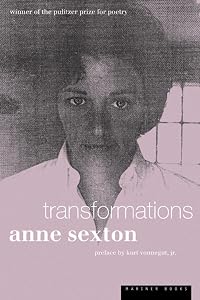
Transformations
by Anne Sexton 
On This Page
Description
Pulitzer Prize-winning poet Anne Sexton morphs classic fairy tales into dark critiques of the cultural myths underpinning modern society Anne Sexton breathes new life into sixteen age-old Brothers Grimm fairy tales, reimagining them as poems infused with contemporary references, feminist ideals, and morbid humor. Grounded by nods to the ordinary-a witch's blood "began to boil up/like Coca-Cola" and Snow White's bodice is "as tight as an Ace bandage"-Sexton brings the stories out of the realm show more of the fantastical and into the everyday world. Stripping away their magical sheen, she exposes the flawed notions of family, gender, and morality within the stories that continue to pervade our collective psyche. Sexton is especially critical of what follows these tales' happily-ever-after endings, noting that Cinderella never has to face the mundane struggles of marriage and growing old, such as "diapers and dust," "telling the same story twice," or "getting a middle-aged spread," and that after being awakened Sleeping Beauty would likely be plagued by insomnia, taking "knock-out drops" behind the prince's back. Deconstructed into vivid, visceral, and often highly amusing poems, these fairy tales reflect themes that have long fascinated Sexton-the claustrophobic anxiety of domestic life, the limited role of women in society, and a psychological strife more dangerous than any wicked witch or poisoned apple. show lessTags
Recommendations



Member Reviews
For my taste this book of Sexton's is far and away her crowning achievent. Each poem retells a Grimm's fairy tale. They are tender, cruel, laugh-out-loud funny, political, feminist, and often so so clever.
In this collection of poetry, Anne Sexton retells seventeen Grimm fairy tales.
I adore fairy tale revisions. I gobble it up as fast as I can. I especially love revisions that are darker and more sensual than the original tales (although that’s hard to do; the original Grimm stories were pretty bleak stuff). Anne Sexton’s poems certainly fit that bill.
She has a pattern. She usually starts each poem with a prologue about general life which then segues into the actual tale. Thus, in each poem, there are actually two stories: the frame and the tale-within-a-tale. It’s a clever use of meta narrative and works really well with the collection’s theme of fairy tales.
Sexton’s language is tricky, sharp, and utterly memorable. She has show more such perfect metaphors that each one of them is a little masterpiece in and of itself. Her fairy tales are both a homage to the original Grimm versions but with a mixture of the modern and the personal. They bite, and that’s a good thing.
Also worth mentioning is Kurt Vonnegut’s fantastic preface. He explains poetry better than I can. show less
I adore fairy tale revisions. I gobble it up as fast as I can. I especially love revisions that are darker and more sensual than the original tales (although that’s hard to do; the original Grimm stories were pretty bleak stuff). Anne Sexton’s poems certainly fit that bill.
She has a pattern. She usually starts each poem with a prologue about general life which then segues into the actual tale. Thus, in each poem, there are actually two stories: the frame and the tale-within-a-tale. It’s a clever use of meta narrative and works really well with the collection’s theme of fairy tales.
Sexton’s language is tricky, sharp, and utterly memorable. She has show more such perfect metaphors that each one of them is a little masterpiece in and of itself. Her fairy tales are both a homage to the original Grimm versions but with a mixture of the modern and the personal. They bite, and that’s a good thing.
Also worth mentioning is Kurt Vonnegut’s fantastic preface. He explains poetry better than I can. show less
“He turns the key.
Presto!
It opens this book of odd tales.
Which transform The Brothers Grimm.
Transform?
As if an enlarged paper clip
Could be a piece of sculpture.
(And it could.)”
-from The Gold Key
I am reading Transformations as part of The Complete Poems, but feel it should be discussed separately as it differs from this poet's usual style of confessional poetry. Although that is not quite true, as each of these fairy tale retellings does have a few stanzas of introduction that are modern reflections upon the larger theme, more similar to her usual work. In them topics such as deception, insomnia, remembered youth, insanity, and even incest are discussed. Each one is tied to the traditional fairy tale that follows in a show more thought-provoking new way, relating it to modern day issues or concepts (some of them dark or even Freudian). That was interesting.
After the introductory lines the fairy tales mostly stick to the script and are quite funny. Sexton possesses a real wit. In Red Riding Hood the wolf becomes for the reader “a strange deception: a wolf dressed in frills, a kind of transvestite”. In The Frog Prince she describes the princess’s revulsion as the frog, perched on her dinner plate “sat upon the liver, and partook like a gourmet”. So icky, yet fun to imagine! There is also humor throughout as the author wonders aloud over some questionable plot lines. For example, when Red Riding Hood sets off to visit her ill grandmother with a bottle of wine and cake, Sexton says:
“Wine and cake
Where’s the aspirin? The penicillin?
Where’s the fruit juice?
Peter Rabbit got chamomile tea.
But wine and cake it was.”
Despite her humor many of the poems do have an undercurrent of darkness running through them. Partly this is due to Sexton’s faithfulness to the original Grimm’s Fairy Tales which can be gruesome in some of their details. Early versions of these tales are often more edgy and even shocking to one who knows only Hollywood adaptations. So when Sexton’s dark side comes out it is not entirely out of place. I’m especially referencing the book’s final poem, Briar Rose (Sleeping Beauty). Here is a haunting description of a girl who seeks escapism from incest by going into a coma-like sleep. She never truly recovers even after being awakened by the kiss of the prince, and suffers insomnia thereafter that requires “the court chemist mixing her some knockout drops”. An uncomfortable interpretation of the fairy tale to be sure, but entirely brilliant in its execution.
I’ve read some of this poet’s other confessional poems and found them difficult to read (although I’m not ready to give her up just yet!), but I really loved this collection. I would encourage others who aren’t quite sure about her other work, or anyone who enjoys mythology and folk tales to read Transformations. show less
When I was small I spent many afternoons buried in my big book of Grimm's fairy tales. These poems recalled those days, except filtered through a lens of black-light posters on the walls and Jefferson Airplane spinning on the turntable. I imagined Anne Sexton situated in this tableau, reading these tales aloud, wreathed in smoke from the incense cone burning nearby. This copy also came from the library and smelled strongly of grandmother perfume, resulting in a bizarre juxtaposition of sensual stimuli. The scent overwhelmed and distracted, even as the words dissolved like bits of paper on my tongue.
Anne Sexton retells seventeen Grimm fair tales. Essentially, each story is the same, except they are not. Sleeping Beauty pricks her finger and wakes up 100 years later with a Prince's kiss. Red meets a wolf who cross dresses in her Grandmother's cloths and then gobbles her up, only to be released later by a passing hunter. And so on.
What makes each retelling unique to Sexton are two things. First, each poem/tale is first introduced with a kind of preface, the author's poetic commentary that introduces the tale she's about to retell. Secondly, she uses modern flare to the metaphor used to describe and detail the tales. The thirteenth witch in "Birar Rose" (Sleeping Beauty) has "eyes burnt by cigarettes" and her "uterus is an empty tea show more cup". Snow White has "china-blue doll eyes" and Cinderella "walked around looking like Al Jolson."
The lines are simple and clean, plain lines, like the original tales she's retelling, but reading them you find there's something more, as though you've just spotted something out of the corner of your eye while walking in the woods. It's wonderful, and I want to keep it always, so that I can come back to it again and again. show less
What makes each retelling unique to Sexton are two things. First, each poem/tale is first introduced with a kind of preface, the author's poetic commentary that introduces the tale she's about to retell. Secondly, she uses modern flare to the metaphor used to describe and detail the tales. The thirteenth witch in "Birar Rose" (Sleeping Beauty) has "eyes burnt by cigarettes" and her "uterus is an empty tea show more cup". Snow White has "china-blue doll eyes" and Cinderella "walked around looking like Al Jolson."
The lines are simple and clean, plain lines, like the original tales she's retelling, but reading them you find there's something more, as though you've just spotted something out of the corner of your eye while walking in the woods. It's wonderful, and I want to keep it always, so that I can come back to it again and again. show less
In mid-20th century USAmerica, certain confessional poets—Robert Lowell, Sylvia Plath, Anne Sexton—were among the most prominent. Out of their own personal sense of suffering, anxiety, even despair, they spoke to and for a generation itself often on the edge of despair. Their confessional lines were candid, often intimate, and genuine, sometimes harsh, even bitter. In style, tone, and theme, Lowell’s “Skunk Hour,” was representative. Its title could easily be taken as the name of an era, not unlike W. H. Auden’s The Age of Anxiety for the previous generation or T. S. Eliot’s Wasteland even before that.
On the surface, Sexton’s collection entitled Transformations is not one that might have been expected from a show more confessional poet. It is witty; it is charming; it is often humorous; it is fast-paced and surprising—a bravura “hail and farewell” to traditional story-telling. For each of these poems is a “transformation,” that is, a retelling of a classic folk tale from the Brothers Grimm; for example, “Snow White,” “Red Riding Hood,” “Rapunzel,” and “Hansel and Gretel.”
The usual pattern of her transformations begins with crisp modern parallels to the story, set forth in exaggerated, humorous detail—but with a sharp satiric edge. Cinderella begins
You always read about it:
the plumber with twelve children
who wins the Irish Sweepstakes.
From toilets to riches.
That story.
Or the nursemaid,
some luscious sweet from Denmark
who captures the oldest son’s heart.
From diapers to Dior.
That story.
The pattern then follows with a straight-forward retelling of the Grimms’ story, including its most grim, ghastly details, but also humorous anachronisms, mod language, and striking satiric twists. Here are a few of the details from the “Cinderella” story transformed into modern language and images: the prince’s ball is “a marriage market”; Cinderella’s stepmother refused to let her go to the ball, for after all, isn’t it always “that way with stepmothers”; when the slipper doesn’t fit the stepsisters they simply slice off toe or heel, but “blood will tell”; after a while the prince “began to feel like a shoe salesman.”
Then the final section of each poem usually rewrites the conclusion of the story, or its aftermath, in satiric, modern terms. For example, Cinderella and her prince are said to have lived happily ever after, like regular Bobbsey twins, “never telling the same story twice, / never getting a middle-aged spread. . . . That story.”
Always Grimm details. Always tongue in cheek. But usually a forked tongue.
Several of the poems deal with stories less well known; for example, “The White Snake,” “Iron Hans,” and “The Maiden without Hands.” Some of the transformations imply psychological aberrations; some use fairly explicit sexual images and allusions; some hint at child abuse, deceitful or criminal activity, and prospective suicide.
As clever and amusing as these “transformations” may be, they are never more than a few steps away from the era of the “skunk hour.”
What may be an even more interesting consideration, however, is how the dark shadows of Sexton’s transformations reflect the admittedly dark undertones of the grim Grimms’ tales—and of lives in her own age. Just recall “Hans and Gretel,” for example, “We have enough bread for ourselves,” says their mother to their father, “but none for them.” Then read newspaper accounts of hunger in USAmerica.
“I will eat you up,” an old witch says, “little nubkin / sweet as fudge.” “Oh succulent one, / it is but one turn in the road / and I would be a cannibal.”
Grimms. Nightmares. Repression/suppression. Yellow journalism. Another missing child. “But one turn in the road” from catastrophe. Anne Sexton, in her Transformations, requires us to wonder how real the darkest realities are. How close they may be to our experience, to our own inner beings. show less
On the surface, Sexton’s collection entitled Transformations is not one that might have been expected from a show more confessional poet. It is witty; it is charming; it is often humorous; it is fast-paced and surprising—a bravura “hail and farewell” to traditional story-telling. For each of these poems is a “transformation,” that is, a retelling of a classic folk tale from the Brothers Grimm; for example, “Snow White,” “Red Riding Hood,” “Rapunzel,” and “Hansel and Gretel.”
The usual pattern of her transformations begins with crisp modern parallels to the story, set forth in exaggerated, humorous detail—but with a sharp satiric edge. Cinderella begins
You always read about it:
the plumber with twelve children
who wins the Irish Sweepstakes.
From toilets to riches.
That story.
Or the nursemaid,
some luscious sweet from Denmark
who captures the oldest son’s heart.
From diapers to Dior.
That story.
The pattern then follows with a straight-forward retelling of the Grimms’ story, including its most grim, ghastly details, but also humorous anachronisms, mod language, and striking satiric twists. Here are a few of the details from the “Cinderella” story transformed into modern language and images: the prince’s ball is “a marriage market”; Cinderella’s stepmother refused to let her go to the ball, for after all, isn’t it always “that way with stepmothers”; when the slipper doesn’t fit the stepsisters they simply slice off toe or heel, but “blood will tell”; after a while the prince “began to feel like a shoe salesman.”
Then the final section of each poem usually rewrites the conclusion of the story, or its aftermath, in satiric, modern terms. For example, Cinderella and her prince are said to have lived happily ever after, like regular Bobbsey twins, “never telling the same story twice, / never getting a middle-aged spread. . . . That story.”
Always Grimm details. Always tongue in cheek. But usually a forked tongue.
Several of the poems deal with stories less well known; for example, “The White Snake,” “Iron Hans,” and “The Maiden without Hands.” Some of the transformations imply psychological aberrations; some use fairly explicit sexual images and allusions; some hint at child abuse, deceitful or criminal activity, and prospective suicide.
As clever and amusing as these “transformations” may be, they are never more than a few steps away from the era of the “skunk hour.”
What may be an even more interesting consideration, however, is how the dark shadows of Sexton’s transformations reflect the admittedly dark undertones of the grim Grimms’ tales—and of lives in her own age. Just recall “Hans and Gretel,” for example, “We have enough bread for ourselves,” says their mother to their father, “but none for them.” Then read newspaper accounts of hunger in USAmerica.
“I will eat you up,” an old witch says, “little nubkin / sweet as fudge.” “Oh succulent one, / it is but one turn in the road / and I would be a cannibal.”
Grimms. Nightmares. Repression/suppression. Yellow journalism. Another missing child. “But one turn in the road” from catastrophe. Anne Sexton, in her Transformations, requires us to wonder how real the darkest realities are. How close they may be to our experience, to our own inner beings. show less
The winner of the Pulizter Prize for poetry, this short collection contains 17 poems based on tales from The Brothers Grimm collection. It includes classics such as Snow White and the Seven Dwarves, Rumplestiltskin, Rapunzel, Cinderella, Little Red Riding Hood, Hansel and Gretel and Briar Rose (Sleeping Beauty). Each poem is prefaced with a short, almost seperatepoem, that looks at the tale in a more modern setting. The main body of the poem is her actual re-telling of the tale.
Dark overtones to most of the poems, they are dry and witty with insightful comments from Sexton along the way. They are a very intimate look inside the mind of the author with much of her personal thoughts exposed on various subjects along the way. I don't read show more much poetry generally but this made me want to pick up more and in paritcular some Slyvia Plath who has a similar background and personal history.
My favourite was Little Red Riding Hood which has a section on moder decievers that made me think. It's quite sad reading the poems however knowing that she killed herself 3 years after this collection was first published. There are lots of references to therapy, depression, ECT (electro convulsive therapy) and medication which strike the reader all the more for knowing what happens next. Overall a beautiful, dark collection of fairy tale inspired poems all lovers of poetry and fairy tales will enjoy. show less
Dark overtones to most of the poems, they are dry and witty with insightful comments from Sexton along the way. They are a very intimate look inside the mind of the author with much of her personal thoughts exposed on various subjects along the way. I don't read show more much poetry generally but this made me want to pick up more and in paritcular some Slyvia Plath who has a similar background and personal history.
My favourite was Little Red Riding Hood which has a section on moder decievers that made me think. It's quite sad reading the poems however knowing that she killed herself 3 years after this collection was first published. There are lots of references to therapy, depression, ECT (electro convulsive therapy) and medication which strike the reader all the more for knowing what happens next. Overall a beautiful, dark collection of fairy tale inspired poems all lovers of poetry and fairy tales will enjoy. show less
Members
- Recently Added By
Lists

Favorite Fairy Tale Retellings
210 works; 61 members

Cinderella Stories
111 works; 15 members

Best Science Fiction Novels
816 works; 430 members

Bibliography for How to be a Heroine
148 works; 12 members

Poetry Corner
187 works; 15 members

Poetry volumes by single author
121 works; 8 members
Favorite Fairy Tales
269 works; 103 members
Author Information

117+ Works 6,365 Members
Anne Sexton (1928-1974) is one of the most influential & frequently discussed American poets. She lived all her life in the Boston area. (Publisher Provided) Poet Anne Sexton was born in Newton, Massachusetts in 1928. She attended Garland Junior College for a year and at nineteen, married Alfred Muller Sexton II. After the birth of her first show more daughter in 1953 and her second daughter in 1955, Sexton suffered mental breakdowns, which included attempting suicide on her birthday in 1955. She had been diagnosed with postpartum depression. Both times she was hospitalized at Westwood Lodge and it was there that her doctor got her to pursue her interest in writing poetry. She enrolled in a poetry workshop at the Boston Center for Adult Education in 1957, which is where she met fellow poet, and soon to be close friend, Maxine Kumin. Sexton then wrote "To Bedlam and Part Way Back" (1960), "All My Pretty Ones" (1962), and in 1966, Sexton won the Pulitzer Prize for poetry for "Live or Die." Sexton wrote about controversial subjects, which included abortion and drug addiction. As with many other "confessional" poets, Sexton wrote of emotional anguish which came from her battle with mental illness. In 1974, she lost that battle and committed suicide. (Bowker Author Biography) show less
Anne Sexton has a Legacy Library. Legacy libraries are the personal libraries of famous readers, entered by LibraryThing members from the Legacy Libraries group.
Work Relationships
Is contained in
Common Knowledge
- Original publication date
- 1971
Classifications
Statistics
- Members
- 1,064
- Popularity
- 24,137
- Reviews
- 18
- Rating
- (4.12)
- Languages
- English, French, German, Spanish
- Media
- Paper, Ebook
- ISBNs
- 8
- UPCs
- 2
- ASINs
- 7