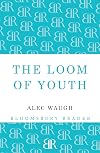
The Loom of Youth
by Alec Waugh
On This Page
Description
Hailing from a renowned literary family, the writer Alec Waugh caused a scandal with the publication of his autobiographical novel/memoir, The Loom of Youth. The book treats the subject of homosexual relationships among British schoolboys with a degree of frankness that was unprecedented at the time, and due to its risque nature and keen insights, it went on to be a runaway bestseller..
Tags
Recommendations




















Member Reviews
Alec Waugh (elder brother of Evelyn Waugh) wrote this semi-autobiographical and thinly disguised account of his teenaged student years at Sherbourne School in Dorset. In his next to last year, Alec and another boy were caught engaged in homosexual activity (later described as a "mild flirtation" and which his great-nephew, Alexander Waugh, opined was likely nothing more than kissing.) Nevertheless, Alec was expelled. In a fit of nostalgia and rebellion, Alec wrote The Loom of Youth over two months in early 1916 when he was 17 1/2 years old and training with the Army O.T.C.
The Loom of Youth was published by his father's firm in 1917 just as Alec was shipped to France in The Great War. (Happily, Arthur Waugh was a writer and publisher in show more his own right.) It was considered a sensational evocation of public school life. It was notable for its frank portrayal of homosexuality which Alec wrote was "the inevitable emotional consequences of a monastic herding together for eight months of the year thirteen year old children and eighteen year old adolescents." Although initially well reviewed, the book was later subject to a virulent letter campaign by public school masters and graduates decrying (and denying) its scandalous allegations. Alec Waugh went on to write novels (some of them quite racy), travel stories, magazine articles on wine and spirits and to briefly teach writing at a small college in Oklahoma.
How has the book aged over the past near century? Like other 'school days' books of the time, we are treated to tales of athletics, cribbing for papers and exams, ragging masters and tricks played on other students. (I admit to skipping through the passages on rugby and cricket -- completely inscrutable to this American-bred reader.) Other readers have likened the novel to 'Tom Brown's School Days.' However, the greater debt is likely to Arnold Lunn's 'The Harrovians' (1913), which is discussed in The Loom of Youth. (Lunn's papers contain correspondence with Alec in 1917-18). Usual school boy antics can give readers a 'step back in time' frisson. Waugh's novel transcends, delving deeper as his protagonist Gordon nears graduation. Here is a real grappling with the purpose of education and the student's own complicity in and responsibility for his academic growth.
To modern eyes, the 'shocking' portion dealing with Gordon's 'romance' with Morcombe is anything but. Alec in the 1955 preface admits to its don't-blink-or-you'll-miss-it quality. Readers looking for racy boy sex will be disappointed. Readers will be rewarded with a remarkably well written book, particularly by one so young. show less
The Loom of Youth was published by his father's firm in 1917 just as Alec was shipped to France in The Great War. (Happily, Arthur Waugh was a writer and publisher in show more his own right.) It was considered a sensational evocation of public school life. It was notable for its frank portrayal of homosexuality which Alec wrote was "the inevitable emotional consequences of a monastic herding together for eight months of the year thirteen year old children and eighteen year old adolescents." Although initially well reviewed, the book was later subject to a virulent letter campaign by public school masters and graduates decrying (and denying) its scandalous allegations. Alec Waugh went on to write novels (some of them quite racy), travel stories, magazine articles on wine and spirits and to briefly teach writing at a small college in Oklahoma.
How has the book aged over the past near century? Like other 'school days' books of the time, we are treated to tales of athletics, cribbing for papers and exams, ragging masters and tricks played on other students. (I admit to skipping through the passages on rugby and cricket -- completely inscrutable to this American-bred reader.) Other readers have likened the novel to 'Tom Brown's School Days.' However, the greater debt is likely to Arnold Lunn's 'The Harrovians' (1913), which is discussed in The Loom of Youth. (Lunn's papers contain correspondence with Alec in 1917-18). Usual school boy antics can give readers a 'step back in time' frisson. Waugh's novel transcends, delving deeper as his protagonist Gordon nears graduation. Here is a real grappling with the purpose of education and the student's own complicity in and responsibility for his academic growth.
To modern eyes, the 'shocking' portion dealing with Gordon's 'romance' with Morcombe is anything but. Alec in the 1955 preface admits to its don't-blink-or-you'll-miss-it quality. Readers looking for racy boy sex will be disappointed. Readers will be rewarded with a remarkably well written book, particularly by one so young. show less
This book was scandalous when it first came out, for it's frank portrayal sexual relationships between boys at a public school. To be honest I don't think the modern reader would even notice the incident. The book is interesting for it's depiction of brutal bullying and causal philistinism of the boys at a well regarded public school, (Alec Waugh was at Sherbourne - from which he was expelled for an inappropriate relationship with a younger boy). Much of the fury at the time came from teachers who could not believe that their charges could be so cynical about school life.
I thought the book was compelling for it's immediacy, I was surprised by some of the slang Waugh used, I would have dated some of it much later than 1916, however, it show more really is an awful book, horribly written, repetitive and clearly written by an author who didn't revise, or even remember what he had written a few chapters earlier. I can't imagine it would have been published if his father hadn't been running Chapman and Hall.
Oddly, I remember reading a much later book by Alec Waugh, "The Fatal Gift", which picked up some of the same themes, but was much better written. show less
I thought the book was compelling for it's immediacy, I was surprised by some of the slang Waugh used, I would have dated some of it much later than 1916, however, it show more really is an awful book, horribly written, repetitive and clearly written by an author who didn't revise, or even remember what he had written a few chapters earlier. I can't imagine it would have been published if his father hadn't been running Chapman and Hall.
Oddly, I remember reading a much later book by Alec Waugh, "The Fatal Gift", which picked up some of the same themes, but was much better written. show less
Ratings
Members
- Recently Added By
Lists

Best Books Set in Boarding Schools
160 works; 57 members

First published in 1917
132 works; 3 members
Author Information

60+ Works 1,220 Members
Series
Belongs to Publisher Series
Common Knowledge
- Original publication date
- 1917
- People/Characters
- Gordon Caruthers
- Important places
- Fernhurst School, Dorset, England, UK
- Epigraph
- "To him who desireth much, much is given; and to him who desireth little, little is given; but to neither according to the letter of his desire." Gilbert Cannan
- Dedication
- Dedicatory Letter to Arthur Waugh, My Dear Father:
- First words
- There comes some time an end to all things, to the good and to the bad. And at last Gordon Caruthers' first day at school, which had so combined excitement and depression as to make it unforgettable, ended also.
- Last words
- (Click to show. Warning: May contain spoilers.)He was on the threshold of life; and he stepped out into the sunlight with a smile, which, though it might be a little cynical, as if he had been disillusioned, held none the less the quiet confidence of a wayfarer who knew what lay before him, and felt himself well equipped and fortified for the "long littleness of life."
Classifications
Statistics
- Members
- 99
- Popularity
- 326,069
- Reviews
- 2
- Rating
- (3.23)
- Languages
- English
- Media
- Paper, Audiobook, Ebook
- ISBNs
- 22
- ASINs
- 10