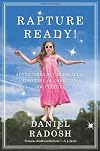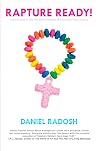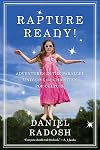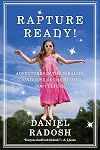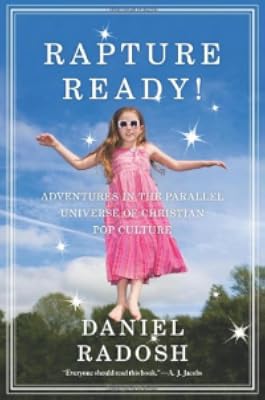
Rapture Ready!: Adventures in the Parallel Universe of Christian Pop Culture
by Daniel Radosh
On This Page
Description
From the Publisher: What does it mean when a band is judged by how hard they pray rather than how hard they rock? Would Jesus buy "Jesus junk" or wear "witness wear"? What do Christian skate parks, raves, and romance novels say about evangelicalism-and America? Daniel Radosh went searching for the answers and reached some surprising conclusions. Written with the perfect blend of amusement and respect, Rapture Ready! is an insightful, entertaining, and deeply weird journey through the often show more hidden world of Christian pop culture. This vast and influential subculture-a $7 billion industry and growing-can no longer be ignored by those who want to understand the social, spiritual, and political aspirations of evangelical Christians. In eighteen cities and towns throughout thirteen states-from the Bible Belt to the outskirts of Hollywood-Radosh encounters a fascinating cast of characters, including Bibleman, the Caped Christian; Rob Adonis, the founder and star of Ultimate Christian Wrestling; Ken Ham, the nation's leading prophet of creationism; and Jay Bakker, the son of Jim and Tammy Faye Bakker, and pastor of his own liberal, punk rock church. From Christian music festivals and theme parks to Passion plays and comedy nights, Radosh combines gonzo reporting with a keen eye for detail and just the right touch of wit. Rapture Ready! is a revealing survey of a parallel universe and a unique perspective on one of America's most important social movements. show lessTags
Recommendations

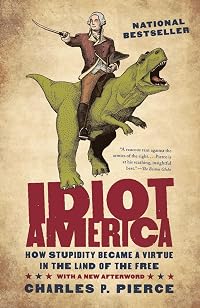

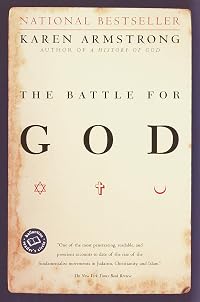
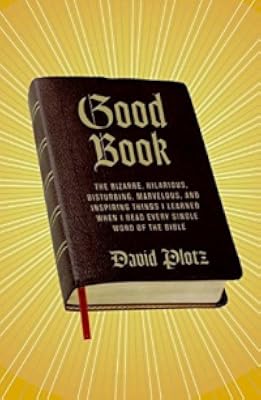

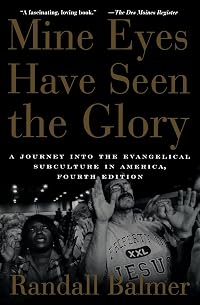













Member Recommendations

Member Reviews
This author has my sense of humor exactly. I find myself agreeing with every snarky observation. Mostly that...
Christians are crazy. Not Scientology crazy, but they are pretty nutty. They seem to know this though, because every time Radosh calls them out they pretty much know exactly what he's complaining about and have doubts, too. I mean, they are on the whole intelligent, loving people. They just try to ignore doubt because, you know, Jesus. He's supposed to remove all doubt, right? And be comforted. That's what they're told. The thing is... I don't think God or whatever has a problem with doubt and questioning. I almost want to shake some of them and yell, "You know, if he does exist, you don't have to protect him this way." show more Christians generally are really hostile to deep intellectual understandings of spirituality (the best come from doubt and questioning, and find answers that are intellectually honest) and that is really hurting them.
I also learned that Jay Bakker seems pretty awesome and mewithoutYou is a good band.
Edit: OMG I read this again and I sound so smug! Naughty. I know! It's not like I have any answers. show less
Christians are crazy. Not Scientology crazy, but they are pretty nutty. They seem to know this though, because every time Radosh calls them out they pretty much know exactly what he's complaining about and have doubts, too. I mean, they are on the whole intelligent, loving people. They just try to ignore doubt because, you know, Jesus. He's supposed to remove all doubt, right? And be comforted. That's what they're told. The thing is... I don't think God or whatever has a problem with doubt and questioning. I almost want to shake some of them and yell, "You know, if he does exist, you don't have to protect him this way." show more Christians generally are really hostile to deep intellectual understandings of spirituality (the best come from doubt and questioning, and find answers that are intellectually honest) and that is really hurting them.
I also learned that Jay Bakker seems pretty awesome and mewithoutYou is a good band.
Edit: OMG I read this again and I sound so smug! Naughty. I know! It's not like I have any answers. show less
The author takes an interesting tour around the world of evangelical marketing, a world most people don't realize exists (but then, you probably have seen some of the so-called 'Jesus Junk' - that had to come from somewhere). He visits conventions, concerts, and even the creation museum to see what's happening, and writes about it in a breezy, casual style that makes it easy reading. He also has a great sense of irony, which he needed frequently in his encounters with oblivious evangelicals who think that Jews like to be patronized (or have no clue they're being patronizing). It loses a star for committing what is, in my opinion, the cardinal sin common in this sort of book: the conflation of "I know nice Christians" with the idea that show more Christianity as a whole is a decent enterprise, but some people have mistaken it and read it wrong. The one thing that hits you in the face as you read through his interviews with various groups and individuals is that for each and every person he talks to, everyone else is doing it wrong. That comes through loud and clear,. and he notices it, as well. And everyone says that everyone else is reading the Bible wrong, making Jesus (conservative/liberal) to fit their own ideology. Which, of course, is true. Which makes this book alternatingly amusing and horrifying. I couldn't put it down. show less
Daniel Radosh, an outsider to the world of the American Christian subculture embarks upon a journey that takes him to Christian music festivals, Bible themed amusement parks, and interviews with Christian authors. Radosh, who is of Jewish background, shares his frank reactions to the products, places, and people he encounters. His viewpoint exposes much that is regrettable about the consumerism that drives many of these ventures. But Radosh is also surprised by the genuine efforts of Christians to reach out to him, to point out their own shortcomings, and their lack of hostility towards him as a self confessed secular liberal. A Christian myself, I found Radosh's book to be an enlightening read. His manner was breezy and light, but he show more still did not shy away from discussing controversial topics. I learned a lot about the Christian subculture that I often am a part of, some things I didn't like, some things that made me sad, and some people that made me a bit proud in how they shared their faith intelligently and with grace. I highly recommend this book for anyone interested in popular culture--Christian or not--as the 'parallel universe' many Christians live in is one that is often over looked, yet it has great influence in our country. It is also just a flat out enjoyable read. show less
I found this book sitting in a Dollar Tree, and the title reminded me of a website I used to frequent so I picked it up. It was much, much better than I thought it would be.
The book follows the author's attempts to explore Christian pop culture in America and his attempts to find the strangest, most alien forms that the "parallel universe" can take. If it had been left at that the book would have made, perhaps, a series of humorous posts on a blog for like minded people. Instead, though, you can see that Radosh comes to respect and maybe admire Evangelicals in America, while still maintaining a safe distance ideologically. While he is happy to point out the kitschiness, absurdity, and hypocrisy, not to mention hatefulness and nastiness, show more of the various kinds of pop culture he explores, you can also see that he comes to find that most evangelicals are not much different from anyone else, they are just struggling to forge their identity in the larger world.
The fascinating part of the book is the variety of characters he meets. A large purveyor of "Jesus Junk" who gives him a big hug when the purveyor discovers he's Jewish, Rob Adonis who gave up a career in the secular pro wrestling circuit so that he could start a small federation of Christian pro wrestlers, Jay Bakker who has nothing but love for Jesus and utter disdain for the modern church and modern church culture and their shunning of people in need, and Ken Ham who Radosh says struck him as sociopathic. There are characters from all across the spectrum: it gives a very human look at the individuals who make up Christianity in America.
If you are a far right fundamentalist, this book will probably offend you. If you are one of that breed of atheist who believes religion is essentially opposed to humanity, you will probably be annoyed by Radosh's lack of a killer instinct. Anyone else will probably be able to enjoy, and learn from, Radosh's investigation. Highly recommended. show less
The book follows the author's attempts to explore Christian pop culture in America and his attempts to find the strangest, most alien forms that the "parallel universe" can take. If it had been left at that the book would have made, perhaps, a series of humorous posts on a blog for like minded people. Instead, though, you can see that Radosh comes to respect and maybe admire Evangelicals in America, while still maintaining a safe distance ideologically. While he is happy to point out the kitschiness, absurdity, and hypocrisy, not to mention hatefulness and nastiness, show more of the various kinds of pop culture he explores, you can also see that he comes to find that most evangelicals are not much different from anyone else, they are just struggling to forge their identity in the larger world.
The fascinating part of the book is the variety of characters he meets. A large purveyor of "Jesus Junk" who gives him a big hug when the purveyor discovers he's Jewish, Rob Adonis who gave up a career in the secular pro wrestling circuit so that he could start a small federation of Christian pro wrestlers, Jay Bakker who has nothing but love for Jesus and utter disdain for the modern church and modern church culture and their shunning of people in need, and Ken Ham who Radosh says struck him as sociopathic. There are characters from all across the spectrum: it gives a very human look at the individuals who make up Christianity in America.
If you are a far right fundamentalist, this book will probably offend you. If you are one of that breed of atheist who believes religion is essentially opposed to humanity, you will probably be annoyed by Radosh's lack of a killer instinct. Anyone else will probably be able to enjoy, and learn from, Radosh's investigation. Highly recommended. show less
Entertaining yet thought provoking expose of Christian, and more specifically Evangelical, popular culture. The author goes to music festivals, conventions, conferences, museums, bookstores, and yes, even churches in order to interview those instrumental in providing Christians with their own "parellel universe" of culture. I laughed a lot, but so often it was with the author, and I didn't feel it was at anyone. Radosh ekes out some some fascinating admissions from some of his subjects and remains open to being wrong.
Radosh's investigation into the world of Christian Evangelicals and Christian Pop Culture is poignant and hilarious. Having grown up in this world, this "parallel universe," I can vouch for Radosh and his experiences related in the book. It brought back a lot of memories (good and bad). Most importantly, it holds a mirror to the actions and dogma of an ancient religion and its adherents' attempts to relegate itself/themselves to modern times.
I had such high hopes for this book. Fundamentalist Christianity fascinates me, and I am especially intrigued with Rapture-focused beliefs. When I hear about young fundamentalist children who go home to an unexpectedly empty house and immediately assume that everyone but them has been "raptured," I have a peculiar impulse to weep with compassion and laugh hysterically, both at the same time. (Note: that impulse is not a happy one - it's actually quite uncomfortable - but it IS intriguing.)
So poo on Daniel Radosh, who, instead of writing a thoughtful, well-organized, well-researched analysis of Rapture culture, wrote instead a shallow, patronizing, scattered comic book. His smug take on far-right Christian culture is not a liberal rant; show more but that's all you can say about it. If you haven't read this, don't waste your time - go straight to _The Unlikely Disciple_ by Kevin Roose, which examines many of the same issues, but is infinitely better. show less
So poo on Daniel Radosh, who, instead of writing a thoughtful, well-organized, well-researched analysis of Rapture culture, wrote instead a shallow, patronizing, scattered comic book. His smug take on far-right Christian culture is not a liberal rant; show more but that's all you can say about it. If you haven't read this, don't waste your time - go straight to _The Unlikely Disciple_ by Kevin Roose, which examines many of the same issues, but is infinitely better. show less
Members
- Recently Added By
Lists

Simon & Schuster
136 works; 4 members
Author Information

2+ Works 357 Members
Daniel Radosh is a writer for The Daily Show with Jon Stewart and a freelance journalist who has contributed to The New Yorker, The New York Times, Playboy, Esquire, and GQ. In the early 1990s, Radosh was a staff writer and editor at Spy magazine. He lives in Brooklyn with his wife and children.
Common Knowledge
- Quotations
- Perhaps you will have just watched the latest Pirates of the Caribbean sequel and you will think to yourself, "Why, yes, being a Christian is a lot like being a free-spirited rogue who sails the seven seas in search of advent... (show all)ure." -- page 9
- Blurbers
- Jacobs, A.J.; Seder, Sam; McLaren, Brian
Classifications
- Genres
- Religion & Spirituality, Nonfiction, Sociology, General Nonfiction, Music
- DDC/MDS
- 261.0973 — Religion Christian organization, social work & worship Social theology and interreligious relations and attitudes Biography And History North America United States
- LCC
- BR115 .C8 .R25 — Philosophy, Psychology and Religion Christianity Christianity Christianity in relation to special subjects
- BISAC
Statistics
- Members
- 356
- Popularity
- 88,489
- Reviews
- 22
- Rating
- (3.96)
- Languages
- English
- Media
- Paper, Ebook
- ISBNs
- 3
- ASINs
- 3