On This Page
Description
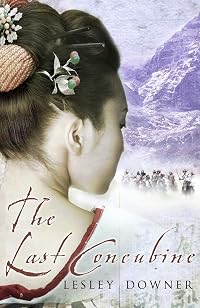
Japan, 1865, the women's palace in the great city of Edo. Bristling with intrigue and erotic rivalries, the palace is home to three thousand women and only one man - the young shogun. Sachi, a beautiful fifteen-year-old girl, is chosen to be his concubine. But Japan is changing, and as civil war erupts, Sachi flees for her life. Rescued by a rebel warrior, she finds unknown feelings stirring within her; but this is a world in which private passions have no place and there is not even a word show more for 'love'. Before she dare dream of a life with him, Sachi must uncover the secret of her own origins - a secret that encompasses a wrong so terrible that it threatens to destroy her .... show lessTags
Recommendations




































Member Reviews
En fantastisk bok som tar en tillbaka till tiden , 1800 talets Japan med vackra konkubiner , makt intriger och sorg. Jag älskar böcker som lyckas får en glömma vardagen , med målande personporträtt och annorlunda livsöden. Att det samtidigt är en bit historia som jag vet mycket lite om är ett stort plus. :
http://www.bookcrossing.com/journal/8159093
This book lived up to almost all expectations the title woke with me. It is the story of the life of a young village girl that is taken to the palace of the shogun by his young wife. When the shogun dies, her story continues, although it is completely upside down because of all the political upheaval that was going on in Japan around the 1850's.
I loved reading this book. I am already interested in 'the east', meaning that I know a tiny bit about ronin, samoerai. This book added to that knowledge and it was a great read. Smoothly I followed Sachi's life from one stage to another and yet through more changes. It felt like I was there with her, it was almost like I could smell the pipes, the show more perfumes, hear the rustling of the kimono's.
It is a novel, not necessarily historical right. I do not know very much about the (political) history of Japan, but the story sounds very plausible. Not that it would have bothered me very much if there were things that are not correct: after all it is a novel, a story, made up by the author, based on historical facts. Well done, when you ask me...
The only thing that this book lacked for me was that there was not a longer story about the 'concubine-time'. Being the title of the book I would have expected more. And I do not mean the sexual side of it, but more about the rules, the ways of treating one another, her life in the side chamber(s) while being a concubine. Nevertheless I give it 5 stars. show less
This book lived up to almost all expectations the title woke with me. It is the story of the life of a young village girl that is taken to the palace of the shogun by his young wife. When the shogun dies, her story continues, although it is completely upside down because of all the political upheaval that was going on in Japan around the 1850's.
I loved reading this book. I am already interested in 'the east', meaning that I know a tiny bit about ronin, samoerai. This book added to that knowledge and it was a great read. Smoothly I followed Sachi's life from one stage to another and yet through more changes. It felt like I was there with her, it was almost like I could smell the pipes, the show more perfumes, hear the rustling of the kimono's.
It is a novel, not necessarily historical right. I do not know very much about the (political) history of Japan, but the story sounds very plausible. Not that it would have bothered me very much if there were things that are not correct: after all it is a novel, a story, made up by the author, based on historical facts. Well done, when you ask me...
The only thing that this book lacked for me was that there was not a longer story about the 'concubine-time'. Being the title of the book I would have expected more. And I do not mean the sexual side of it, but more about the rules, the ways of treating one another, her life in the side chamber(s) while being a concubine. Nevertheless I give it 5 stars. show less
Given to me by a friend, and it was just what I needed. A good story set against a well-explained back drop. Japan on the cusp of the "modern" era, the deaths of the Shogun and the Emperor in quick succession have rocked the very traditions of this country.
Downer seems to know her history, and has made this story rich in detail, leaving me wanting to read her non-fiction books as well.
Downer seems to know her history, and has made this story rich in detail, leaving me wanting to read her non-fiction books as well.
Set in the mid-1800s, Japan was still a land of ancient rituals when the Western world was hurtling headlong into the Industrial Age.
Imagine being a young lady of 15, living with 3000 other women all of whom are vying for the attention of a single alpha male - the young shogun? How lucky Sachi must have felt to be chosen as the young shogun's concubine. However, in our current era, it would be the ultimate insult to be chosen just to be a breeding mare!
However, back then when a young girl entered the life of the court, it is highly unlikely that she will ever leave. So ultimately, if they are not chosen as the shogun's concubine, they will have nothing to do with men from that point onwards. As the women's palace as no male (hence the show more name women's palace), the women are given warrior training to protect the palace, if need be. There are very strict rules of behaviour and of course, lots of lavish clothes and beauty regimes.
Because the women in the women's palace are not seen by outsiders, Sachi is chosen as a decoy to protect the Imperial Princess when the insurgents from the South continue their war towards Edo (Tokyo as we currently now it). Thus begins her great adventure of going back to her village to find out who she really is. Along the way, she meets up with 3 warriors, one of whom, Shinzaemon, makes her heart beat faster than usual, even though she knows she is strictly forbidden to fraternise with any men.
One of her other admirers is a European man who rescues her during a time when she was shifting through dead bodies trying to find Shinzaemon. As I mentioned earlier, this was during the Industrial Age and the Europeans were looking to expand into Japan, bringing with them strange contraptions (carriages) and the iron monsters (trains) on board their black ships.
There is a gradual build up of Sachi and Shinzaemon's relationship. The danger of this growing relationship being exposed is always hovering just below the surface and taints the interaction between these two doomed lovers.
This is a fascinating book to read and the author's writing style is not overly done in a historical fiction. It is a 450-page book to read, but if you have a penchant for history, a good book. show less
Imagine being a young lady of 15, living with 3000 other women all of whom are vying for the attention of a single alpha male - the young shogun? How lucky Sachi must have felt to be chosen as the young shogun's concubine. However, in our current era, it would be the ultimate insult to be chosen just to be a breeding mare!
However, back then when a young girl entered the life of the court, it is highly unlikely that she will ever leave. So ultimately, if they are not chosen as the shogun's concubine, they will have nothing to do with men from that point onwards. As the women's palace as no male (hence the show more name women's palace), the women are given warrior training to protect the palace, if need be. There are very strict rules of behaviour and of course, lots of lavish clothes and beauty regimes.
Because the women in the women's palace are not seen by outsiders, Sachi is chosen as a decoy to protect the Imperial Princess when the insurgents from the South continue their war towards Edo (Tokyo as we currently now it). Thus begins her great adventure of going back to her village to find out who she really is. Along the way, she meets up with 3 warriors, one of whom, Shinzaemon, makes her heart beat faster than usual, even though she knows she is strictly forbidden to fraternise with any men.
One of her other admirers is a European man who rescues her during a time when she was shifting through dead bodies trying to find Shinzaemon. As I mentioned earlier, this was during the Industrial Age and the Europeans were looking to expand into Japan, bringing with them strange contraptions (carriages) and the iron monsters (trains) on board their black ships.
There is a gradual build up of Sachi and Shinzaemon's relationship. The danger of this growing relationship being exposed is always hovering just below the surface and taints the interaction between these two doomed lovers.
This is a fascinating book to read and the author's writing style is not overly done in a historical fiction. It is a 450-page book to read, but if you have a penchant for history, a good book. show less
I read many favourable reviews about this book,and many of them were gushing with praise for it. A Japanese “Gone with the wind” With a gorgeous cover. Can you imagine I was so eager to get this book in my hands?
The plot boils down to this: Sachi is a peasant girl who is adopted by a princess.The princess is going to be the shoguns wife. Sachi grows up in the Edo castle and learns the strict protocol of the castle and using a halberd. The heroine becomes noticed by the shogun and becomes his concubine.
Cue one creepy sex scene (first time nevertheless..poor girl)and some bawdy jokes about "picking mushrooms" by some older women.And then we have the shogun unexpectedly dying,adding to the unrest of the land.
War breaks out and Sachi show more and a handmaiden flees the castle,Sachi posing as the princess.They met up with some ronin samurai and decide to travel with them. After this I lost grip on the plot….except for the love story between Sachi and one of the samurai. What was his name again?
And as for the editing....
First of all someone hand this author a book about synonyms!
There is only so much repeating of words one can endure. For example someones hair is described as “bushy” throughout the whole book and everyone seems to have “plump” lips.And the plot structure is lacking,feeling sketchy and not that well thought out,the same can be said for the characters up to and including our maincharacter.
Fascinating history yes but it reads more like a history book than a novel sometimes.
And even if I found the love story touching sometimes..it didn’t have that extra oomph! Like in the real “Gone with the wind”
Just about readable.
If you are interested in the authors claim that there was no word for love in japanese culture up until the 19th Century. Here is her take on it. No sources though so I dont know...
http://www.lesleydowner.com/2008/02/15/how-do-you-fall-in-love-when-your- show less
The plot boils down to this: Sachi is a peasant girl who is adopted by a princess.The princess is going to be the shoguns wife. Sachi grows up in the Edo castle and learns the strict protocol of the castle and using a halberd. The heroine becomes noticed by the shogun and becomes his concubine.
Cue one creepy sex scene (first time nevertheless..poor girl)and some bawdy jokes about "picking mushrooms" by some older women.And then we have the shogun unexpectedly dying,adding to the unrest of the land.
War breaks out and Sachi show more and a handmaiden flees the castle,Sachi posing as the princess.They met up with some ronin samurai and decide to travel with them. After this I lost grip on the plot….except for the love story between Sachi and one of the samurai. What was his name again?
And as for the editing....
First of all someone hand this author a book about synonyms!
There is only so much repeating of words one can endure. For example someones hair is described as “bushy” throughout the whole book and everyone seems to have “plump” lips.And the plot structure is lacking,feeling sketchy and not that well thought out,the same can be said for the characters up to and including our maincharacter.
Fascinating history yes but it reads more like a history book than a novel sometimes.
And even if I found the love story touching sometimes..it didn’t have that extra oomph! Like in the real “Gone with the wind”
Just about readable.
If you are interested in the authors claim that there was no word for love in japanese culture up until the 19th Century. Here is her take on it. No sources though so I dont know...
http://www.lesleydowner.com/2008/02/15/how-do-you-fall-in-love-when-your- show less
Amazing and heartwarming.
There's a reason this made it to my favourites list and was granted the almighty 5 star rating.
This book was intriguing; we were brought into a world that has never been fully explored before. The going on’s inside a woman palace, we got a look at the customs, and we got to see how duty, honour and loyalty was something worth throwing away your life for.
Falling in love when at that time was unheard of,
Being on the run, not knowing if you're live,
It's just amazing.
I highly recommend this book.
You'll love it
Later
Emily
There's a reason this made it to my favourites list and was granted the almighty 5 star rating.
This book was intriguing; we were brought into a world that has never been fully explored before. The going on’s inside a woman palace, we got a look at the customs, and we got to see how duty, honour and loyalty was something worth throwing away your life for.
Falling in love when at that time was unheard of,
Being on the run, not knowing if you're live,
It's just amazing.
I highly recommend this book.
You'll love it
Later
Emily
I enjoyed this book so much, and although I know nothing about the history of Japan in order to say how close it was to the truth , I am pleased I discovered this book which has sparked my interest in learning more about Japan's history. It is written beautifully.
Members
- Recently Added By
Author Information

24+ Works 1,767 Members
Lesley Downer is an award-winning author of many books on Japan. She divides her time between London and Tokyo. (Bowker Author Biography)
Some Editions
Series

Belongs to Publisher Series
btb (74307)
Common Knowledge
- Canonical title*
- L'ultima concubina
- Original title
- The Last Concubine
- Original publication date
- 2008; 2012-06-07
- People/Characters
- Princess Kazu; Take; Shogun Iemochi; General Kitaoka a Satsuma; Lord Ieyoshi; Nobu (show all 7); Sachi
- Important places
- Japan; Edo Castle; Tokyo, Japan
- Important events
- Japanese Civil War (1863-1868); Boshin War
- Dedication
- To Arthur
- First words
- "Shita ni iyo! Shita ni iyo! Shita ni.... shita ni.... On your knees! On your knees! Get down ... Get down..."
- Quotations
- Oshikaraji kimi to tami to no tame naraba mi wa Musashino no tsuyu to kiyu tomo, Princess Kazu, 1861
"Without regret, if it is for you, my lord, and your people, I will vanish with the dew on the plain of Musashi. - Last words
- (Click to show. Warning: May contain spoilers.)The train rumbled off and disappeared into the distance.
*Some information comes from Common Knowledge in other languages. Click "Edit" for more information.
Classifications
Statistics
- Members
- 302
- Popularity
- 106,571
- Reviews
- 18
- Rating
- (3.59)
- Languages
- 13 — Catalan, Czech, Danish, Dutch, English, French, German, Indonesian, Italian, Portuguese, Romanian, Spanish, Swedish
- Media
- Paper, Ebook
- ISBNs
- 35
- ASINs
- 3