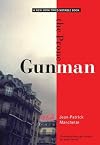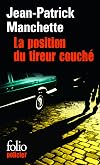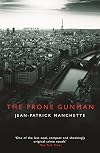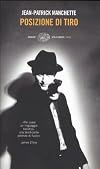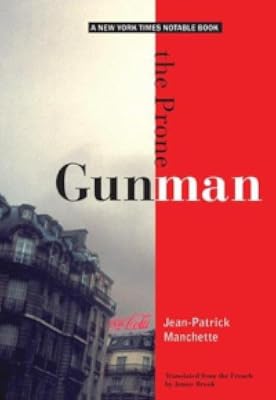
The Prone Gunman
by Jean-Patrick Manchette
On This Page
Description
Martin Terrier is a hired killer who wants out of the game so he can settle down and marry his childhood sweetheart, Anne. After all, that's why he took up this profession in the first place. But the organization won't let him go—they have other, more deadly plans for him. There's a visiting politician, an Arab oil magnate, whom they want assassinated, and Terrier is their man. Once again, the gunman must assume the prone shooting position—but not everything goes according to plan.A show more tour de force, this violent tale shatters as many illusions about life and politics as it does bodies. It is perhaps the finest work from the pen of Jean-Patrick Manchette.
. show less
Tags
Recommendations













Member Reviews
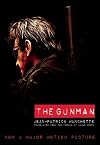
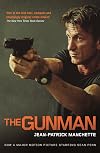
The cover of my edition of "The Prone Gunman" told me that it is "soon to be a major motion picture." I'm not surprised. The book's protagonist, Martin Terrier, is a hitman who displays the same impossibly cool, unperturbable mein as John Wick and should fit in well with a cinematic trend that seems to want to show how little some humans are bothered by hurting others. Patrick, a former soldier, soldier of fortune, and now a killer-for-hire is preternaturally good at his job and successful in his field, as it were. Manchette, not merely content to depict his character's mastery of spycraft and assassination, also lovingly describes the specific armaments that each of his characters employ. In this, I fear to report that Manchette might show more be considered a precursor to technologically obsessed writers such as Tom Clancy, who never fail to describe exactly what armaments their paper-thin characters are carrying. The author doesn't spare us the gory details, but neither does he take much time to examine anyone's feelings. "The Prone Gunman" glides along swiftly, and its major characters leave a pile of corpses in their wake.
Martin, who also goes by Christopher, is so emotionally detached that I couldn't read this one without thinking of Camus's "The Stranger," whose main character, Meursault, killed a nameless Arab in a haze of confusion and then went on to seek some sort of moral and emotional clarity afterwards, if only through the smallest, most seemingly insignificant life experiences. Martin, on the other hand, seems to grow further from humanity and the world as the book goes on, becoming less communicative and shedding any limited abilities he might have had to connect to his world. This book's tone throughout is both gruesome and disconcertingly chilly. There are, of course, lots of young, male readers and moviegoers who enjoy watching this kind of character, and so I wouldn't be surprised if the movie version of "The Prone Gunman" finds a niche of sorts. But super-competence and silence is not hugely interesting to this reader on the page, though I do feel that the author, by making his character more and more of a cipher as the plot moves on, is trying to make some postmodernist point about the freedom that Martin might find in this sort of erasure.
There is a payoff of sorts at the end when this little book's last pages during which its scope and potential meaning seems to open up quite suddenly, and while I do appreciate the author's lithe plot and controlled tone, I suppose I've seen too much of this sort of emotionally blank, consequence-free killing on the screen to want to actually sit down and read about it. This one's brief, effective, but ultimately unsatisfying, a provocative little book that I don't feel goes to too many places. Or, at least, not to any places I'd want to go anywhere near. show less
Martin, who also goes by Christopher, is so emotionally detached that I couldn't read this one without thinking of Camus's "The Stranger," whose main character, Meursault, killed a nameless Arab in a haze of confusion and then went on to seek some sort of moral and emotional clarity afterwards, if only through the smallest, most seemingly insignificant life experiences. Martin, on the other hand, seems to grow further from humanity and the world as the book goes on, becoming less communicative and shedding any limited abilities he might have had to connect to his world. This book's tone throughout is both gruesome and disconcertingly chilly. There are, of course, lots of young, male readers and moviegoers who enjoy watching this kind of character, and so I wouldn't be surprised if the movie version of "The Prone Gunman" finds a niche of sorts. But super-competence and silence is not hugely interesting to this reader on the page, though I do feel that the author, by making his character more and more of a cipher as the plot moves on, is trying to make some postmodernist point about the freedom that Martin might find in this sort of erasure.
There is a payoff of sorts at the end when this little book's last pages during which its scope and potential meaning seems to open up quite suddenly, and while I do appreciate the author's lithe plot and controlled tone, I suppose I've seen too much of this sort of emotionally blank, consequence-free killing on the screen to want to actually sit down and read about it. This one's brief, effective, but ultimately unsatisfying, a provocative little book that I don't feel goes to too many places. Or, at least, not to any places I'd want to go anywhere near. show less
I've never heard of Jean-Patrick Manchette before I found this book. Noir is one of my genres so it is surprising that I somehow missed him - and after I read this book, I am not sure if I regret that this was my first book by him or not. Not because I did not like it - I loved it. But that means I have more of them to look forward to - this type of authors, I would have read all of his books in short time if I knew about him in my 20s.
But let's talk about the book. Meet Martin Terrier - a hitman, a very good one. Who is ready to call it quits. His handlers do not really like the idea and convince him to do one more job. But it soon becomes clear that part of the job is for Martin to die. And the chase is on.
It is a very dark novel - show more the darkness that comes from both actions and hearts that you cannot comprehend; that is so awful that you wonder how it can exist. And yet, somehow Manchette makes Martin likeable - for most of the novel I wanted him to win - despite what he had been doing for a living, despite the fact that his moral compass is really messed up.
The summary sounds almost like a boring and done way too often story. It is the execution, the characters, the setting that make it different. And better. And despite it being 35 years old by now, it does not sound dated - and that is not so easy in this genre - it can be happening here and now.
Highly recommended. show less
But let's talk about the book. Meet Martin Terrier - a hitman, a very good one. Who is ready to call it quits. His handlers do not really like the idea and convince him to do one more job. But it soon becomes clear that part of the job is for Martin to die. And the chase is on.
It is a very dark novel - show more the darkness that comes from both actions and hearts that you cannot comprehend; that is so awful that you wonder how it can exist. And yet, somehow Manchette makes Martin likeable - for most of the novel I wanted him to win - despite what he had been doing for a living, despite the fact that his moral compass is really messed up.
The summary sounds almost like a boring and done way too often story. It is the execution, the characters, the setting that make it different. And better. And despite it being 35 years old by now, it does not sound dated - and that is not so easy in this genre - it can be happening here and now.
Highly recommended. show less
Update, re-read - March 2nd 2026
This is novel that just cannot get proper movie adaptation. French one from 1982 and US one from 2010's just don't cut it. They are all happy ending action flicks, which completely miss the point of the book.
Martin Terrier is an assassin working for mysterious (or is it so mysterious ....) company. He is very effective in his work, but surprises his superiors when he decides to walk away. But can anyone walk away from this line of work?
Terrier is capable, true, but decision to walk away for his superiors indicates a great vulnerability - Terrier has something to lose (or why do it?). He is now target for repression and arm twisting.
When it comes to action, book is, in my opinion, very realistic. Terrier show more is a single man fighting a vast organization, and he makes mistakes that get him captured and beaten. Not that organization is flawless, but lets be honest one against multitude with means only works in movies. What is Achilles' heel for Terrier is Anna, his love interest from teenage years. But she is akin to Samson's Dalilah, bored and thrill seeking woman that just does not care about anyone, very loose morals and sleeping around. In other words, crazy witch if you ask me. She is aware of Terrier's affection but she cannot help herself not to insult him, especially in love making department, considering nymphomaniac she is. And this affects our hero since she was the center around which he built his career in a way he can return to her as he promised (which of course, she cannot remember years later). Shows how one can be tough in field that requires cold-blood approach to life, but be complete idiot when it comes to relationships and identifying that some people are just to be let go for the sake of ones sanity. As a contrast to Terrier, Wignall's protagonists for example are more pragmatic - just look at assassin from The Hunter's Prayer and his advice to daughter seeking revenge (an obsessive person not unlike Anna), he exactly saw what type of woman she is.
Ending is bitter, very bitter, and ends with notion how dysfunctional families just continue in the same old behavioral patterns through generations. I feel sad that Terrier ends up as an idiot of sorts (not literally but by his actions) but then again he does find peace of sorts, aware that Anne's absence is actually a blessing.
All of this is reason why no movie adaptation can be made to do this novel a credit. It just presents these types of heroes as ordinary humans.
In any case, excellent novel, highly recommended.
Original rating - May 17th 2015 show less
This is novel that just cannot get proper movie adaptation. French one from 1982 and US one from 2010's just don't cut it. They are all happy ending action flicks, which completely miss the point of the book.
Martin Terrier is an assassin working for mysterious (or is it so mysterious ....) company. He is very effective in his work, but surprises his superiors when he decides to walk away. But can anyone walk away from this line of work?
Terrier is capable, true, but decision to walk away for his superiors indicates a great vulnerability - Terrier has something to lose (or why do it?). He is now target for repression and arm twisting.
When it comes to action, book is, in my opinion, very realistic. Terrier show more is a single man fighting a vast organization, and he makes mistakes that get him captured and beaten. Not that organization is flawless, but lets be honest one against multitude with means only works in movies. What is Achilles' heel for Terrier is Anna, his love interest from teenage years. But she is akin to Samson's Dalilah, bored and thrill seeking woman that just does not care about anyone, very loose morals and sleeping around. In other words, crazy witch if you ask me. She is aware of Terrier's affection but she cannot help herself not to insult him, especially in love making department, considering nymphomaniac she is. And this affects our hero since she was the center around which he built his career in a way he can return to her as he promised (which of course, she cannot remember years later). Shows how one can be tough in field that requires cold-blood approach to life, but be complete idiot when it comes to relationships and identifying that some people are just to be let go for the sake of ones sanity. As a contrast to Terrier, Wignall's protagonists for example are more pragmatic - just look at assassin from The Hunter's Prayer and his advice to daughter seeking revenge (an obsessive person not unlike Anna), he exactly saw what type of woman she is.
Ending is bitter, very bitter, and ends with notion how dysfunctional families just continue in the same old behavioral patterns through generations. I feel sad that Terrier ends up as an idiot of sorts (not literally but by his actions) but then again he does find peace of sorts, aware that Anne's absence is actually a blessing.
All of this is reason why no movie adaptation can be made to do this novel a credit. It just presents these types of heroes as ordinary humans.
In any case, excellent novel, highly recommended.
Original rating - May 17th 2015 show less
When he left Nauzac at nineteen Martin Terrier had a life plan: Make enough money to return in a decade and retrieve his girlfriend Anne Freux. Whatever his plan, he joined the army, moved on to mercenary work, then was recruited by a “firm” as a hired killer, an assassin. Now that he wants to leave that life, the firm objects. He goes anyway to find Anne has married while he was gone. Then the turmoil begins.
There are murders and kidnappings that Martin gets caught up in, caused by his former boss at the shadowy firm. He’s meant to be a scapegoat. There’s the Anne issue. Maybe he comes out on top – it’s subject to interpretation. And then there’s his father’s legacy. There’s more to the story than assassinations, show more murder and conspiracies. That’s what set this book aside from others of the genre. show less
There are murders and kidnappings that Martin gets caught up in, caused by his former boss at the shadowy firm. He’s meant to be a scapegoat. There’s the Anne issue. Maybe he comes out on top – it’s subject to interpretation. And then there’s his father’s legacy. There’s more to the story than assassinations, show more murder and conspiracies. That’s what set this book aside from others of the genre. show less
"Dobofsky opened his mouth to shout. Terrier quickly shot him once in his open mouth and again at the base of his nose. At the discreet sound of these shots, the redhead turned. Terrier also turned, and they found themselves face to face just as Dubofsky's head, which was split open, full of holes, and shattered like the shell of a hard-boiled egg, hit the sidewalk with a squishy sound."
Whoa, baby, now that's some scene! But let's step back. There's more to Jean-Patrick Manchette's action-packed, fast-paced noir crime thriller than simply blood, bullets and bodies. The author's compressed literary prose has much in common with two modern movement of French literature: the existentialism of Jean-Paul Sartre and the Nouveau Roman (new show more novel) of Alain Robbe-Grillet.
For starters, let’s consider the above quote from the first few pages of the novel. We have the dead man’s shattered head creating a squishy mess counterpoised with objects described by brad name on those same pages: the killer’s little Bedford van, his Ortgies automatic pistol with a Redfield silencer, his Gauloise French cigarettes, the victim’s Tyrolean hat. In the modern world of mass produced, long lasting brand name products, there is one part of life that is almost out-of-place, completely de trop: sweating, fleshy human bodies with their unending bodily needs.
Thus we have our first clear-cut glimpse of existential alienation and Nouveau Roman’s focus on objects, in detail, over character. Indeed, many the time the author contrasts sleek, smooth, shiny attractive merchandise against cruddy humans soiled by acne, blackheads, blotches, stringy hair - squat, plump, dumpy or skinny men and women forever slobbering, belching and farting. The author’s depicting the human body as a sack of filth echoes the language in Sartre’s Nausea and The Wall as well as Alain Robbe-Grillet's The Erasers and Jealousy. French existential and Nouveau Roman themes of disgust, ugliness and estrangement, anyone?
True to Jean-Patrick Manchette form, The Prone Guman is all action, nothing but action, including subplots and interludes – novel as Pulp Fiction-style cinema, the narrator functioning as the camera’s eye hovering over professional killer Martin Terrier completing an assignment in England, returning to Paris in order to gather his belongings, bid adieu to his girlfriend and inform Cox, his boss, that he’s quitting in order to embark on a new phase of life. Make that new phase of his hyper violent life since Cox and the unidentified Company he represents have other plans, big plans, for their hired gun.
Let’s pause here to observe this apartment jam-packed with ultramodern furniture and Pop Art, Op Art and Kinetic Art (our eyes needn’t linger on Cox’s lips sticky with maple syrup or the short guy with black eyes and big belly leaning on a balcony railing) and Terrier standing in the middle of the room, a tall, handsome man with blue eyes and brown hair. Feel free to picture Martin Terrier as Sean Penn or Woody Harrelson; actually, since I myself fell in love with lethal Aimée Joubert from Manchette’s Fatale, somewhat fancifully I switch genders and picture Terrier as a slim, fetching knock out – Uma Thurman, Lucy Liu, Vivica A. Fox, Daryl Hannah – complete with piercing eyes ready to inflict damage on anybody foolish enough to stand in her path.
As Terrier leaves Paris in a Citroën DS 21 for his home town, we learn of his plan: when age eighteen he asked his teenage sweetheart Anne Freux to wait ten years for him, at which time he would return for her. Anne agrees. A ten year plan! One is reminded of Joseph Stalin’s five year plan for the USSR back in the twenties. Let’s not forget Jean-Patrick Manchette was a disenchanted Marxist and infused his fiction with a strong political slant. Stalin’s five year plan lead to a living hell for millions of Russians. Any guesses as to where Terrier’s ten year plan will lead?
One scene has Terrier back in Paris at the Châtelet station of the Paris Métro. In a station recess, Scandinavians play a version of Franz Schubert ’s Death and the Maiden on flute, harmonica and violin. In another part of the station a half dozen rockers are pounding away on another rocker in order to steal his boots. Are these rockers French, Eastern European, Caribbean? Could be any nationality since, as Cox points out to Terrier, the world is all the same nowadays, there’s no escape. In other words, we are all one world culture. Thus Jean-Patrick highlighted back in 1981 when his novel was published a phenomenon that has become an integral part of our everyday vocabulary: globalization.
Ah, globalization. This gets back to the nebulous Company orchestrating the string of political assassinations. Is the Company Russian? American? French? German? Is it perhaps a sinister side of a corporate conglomerate or a hidden international political or economic alliance? In the new globalized culture, does it really matter? Curiously, the person who appears to be a top dog of the Company has no name but is simply referred to as “Blue Suit.”
I’m well aware a movie was made based, in part, on the novel, a movie I have no interest in seeing. For me, Manchette’s novel is more than enough – I’ve read the book and listened to the audio multiple times, each time coming away with new jewels of insight. And I can promise you, the ending will be a surprise, bringing to mind another influential well-known writer frequently associated with existentialism and absurdity: Samuel Beckett. To discover the degree of accuracy of this comparison, I urge you to read The Prone Gunman twice: first time as crime thriller and then again as a deeply probing mediation on the absurd nature of modern life. One thing for sure – you will keep turning the pages.
French author Jean-Patrick Manchette, 1942-1995 show less
Beautifully written and spare, this story of a less-than-brilliant gunman looking to retire is a bit reminiscent of something James Sallis at his best might write. The situations and the settings are all very well done. There is even a bit of humor. This is about as noir as it gets. Obviously, a great translation!
dark dark dark dark. this guy gives massimo carlotto a run for his money. manchette tells the story of an assassin who gets pulled into a dark web of lies only to be spat out the other side like chewed up meat. violent and senseless, full of twists and turns, it took me places I never expected it to go. i feel bad for the cat especially.
Members
- Recently Added By
Lists

Favorite French Fiction
210 works; 94 members
Author Information

42+ Works 3,053 Members
Some Editions
Series
Belongs to Publisher Series
Work Relationships
Is contained in
Has the adaptation
Common Knowledge
- Canonical title
- The Prone Gunman
- Original title
- La position du tireur couché
- Original publication date
- 1981 (French) (French)
- People/Characters
- Martin Terrier
- Important places
- Paris, France; France
- Related movies*
- The Gunman (2015 | IMDb)
- First words
- It was winter, and it was dark.
- Original language
- French
- Disambiguation notice
- Original title: La position du tireur couché. This should not be combined with the Tardi graphic novel adaptation Like a Sniper Lining Up His Shot.
*Some information comes from Common Knowledge in other languages. Click "Edit" for more information.
Classifications
Statistics
- Members
- 394
- Popularity
- 79,481
- Reviews
- 18
- Rating
- (3.73)
- Languages
- 7 — English, French, German, Greek, Italian, Spanish, Turkish
- Media
- Paper, Audiobook, Ebook
- ISBNs
- 35
- ASINs
- 7