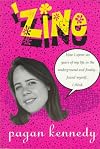
Zine: How I Spent Six Years of My Life in the Underground and Finally Found Myself... I Think
by Pagan Kennedy
On This Page
Description
Back in print for the first time in a decade, this is the hilarious autobiography of a pioneer of the 1990s zine movement. A young woman named Pagan, having just graduated from a writing program at a very prestigious university, is left with a single burning question: Now what? She then takes an unusual step by deciding to invent her new self-the one the public will know-by starting her own magazine, one that will be written, created, and star none other than herself.Tags
Recommendations


















Member Recommendations

Sylak See the early genesis of this art form in its purest satirical form. All hail Crumb!
Member Reviews
I enjoyed this much more than expected. I liked the introduction preceding each zine which explains what was going on behind the scenes in Pagan's life and helped to enrich each issue. Due to her style of writing, and despite the fact that the zines themselves were reproduced in excruciatingly tiny print, I often found myself unaware of whether I was reading an intro or a zine. She captivates. My copy has many page corners turned because something she wrote about was so striking that I wanted to read it again and tell others about it: her thoughts about her slave-owning ancestors, her father's battle with cancer, her own battle with healthcare, and, yes, the feminist popcorn recipe! My favorite entry was Tearing Up the Highway which is show more lengthy but ended much too soon. Although a zine, it rivals any "across America" travelogue, one of my favorite genres. I now have several other Pagan Kennedy books on my wishlist. This is a gem I am glad to have discovered thanks to LT Early Reviewers. show less
 This review was written for LibraryThing Early Reviewers.
This collection of Pagan Kennedy's 8 issue 'zine experiment, with reflective commentary, is a fantastic illustration of Truth in Comedy. In revealing her various neuroses (always with her hair!) and preoccupation with pop culture minutiae Pagan mines laughs from the objectively trivial. There is something humanizing the easily identifiable in a young woman with a substantial journalism/book career revealing her Danny Bonaduce fantasy.
If this book doesn't inspire you to knock out an short essay on your own private obsession, even for an audience of no one, you're not reading it right.
If this book doesn't inspire you to knock out an short essay on your own private obsession, even for an audience of no one, you're not reading it right.
This review was written for LibraryThing Early Reviewers.This was great. A little bit of everything and ALL of it Pagan.
I'd not heard of Pagan Kennedy before reading this reissued zine collection but reading it is like joining a club -- a fun, silly, earnest, handmade, and compelling club. The intro before each issue gave context and helped fill in the gaps between original publication. There are some good drawings and some really bad ones, lots of photographs, and many reports about Pagan's hair.
I couldn't help but compare 'Zine to blogs, but (and it's probably because of my age) there's something about a carefully cut-and-pasted and photocopied book that feels more real to me than some typed words and images uploaded into a shiny blogging template. Me, sentimental? YES. I recommend this show more book regardless.
But augh, some portions of text are so tiny and difficult to read! show less
I'd not heard of Pagan Kennedy before reading this reissued zine collection but reading it is like joining a club -- a fun, silly, earnest, handmade, and compelling club. The intro before each issue gave context and helped fill in the gaps between original publication. There are some good drawings and some really bad ones, lots of photographs, and many reports about Pagan's hair.
I couldn't help but compare 'Zine to blogs, but (and it's probably because of my age) there's something about a carefully cut-and-pasted and photocopied book that feels more real to me than some typed words and images uploaded into a shiny blogging template. Me, sentimental? YES. I recommend this show more book regardless.
But augh, some portions of text are so tiny and difficult to read! show less
This review was written for LibraryThing Early Reviewers.Self-publishing is a weird old thing. Why go to all the effort of creating something that often will only be read by family and friends, but takes you weeks or even months of effort to produce, then costs you too much money to get printed, and then can be incredibly difficult to distribute to complete strangers? Why not just do it electronically or just try and get it published properly? It’s surely just pure self-indulgence…
Well yeah, in a way it kind of is. And I say that as someone who has been happily, and not cheaply, indulging his silliest ideas for about five years now. I am struck with a deeply silly idea (what if I wrote something like “Roy of the Rovers” but from my own perspective of not caring or understanding a show more single thing about the kicking game?) that makes me chuckle and then doodle it down and hope it makes someone else laugh as much as I did (if you want to find out if that person is you, by the way, the resulting “Roy of the Rovers” parody is called “Johnny Kickfoot” and can be found in “The Common Swings Variousness Spectacular” available from, well, me). So in many ways it’s, yes, indulging myself in a very real way. But it’s also a wonderful way of spontaneously taking an idea and getting it down on the page very quickly. To me this is one of the most profoundly wonderful things about zines and mini comics: it’s quick to produce and is frequently (once you get the hang of doing them) pretty much the equivalent of opening up your head and allowing the ideas to plop out directly onto the page.
And the delight of it all is… you don’t have to care or worry about what readers might think about it. You’re not doing it for them. You’re doing it for you. No second guessing. As long as it’s not entirely self-obsessed, boring navel gazing that you’re producing (that’s what blogs are for, surely) you’ve got a good chance of finding someone who finds what you do enjoyable. I’ve had many baffled looks at my zines, but I’ve also found that one thing usually appeals to each person who reads them. Just one thing. And it’s usually the most unexpected thing in the world. My wife’s favourite was a kid’s book idea I basically knocked up on the spot about a vain pony called “Carl the Splendid Horse”. Just mentioning it sends her into giggles and I have no idea why. And I don’t’ think about it too much either, because by then I’m usually trying to think of another silly gag to make someone else chuckle.
This is a roundabout way of saying that I understand a lot of the world that “Zine” comes from. I may not have been creating an autobiographical, mainly text based zine like Pagan Kennedy did, but by golly did this book resonate with me. Kennedy started “Pagan’s Head” as a way of not trying to second guess what other people – and Pagan herself - expected from her attempts to write the Great American Novel ™. This was the Great American Novel’s idiot, carefree brother who just gadded about on the sofa and watched the telly while his precious sibling vexed for hours pondering how many times is too many when it comes to saying “said” on one page. In other words, this was a spontaneous, slight, silly, wildly creative outlet for the kind of ideas that she deemed unusable for her “proper work”. And before she knew it, that spontaneous, slight, silly and wildly creative outlet had actually become, in many ways, as important – if not more so - as the Proper Novel itself.
And that’s because a zine is like a dialogue. A dialogue between the creator and the reader. It’s a letter to people you initially know and then, hopefully, some you have yet to meet. It’s a bulletin straight from your brain. And having Kennedy’s insights into the creative process – and then being able to see that creative process itself – are fascinating. In many ways the quality of the zine itself is not important (although, handily, “Pagan’s Head” is a great read as it moves slowly from self-indulgence to finding a very real and confident voice, as Pagan moves towards the more themed issues: it’s a lovely companion piece to something like John Porcellino’s “King Cat Classix”, a similar collection of juvenilia slowly becoming bolder and more adventurous as the writer and artist grows in confidence in using his skills) – it’s the story of how it got there that really holds the attention.
Because in many ways zines, mini comics and the whole world of self-publishing are more about the journey than they are about the destination itself. Many novels suffer from being so focussed on the destination, they don’t take the time to enjoy dawdling and take in the view on the route. In the hurry to say something important about the human condition, writers don’t suddenly get waylaid by a comical cat or an unusual street name. The zine writer absolutely thrives on those tiny details. Most zine writers and mini comic writers couldn’t give a stuff about the destination. Some of them have barely left the house. Some of them could probably knock out ten issues of something based purely on their front door. Which is why they’re so wonderful. They’re entirely the work of a creative mind wanting to scoop out the overflow from their brain and pin it down on the page. Even the dullest zine or mini comic can contain something uniquely brilliant and vivid. And to read someone’s story about how they progressed along that route makes it even more wonderful. A great, great book. show less
Well yeah, in a way it kind of is. And I say that as someone who has been happily, and not cheaply, indulging his silliest ideas for about five years now. I am struck with a deeply silly idea (what if I wrote something like “Roy of the Rovers” but from my own perspective of not caring or understanding a show more single thing about the kicking game?) that makes me chuckle and then doodle it down and hope it makes someone else laugh as much as I did (if you want to find out if that person is you, by the way, the resulting “Roy of the Rovers” parody is called “Johnny Kickfoot” and can be found in “The Common Swings Variousness Spectacular” available from, well, me). So in many ways it’s, yes, indulging myself in a very real way. But it’s also a wonderful way of spontaneously taking an idea and getting it down on the page very quickly. To me this is one of the most profoundly wonderful things about zines and mini comics: it’s quick to produce and is frequently (once you get the hang of doing them) pretty much the equivalent of opening up your head and allowing the ideas to plop out directly onto the page.
And the delight of it all is… you don’t have to care or worry about what readers might think about it. You’re not doing it for them. You’re doing it for you. No second guessing. As long as it’s not entirely self-obsessed, boring navel gazing that you’re producing (that’s what blogs are for, surely) you’ve got a good chance of finding someone who finds what you do enjoyable. I’ve had many baffled looks at my zines, but I’ve also found that one thing usually appeals to each person who reads them. Just one thing. And it’s usually the most unexpected thing in the world. My wife’s favourite was a kid’s book idea I basically knocked up on the spot about a vain pony called “Carl the Splendid Horse”. Just mentioning it sends her into giggles and I have no idea why. And I don’t’ think about it too much either, because by then I’m usually trying to think of another silly gag to make someone else chuckle.
This is a roundabout way of saying that I understand a lot of the world that “Zine” comes from. I may not have been creating an autobiographical, mainly text based zine like Pagan Kennedy did, but by golly did this book resonate with me. Kennedy started “Pagan’s Head” as a way of not trying to second guess what other people – and Pagan herself - expected from her attempts to write the Great American Novel ™. This was the Great American Novel’s idiot, carefree brother who just gadded about on the sofa and watched the telly while his precious sibling vexed for hours pondering how many times is too many when it comes to saying “said” on one page. In other words, this was a spontaneous, slight, silly, wildly creative outlet for the kind of ideas that she deemed unusable for her “proper work”. And before she knew it, that spontaneous, slight, silly and wildly creative outlet had actually become, in many ways, as important – if not more so - as the Proper Novel itself.
And that’s because a zine is like a dialogue. A dialogue between the creator and the reader. It’s a letter to people you initially know and then, hopefully, some you have yet to meet. It’s a bulletin straight from your brain. And having Kennedy’s insights into the creative process – and then being able to see that creative process itself – are fascinating. In many ways the quality of the zine itself is not important (although, handily, “Pagan’s Head” is a great read as it moves slowly from self-indulgence to finding a very real and confident voice, as Pagan moves towards the more themed issues: it’s a lovely companion piece to something like John Porcellino’s “King Cat Classix”, a similar collection of juvenilia slowly becoming bolder and more adventurous as the writer and artist grows in confidence in using his skills) – it’s the story of how it got there that really holds the attention.
Because in many ways zines, mini comics and the whole world of self-publishing are more about the journey than they are about the destination itself. Many novels suffer from being so focussed on the destination, they don’t take the time to enjoy dawdling and take in the view on the route. In the hurry to say something important about the human condition, writers don’t suddenly get waylaid by a comical cat or an unusual street name. The zine writer absolutely thrives on those tiny details. Most zine writers and mini comic writers couldn’t give a stuff about the destination. Some of them have barely left the house. Some of them could probably knock out ten issues of something based purely on their front door. Which is why they’re so wonderful. They’re entirely the work of a creative mind wanting to scoop out the overflow from their brain and pin it down on the page. Even the dullest zine or mini comic can contain something uniquely brilliant and vivid. And to read someone’s story about how they progressed along that route makes it even more wonderful. A great, great book. show less
This review was written for LibraryThing Early Reviewers.I received an earlier book by Pagan Kennedy from the LibraryThing Early Reviewers program, The Dangerous Joy of Dr Sex, and enjoyed that very much. This one is even more original, imaginative, funny, poignant, and engaging. She may be presenting her 'zines all about herself (and her hair) but it is not the least bit self-absorbed. Instead, Kennedy manages to include all manner of things that life throws at all of us, and she does it with wit and good writing. Thanks to Sante Fe Writers Project for providing the book for review. I look forward to reading more!
p.s. makes me want to make my own zines!
p.s. makes me want to make my own zines!
This review was written for LibraryThing Early Reviewers.What does an authentic voice mean when by the end of this look back at her 20s and her creative experience, Kennedy is talking about her expressed personas as Pagans 1-4?
Many of the reviews I've seen were written by the fellow "Gen Xers" of the author who expressed recognition and nostalgia for the times. I found that my experience as an early millennial was also heavily influential on my reading of the collection, so that its narrative seemed simultaneously terribly dated and universal. The frequent references to paper correspondence and long phone calls made me nostalgic for meaningful communications that I hardly ever experienced, but my teenage years were full of chat rooms and instant messaging and my 20s full of social show more networking. Access to heavily-mediated expression to a large, loosely-connected audience has almost always been available to me in a way that was pretty novel when zines hit the scene in the 90s. However, striving for a sense-of-self and creative success are universal drives to which anyone can relate.
Kennedy's writing throughout is enjoyable to read, but I especially enjoyed the introductions to each issue of her zine. Peering behind the curtain and having the tricks revealed before each issue, did seem to break the spell of Pagan's zine persona, and I sometimes flagged in the longer pieces in the tiny text. Even well-written, entertaining navel-gazing can become a little tiresome upon extended exposure. This was an enjoyable introduction to part of the zine culture of the 90s and to Kennedy's writing. show less
Many of the reviews I've seen were written by the fellow "Gen Xers" of the author who expressed recognition and nostalgia for the times. I found that my experience as an early millennial was also heavily influential on my reading of the collection, so that its narrative seemed simultaneously terribly dated and universal. The frequent references to paper correspondence and long phone calls made me nostalgic for meaningful communications that I hardly ever experienced, but my teenage years were full of chat rooms and instant messaging and my 20s full of social show more networking. Access to heavily-mediated expression to a large, loosely-connected audience has almost always been available to me in a way that was pretty novel when zines hit the scene in the 90s. However, striving for a sense-of-self and creative success are universal drives to which anyone can relate.
Kennedy's writing throughout is enjoyable to read, but I especially enjoyed the introductions to each issue of her zine. Peering behind the curtain and having the tricks revealed before each issue, did seem to break the spell of Pagan's zine persona, and I sometimes flagged in the longer pieces in the tiny text. Even well-written, entertaining navel-gazing can become a little tiresome upon extended exposure. This was an enjoyable introduction to part of the zine culture of the 90s and to Kennedy's writing. show less
This review was written for LibraryThing Early Reviewers.This book was a delight. All eight 'Back to Pagan' zines are collected here, with short supplementary essays from Kennedy detailing the context of their composition. The juxtaposition of the two - youthful and vibrant zines, and more reflective, world weary essays - works brilliantly to evoke a woman assessing and processing the people she used to be in order to better grasp who she is now. So, as autobiography it works startlingly well, and for all Pagan's wry self-deprecation, 'Zine' is postmodern life-writing at its best. The only thing that has stopped me from giving this book the full five stars is, unfortunately, the general layout and presentation. Though SFWP should be lauded for faithfully reproducing the original zines, they show more have shot themselves in the foot by not opting for a larger canvas to do it on. Often the font is so small that most readers will need a magnifying glass to decipher it. This is a shame, because Kennedy writes with such antic exuberance, and composes in such a discerningly ramshackle manner, that her work deserves to be seen up close and a lot more clearly that it can be here. Nonetheless, however much it might hurt your eyes to read it, 'Zine' more than rewards your efforts - whether that be in Kennedy's tale of a road trip through non-place America, reflections on her Southern ancestors, her moving and indignant account of the medical establishment's attitudes to women, or - most importantly of course - the current state of her hair. show less
This review was written for LibraryThing Early Reviewers.Members
- Recently Added By
Author Information

16+ Works 1,256 Members
Common Knowledge
- Canonical title
- Zine: How I Spent Six Years of My Life in the Underground and Finally Found Myself... I Think
- People/Characters
- David Cassidy; Bobby Sherman
- Important places
- Gatlinburg, Tennessee, USA; Space Needle; Allston, Massachusetts, USA; New York, New York, USA
- First words
- For six years I published a magazine about myself.
- Last words
- (Click to show. Warning: May contain spoilers.)But even so, even if I give up this Head, I know I'll never move out of this house made of art, this secret garden that sits in tbe midst of an anonymous city.
Classifications
Statistics
- Members
- 122
- Popularity
- 268,837
- Reviews
- 22
- Rating
- (3.89)
- Languages
- English
- Media
- Paper, Ebook
- ISBNs
- 4
- ASINs
- 2