
Emily Dickinson: Poems
by Emily Dickinson 
On This Page
Description
Emily Dickinson (1830 - 1886) was an eccentric, reclusive poet, though born to a family of good standing within their Massachusetts community. She had fewer than a dozen poems published in her lifetime, though posthumously her sister found a cache of nearly eighteen hundred, all of which have now been published. Emily's style was broke with the common forms of poetry at the time, and foreshadowed what was to come. Her work was harshly criticized when first published, but she is now show more considered one of the American greats.. show less
Tags
Recommendations



















Member Reviews
I picked Emily Dickinson Poems up thinking I should study Dickinson's work. I'm fairly certain I read some of her poems in high school and/or college, but I'm not sure. Anyway, as with any should, this book sat in my to-be-read pile for a really long time. Occasionally, I'd pick it up and read a poem or two and then put it back. It was that should that kept getting in the way. Finally, I decided it was time to read these poems. I planned to read a couple each night before going to sleep. Most nights I decided to read "just two more" when I finished my planned reading for the night. Dickinson evokes a lot of emotion in her writing even when her poems aren't particularly clear as to whether they're meant literally or symbolically. Often, show more the poems left me conflicted between two potential messages as the wording felt open to interpretation. Notes of depression float beside appreciation for nature wrapped up in religious ideology in Dickinson's poetry. A book well worth reading, especially for anyone interested in exploring why Dickinson is so highly regarded among poets. show less
Full disclaimer- I really can't properly review poetry. Mainly because I suck at scansion and meter. Language, I'm good with, but everything else...not so much.
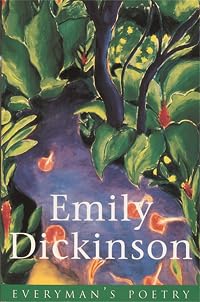
That out of the way, I do quite like Dickinson. This is a fairly comprehensive collection, covering three years of writing (1890, 1891, and 1896), and grouped into her four most prevalent subjects. There's a definite change in the tone of her poems from the 1890 section to 1896, and with the majority of topics (particularly anything in the Life and Eternity sections), there's a much darker tone and worldview in her writing. Of the four groupings, I really wasn't fond of the Nature poems- they were nice, but they got a little tedious and flowery (heh) for my tastes. To paraphrase show more Pratchett, "Apparently, the poet had liked [the garden] very much." I liked the Life and Eternity sections, pretty much because my tastes run toward the darker side. And also, I liked the collection because there's such a wide range of her poetry included here. (Because, let's be honest, "I'm nobody!" and "Because I couldn't stop for Death..." got really old the third time I had to read it for school.) It's not a bad collection, and I would recommend reading it just to get another side of Dickinson other than what gets read in school. show less
That out of the way, I do quite like Dickinson. This is a fairly comprehensive collection, covering three years of writing (1890, 1891, and 1896), and grouped into her four most prevalent subjects. There's a definite change in the tone of her poems from the 1890 section to 1896, and with the majority of topics (particularly anything in the Life and Eternity sections), there's a much darker tone and worldview in her writing. Of the four groupings, I really wasn't fond of the Nature poems- they were nice, but they got a little tedious and flowery (heh) for my tastes. To paraphrase show more Pratchett, "Apparently, the poet had liked [the garden] very much." I liked the Life and Eternity sections, pretty much because my tastes run toward the darker side. And also, I liked the collection because there's such a wide range of her poetry included here. (Because, let's be honest, "I'm nobody!" and "Because I couldn't stop for Death..." got really old the third time I had to read it for school.) It's not a bad collection, and I would recommend reading it just to get another side of Dickinson other than what gets read in school. show less
We may ask ourselves a simple question: do we believe Emily Dickinson tried to tell about very exceptional Bees, Ears, or Birds, so peculiar that you write them with capital letters? After verification against manuscript resources and a few thoughts, we may come up with the answer: no, she definitely did not.
As for as the actual book, this is a cute little volume of poems. However, I find Dickinson to be a poor poet who doesn't really mature as the years progress. The poetry is simplistic, lacks imagery, and typically dwells in death.
I have had this book since I was 16. My mother gave it to me for my Birthday. It is worn out but holds a lot of sentimental value to me. My grandparents and my uncle have poems written by her on their gravestones. I love Hope is the thing with feathers and It's all I have to bring today. Wild Nights is lovely too.
[From Books and You, Doubleday, Doran & Co., 1940, pp. 102-4:]
I must also say a few words about Emily Dickinson. I am afraid I shall offend many persons in America when I confess that to my mind she has been accorded more praise than she deserves. She has been hailed as the great American poet. But poetry has nothing to do with nationality. Poets inhabit the empyrean and belong to no country. Do we talk of Homer as a great Greek poet or of Dante as a great Italian poet? To do so would be to depreciate them. Nor should our judgment be affected by the circumstances of a poet’s life. That Emily Dickinson had an unhappy love affair and lived for many years in seclusion, that Poe tippled and was ungrateful to those who befriended him, show more neither makes the poetry of the one any better nor that of the other any worse. Emily Dickinson is best read in anthologies. There her wit, her poignancy, her simplicity make their utmost effect, and it may be that most anthologies would be the richer if they were less niggardly in their selections; but when you read the whole body of her work you are likely to be disappointed. She is at her best when she allows herself to sing; when her rhythm is modulated and varied, when her language serves her emotion and when her invention is spontaneous. But she is too rarely at her best. Like Miss Emmeline Grangerford, Emily Dickinson could rattle off poetry like nothing. There is a great deal of monotony in her constant use of the common or ballad metre in a stanza of four lines; it is in itself a limiting form, and she narrows it still more because her ear was not subtle and her language was seldom simple enough for the measure. She had a strain of sophistication which induced her too often to sacrifice lyric beauty to a desire to make a clever point. In the short epigrammatic poems she wrote it is a matter of hitting the nail accurately on the head; she was very apt to give it a little tap slightly on one side. She had a gift, but a small one, and it is only confusing when claims are made on her behalf which there is little in her work to justify. Poetry is the crown of literature, but we have the right to demand that its pearls should not be cultured nor its rubies reconstructed. America will produce poets (indeed I am inclined to think it has already done so) who will make the encomiums lavished on Emily Dickinson appear extravagant. show less
I must also say a few words about Emily Dickinson. I am afraid I shall offend many persons in America when I confess that to my mind she has been accorded more praise than she deserves. She has been hailed as the great American poet. But poetry has nothing to do with nationality. Poets inhabit the empyrean and belong to no country. Do we talk of Homer as a great Greek poet or of Dante as a great Italian poet? To do so would be to depreciate them. Nor should our judgment be affected by the circumstances of a poet’s life. That Emily Dickinson had an unhappy love affair and lived for many years in seclusion, that Poe tippled and was ungrateful to those who befriended him, show more neither makes the poetry of the one any better nor that of the other any worse. Emily Dickinson is best read in anthologies. There her wit, her poignancy, her simplicity make their utmost effect, and it may be that most anthologies would be the richer if they were less niggardly in their selections; but when you read the whole body of her work you are likely to be disappointed. She is at her best when she allows herself to sing; when her rhythm is modulated and varied, when her language serves her emotion and when her invention is spontaneous. But she is too rarely at her best. Like Miss Emmeline Grangerford, Emily Dickinson could rattle off poetry like nothing. There is a great deal of monotony in her constant use of the common or ballad metre in a stanza of four lines; it is in itself a limiting form, and she narrows it still more because her ear was not subtle and her language was seldom simple enough for the measure. She had a strain of sophistication which induced her too often to sacrifice lyric beauty to a desire to make a clever point. In the short epigrammatic poems she wrote it is a matter of hitting the nail accurately on the head; she was very apt to give it a little tap slightly on one side. She had a gift, but a small one, and it is only confusing when claims are made on her behalf which there is little in her work to justify. Poetry is the crown of literature, but we have the right to demand that its pearls should not be cultured nor its rubies reconstructed. America will produce poets (indeed I am inclined to think it has already done so) who will make the encomiums lavished on Emily Dickinson appear extravagant. show less
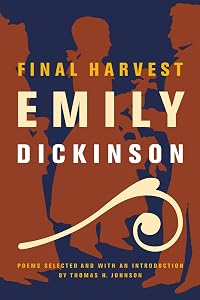
This posthumous collection introduced the Amherst recluse to the literary world, apart from a few poems published in her lifetime in local newspapers. Among the 116 poems it contains are some of her most famous, such as “There’s a certain slant of light” and “Because I could not stop for Death.” Dickinson’s envoy, “This is my letter to the world,” serves as a preface. The rest of the collection is subdivided into four sections: Life (26 poems), Love (18), Nature (31), and Time and Eternity (40). The final section title is euphemistic; the poems in it are about death, although many are tempered by an intimation of immortality.
While no substitute for modern critical editions, due to the editors’ interventions, it’s show more useful to have this selection on my Kindle. show less
While no substitute for modern critical editions, due to the editors’ interventions, it’s show more useful to have this selection on my Kindle. show less
Members
- Recently Added By
Lists

Blue Pyramid 1,276 Best Books of All Time
1,248 works; 32 members

Trinity College Booklist (1951): Class Ten, English Literature
358 works; 5 members

Mustich's 1000 Books to Read Before You Die: A Life Changing List
1,001 works; 20 members
Author Information

539+ Works 30,138 Members
Emily Dickinson was born in Amherst, Massachusetts on December 10, 1830. Although one of America's most acclaimed poets, the bulk of her work was not published until well after her death on May 15, 1886. The few poems published in her lifetime were not received with any great fanfare. After her death, Dickinson's sister Lavinia found over 1,700 show more poems Emily had written and stashed away in a drawer -- the accumulation of a life's obsession with words. Critics have agreed that Dickinson's poetry was well ahead of its time. Today she is considered one of the best poets of the English language. Except for a year spent at Mount Holyoke Female Seminary in South Hadley, Dickinson spent her entire life in the family home in Amherst, Massachusetts. She never married and began to withdraw from society, eventually becoming a recluse. Dickinson's poetry engages the reader and requires his or her participation. Full of highly charged metaphors, her free verse and choice of words are best understood when read aloud. Dickinson's punctuation and capitalization, not orthodox by Victorian standards and called "spasmodic" by her critics, give greater emphasis to her meanings. (Bowker Author Biography) show less
Emily Dickinson has a Legacy Library. Legacy libraries are the personal libraries of famous readers, entered by LibraryThing members from the Legacy Libraries group.
Some Editions
Awards and Honors
Series
Belongs to Publisher Series
Common Knowledge
- Original title
- Poesie
- Original language*
- Englisch
*Some information comes from Common Knowledge in other languages. Click "Edit" for more information.
Classifications
Statistics
- Members
- 1,103
- Popularity
- 23,090
- Reviews
- 13
- Rating
- (4.18)
- Languages
- 6 — English, French, Italian, Multiple languages, Portuguese, Spanish
- Media
- Paper, Audiobook, Ebook
- ISBNs
- 67
- ASINs
- 34