On This Page
Description
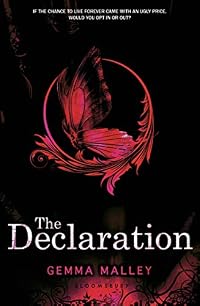
In 2140 England, where drugs enable people to live forever and children are illegal, teenaged Anna, an obedient "Surplus" training to become a house servant, discovers that her birth parents are trying to find her.Tags
Recommendations
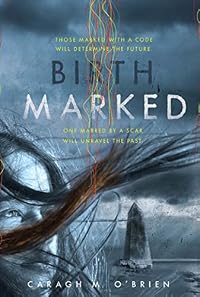

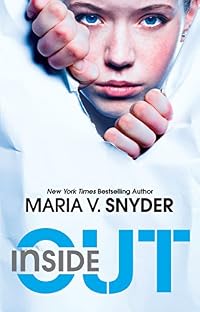
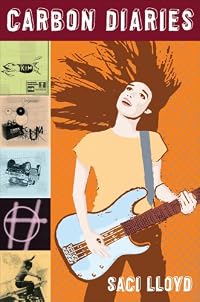
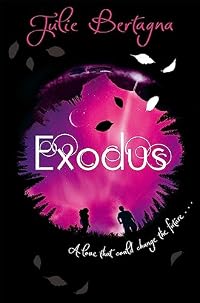
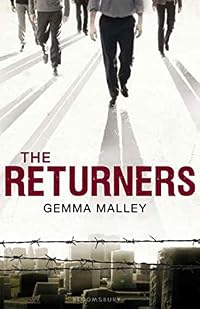
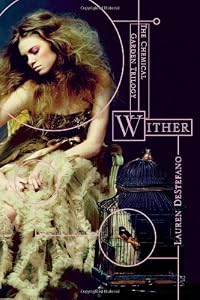

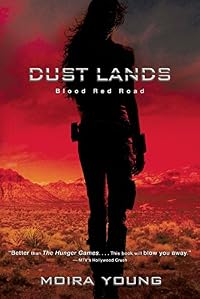
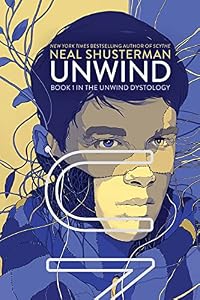
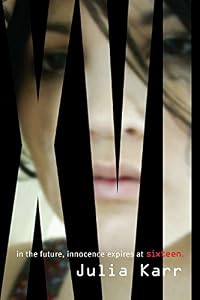
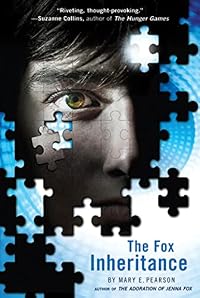
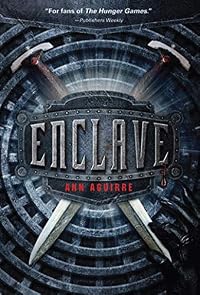
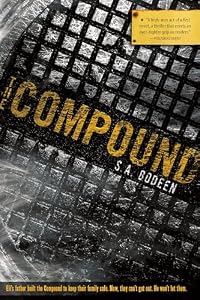
Member Recommendations
Member Reviews
It’s been a long time since I’ve read a book in one sitting. ONE. As in I didn’t realized I had, until I finished and looked up to find my cats very grumpy from lack of attention. Maybe I should change my rating system from stars to a “grumpy kitty meter”. If I did, The Declaration gets 5 out 5 Shredded Shoes.
The premise for this dystopian novel derives from the author wondering what a society would be like if humans could live forever. However there remains the issue of population control.
In the year 2140, this is managed by the Declaration, an oath taken by those wanting immortality:
"Longevity drugs are a fountain of youth. Sign the Declaration, agree not to have children, and you too can live forever. Refuse, and you will show more live as an outcast. For the children born outside the law, it only gets worse – Surplus status." – From the back cover
The story is told from the point of view of Surplus Anna: a young, indoctrinated, yet authentic voice. The realization of what is really going on in the world would not have the dramatic impact it does, if the main narrator were anyone else.
". . . captured when she was young and brought up in a Surplus Hall, a place where she is taught to hate herself and her parents; to be told again and again that she owes a debt to society, to Mother Nature, whose generosity she has abused by her very existence." – Description of Anna by the author
To help her enlightenment is Peter. Another Surplus, but not like any Anna has known before. He’s spent most of his life on the “outside”. What unnerves her most is that he knows things about her that he shouldn’t. Luckily, seeds of doubt have already been planted in Anna’s mind, so it isn’t too hard to accept her sudden decision to turn her back on the only life she’s ever known.
The author states that “The Declaration is, I hope, a story that will challenge its readers, that will stay with them, that will make them think about the freedoms and privileges we take for granted and about the price paid for these. But, ultimately, The Declaration is Anna’s Story.
This story does stay with you. Makes you wonder how many of us are willing to accept our true role on this planet, and whether or not it should be an infinite one. What price would any of us pay in order to have a longer life? Would we accept a Fountain of Youth if what we had to sacrifice, is youth itself?
Another highly recommended read. I can’t wait to get my hands on The Resistance and The Legacy. show less
The premise for this dystopian novel derives from the author wondering what a society would be like if humans could live forever. However there remains the issue of population control.
In the year 2140, this is managed by the Declaration, an oath taken by those wanting immortality:
"Longevity drugs are a fountain of youth. Sign the Declaration, agree not to have children, and you too can live forever. Refuse, and you will show more live as an outcast. For the children born outside the law, it only gets worse – Surplus status." – From the back cover
The story is told from the point of view of Surplus Anna: a young, indoctrinated, yet authentic voice. The realization of what is really going on in the world would not have the dramatic impact it does, if the main narrator were anyone else.
". . . captured when she was young and brought up in a Surplus Hall, a place where she is taught to hate herself and her parents; to be told again and again that she owes a debt to society, to Mother Nature, whose generosity she has abused by her very existence." – Description of Anna by the author
To help her enlightenment is Peter. Another Surplus, but not like any Anna has known before. He’s spent most of his life on the “outside”. What unnerves her most is that he knows things about her that he shouldn’t. Luckily, seeds of doubt have already been planted in Anna’s mind, so it isn’t too hard to accept her sudden decision to turn her back on the only life she’s ever known.
The author states that “The Declaration is, I hope, a story that will challenge its readers, that will stay with them, that will make them think about the freedoms and privileges we take for granted and about the price paid for these. But, ultimately, The Declaration is Anna’s Story.
This story does stay with you. Makes you wonder how many of us are willing to accept our true role on this planet, and whether or not it should be an infinite one. What price would any of us pay in order to have a longer life? Would we accept a Fountain of Youth if what we had to sacrifice, is youth itself?
Another highly recommended read. I can’t wait to get my hands on The Resistance and The Legacy. show less
I could really tell this was written by a journalist. It was eat-it-up-faster-than-physically-possible-writing. I enjoyed the way Malley made it emotive without being emotional. It's an interesting, bleak and believable world - more sci-fi than fantasy.My only problem was the love story - these kids are really young to be committing to each other. It seems to be a theme at the moment, 16 year olds who have found the loves of their lives. I guess it fits with the target readers (who will feel like that if they fall in love, because they're so passionate at that age).
The Declaration by Gemma Malley is set in a world where a longevity drug has given everyone on earth immortality. Sounds great at first - until you realize that if no one dies and people keep having children, population growth explodes and there just aren’t enough resources to go around. That’s why everyone who takes longevity drugs must sign a declaration saying that they will not have children.
15 year old Anna is an illegal and has lived in a “surplus” hall most of her life. She’s been told her parents broke the law by having her and indoctrinated by the cruel Mrs. Pincent to believe that her only chance to make things right is to be obedient and learn to become a “valuable asset” (otherwise known as a slave!). Her show more beliefs are shaken up when a boy her age who has lived on the outside all his life in hiding arrives and tells her “shocking things” about her parents and the declaration.
As in most dystopian fiction, the main conflict is man vs society but we also have a well rounded villainess in Mrs. Pincent. In fact, Mrs. Pincent is actually a vastly more interesting character than Anna who comes off as fairly bland (granted it is due to her very limited life experience). The beginning of the book is slow with big lumps of exposition and lots of scenes showing just how very inhumane it is to tell children they are worthless.
Things pick up when Anna decides it’s time to develop a personality and scenes with Mrs. Sharpe, a well drawn yet minor character are sharp and insightful. Even though the big twist is pretty obvious, it’s still satisfying.
I had really high expectations for this book so I was a bit let down that it didn’t completely live up to them. Still, I would recommend it to my fellow dystopian fiction fans. show less
15 year old Anna is an illegal and has lived in a “surplus” hall most of her life. She’s been told her parents broke the law by having her and indoctrinated by the cruel Mrs. Pincent to believe that her only chance to make things right is to be obedient and learn to become a “valuable asset” (otherwise known as a slave!). Her show more beliefs are shaken up when a boy her age who has lived on the outside all his life in hiding arrives and tells her “shocking things” about her parents and the declaration.
As in most dystopian fiction, the main conflict is man vs society but we also have a well rounded villainess in Mrs. Pincent. In fact, Mrs. Pincent is actually a vastly more interesting character than Anna who comes off as fairly bland (granted it is due to her very limited life experience). The beginning of the book is slow with big lumps of exposition and lots of scenes showing just how very inhumane it is to tell children they are worthless.
Things pick up when Anna decides it’s time to develop a personality and scenes with Mrs. Sharpe, a well drawn yet minor character are sharp and insightful. Even though the big twist is pretty obvious, it’s still satisfying.
I had really high expectations for this book so I was a bit let down that it didn’t completely live up to them. Still, I would recommend it to my fellow dystopian fiction fans. show less
If you could live forever, would you? And, if most people said yes, how would the world deal with the competition for valuable natural resources and energy?
This is the premise for Gemma Malley's The Declaration. Under the Declaration, people who chose to opt-into the Declaration do not have the right to reproduce. If they do, their children are called Surplus. These surplus children are taken from their parents in raised in institutions, where they are beaten, near-starved, and convinced that they are virtually worthless. Their only hope is to learn to be Useful and to serve the Legals.
This is the basic life story for the main character, Surplus Anna. She was discovered when she was just two years old, and has been told that her parents show more were greedy law-breakers. Raised in the Grange under the watchful, cruel eye of Mrs. Pincent, she has learned to be meek and to not question her life's lot. She believes this to be true and her only concern is to find a way to become Useful and to find a good placement where she can wait out her life in complete servitude.
That is, until an older boy named Peter shows up at the Grange. He is much older than the average new Surplus, and is filled with revolutionary ideas and is wild by Surplus standards. Peter challenges everything that Anna has believed for her entire life. When he starts calling her "Anna Covey" and talks about her parents and says that he knows who she really is, he puts her world into a tailspin.
Though she resists Peter's information and knowledge, she cannot help but be intrigued. Is there more to life than being a servant? Does life have value, even if one is born a Surplus?
I thoroughly enjoyed this book. I've actually had it for a long time, but had never read it. I found it on my free reading shelves in my classroom, and vowed to read it for a Dystopian challenge. Normally, I read all of the books on the shelves that I make available for my students, but this tricky title slipped in without my knowledge.
I am so glad that I read this book. I really and truly stopped to think about what our world would be like if there was an option to take Longevity drugs. What I imagined is not pretty. I think that many countries would use this as a way to reward the rich and eliminate the poor. I'd worry about several of the minority populations on our planet. How would they survive and persist if there were expensive drugs that only a small population of people had access to? I could go on and on. This is a great book for conversation and would be perfect as a whole-class read or as a book club selection. show less
This is the premise for Gemma Malley's The Declaration. Under the Declaration, people who chose to opt-into the Declaration do not have the right to reproduce. If they do, their children are called Surplus. These surplus children are taken from their parents in raised in institutions, where they are beaten, near-starved, and convinced that they are virtually worthless. Their only hope is to learn to be Useful and to serve the Legals.
This is the basic life story for the main character, Surplus Anna. She was discovered when she was just two years old, and has been told that her parents show more were greedy law-breakers. Raised in the Grange under the watchful, cruel eye of Mrs. Pincent, she has learned to be meek and to not question her life's lot. She believes this to be true and her only concern is to find a way to become Useful and to find a good placement where she can wait out her life in complete servitude.
That is, until an older boy named Peter shows up at the Grange. He is much older than the average new Surplus, and is filled with revolutionary ideas and is wild by Surplus standards. Peter challenges everything that Anna has believed for her entire life. When he starts calling her "Anna Covey" and talks about her parents and says that he knows who she really is, he puts her world into a tailspin.
Though she resists Peter's information and knowledge, she cannot help but be intrigued. Is there more to life than being a servant? Does life have value, even if one is born a Surplus?
I thoroughly enjoyed this book. I've actually had it for a long time, but had never read it. I found it on my free reading shelves in my classroom, and vowed to read it for a Dystopian challenge. Normally, I read all of the books on the shelves that I make available for my students, but this tricky title slipped in without my knowledge.
I am so glad that I read this book. I really and truly stopped to think about what our world would be like if there was an option to take Longevity drugs. What I imagined is not pretty. I think that many countries would use this as a way to reward the rich and eliminate the poor. I'd worry about several of the minority populations on our planet. How would they survive and persist if there were expensive drugs that only a small population of people had access to? I could go on and on. This is a great book for conversation and would be perfect as a whole-class read or as a book club selection. show less
Anna is illegal and hated-just for being born. Set in 2140, a drug called longevity has made immortality a reality. With this, overpopulation is a serious concern. Children have been outlawed-and those that are born are captured and trained to be slaves to the immortal. Anna is a ‘Surplus’ living in Grange hall. She meets a rebellious teenager named Peter who opens her eyes to other possibilities in the world and a choice to make regarding her place in it.
Reviewed by Natalie Tsang for TeensReadToo.com
C.S. Lewis, author of THE CHRONICLES OF NARNIA, once wrote that there are three ways of writing for children. The first is to cater to what children want (but people seldom know what they want and this usually ends badly), the second develops from a story told to a specific child (Lewis Carrol's THE ADVENTURES OF ALICE IN WONDERLAND, for instance), and the third is that it is simply the best art form to convey the story.
Gemma Malley's debut young adult novel, THE DECLARATION, is of the last category.
I am making this point because while THE DECLARATION involves two teenagers, fourteen-year-old Anna and fifteen-year-old Peter, it never feels aimed towards the teen audience Therefore it is show more categorized as a young adult novel by the age of its narrators rather than its content and this, I believe, will give it an enduring quality. C. S. Lewis wrote, "Where the children's story is simply the right form for what the author has to say, then of course readers who want to hear that will read the story or reread it at any age."
THE DECLARATION opens in the year 2140, and people have conquered death in the form of Longevity drugs. With limited food and fuel resources, waste has become a serious crime and the worst crime of all is having a child. Anna is one of these children. She is housed at Grange Hall where she and other Surpluses are taught that the most they can ever hope for is a harsh life of servitude to make amends for their existence.
Anna is well on her way to becoming a Valuable Asset when Peter arrives at Grange Hall. He challenges everything she has learned by arguing that people who take Longevity are the real criminals and perversions of nature, not the young. He also claims that he knows her parents and that they want her back. Peter is strange and new, but is he enough to make her risk everything to escape with him?
Unlike some novels that use characters, plot, and setting as a vehicle to drive home a message, Gemma Malley never lets the moral and ethical questions she raises detract from the actual story. The characters are well drawn and identifiable, and the language is simple and unpretentious. THE DECLARATION is not without flaws, especially the failure to explain or integrate Mrs. Pincent's involvement with the black market product Longevity+ into a major plotline, but this lends mystery and excitement for a sequel.
Even though it contains a handful of science fiction and young adult hallmarks, such as a utopia/dystopia setting, wonder drugs, and finding and defining oneself, it cannot be dismissed as merely a youthful 1984 knockoff. It is mostly a book about people, fear, and loss. Themes that are, if not always, exquisitely accessible in this age. show less
C.S. Lewis, author of THE CHRONICLES OF NARNIA, once wrote that there are three ways of writing for children. The first is to cater to what children want (but people seldom know what they want and this usually ends badly), the second develops from a story told to a specific child (Lewis Carrol's THE ADVENTURES OF ALICE IN WONDERLAND, for instance), and the third is that it is simply the best art form to convey the story.
Gemma Malley's debut young adult novel, THE DECLARATION, is of the last category.
I am making this point because while THE DECLARATION involves two teenagers, fourteen-year-old Anna and fifteen-year-old Peter, it never feels aimed towards the teen audience Therefore it is show more categorized as a young adult novel by the age of its narrators rather than its content and this, I believe, will give it an enduring quality. C. S. Lewis wrote, "Where the children's story is simply the right form for what the author has to say, then of course readers who want to hear that will read the story or reread it at any age."
THE DECLARATION opens in the year 2140, and people have conquered death in the form of Longevity drugs. With limited food and fuel resources, waste has become a serious crime and the worst crime of all is having a child. Anna is one of these children. She is housed at Grange Hall where she and other Surpluses are taught that the most they can ever hope for is a harsh life of servitude to make amends for their existence.
Anna is well on her way to becoming a Valuable Asset when Peter arrives at Grange Hall. He challenges everything she has learned by arguing that people who take Longevity are the real criminals and perversions of nature, not the young. He also claims that he knows her parents and that they want her back. Peter is strange and new, but is he enough to make her risk everything to escape with him?
Unlike some novels that use characters, plot, and setting as a vehicle to drive home a message, Gemma Malley never lets the moral and ethical questions she raises detract from the actual story. The characters are well drawn and identifiable, and the language is simple and unpretentious. THE DECLARATION is not without flaws, especially the failure to explain or integrate Mrs. Pincent's involvement with the black market product Longevity+ into a major plotline, but this lends mystery and excitement for a sequel.
Even though it contains a handful of science fiction and young adult hallmarks, such as a utopia/dystopia setting, wonder drugs, and finding and defining oneself, it cannot be dismissed as merely a youthful 1984 knockoff. It is mostly a book about people, fear, and loss. Themes that are, if not always, exquisitely accessible in this age. show less
My opinion on this book swayed back and forth between 3 and 5 stars, so I eventually settled on 4 and I'm now going to do my best to explain why.
Why it got 4 stars
This book got 4 stars for being a highly original and intriguing story. I'm a real lover of dystopian societies, especially those set in a foreseeable future, and this is one unlike any other but with elements that are so cleverly woven with the current thoughts and fears that it makes it seem like a tragic possibility.
The book tells the story of a society where longevity drugs mean that the body never grows old and dies, they keep all the organs working and eradicate diseases such as cancer, heart disease and AIDs. But a society where no one dies cannot exist unless no one is show more born either.
Hence the declaration. Signing the declaration gives you eternal access to longevity drugs, as long as you swear to never have children. Any children born illegally are called 'surpluses', and sent away to surplus houses where they are taught of their lack of worth. How they are a burden to mother nature and the Legals who were here first, they are trained to be slaves to the Legals and to expect beatings and mistreatment as a punishment for their parents' sins.
It's an incredible and well-constructed idea and you can feel the frustration at being told your nothing by people who have selfishly warped nature in order to avoid death. It questions some of today's issues, particularly some practises found in China, and is a story about the value of life... and, strangely, of death. I cannot wait to read the second book in this series.
Why it didn't get 5 stars
Quite simply, I didn't like any of the characters. The protagonist, Anna, was selfish and bratty and just really quite pathetic at times. Also, Peter was a drip. I've never been a big fan of the male hero coming in and saving the helpless princess, but if you are going to go down that route, at least make your hero memorable. There just isn't much to say about Peter, other than the fact that he was boring. The most interesting character was Mrs Pincham and the strange twist to this story that does come as quite a shock.
I am eagerly anticipating more and just hope that the author can develop her characters to match up to the standards of the the very imaginative story. show less
Why it got 4 stars
This book got 4 stars for being a highly original and intriguing story. I'm a real lover of dystopian societies, especially those set in a foreseeable future, and this is one unlike any other but with elements that are so cleverly woven with the current thoughts and fears that it makes it seem like a tragic possibility.
The book tells the story of a society where longevity drugs mean that the body never grows old and dies, they keep all the organs working and eradicate diseases such as cancer, heart disease and AIDs. But a society where no one dies cannot exist unless no one is show more born either.
Hence the declaration. Signing the declaration gives you eternal access to longevity drugs, as long as you swear to never have children. Any children born illegally are called 'surpluses', and sent away to surplus houses where they are taught of their lack of worth. How they are a burden to mother nature and the Legals who were here first, they are trained to be slaves to the Legals and to expect beatings and mistreatment as a punishment for their parents' sins.
It's an incredible and well-constructed idea and you can feel the frustration at being told your nothing by people who have selfishly warped nature in order to avoid death. It questions some of today's issues, particularly some practises found in China, and is a story about the value of life... and, strangely, of death. I cannot wait to read the second book in this series.
Why it didn't get 5 stars
Quite simply, I didn't like any of the characters. The protagonist, Anna, was selfish and bratty and just really quite pathetic at times. Also, Peter was a drip. I've never been a big fan of the male hero coming in and saving the helpless princess, but if you are going to go down that route, at least make your hero memorable. There just isn't much to say about Peter, other than the fact that he was boring. The most interesting character was Mrs Pincham and the strange twist to this story that does come as quite a shock.
I am eagerly anticipating more and just hope that the author can develop her characters to match up to the standards of the the very imaginative story. show less
Members
- Recently Added By
Lists

Best Dystopias
280 works; 276 members
Talk Discussions
Past Discussions
Found: YA dystopia - people no longer age and can't have children in Name that Book (June 2024)
Author Information

9 Works 2,209 Members
Awards and Honors
Awards
Distinctions
Series

Common Knowledge
- Canonical title
- The Declaration
- Original publication date
- 2007-10-02
- People/Characters
- Anna Covey; Margaret Pincent
- Important places
- Grange Hall
- Dedication
- For Dorie Simmonds
- First words
- 11 January 2140
My name is Anna. - Quotations
- “Reading and writing were a dangerous business; they made you think.”
- Last words
- (Click to show. Warning: May contain spoilers.)I am Anna Covey: Opt Out.
Classifications
- Genres
- Teen, Fiction and Literature, Science Fiction, Young Adult
- DDC/MDS
- 823.92 — Literature & rhetoric English & Old English literatures English fiction 1900- 2000-
- LCC
- PZ7 .M2953 .D — Language and Literature Fiction and juvenile belles lettres Fiction and juvenile belles lettres Juvenile belles lettres
- BISAC
Statistics
- Members
- 1,185
- Popularity
- 20,998
- Reviews
- 78
- Rating
- (3.67)
- Languages
- 11 — Czech, Danish, Dutch, English, French, German, Italian, Polish, Portuguese, Spanish, Swedish
- Media
- Paper, Audiobook, Ebook
- ISBNs
- 35
- ASINs
- 4