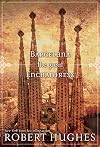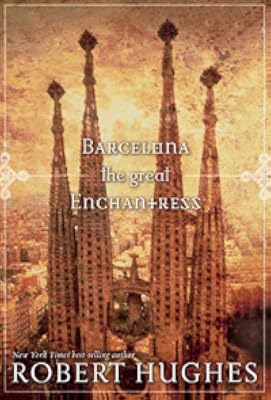
Barcelona the Great Enchantress
by Robert Hughes
On This Page
Description
Beginning with a vivid description of his wedding in the splendid medieval ceremonial chamber in Barcelona's city hall, Hughes launches into a lively account of the history, art, and architecture of the storied city. He tells of architectural treasures abounding in 14th-century Barcelona, establishing it as one of Europe's great Gothic cities, while Madrid was hardly more than a cluster of huts. The city spawned such great artists as Antoni Gaudi, Pablo Picasso, Joan Miro, Salvador Dali, and show more Pablo Casals. Hughes's deep knowledge of the city is evident--but it's his personal reflections of what Barcelona, its people, and its storied history and culture have meant to him over the decades that sets Barcelona the Great Enchantress apart from all others' books. show lessTags
Recommendations









Member Reviews
An interesting journey through the history of the city of Barcelona, its art and culture, as well as a good introduction on the "secrets" behind Catatonia's nationalism and identity.
I've read this book in search for answers and insights on what historical and artistic forces have shaped Barcelona into the unique metropolis it now is today. I also wanted to gain a better understanding of what it means to be Catalan (I owe this interest to the ongoing movements for Catalonia's independence as well as FC Barcelona's interesting motto "mas que un club"/"more than a club"). The book did not fail to deliver on these two fronts.
This book is a condensed version of Robert Hughes's 1992 500-page book titled "Barcelona". Robert, who is an art show more critic, is clearly infatuated with Barcelona and its art symbols; and his love for the city is infectious and shines through his writing.
I have visited Barcelona back in 2011, and this city is still, to date, one of my personal favorites. To say that Barcelona is a city with a unique blend of life, modernism, culture, and architecture would be a huge understatement (and, not to mention, a tautology of sorts).
This book helped rekindle my nostalgic flames for the city and filled in the historical, artistic, and contextual backdrop that I was lacking (I only have myself to blame). I wish I've had this book in my company touring Barcelona as it would've been the perfect guide to a wonderful city.
One of the major disappointments I have with this book is the small number of photos to go with the text. Robert's descriptions of many buildings, monuments, and paintings were left incomplete and "crippled" without visual aids. Sure, I googled many of the works as they came along, but I'm sure tourists would appreciate a self-contained book/guide.
Recommended for anyone who wants to learn about, or is in love with, Barcelona.
3/5 show less
I've read this book in search for answers and insights on what historical and artistic forces have shaped Barcelona into the unique metropolis it now is today. I also wanted to gain a better understanding of what it means to be Catalan (I owe this interest to the ongoing movements for Catalonia's independence as well as FC Barcelona's interesting motto "mas que un club"/"more than a club"). The book did not fail to deliver on these two fronts.
This book is a condensed version of Robert Hughes's 1992 500-page book titled "Barcelona". Robert, who is an art show more critic, is clearly infatuated with Barcelona and its art symbols; and his love for the city is infectious and shines through his writing.
I have visited Barcelona back in 2011, and this city is still, to date, one of my personal favorites. To say that Barcelona is a city with a unique blend of life, modernism, culture, and architecture would be a huge understatement (and, not to mention, a tautology of sorts).
This book helped rekindle my nostalgic flames for the city and filled in the historical, artistic, and contextual backdrop that I was lacking (I only have myself to blame). I wish I've had this book in my company touring Barcelona as it would've been the perfect guide to a wonderful city.
One of the major disappointments I have with this book is the small number of photos to go with the text. Robert's descriptions of many buildings, monuments, and paintings were left incomplete and "crippled" without visual aids. Sure, I googled many of the works as they came along, but I'm sure tourists would appreciate a self-contained book/guide.
Recommended for anyone who wants to learn about, or is in love with, Barcelona.
3/5 show less
This is a fine little book, a pared down version of Hughes’s bigger volume, Barcelona. For those who do not require a blow-by-blow account of Catalan history, this smaller book is just the thing.
Hughes loves Barcelona and knows it well. That he often means “Catalunya” when he says “Barcelona” is not too important if you’re not reading this for academic reasons. Yet it surprised me to read some other errors and inaccuracies.
The worst of them was his use of Castilian for several Catalan place names. Espluges de Llobregat is not the only example, but the only one that comes to mind. Not only does he know the history of the suppression of the Catalan language that was endured during Franco years, he writes about it in the book. show more
Other little annoyances were his description of castells, the human castles. They are not built in rings. They are built on a central frame of four men who are then fortified by a great mass, called a pinya (pineapple), which might have a choreography, but looks simply like a mass to the observer. And the sardanes danced in front of the cathedral are not spontaneous in that they are held weekly for most of the year and although the occasional Catalan or tourist might be surprised by the performance, most people who dance or come to hear the music know to come.
I lived in Barcelona for a couple of years and it is my favorite city too, so I notice these little things. Then again, I very much appreciate Hughes's well-informed description of and affection for this wonderful city. show less
Hughes loves Barcelona and knows it well. That he often means “Catalunya” when he says “Barcelona” is not too important if you’re not reading this for academic reasons. Yet it surprised me to read some other errors and inaccuracies.
The worst of them was his use of Castilian for several Catalan place names. Espluges de Llobregat is not the only example, but the only one that comes to mind. Not only does he know the history of the suppression of the Catalan language that was endured during Franco years, he writes about it in the book. show more
Other little annoyances were his description of castells, the human castles. They are not built in rings. They are built on a central frame of four men who are then fortified by a great mass, called a pinya (pineapple), which might have a choreography, but looks simply like a mass to the observer. And the sardanes danced in front of the cathedral are not spontaneous in that they are held weekly for most of the year and although the occasional Catalan or tourist might be surprised by the performance, most people who dance or come to hear the music know to come.
I lived in Barcelona for a couple of years and it is my favorite city too, so I notice these little things. Then again, I very much appreciate Hughes's well-informed description of and affection for this wonderful city. show less
Barcelona the great enchantress is often described as a condensed version of Barcelona, also by Robert Hughes, whereas it would probably be better described as a more intimate, personal description, highlighting the personal interest of its author. At various moments, Hughes describes his personal relation to the city of Barcelona, as relationship of more than 40 years of attraction. Hence, Barcelona the great enchantress.
In this short work, Hughes manages to describe all that is important to know about Barcelona, as if delving into the essence of this magnificent city. The focus is on architecture, as it enables the author to draw an uninterrupted line from the Roman origins, the Middle Ages up to the Modern period, exemplified by the show more work by Antoni Gaudi.
The history of Catalonia, and Barcelona, is firmly rooted in the Gothic. Hughes describes which features of Gothic architecture in Barcelona are unique, and describes the gothic sites which form the heart of Catalan identity namely the Council of Hundred (Conseil de Cent and the Llotja, the earliest business exchange in Barcelona. While the Cathedral in Barcelona is admired for its endearing garden and the custom of holding geese in the cloister, Hughes writes that the Santa Maria del Mar, in all its austerity, is his favourite Gothic church, in Barcelona, not far from the Picasso museum.
For all its brevity, Barcelona the great enchantress describes all major sights in the city, the fresh market, the Boqueria on the Ramblas, not far from the Opera and the Placa Real. Gaudi is described as one of the main proponents of the Modernista period, and the expansion of Barcelona beyond its old city perimeter into the development of the Eixempla.
As one would read a beloved novel more than once, thus, one can return to Barcelona, by reading different books about the city. Barcelona the great enchantress should definitely not be omitted. show less
In this short work, Hughes manages to describe all that is important to know about Barcelona, as if delving into the essence of this magnificent city. The focus is on architecture, as it enables the author to draw an uninterrupted line from the Roman origins, the Middle Ages up to the Modern period, exemplified by the show more work by Antoni Gaudi.
The history of Catalonia, and Barcelona, is firmly rooted in the Gothic. Hughes describes which features of Gothic architecture in Barcelona are unique, and describes the gothic sites which form the heart of Catalan identity namely the Council of Hundred (Conseil de Cent and the Llotja, the earliest business exchange in Barcelona. While the Cathedral in Barcelona is admired for its endearing garden and the custom of holding geese in the cloister, Hughes writes that the Santa Maria del Mar, in all its austerity, is his favourite Gothic church, in Barcelona, not far from the Picasso museum.
For all its brevity, Barcelona the great enchantress describes all major sights in the city, the fresh market, the Boqueria on the Ramblas, not far from the Opera and the Placa Real. Gaudi is described as one of the main proponents of the Modernista period, and the expansion of Barcelona beyond its old city perimeter into the development of the Eixempla.
As one would read a beloved novel more than once, thus, one can return to Barcelona, by reading different books about the city. Barcelona the great enchantress should definitely not be omitted. show less
The beauty of the whole series of books with the collective title of "National Geographic Directions" is that they are short little gems that give the reader a quick overview of the highlights of a place or a city. They are designed to provide some insight about the culture and history of place and some education about what is there for the tourist to see while not overwhelming the reader with a tome of a thousand pages. This is the second book in this series that I have read and they take me away without making me study. Perhaps they are culture light, but they are also enjoyable. This volume succeeds admirably in reaching its audience and fulfilling the goal of the series. Well written, by a noteworthy author who has a very good show more resume of work that concentrates on the fields of history and art, the text does not overwhelm the reader and clearly makes the case for what is noteworthy in the history and development of the city. While the author is not an art critic he provides insight about what sights should be seen and why they are admirable or outstanding examples of art and architecture. While not a definitive guide book it is well worth reading if planning a trip to this noteworthy city. And it is just the right length for reading on the plane trip over to the city. show less
This was the book I wished his earlier history, Barcelona, had been. More personal and engaging, reminds me of all the things I love about Barcelona and all the reasons I want to return again and again.
Re-read 23 jan 2008. Anyone who loves barcelona would love this book. Not too long, a wonderful evocation.
Barcelona Redux- a more personal and abbreviated version of his big book.
Members
- Recently Added By
Author Information

53+ Works 11,271 Members
Robert Hughes was born in Sydney, Australia on July 28, 1938. He studied art and architecture at the University of Sydney. He pursued art criticism mostly as a sideline while painting, writing poetry and serving as a cartoonist for the weekly intellectual journal The Observer. He left Australia and spent time in Italy before settling in London, show more where he became a well-known critical voice and wrote for several newspapers. He was chief art critic for Time magazine for over 30 years. He wrote several books including The Fatal Shore, American Visions: The Epic History of Art in America, Culture of Complaint: The Fraying of America, Things I Didn't Know, and Rome. He also hosted an eight-part documentary about the development of modernism from the Impressionists through Warhol entitled The Shock of the New. It was seen by more than 25 million viewers when it ran first on BBC and then on PBS. He also wrote a book by the same name about the series. He died after a long illness on August 6, 2012 at the age of 74. (Bowker Author Biography) show less
Some Editions
Series
Belongs to Publisher Series
Work Relationships
Is an abridged version of
Common Knowledge
- Canonical title
- Barcelona the Great Enchantress
- Original publication date
- 2004
- Important places
- Barcelona, Catalonia, Spain; Catalonia, Spain
- Original language
- English
Classifications
- Genres
- Nonfiction, Travel, Art & Design, General Nonfiction, Biography & Memoir
- DDC/MDS
- 946.72 — History & geography History of Europe Spain & Portugal Catalonia; Balearic isles; Valencia; Murcia; Andorra Barcelona
- LCC
- DP402 .B265 .H87 — History of Europe, Asia, Africa and Oceania Spain – Portugal History of Spain Local history and description Other cities, towns, etc., A-Z
- BISAC
Statistics
- Members
- 230
- Popularity
- 141,897
- Reviews
- 7
- Rating
- (3.72)
- Languages
- Dutch, English, Italian, Spanish
- Media
- Paper, Ebook
- ISBNs
- 9
- ASINs
- 4