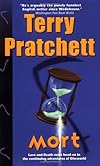
4.5/5
Discovering Discworld is definitely up there with some of the best things that happened to me during the past couple of years, and I really enjoyed this one. The combination of world-building, humor, the anthropomorphic personification of death (complete with emotions and all), etc. was exactly my cup of tea. A nice comfort and fantastic read, and an even better palate cleanser as Discworld novels apparently are. I'll definitely be coming back for more.
That being said, the ending felt like too much of a rush, and for that I'm docking it half a star.
Discovering Discworld is definitely up there with some of the best things that happened to me during the past couple of years, and I really enjoyed this one. The combination of world-building, humor, the anthropomorphic personification of death (complete with emotions and all), etc. was exactly my cup of tea. A nice comfort and fantastic read, and an even better palate cleanser as Discworld novels apparently are. I'll definitely be coming back for more.
That being said, the ending felt like too much of a rush, and for that I'm docking it half a star.
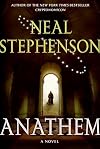
This is my first journey with a Neal Stephenson novel. And I must say, this went quite well. Sure, it might be a little dull at times, slowly-paced, and maybe even anti-climatic.
But all things considered, this is a mind-boggling and thought-provoking piece of work that definitely made a dent in my personal universe, or "cosmos" - to use the book's terminology.
Stephenson wrote an epic Sci-Fi/Fantasy treat complete with its own vocabulary (which takes you a good hundred or two pages to get used to). Combined with this is a wonderful blend of philosophy, mathematics, physics (quantum mechanics and multiverse theory), as well as history. These were all weaved together artfully by Stephenson (I'm a mere enthusiast when it comes to these topics - but I really enjoyed the combination of ideas presented here embedded within the story).
Although the novel's length (900 pages) is an issue to some, it still has other glaring flaws. While Stephenson's world-building is impressive and awe-inspiring; it seemed to me that this was at the expense of character depth and storytelling. At times where I expected hints of surprise from characters from sudden/shocking events, or distrusting of newly-met strangers - a normal human reaction in such situations, none were to be found. Few logical motives were explained to progress the story and tie it together into a coherent whole (so much for coherent narratives, Neal!).
All in all, I chose to overlook these flaws and award this book with a show more perfect 5-star rating because that was one thought-provoking ride that will be hard to scrub off for years(?) to come. show less
But all things considered, this is a mind-boggling and thought-provoking piece of work that definitely made a dent in my personal universe, or "cosmos" - to use the book's terminology.
Stephenson wrote an epic Sci-Fi/Fantasy treat complete with its own vocabulary (which takes you a good hundred or two pages to get used to). Combined with this is a wonderful blend of philosophy, mathematics, physics (quantum mechanics and multiverse theory), as well as history. These were all weaved together artfully by Stephenson (I'm a mere enthusiast when it comes to these topics - but I really enjoyed the combination of ideas presented here embedded within the story).
Although the novel's length (900 pages) is an issue to some, it still has other glaring flaws. While Stephenson's world-building is impressive and awe-inspiring; it seemed to me that this was at the expense of character depth and storytelling. At times where I expected hints of surprise from characters from sudden/shocking events, or distrusting of newly-met strangers - a normal human reaction in such situations, none were to be found. Few logical motives were explained to progress the story and tie it together into a coherent whole (so much for coherent narratives, Neal!).
All in all, I chose to overlook these flaws and award this book with a show more perfect 5-star rating because that was one thought-provoking ride that will be hard to scrub off for years(?) to come. show less
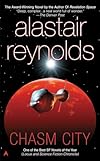
A 3.5 is more accurate.
Did not find it as enjoyable as Revelation Space (I probably am more of a sucker for big ideas, cosmic horror, and existential dread). It also really slogged through the middle and the reveal was sorta dragged out (much like a good deal of the book). But all in all, it’s still a good read.
Did not find it as enjoyable as Revelation Space (I probably am more of a sucker for big ideas, cosmic horror, and existential dread). It also really slogged through the middle and the reveal was sorta dragged out (much like a good deal of the book). But all in all, it’s still a good read.
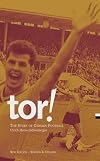
A must read for fans of German football.
A comprehensive history of German football at both the club and the national level. Unfortunately, I read the older edition which meant that I missed out on some of the updates in the newer edition covering the post-2002 period.
It’s also just a well-written book and would recommend this for all football fans.
A comprehensive history of German football at both the club and the national level. Unfortunately, I read the older edition which meant that I missed out on some of the updates in the newer edition covering the post-2002 period.
It’s also just a well-written book and would recommend this for all football fans.
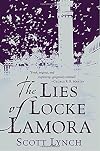
3.5/5
Fun read despite the slow start, witty writing, and a twisted plot. Characters were a glaring flaw but Lynch's writing somehow carried the entire story and made up for the missteps.
Would recommend if you are looking for a fun fantasy heist story.
Fun read despite the slow start, witty writing, and a twisted plot. Characters were a glaring flaw but Lynch's writing somehow carried the entire story and made up for the missteps.
Would recommend if you are looking for a fun fantasy heist story.
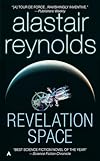
4.5/5
I usually reserve the 5-star ratings for books that are perfect: so good, they can almost be re-read infinitely, each re-reading uncovering more and more of the book's layers. I'm not sure this book is quite that good, but I'm deviating from my own convention (for now at least) and giving this a 5-star rating because it's been a while since I enjoyed a book as much as this one. I may later choose to round this down to 4-stars.
It has been on my TBR list for 5 years and I think I've started this book 4 times before without managing to get past the 25% mark. This was, of course, through no fault of the book itself, and the fact that I kept coming back is a testament to how much I wanted more.
I kept reading that the writers of the Mass Effect video game series (probably up there as some of my favorite video games of all time) were heavily inspired by this series, and it shows. This is a space opera, but one that still felt intimate, following a rather small cast of characters and visiting a handful of planets. But there is enough worldbuilding here to keep a worldbuilding-fiend satiated, with many hints and suggestions of more to come in the rest of the series. After all, this is just the first book. It also is "harder" than a lot of Sci-Fi out there, and Reynolds (a PhD in Astrophysics) doesn't shy away from "techno-dumps" and techno-terms, a lot of which might go over your head, but that, in my view, lend a lot of credibility to the realism of the setting itself. show more Ultimately, it's a very interesting take on the Fermi Paradox featuring a twist of Lovecraftian Horror (this is a rather dark/bleak space opera) set in a future universe that I probably won't be able to get out of my head for some time to come, and I'm especially eager to dive into Chasm City to experience more and more of this universe. As a Mass Effect fan, this scratched an itch that I had been yearning to scratch for years.
My only gripes with this book were the length (might be specifically the uneven pacing more so than the length) and the characterizations. The characters all felt rather same-y (especially in the first half of the book). It was hard to form any sort of attachment to any of the characters, but that improved slightly towards the end, and I'm hoping his later books improve even further on this aspect.
Other than that, a great ride, and I will keep coming back for more Reynolds. show less
I usually reserve the 5-star ratings for books that are perfect: so good, they can almost be re-read infinitely, each re-reading uncovering more and more of the book's layers. I'm not sure this book is quite that good, but I'm deviating from my own convention (for now at least) and giving this a 5-star rating because it's been a while since I enjoyed a book as much as this one. I may later choose to round this down to 4-stars.
It has been on my TBR list for 5 years and I think I've started this book 4 times before without managing to get past the 25% mark. This was, of course, through no fault of the book itself, and the fact that I kept coming back is a testament to how much I wanted more.
I kept reading that the writers of the Mass Effect video game series (probably up there as some of my favorite video games of all time) were heavily inspired by this series, and it shows. This is a space opera, but one that still felt intimate, following a rather small cast of characters and visiting a handful of planets. But there is enough worldbuilding here to keep a worldbuilding-fiend satiated, with many hints and suggestions of more to come in the rest of the series. After all, this is just the first book. It also is "harder" than a lot of Sci-Fi out there, and Reynolds (a PhD in Astrophysics) doesn't shy away from "techno-dumps" and techno-terms, a lot of which might go over your head, but that, in my view, lend a lot of credibility to the realism of the setting itself. show more Ultimately, it's a very interesting take on the Fermi Paradox featuring a twist of Lovecraftian Horror (this is a rather dark/bleak space opera) set in a future universe that I probably won't be able to get out of my head for some time to come, and I'm especially eager to dive into Chasm City to experience more and more of this universe. As a Mass Effect fan, this scratched an itch that I had been yearning to scratch for years.
My only gripes with this book were the length (might be specifically the uneven pacing more so than the length) and the characterizations. The characters all felt rather same-y (especially in the first half of the book). It was hard to form any sort of attachment to any of the characters, but that improved slightly towards the end, and I'm hoping his later books improve even further on this aspect.
Other than that, a great ride, and I will keep coming back for more Reynolds. show less
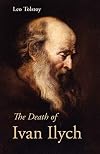
My first Tolstoy.
A book about death, which suits my tastes perfectly (Disclaimer: I have a morbid obsession with the concept of death).
Having witnessed first-hand a dear family member struggle with death exactly one year ago, I couldn't have read this book at a better time. It is bewildering how we only recognize the inevitability of death and the mortality of our fickle selves when we finally face it, or when someone dear passes away. Only then would we realize how close death is lurking, and how life was nothing but a constant struggle with death.
Tolstoy accurately describes what it is like to face death slowly but surely moving towards you. How you cling to life with every speck of hope you can muster out of your feeble self but then when death unveils itself to you, you embrace it and wait for it. But death still mocks you. How your loved ones continue believing there is hope; that you can be saved from its clutches. But only you know the truth. You urge death on to get its job done; to rid yourself of the humility of being weak; of seeing your loved ones' pity and how much of a liability you have become to them now.
I was particularly drawn to the transformation of Ivan Ilych's character from a man obsessed with life (and its minute details) to the entire opposite. It is that critical point of time in one's life that I continuously ponder on. As perplexing and mysterious the ways of death are, I think to be human is not only to recognize one's mortality, but to show more contemplate it and to embrace it.
5/5 show less
A book about death, which suits my tastes perfectly (Disclaimer: I have a morbid obsession with the concept of death).
Having witnessed first-hand a dear family member struggle with death exactly one year ago, I couldn't have read this book at a better time. It is bewildering how we only recognize the inevitability of death and the mortality of our fickle selves when we finally face it, or when someone dear passes away. Only then would we realize how close death is lurking, and how life was nothing but a constant struggle with death.
Tolstoy accurately describes what it is like to face death slowly but surely moving towards you. How you cling to life with every speck of hope you can muster out of your feeble self but then when death unveils itself to you, you embrace it and wait for it. But death still mocks you. How your loved ones continue believing there is hope; that you can be saved from its clutches. But only you know the truth. You urge death on to get its job done; to rid yourself of the humility of being weak; of seeing your loved ones' pity and how much of a liability you have become to them now.
I was particularly drawn to the transformation of Ivan Ilych's character from a man obsessed with life (and its minute details) to the entire opposite. It is that critical point of time in one's life that I continuously ponder on. As perplexing and mysterious the ways of death are, I think to be human is not only to recognize one's mortality, but to show more contemplate it and to embrace it.
5/5 show less

لا شيء يذكر .. بعض المعلومات المفيدة ولكن لم يعجبني الكتاب بصورة عامة.

Did not enjoy this one at all. This is my second or third disappointment in a row with a "must-read" book (I've had successes with a good number of them). I'm still surprised I managed to finish it.
I found the writing dull and flavorless for my taste, and the use of the whole time-travel unreliable-narrator-fragmented-storytelling technique distracting and off-putting (although not particularly confusing). But that's just me. Others seem to enjoy the book for the ingenuity of the same technique, I guess. Not to mention the humor which I didn't like or find funny/relieving in the least bit. Oh, and the repetition of the phrase "so it goes" really got on my nerves after a while.
I'm not exactly sure why this book has garnered so much praise over the years. If anything, I think this novel is just another ordinary off-the-shelf novel.
I don't think I will be recommending this book for anyone to read.
1/5
I found the writing dull and flavorless for my taste, and the use of the whole time-travel unreliable-narrator-fragmented-storytelling technique distracting and off-putting (although not particularly confusing). But that's just me. Others seem to enjoy the book for the ingenuity of the same technique, I guess. Not to mention the humor which I didn't like or find funny/relieving in the least bit. Oh, and the repetition of the phrase "so it goes" really got on my nerves after a while.
I'm not exactly sure why this book has garnered so much praise over the years. If anything, I think this novel is just another ordinary off-the-shelf novel.
I don't think I will be recommending this book for anyone to read.
1/5
من 3-3.5 نجمات
قرأت النسخة المترجمة.
كتاب جميل ومفيد ويبدو لي أنه كان مكتوب بأسلوب رائع وجذاب ولكن ولم تعجبني الترجمة كثيرا .. عانيت من شرود الذهن كثيرا بسببها ..
قرأت النسخة المترجمة.
كتاب جميل ومفيد ويبدو لي أنه كان مكتوب بأسلوب رائع وجذاب ولكن ولم تعجبني الترجمة كثيرا .. عانيت من شرود الذهن كثيرا بسببها ..
Leviathan Wakes: Book 1 of the Expanse (now a Prime Original series) (English Edition) by James S. A. Corey
The show got me to pick up the first book in the series.
Verdict?
Great setting, immersive world, but completely fell flat for me in the 2nd half. Utterly disappointed. Will I keep reading the other books in the series? Maybe? But definitely not soon, and if I do, it’s just because of the setting. Characters, writing, and plot were really subpar. No intrigue, no attachment, no desire to keep reading for a reason other than the hope of the book getting its act together in the final third. But none of that happened. Plot and ending had me going: Why is everyone praising this book again?
Oh well.
Verdict?
Great setting, immersive world, but completely fell flat for me in the 2nd half. Utterly disappointed. Will I keep reading the other books in the series? Maybe? But definitely not soon, and if I do, it’s just because of the setting. Characters, writing, and plot were really subpar. No intrigue, no attachment, no desire to keep reading for a reason other than the hope of the book getting its act together in the final third. But none of that happened. Plot and ending had me going: Why is everyone praising this book again?
Oh well.
The writing is pretentious and irritating. Also seemingly incoherent, yet repetitive and loopy. Taleb also seems very confident for a 'skeptic' as he boasts and attacks all those who are 'blind' to his ways and thoughts.
All that aside, the book is thought-provoking and does contain some powerful thoughts amidst the swamp of verbiage and irritating asides.
I usually reward 5 stars to books that have influenced/changed my thinking patterns and perspectives. For that, as well as myself being (in a way) a student of probability and statistics, I grant this book a 5.
All that aside, the book is thought-provoking and does contain some powerful thoughts amidst the swamp of verbiage and irritating asides.
I usually reward 5 stars to books that have influenced/changed my thinking patterns and perspectives. For that, as well as myself being (in a way) a student of probability and statistics, I grant this book a 5.
A complete guide to science for everybody to read. Truly brilliant !
Covers most of the scientific topics which mankind has tapped into.
The latter half had some boring parts for me, though the book started out REAL strong (maybe that's because of my interests), so I started skipping near the end. So, for that, and only personally, I'd give it a 4-4.5 ...
But you'll never find a better guide to science.
Simply, A MUST READ !!
Covers most of the scientific topics which mankind has tapped into.
The latter half had some boring parts for me, though the book started out REAL strong (maybe that's because of my interests), so I started skipping near the end. So, for that, and only personally, I'd give it a 4-4.5 ...
But you'll never find a better guide to science.
Simply, A MUST READ !!
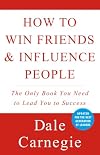
Nice, simple, and helpful tips !
Capable of making at least some minor changes in the way you deal with people.
Capable of making at least some minor changes in the way you deal with people.
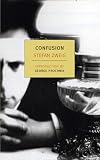
To keep it short, Zweig's prose (which actually took me by surprise after trudging through the lifeless heap of words that is The Glass Bead Game) and story-telling trumps the predictable ending (which wasn't to my liking).
My 2nd Zweig novella, and this guy continues to captivate me. Definitely asking for more Zweig!
My 2nd Zweig novella, and this guy continues to captivate me. Definitely asking for more Zweig!
كتاب بسيط، جميل، وخفيف ...
مقدمة أو كما يقول المؤلف : خطوة أولى لعالم الاقتصاد ..
الصراحة رغم قصره، خرجت منه بفائدة طيبة وأنصح بقراءته (يأخذ قرابة الساعة والنصف)
مقدمة أو كما يقول المؤلف : خطوة أولى لعالم الاقتصاد ..
الصراحة رغم قصره، خرجت منه بفائدة طيبة وأنصح بقراءته (يأخذ قرابة الساعة والنصف)
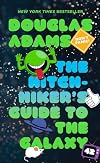
I have never thought I could laugh reading a book! This book is hilariously witty and perfect for just about anyone (a must if you enjoy witty humor like that of Stephen Colbert, for example - or if you happen enjoy British humor, I guess).
It's not only the humor that makes this book a classic, but the story is also whimsical and unusual in many ways despite its short length, and describes an interesting, but again unusual, perspective on things. Combined, both make the book perfect as a refreshing light read.
This is a clever blend of science fiction and humor and would deserve a perfect 5-star rating. With my standards being set a bit higher, this book will have to settle for a 4-star rating (but "Don't Panic!" - I tend to review my ratings periodically and update them and you just might see 5 stars instead of 4 in the future). I've also given many of my favorite books a 4 star rating for various reasons (they are still excellent books, however).
It's not only the humor that makes this book a classic, but the story is also whimsical and unusual in many ways despite its short length, and describes an interesting, but again unusual, perspective on things. Combined, both make the book perfect as a refreshing light read.
This is a clever blend of science fiction and humor and would deserve a perfect 5-star rating. With my standards being set a bit higher, this book will have to settle for a 4-star rating (but "Don't Panic!" - I tend to review my ratings periodically and update them and you just might see 5 stars instead of 4 in the future). I've also given many of my favorite books a 4 star rating for various reasons (they are still excellent books, however).
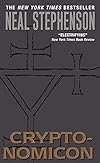
Wrestled with this book for 2 months, and I finally managed to put it down!
Neal Stephenson is a geek's geek, and that's what makes his books enjoyable to me. His digressions about Greek mythology or the Knapsack Problem, among others, are what make a long-winded book like this one quite entertaining. You just learn a lot reading a Stephenson book; and after 1000 pages, you will most likely feel rewarded. Oh and, of course, there's Neal's sarcastic sense-of-humor which I'm really fond of!
Cryptonomicon isn't my first Stephenson mammoth. I've already enjoyed Anathem quite a lot and still hold it in high regard to this day. Cryptonomicon, on the other hand, was slightly less enjoyable (not too many big ideas here, I guess). It tackles topics such as cryptoanalysis, code-breaking in WWII, digital currency, entrepreneurship, Big Data, among others. These come together quite well (especially in the latter half of the book) but is still a thriller at the end of the day.
One thing I really liked in Cryptonomicon was the timeline set during the WWII period - one of my favorite historical periods when it comes to fiction. For me, it shed some new light on WWII from an angle that I knew little to nothing about.
All that being said, however, the book's length made keeping up with the timelines and the plot quite difficult in my case. I'm not sure whether it was my poor reading stamina, or whether it goes with the book's length and the writing style. And then there's the ending which was show more a bit of a letdown for a book this size - but I won't say much about here.
I would still recommend this book wholeheartedly for anyone interested, at all, in any of the topics I've mentioned.
4/5 show less
Neal Stephenson is a geek's geek, and that's what makes his books enjoyable to me. His digressions about Greek mythology or the Knapsack Problem, among others, are what make a long-winded book like this one quite entertaining. You just learn a lot reading a Stephenson book; and after 1000 pages, you will most likely feel rewarded. Oh and, of course, there's Neal's sarcastic sense-of-humor which I'm really fond of!
Cryptonomicon isn't my first Stephenson mammoth. I've already enjoyed Anathem quite a lot and still hold it in high regard to this day. Cryptonomicon, on the other hand, was slightly less enjoyable (not too many big ideas here, I guess). It tackles topics such as cryptoanalysis, code-breaking in WWII, digital currency, entrepreneurship, Big Data, among others. These come together quite well (especially in the latter half of the book) but is still a thriller at the end of the day.
One thing I really liked in Cryptonomicon was the timeline set during the WWII period - one of my favorite historical periods when it comes to fiction. For me, it shed some new light on WWII from an angle that I knew little to nothing about.
All that being said, however, the book's length made keeping up with the timelines and the plot quite difficult in my case. I'm not sure whether it was my poor reading stamina, or whether it goes with the book's length and the writing style. And then there's the ending which was show more a bit of a letdown for a book this size - but I won't say much about here.
I would still recommend this book wholeheartedly for anyone interested, at all, in any of the topics I've mentioned.
4/5 show less
Simply, a lovely African story about family, kinship, brotherhood, religion, clans, culture, clash customs, colonialism, and change in an Ibo village in Nigeria.
I initially finished this book with a four-star rating in mind, but a deeper reflection on the journey this book took me through really brought the issues and flaws to the forefront. I have a feeling it was the ending that edged me towards the fourth star. Surely, the ending was one of the most interesting I've come across, and its tragic touch somehow nestled perfectly within the overall thematic thrust of the book.
However, a bit of me still complains about the first two-thirds of the book which were almost plot-less. Nothing worth noting ever happens there. On top of that, so many things happened just to 'set the mood' and not to advance the plot, which in itself might have been fine, if not for the dull repetitiveness that the narrative succumbed to. I love world-building; I love context; I love settings. But you do not need to spend two-thirds of a book repeating the same descriptions of the world/culture you are trying to describe. It kinda exposes your flaws as a writer. Yams and palm-oils, anyone?
I'm also not sure why Achebe chose to write in English. Was it to broadcast his message to a wider audience and shed light on what colonialism and imperialism have done to a people whom we do not know much about? If so, the usage of the original African names for some of the events or objects in the book could have show more been handled in a much better fashion. As someone who has recently read Rushdie's Midnight's Children, I kept frowning at every word and every cultural symbol I did not get an explanation for (market week?) in Things Fall Apart. Putting a glossary at the end of the book with all those African terms just came of as a sign of writing weakness/laziness, rather than a helpful dictionary. If I wrote a book like this, then surely, I would have seized this opportunity to cast the people of Ibo in a much more interesting light and detail their culture to the best extent possible. You don't have to be overly explicit about it; subtlety and engagement is the way to go (again, Midnight's Children).
Finally, although the last third of the book was the most intriguing, it could have been executed way better. The whole novel could have explored those main themes using a deeper voice, which would not only have made it a better book, but a true classic to behold. Great book Achebe, but alas, things fell apart, I guess. show less
I initially finished this book with a four-star rating in mind, but a deeper reflection on the journey this book took me through really brought the issues and flaws to the forefront. I have a feeling it was the ending that edged me towards the fourth star. Surely, the ending was one of the most interesting I've come across, and its tragic touch somehow nestled perfectly within the overall thematic thrust of the book.
However, a bit of me still complains about the first two-thirds of the book which were almost plot-less. Nothing worth noting ever happens there. On top of that, so many things happened just to 'set the mood' and not to advance the plot, which in itself might have been fine, if not for the dull repetitiveness that the narrative succumbed to. I love world-building; I love context; I love settings. But you do not need to spend two-thirds of a book repeating the same descriptions of the world/culture you are trying to describe. It kinda exposes your flaws as a writer. Yams and palm-oils, anyone?
I'm also not sure why Achebe chose to write in English. Was it to broadcast his message to a wider audience and shed light on what colonialism and imperialism have done to a people whom we do not know much about? If so, the usage of the original African names for some of the events or objects in the book could have show more been handled in a much better fashion. As someone who has recently read Rushdie's Midnight's Children, I kept frowning at every word and every cultural symbol I did not get an explanation for (market week?) in Things Fall Apart. Putting a glossary at the end of the book with all those African terms just came of as a sign of writing weakness/laziness, rather than a helpful dictionary. If I wrote a book like this, then surely, I would have seized this opportunity to cast the people of Ibo in a much more interesting light and detail their culture to the best extent possible. You don't have to be overly explicit about it; subtlety and engagement is the way to go (again, Midnight's Children).
Finally, although the last third of the book was the most intriguing, it could have been executed way better. The whole novel could have explored those main themes using a deeper voice, which would not only have made it a better book, but a true classic to behold. Great book Achebe, but alas, things fell apart, I guess. show less
“So live as if you were living already for the second time and as if you had acted the first time as wrongly as you are about to act now!”.
This is a good book. Not the great over-the-top life-changing bible I was led to believe, but good nonetheless. It is, indeed, a one-of-a-kind book, and one I would recommend.
Dr. Viktor Frankl, a psychiatrist, and a holocaust survivor shares a first-person account of what it was like to be in a dreaded Nazi concentration camp back in World War II. The stories he shares are frightening to say the least. But, through the stories, Frankl manages to show us how a rose can bloom from concrete, and how one can find meaning for life in the darkest of conditions. He then goes on to elaborate further on this issue in the next part of the book which deals with "logotherapy"; therapy with meaning.
Depending on how you feel about existentialism, this book may or may not impact you. Despite being somewhat repetitive at times, it's still a fairly short read and I would recommend it, nonetheless, as it still has some insight and inspiration for the ages.
4/5
This is a good book. Not the great over-the-top life-changing bible I was led to believe, but good nonetheless. It is, indeed, a one-of-a-kind book, and one I would recommend.
Dr. Viktor Frankl, a psychiatrist, and a holocaust survivor shares a first-person account of what it was like to be in a dreaded Nazi concentration camp back in World War II. The stories he shares are frightening to say the least. But, through the stories, Frankl manages to show us how a rose can bloom from concrete, and how one can find meaning for life in the darkest of conditions. He then goes on to elaborate further on this issue in the next part of the book which deals with "logotherapy"; therapy with meaning.
Depending on how you feel about existentialism, this book may or may not impact you. Despite being somewhat repetitive at times, it's still a fairly short read and I would recommend it, nonetheless, as it still has some insight and inspiration for the ages.
4/5
One of the best books I've read in a long while, and possibly ever.
Maybe 2.5/5 seems more appropriate.
I'm on the fence here. This book was not to my taste at all and a bit of a disappointment. To "get" this book also meant you need a good amount of context, which I was obviously not in the mood to research and read up on.
On the other hand, something tells me it will be stuck in my head for some time to come. It is certainly a unique piece of work.
I'm on the fence here. This book was not to my taste at all and a bit of a disappointment. To "get" this book also meant you need a good amount of context, which I was obviously not in the mood to research and read up on.
On the other hand, something tells me it will be stuck in my head for some time to come. It is certainly a unique piece of work.
An interesting journey through the history of the city of Barcelona, its art and culture, as well as a good introduction on the "secrets" behind Catatonia's nationalism and identity.
I've read this book in search for answers and insights on what historical and artistic forces have shaped Barcelona into the unique metropolis it now is today. I also wanted to gain a better understanding of what it means to be Catalan (I owe this interest to the ongoing movements for Catalonia's independence as well as FC Barcelona's interesting motto "mas que un club"/"more than a club"). The book did not fail to deliver on these two fronts.
This book is a condensed version of Robert Hughes's 1992 500-page book titled "Barcelona". Robert, who is an art critic, is clearly infatuated with Barcelona and its art symbols; and his love for the city is infectious and shines through his writing.
I have visited Barcelona back in 2011, and this city is still, to date, one of my personal favorites. To say that Barcelona is a city with a unique blend of life, modernism, culture, and architecture would be a huge understatement (and, not to mention, a tautology of sorts).
This book helped rekindle my nostalgic flames for the city and filled in the historical, artistic, and contextual backdrop that I was lacking (I only have myself to blame). I wish I've had this book in my company touring Barcelona as it would've been the perfect guide to a wonderful city.
One of the major disappointments I have with this show more book is the small number of photos to go with the text. Robert's descriptions of many buildings, monuments, and paintings were left incomplete and "crippled" without visual aids. Sure, I googled many of the works as they came along, but I'm sure tourists would appreciate a self-contained book/guide.
Recommended for anyone who wants to learn about, or is in love with, Barcelona.
3/5 show less
I've read this book in search for answers and insights on what historical and artistic forces have shaped Barcelona into the unique metropolis it now is today. I also wanted to gain a better understanding of what it means to be Catalan (I owe this interest to the ongoing movements for Catalonia's independence as well as FC Barcelona's interesting motto "mas que un club"/"more than a club"). The book did not fail to deliver on these two fronts.
This book is a condensed version of Robert Hughes's 1992 500-page book titled "Barcelona". Robert, who is an art critic, is clearly infatuated with Barcelona and its art symbols; and his love for the city is infectious and shines through his writing.
I have visited Barcelona back in 2011, and this city is still, to date, one of my personal favorites. To say that Barcelona is a city with a unique blend of life, modernism, culture, and architecture would be a huge understatement (and, not to mention, a tautology of sorts).
This book helped rekindle my nostalgic flames for the city and filled in the historical, artistic, and contextual backdrop that I was lacking (I only have myself to blame). I wish I've had this book in my company touring Barcelona as it would've been the perfect guide to a wonderful city.
One of the major disappointments I have with this show more book is the small number of photos to go with the text. Robert's descriptions of many buildings, monuments, and paintings were left incomplete and "crippled" without visual aids. Sure, I googled many of the works as they came along, but I'm sure tourists would appreciate a self-contained book/guide.
Recommended for anyone who wants to learn about, or is in love with, Barcelona.
3/5 show less
Very good book, and would’ve definitely been a 5-star book had it been my first introduction to meditation.
The Presentation Secrets of Steve Jobs: How to Be Insanely Great in Front of Any Audience by Carmine Gallo
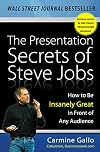
Nice book ...
Suffers from some repetition, but I think it's practical, insightful, and an easy read.
Hope it has effect on my presentations. Steve is a master !
Suffers from some repetition, but I think it's practical, insightful, and an easy read.
Hope it has effect on my presentations. Steve is a master !
The Bible, the Qu'ran and Science: The Holy Scriptures Examined in the Light of Modern Knowledge by Maurice Bucaille
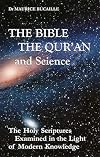
Read the Arabic version.
I think the book deserves 4/5 but the translation wasn't that strong, and there were also quite a few typos, so I'd give it 3.5/4 for that.
Nice read though. Some parts are nicer than others.
I think the book deserves 4/5 but the translation wasn't that strong, and there were also quite a few typos, so I'd give it 3.5/4 for that.
Nice read though. Some parts are nicer than others.
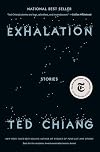
More like a 4.5/5, since I felt the story “The Lifecycle of Software Objects” although having an interesting premise dragged on a little too long (it was a good chunk of this book) and ended rather abruptly.
But, yes, everyone should read Ted Chiang.
But, yes, everyone should read Ted Chiang.