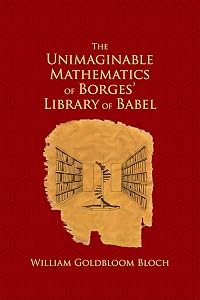
The Unimaginable Mathematics of Borges' Library of Babel
by William Goldbloom Bloch
On This Page
Description
'The Library of Babel' is arguably Jorge Luis Borges' best known story - memorialised along with Borges on an Argentine postage stamp. In this volume, William Goldbloom Bloch takes readers on a fascinating tour of the mathematical ideas hidden within one of the classic works of modern literature.Tags
Recommendations
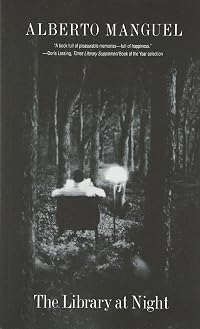
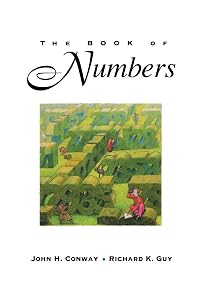
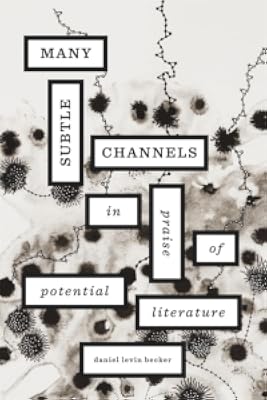
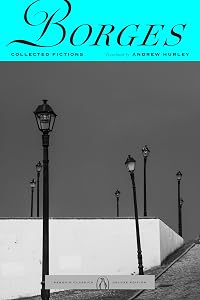







Member Recommendations
Member Reviews
I like math, and I’ve learned in the past fifty years that I usually like math writings. There are exceptions, of course*. I’m squaring the circle here with this one. In a book group, someone recommended Michael Graziano’s The Divine Farce (and I don’t, now that I’ve read it) for reasons I don’t remember. Many commenters said that the novella, A Short Stay in Hell by Stephen Peck which is based on Borges’ Library short story, was better (it was, but then it had to be). I shelved them both TBR and then I came across this book, which looked to be an interesting analysis/hyperextension of the Library. So, I did read both the Farce, and the Short Stay, along with the Library, and then this. How Mr. Bloch wrote 200+ pages on a show more 8-10 page short story, I had no idea, but now I know.
There are fun musings here, backed up with equally fun maths. *And there are some that I am not fond of, topology being a big one. I never got into the subject as much as Martin Gardner in Mathematical Games columns, and I still don’t. But that does t take away from what Bloch has done here.
Infinity, infinite series, infinitesimal elements, geometry of Euclidean and non-Euclidean natures, an aficionado should find something to like here.
On notes, in his Preface, Bloch says
“As a reader, when I encounter an endnote, I’m compelled almost against my will to flip to the back of the book to learn what the endnote says.”
{The note says, “Did you look?}
I always look.
He continues,
“As I writer, I find that despite my best efforts to incorporate them into the body of the book, my work includes diverting digressions, fine points of mathematics that might interest only specialists, and citations to other works. All of these are consigned to the endnotes.”
As a reader, I value those almost as much as the text.
I liked this, but perversely, I found the most value in the epigrams Bloch chose. And now I have even more on my TBR List. show less
There are fun musings here, backed up with equally fun maths. *And there are some that I am not fond of, topology being a big one. I never got into the subject as much as Martin Gardner in Mathematical Games columns, and I still don’t. But that does t take away from what Bloch has done here.
Infinity, infinite series, infinitesimal elements, geometry of Euclidean and non-Euclidean natures, an aficionado should find something to like here.
On notes, in his Preface, Bloch says
“As a reader, when I encounter an endnote, I’m compelled almost against my will to flip to the back of the book to learn what the endnote says.”
{The note says, “Did you look?}
I always look.
He continues,
“As I writer, I find that despite my best efforts to incorporate them into the body of the book, my work includes diverting digressions, fine points of mathematics that might interest only specialists, and citations to other works. All of these are consigned to the endnotes.”
As a reader, I value those almost as much as the text.
I liked this, but perversely, I found the most value in the epigrams Bloch chose. And now I have even more on my TBR List. show less
Ok, so I'm an easy mark for this book. I was concerned that this would be insufficiently mathy or literary or both, but it is a careful balance of readablity and high concept math. What the title promises, the book delivers.
Not earth-shattering in its excitement, and I'm not totally sure how accessible it is to non-mathmos (or at least allied professions). Nonetheless, I quite enjoyed reading this trawl through the mathematical ideas thrown up by Borges' short story. Even if I'm not, as a humble physicist, quite convinced by some of his conclusions.
This book applies ideas in pure mathematics to Jorge Luis Borges' short story, The Library of Babel. Given the description of the Library and the things mentioned in the story, we can come to a number of surprising conclusions about the Library itself. For one thing, it would not be possible to contain the Library in our Universe. The topology of the Library is also something of a sticking point for some since it is supposed to be infinite. Anyway, I thought this book was a charming introduction to the mathematics involved and to the works of Jorge Luis Borges.
The author does a very good job of explaining some of the mathematics that are implied from Borges' short story, and thus uses this as a generative point. The section on the manifold may be a bit confusing for many (although the author does give his frequent "advisories"). Perhaps a little too much time is spent in the beginning making qualifying comments / apologies when they may not be necessary. In my view, there were a few other avenues the author could have explored, but that is hardly considered a failing.
Ratings
Members
- Recently Added By
Author Information

2 Works 229 Members
Awards and Honors
Awards
Work Relationships
Was inspired by
Common Knowledge
- Epigraph
- We do not content ourselves with the life we have in ourselves and in our own being; we desire to live an imaginary life in the mind of others, and for this purpose we endeavor to shine. We labor unceasingly to adorn and ... (show all)preserve this imaginary existence and neglect the real.
- Blaise Pascal, Penses, no. 147 - First words
- Preface: "Who is the intended audience for this work in progress?"
- Last words
- (Click to show. Warning: May contain spoilers.)It is my hope that this book belies that sentiment.
- Publisher's editor
- Penn, Michael; Sears, Ned; Dodson, Stephen; Faivre, Keith
- Blurbers
- Williamson, Edwin; Safir, Margery Arent; Banchoff, Thomas
Classifications
- Genres
- Literature Studies and Criticism, Fiction and Literature
- DDC/MDS
- 868 — Literature & rhetoric Spanish Literature Spanish miscellaneous writings
- LCC
- PQ7797 .B635 .Z63438 — Language and Literature French, Italian, Spanish and Portuguese literatures Spanish literature Provincial, local, colonial, etc. Spanish America
- BISAC
Statistics
- Members
- 228
- Popularity
- 142,942
- Reviews
- 5
- Rating
- (4.10)
- Languages
- English
- Media
- Paper, Ebook
- ISBNs
- 4
- ASINs
- 1