On This Page
Description
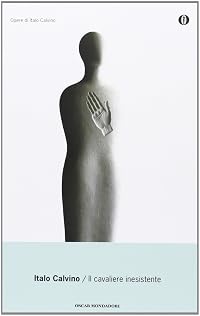
An empty suit of armor is the hero in this witty novella, a picaresque gem-now available in an independent volume for the first time-that brilliantly parodies medieval knighthood. Set in the time of Charlemagne and narrated by a nun with her own secrets to keep, The Nonexistent Knight tells the story of Agilulf, a gleaming white suit of armor with nothing inside it. A challenge to his honor sends Agilulf on a search through France, England, and North Africa to confirm the chastity of a show more virgin he saved from rape years earlier. In the end, after many surprising turns of plot, a closing confession draws this sparkling novella to a perfect finish. show lessTags
Recommendations











Member Reviews
Calvino is one of those authors I always come to slightly nervously, knowing he's going to be difficult and experimental, but then have to laugh at myself because I should have remembered from the last five or six times how much fun "difficult and experimental" becomes when he's in charge of it. This particular one is, as we should all know, the missing link between Orlando furioso and Monty Python and the Holy Grail.
Agilulfo is the most perfect knight in Charlemagne's army. Brave, reliable, immaculately clean, a model of efficiency and a walking encyclopaedia of the rules of chivalry, the only knight in the army who finds inspecting regimental kitchens as interesting and rewarding as smiting the infidel. Oddly enough, he doesn't seem show more to have many friends... And even more oddly, he doesn't appear to exist. When he lifts the visor of his spotless white suit of armour, it turns out that there's no-one inside it.
But then there's the irrepressibly keen young Rambaldo, raised on tales of chivalry (which did not have anything to say about the administration of regimental kitchens and the proper way to make cabbage soup) and out to avenge his father's death at the hands of the Moors; the enigmatic amazon-warrior Bradamante (with the messiest tent in the army) who lusts after the efficient Agilulfo from inside her suit of armour; young Torrismondo who isn't quite who he says he is; and Agilulfo's unusual squire Gurdulú, who isn't quite sure what species he belongs to. And finally, there's Sister Theodora who is writing all this down for us as a penance imposed by the Abbess, and who for all we know may be making some or all of it up. Particularly the bit where she herself is carried off into the action...
Calvino is obviously playing around with ideas of identity and how we define it to ourselves, as well as doing his usual thing of undermining our trust in the narrator, but he's also having fun with our perception of what the Age of Chivalry was like, by reminding us that Charlemagne's army must have been an actual army, with all the practical needs and administrative headaches that armies have in the real world. Roland and the rest wouldn't have been able to do glorious battle without all the farriers and saddlers and armourers and makers of cabbage soup, and somewhere or other there must have been room for boring staff officers with rulebooks to make sure that everyone was in the right place at the right time. Which is probably an insight that has something to do with Calvino's own experience as a communist partisan during the war. His rather less-than-Wagnerian view of the Knights of the Grail also has a distinctly World War II flavour to it... show less
Agilulfo is the most perfect knight in Charlemagne's army. Brave, reliable, immaculately clean, a model of efficiency and a walking encyclopaedia of the rules of chivalry, the only knight in the army who finds inspecting regimental kitchens as interesting and rewarding as smiting the infidel. Oddly enough, he doesn't seem show more to have many friends... And even more oddly, he doesn't appear to exist. When he lifts the visor of his spotless white suit of armour, it turns out that there's no-one inside it.
But then there's the irrepressibly keen young Rambaldo, raised on tales of chivalry (which did not have anything to say about the administration of regimental kitchens and the proper way to make cabbage soup) and out to avenge his father's death at the hands of the Moors; the enigmatic amazon-warrior Bradamante (with the messiest tent in the army) who lusts after the efficient Agilulfo from inside her suit of armour; young Torrismondo who isn't quite who he says he is; and Agilulfo's unusual squire Gurdulú, who isn't quite sure what species he belongs to. And finally, there's Sister Theodora who is writing all this down for us as a penance imposed by the Abbess, and who for all we know may be making some or all of it up. Particularly the bit where she herself is carried off into the action...
Calvino is obviously playing around with ideas of identity and how we define it to ourselves, as well as doing his usual thing of undermining our trust in the narrator, but he's also having fun with our perception of what the Age of Chivalry was like, by reminding us that Charlemagne's army must have been an actual army, with all the practical needs and administrative headaches that armies have in the real world. Roland and the rest wouldn't have been able to do glorious battle without all the farriers and saddlers and armourers and makers of cabbage soup, and somewhere or other there must have been room for boring staff officers with rulebooks to make sure that everyone was in the right place at the right time. Which is probably an insight that has something to do with Calvino's own experience as a communist partisan during the war. His rather less-than-Wagnerian view of the Knights of the Grail also has a distinctly World War II flavour to it... show less
What starts out as a straight tale (and yes, there's an in-story storyteller telling us that they're telling us a tale) of a bunch of knights in one of Charlemagne's campaigns against the muslims gets thrown off its track when it turns out that one of the knights, the wisest, fairest, chastest, most analytically-minded of them all, doesn't actually exist; he's just an empty suit of armour held together by the idea of his own existence. So Charlemagne, in his wisdom, gives him a Sancho Panza-style squire in the shape of a madman who exists, but isn't aware of it, expecting them to get on well with each other. And off we go.
As with most of Calvino's books, it's hard to describe it without killing what makes it come alive. We have a group show more of characters who are really just philosophical concepts dressed up as knights and taken so far to their respective extremes that they barely work, blundering through the plots of Candide and Monty Python's Holy Grail, trying to work out whether they exist or not. And since they're philosophical concepts, it gets meta as fuck... but it never gets annoyingly, preciously so, partly because at just over 100 pages it never has time to, but also because he knows how to riff on tales we've heard before (and does so far better than in Castle of Crossed Destinies IMO). And somehow, after all these high concept modernist ideas fighting each other, he comes out with a rather beautiful ending in praise of the possibilities of fiction, of everything that doesn't exist.
But now, o future, I'm in the saddle and riding your horse. What new flags do you raise at me from the towers in a city yet to be founded? What fires will you let ravage the castles and gardens I've loved? What unforeseen golden ages do you have lined up for me, you unbending, you bearer of treasures to be dearly paid for, you my country to be conquered, you future... show less
As with most of Calvino's books, it's hard to describe it without killing what makes it come alive. We have a group show more of characters who are really just philosophical concepts dressed up as knights and taken so far to their respective extremes that they barely work, blundering through the plots of Candide and Monty Python's Holy Grail, trying to work out whether they exist or not. And since they're philosophical concepts, it gets meta as fuck... but it never gets annoyingly, preciously so, partly because at just over 100 pages it never has time to, but also because he knows how to riff on tales we've heard before (and does so far better than in Castle of Crossed Destinies IMO). And somehow, after all these high concept modernist ideas fighting each other, he comes out with a rather beautiful ending in praise of the possibilities of fiction, of everything that doesn't exist.
But now, o future, I'm in the saddle and riding your horse. What new flags do you raise at me from the towers in a city yet to be founded? What fires will you let ravage the castles and gardens I've loved? What unforeseen golden ages do you have lined up for me, you unbending, you bearer of treasures to be dearly paid for, you my country to be conquered, you future... show less
De tous les paladins qui guerroient avec l'empereur Charlemagne contre les Sarrasins, Agilulfe des Guildivernes est le chevalier à l'armure la mieux fourbie, à la tente la mieux rangée : c'est qu'il a besoin de s'affairer sans repos pour se sentir vivre, faute de corps qui prouve son existence. En effet, son armure blanche n'abrite qu'une énergie invisible dont le zèle perpétuel horripile ses pairs. Ce zèle serait plutôt ce qu'il a de plus sympathique aux yeux du jeune Raimbaut de Roussillon, venu s'engager dans l'armée de Charlemagne pour venger son père tué par l'émir Izoard et que déconcerte le formalisme de la vie militaire. Sans l'amour que lui inspire la belle guerrière Bradamante, il serait fortement tenté de s'en show more aller. Or Bradamante aussi a été conquise par ce zèle. Sur ces entrefaites, Torrismond de Cornouaille conteste au cours d'un festin l'exploit qui a valu son adoubement à Agilulfe. Charlemagne, trop content de s'en débarrasser, envoie ce der-nier chercher la preuve de son haut fait. Il part donc avec son écuyer Gourdoulou et après lui court Bradamante que poursuit Raimbaut. Ainsi commence l'épopée que raconte certaine soeur Theodora de l'ordre de Saint-Colomban dans un récit d'une malicieuse et percutante actualité sous ses dehors fabuleux. show less
Calvino is the man. This little book is a story about story-telling, but really it's about Life and Being. And it's actually fun and funny! I think I'm gonna re-read it right away.
As always, story, structure and theme are one. This is the way it's done Larsson! (sorry, had to get that dig in, even though the poor guy is dead (Larsson I mean), and I just read that all he did was drink coffee and smoke, which explains a lot...)
Anyway if you want a fun little medieval adventure story that will tell you all about modern life, read this!
As always, story, structure and theme are one. This is the way it's done Larsson! (sorry, had to get that dig in, even though the poor guy is dead (Larsson I mean), and I just read that all he did was drink coffee and smoke, which explains a lot...)
Anyway if you want a fun little medieval adventure story that will tell you all about modern life, read this!
No melhor estilo de Italo Calvino com humor, ironia e surrealismo o cavaleiro inexistente pode ser considerado uma fábula existencialista. Trata-se de um livro com muitas metáforas sobre nosso tempo, valores, e ideias. O livro tem uma simplicidade aparente que facilita a leitura e ao mesmo tempo permite reflexão e questionamentos. Recomendo para leitores a partir dos 14 anos até os de 140 anos.
Heillandi saga af riddara á miðöldum sem er ekki til. Herklæði hans eru tóm en hann talar við félaga sína og berst með þeim. Heiður hans og hugrekki er óvéfengjanlegt. Þegar vafa er varpað á fortíð hans og afrek sem öfluðu honum riddaratignar verður riddarinn að leggja í hættuför til að sanna afrek sín. Calvino gerir stólpagrín að hugsjónum miðaldariddarans og aðalsins. Unaður aflestrar.
I haven't read any Calvino but If on a Winter's Night a Traveller, and that was many years ago. I've been meaning to read more for a while, and this book looked so charming that I just had to pick it up.
I have to say, I was a little bit disappointed. The knight character didn't exist, so it isn't like you could be drawn into the story by empathy for him, most of the other characters hardly felt original (partly the point, yes, I know), there was a castle filled with sex-starved ladies that felt more like a Monty Python sketch than anything else, the bit with the nun turning out to be one of the characters from the story was obvious from a mile off, and while the whole deal with the Knights of the Round Table was certainly... different, show more I had no idea how to feel about it. Was it supposed to be clever? Satirical? Funny? Ironic? I finished the book with a feeling of "well..."
There were some clever bits, and some ways that it was clear that Calvino was poking some fun at some knights and chivalry tropes, but then the book ends with a rape (I'm sorry, but if the woman you're having sex with thinks you're someone else, and wouldn't have consented if she knew your identity, that's rape.) and then the woman falling in love with her rapist.
Ugh. show less
I have to say, I was a little bit disappointed. The knight character didn't exist, so it isn't like you could be drawn into the story by empathy for him, most of the other characters hardly felt original (partly the point, yes, I know), there was a castle filled with sex-starved ladies that felt more like a Monty Python sketch than anything else, the bit with the nun turning out to be one of the characters from the story was obvious from a mile off, and while the whole deal with the Knights of the Round Table was certainly... different, show more I had no idea how to feel about it. Was it supposed to be clever? Satirical? Funny? Ironic? I finished the book with a feeling of "well..."
There were some clever bits, and some ways that it was clear that Calvino was poking some fun at some knights and chivalry tropes, but then the book ends with a rape (I'm sorry, but if the woman you're having sex with thinks you're someone else, and wouldn't have consented if she knew your identity, that's rape.) and then the woman falling in love with her rapist.
Ugh. show less
Members
- Recently Added By
Lists

Italian Literature
558 works; 42 members

Short and Sweet
246 works; 24 members

Tammen Keltainen kirjasto
81 works; 1 member

Mooie titels
80 works; 1 member

Lo mejor leído en 2025 - Leídos por primera vez: Magistrales (R. D.)
28 works; 1 member
Author Information

395+ Works 70,166 Members
Italo Calvino 1923-1984 Novelist and short story writer Italo Calvino was born in Cuba on October 15, 1923, and grew up in Italy, graduating from the University of Turin in 1947. He is remembered for his distinctive style of fables. Much of his first work was political, including Il Sentiero dei Nidi di Ragno (The Path of the Nest Spiders, 1947), show more considered one of the main novels of neorealism. In the 1950s, Calvino began to explore fantasy and myth as extensions of realism. Il Visconte Dimezzato (The Cloven Knight, 1952), concerns a knight split in two in combat who continues to live on as two separates, one good and one bad, deprived of the link which made them a moral whole. In Il Barone Rampante (Baron in the Trees, 1957), a boy takes to the trees to avoid eating snail soup and lives an entire, fulfilled life without ever coming back down. Calvino was awarded an honorary degree from Mount Holyoke College in 1984 and died in 1985, following a cerebral hemorrhage. At the time of his death, he was the most translated contemporary Italian writer and a contender for the Nobel Prize for Literature. (Bowker Author Biography) show less
Some Editions
Awards and Honors
Series

Belongs to Publisher Series
Work Relationships
Is contained in
Has as a reference guide/companion
Common Knowledge
- Canonical title
- The Nonexistent Knight
- Original title
- Il cavaliere inesistente
- Original publication date
- 1959
- People/Characters
- Charlemagne
- Important places
- Paris, France
- Related movies
- Il cavaliere inesistente (1969 | IMDb)
- First words*
- Sotto le rosse mura di Parigi era schierato l'esercito di Francia.
- Last words*
- (Click to show. Warning: May contain spoilers.)Dal raccontare al passato, e dal presente che mi prendeva la mano nei tratti concitati, ecco, o futuro, sono salita in sella al tuo cavallo. Quali nuovi stendardi mi levi incontro dai pennoni delle torri di città non ancora fondate? quali fumi di devastazioni dai castelli e dai giardini che amavo? quali impreviste età dell'oro prepari, tu malpadroneggiato, tu foriero di tesori pagati a caro prezzo, tu mio regno da conquistare, futuro...
- Original language
- Italian
*Some information comes from Common Knowledge in other languages. Click "Edit" for more information.
Classifications
- Genres
- Fiction and Literature, General Fiction, Fantasy
- DDC/MDS
- 853.914 — Literature & rhetoric Italian, Romanian & related literatures Italian fiction 1900- 20th Century 1945-1999
- LCC
- PQ4809 .A45 .C3 — Language and Literature French, Italian, Spanish and Portuguese literatures Italian literature Individual authors, 1900-1960
- BISAC
Statistics
- Members
- 1,643
- Popularity
- 13,693
- Reviews
- 21
- Rating
- (3.90)
- Languages
- 18 — Catalan, Chinese, Dutch, English, Finnish, French, German, Greek, Hebrew, Icelandic, Italian, Japanese, Polish, Russian, Spanish, Swedish, Turkish, Portuguese (Brazil)
- Media
- Paper, Audiobook, Ebook
- ISBNs
- 66
- ASINs
- 20