On This Page
Description
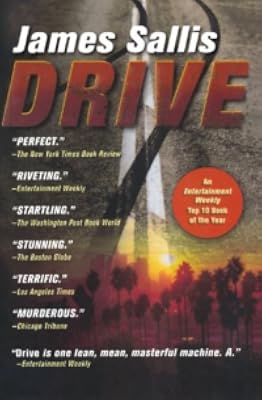
Much later, as he sat with his back against an inside wall of a Motel 6 just north of Phoenix, watching the pool of blood lap toward him, Driver would wonder whether he had made a terrible mistake. Later still, of course, there'd be no doubt. But for now Driver is, as they say, in the moment. And the moment includes this blood lapping toward him, the pressure of dawn's late light at windows and door, traffic sounds from the interstate nearby, the sound of someone weeping in the next room....show more Thus begins Drive, a new novella by one of the nation's most respected and honored writers of noir fiction. Set mostly in Arizona and L.A., the story is, according to Sallis, ..."about a guy who does stunt driving for movies by day and drives for criminals at night. In classic noir fashion, he is double-crossed and, though before he has never participated in the violence ('I drive. That's all.'), he goes after the ones who doublecrossed and tried to kill him."
. show less
Tags
Recommendations



Member Reviews
Rating: 4* of five
The Book Description: “Much later, as he sat with his back against an inside wall of a Motel 6 just north of Phoenix, watching the pool of blood lap toward him, Driver would wonder whether he had made a terrible mistake. Later still, of course, there'd be no doubt. But for now Driver is, as they say, in the moment. And the moment includes this blood lapping toward him, the pressure of dawn's late light at windows and door, traffic sounds from the interstate nearby, the sound of someone weeping in the next room....”
Thus begins Drive, a new novella by one of the nation's most respected and honored writers of noir fiction. Set mostly in Arizona and L.A., the story is, according to Sallis, ..."about a guy who does show more stunt driving for movies by day and drives for criminals at night. In classic noir fashion, he is double-crossed and, though before he has never participated in the violence ('I drive. That's all.'), he goes after the ones who doublecrossed and tried to kill him." .
My Review: It's 153pp of very noir-y noir. It's got an anti-hero just as antiheroic as you want him to be...he knows how to do everything, drive, fight, drink, kill, pick a noir skill and Driver (no other name) has it.
I'm a sucker for that kind of all-rounder. I like Sallis's New Orleans series featuring Lew Griffin, too, but this begins a new-to-me series of noir novellas featuring Driver. I'll be back for more.
It's violent, but not graphic. The killings all take place in front of our eyes, but apart from the short and matter-of-fact reports of the means and aftermath of each killing, there's no ghoulish lingering on the pain or the gore. That means the reader's not stuck to the floor of the book in sticky goo, like in many violent novels.
It's taut, not verbose. In this age of no thought left unexpressed, no feeling left unaired, no absurdity left unplumbed in the gazillionologies of two-thousand-page forest-rapers, that feels like the first cool breath of autumn after the horrid belchings of summer.
Sallis, a serious writer, author of a biography of Chester Himes that's the gold standard on that underknown talent, delivers a happy surprise to the committed reader of darker books and more gritty crime fiction. He brings something fresh to something familiar. He abides by every convention of the genre he's chosen to work in and still gives a take on the tropes that's not hackneyed. The reason is he can write quite simple, Hemingwayesque sentences, and make them sound like he means them in both content and feeling.
Well, there it is. If you like that, you'll like Drive, and if not, you won't.
PS: Apparently there was a movie made of this book last year. Ryan Gosling and Bryan Cranston starred. I haven't seen it, but the plot summary is enough different from the book that I don't care if I do. show less
The Book Description: “Much later, as he sat with his back against an inside wall of a Motel 6 just north of Phoenix, watching the pool of blood lap toward him, Driver would wonder whether he had made a terrible mistake. Later still, of course, there'd be no doubt. But for now Driver is, as they say, in the moment. And the moment includes this blood lapping toward him, the pressure of dawn's late light at windows and door, traffic sounds from the interstate nearby, the sound of someone weeping in the next room....”
Thus begins Drive, a new novella by one of the nation's most respected and honored writers of noir fiction. Set mostly in Arizona and L.A., the story is, according to Sallis, ..."about a guy who does show more stunt driving for movies by day and drives for criminals at night. In classic noir fashion, he is double-crossed and, though before he has never participated in the violence ('I drive. That's all.'), he goes after the ones who doublecrossed and tried to kill him." .
My Review: It's 153pp of very noir-y noir. It's got an anti-hero just as antiheroic as you want him to be...he knows how to do everything, drive, fight, drink, kill, pick a noir skill and Driver (no other name) has it.
I'm a sucker for that kind of all-rounder. I like Sallis's New Orleans series featuring Lew Griffin, too, but this begins a new-to-me series of noir novellas featuring Driver. I'll be back for more.
It's violent, but not graphic. The killings all take place in front of our eyes, but apart from the short and matter-of-fact reports of the means and aftermath of each killing, there's no ghoulish lingering on the pain or the gore. That means the reader's not stuck to the floor of the book in sticky goo, like in many violent novels.
It's taut, not verbose. In this age of no thought left unexpressed, no feeling left unaired, no absurdity left unplumbed in the gazillionologies of two-thousand-page forest-rapers, that feels like the first cool breath of autumn after the horrid belchings of summer.
Sallis, a serious writer, author of a biography of Chester Himes that's the gold standard on that underknown talent, delivers a happy surprise to the committed reader of darker books and more gritty crime fiction. He brings something fresh to something familiar. He abides by every convention of the genre he's chosen to work in and still gives a take on the tropes that's not hackneyed. The reason is he can write quite simple, Hemingwayesque sentences, and make them sound like he means them in both content and feeling.
“What’d you need?" {Manny}
"Desuetude." {Driver}
"Reading again, are we? Could be dangerous. It means to become unaccustomed to. As in something gets discontinued, falls into disuse."
"Thanks, man."
"That it?"
"Yeah, but we should grab a drink sometime.”
Well, there it is. If you like that, you'll like Drive, and if not, you won't.
PS: Apparently there was a movie made of this book last year. Ryan Gosling and Bryan Cranston starred. I haven't seen it, but the plot summary is enough different from the book that I don't care if I do. show less
A dark, compelling noir novella (158 pages) that vividly portrays a gritty underworld of crime and criminals, but shortchanges the reader on plot. The prose comes across like an Impressionistic painting, holding back on detail in ways that make your brain fill in what is missing. This works for characters and setting, but not so much on plot, which is a muddle.
We never learn the name of Driver, but we learn more about him in the book than in the film that was based on it. Here, he has a former life and a former family. We learn why he has the survival skills that he does. We still don't learn about his motivations and dreams, other than the need to survive. But the screenplay has the benefit of creating a richer now that includes a show more compelling through line of plot, cause and effect, in contrast to the book, which consists only of moments.
Like a pointillist painting, those moments eventually add up to a fuller, if still incomplete picture. And like the film, the book is a work of art. show less
We never learn the name of Driver, but we learn more about him in the book than in the film that was based on it. Here, he has a former life and a former family. We learn why he has the survival skills that he does. We still don't learn about his motivations and dreams, other than the need to survive. But the screenplay has the benefit of creating a richer now that includes a show more compelling through line of plot, cause and effect, in contrast to the book, which consists only of moments.
Like a pointillist painting, those moments eventually add up to a fuller, if still incomplete picture. And like the film, the book is a work of art. show less
Most readers coming to Sallis' bloody and smart neo-noir telling of a Hollywood stunt driver captured by a violent fate are likely here because of Nicolas Winding Refn's superb film of the same name. And those readers may come away disappointed. Though the book is excellent, the film is on another level. Regardless, Sallis' Drive is a precise and compelling crime drama that pulls the reader over and around a non-linear story. It's a short read, but very rewarding for fans of violent competence and revenge.
An absolutely stunning piece of neo-noir. Brutal and beautiful in nearly every sentence. Sallis pares the story of Driver and a heist gone bad down to its very skeleton, and yet, every character is rich with enigmas and mysteries. It's an afternoon read, but it lingers on much longer.
The publishing industry is filled with predictable books. By that I don't mean just formula genre books, such as most romances, action-adventure books, and mysteries, but mainstream books with predictable elements: anti-hero, rising arcs of action over three hundred or so pages, happy ending or not, closure. Such elements have become so ingrained in the industry that books that go against them must be so strongly written that readers (and critics) overlook the lack of familiar elements. In Drive, the powerful prose of James Sallis provides just such a distraction, in a book so off-beat that we never even learn the protagonist's name.
Written in the best noir style, Drive opens, literally, in a pool of blood. The protagonist, whose name show more is never more than "Driver", spends part of his time as a stunt driver for the movies, and another part driving for criminals. As the book opens, his work for (the non-Hollywood) criminals has taken a terrible turn, and Driver finds his life completely unhinged. The rest of the book explores how Driver has come to be in this situation, and how he might get himself out. As the story unfolds across Arizona and southern California, Sallis's lean and powerful prose draws a stark image of a man on the fringe of society, in a dark world that most of us only see in the corners of our eyes as we drive quickly by.
From a writer's perspective, Drive is an excellent example of handling flashback. Common advice for writers is to begin "in media res"-in the middle of the action. Drive takes this to the extreme, beginning only a few days before the end, but telling a story that sweeps across a span of years. What does that mean for a story? Flashback, and lots of it. Probably two thirds of the book is flashback, and while that can be the kiss of death for a story in the hands of an amateur, Sallis handles it flawlessly. Despite the dramatic jumps backward and forward in time, a reader goes through the pages without feeling lost. Instead, the narrative comes together as a jigsaw puzzle, with the pieces falling into place one by one until the final, inevitable, piece completes the picture.
Cover to cover, Sallis puts on a demonstration of the style and structure of quality writing. Drive easily could be (and surely will be if it isn't already) used as a textbook in a creative writing class. It's that good.
Drive is an excellent book, written by a veteran author who really understands books and writing. Any fan of noir should not miss it, and anyone who enjoys a solid story wrapped in excellent prose should not miss it either. That, in my opinion, should include everyone. show less
Written in the best noir style, Drive opens, literally, in a pool of blood. The protagonist, whose name show more is never more than "Driver", spends part of his time as a stunt driver for the movies, and another part driving for criminals. As the book opens, his work for (the non-Hollywood) criminals has taken a terrible turn, and Driver finds his life completely unhinged. The rest of the book explores how Driver has come to be in this situation, and how he might get himself out. As the story unfolds across Arizona and southern California, Sallis's lean and powerful prose draws a stark image of a man on the fringe of society, in a dark world that most of us only see in the corners of our eyes as we drive quickly by.
From a writer's perspective, Drive is an excellent example of handling flashback. Common advice for writers is to begin "in media res"-in the middle of the action. Drive takes this to the extreme, beginning only a few days before the end, but telling a story that sweeps across a span of years. What does that mean for a story? Flashback, and lots of it. Probably two thirds of the book is flashback, and while that can be the kiss of death for a story in the hands of an amateur, Sallis handles it flawlessly. Despite the dramatic jumps backward and forward in time, a reader goes through the pages without feeling lost. Instead, the narrative comes together as a jigsaw puzzle, with the pieces falling into place one by one until the final, inevitable, piece completes the picture.
Cover to cover, Sallis puts on a demonstration of the style and structure of quality writing. Drive easily could be (and surely will be if it isn't already) used as a textbook in a creative writing class. It's that good.
Drive is an excellent book, written by a veteran author who really understands books and writing. Any fan of noir should not miss it, and anyone who enjoys a solid story wrapped in excellent prose should not miss it either. That, in my opinion, should include everyone. show less
This felt like pretentious noir, like an action screenplay. "Caught in some variant of that abstract..." What? Come on, give me a break! This is about a stunt driver who also drives for guys robbing pawn shops, etc. He also does a number of cold blooded murders. It is my humble opinion that noir tends to get over-rated by the critics. They love the genre and noir authors are getting away with murder.
The movie might be better.
This is a lean book, and well written, but on the printed page I had no sympathy for the protagonist. Having an actor on screen humanized an insular, shallow character.
"Driver," the protagonist, is a sub species of silent tough guy specializing in cars. He doesn't need to paint or be into Shakespeare, but he needs something to make him human. His stated passion is cars, but the writing doesn't back it up. He works at driving. Pushes himself to achieve amazing, stunt driving perfection, but I don't feel that he particularly loves cars of driving. It's more like he needs to do a thing that doesn't depend on human interaction and driving stuck him as more interesting than carpentry. There is a little backstory show more about being a kid at the race track, but none of it communicates much passion. show less
This is a lean book, and well written, but on the printed page I had no sympathy for the protagonist. Having an actor on screen humanized an insular, shallow character.
"Driver," the protagonist, is a sub species of silent tough guy specializing in cars. He doesn't need to paint or be into Shakespeare, but he needs something to make him human. His stated passion is cars, but the writing doesn't back it up. He works at driving. Pushes himself to achieve amazing, stunt driving perfection, but I don't feel that he particularly loves cars of driving. It's more like he needs to do a thing that doesn't depend on human interaction and driving stuck him as more interesting than carpentry. There is a little backstory show more about being a kid at the race track, but none of it communicates much passion. show less
Members
- Recently Added By
Lists

Best Noir Fiction
160 works; 14 members

Noirvember: The Best Noir
113 works; 56 members

Read the book and saw the movie
1,170 works; 192 members

Watched the Movie, Probably Won't Read the Book
185 works; 34 members

Unshelved Book Clubs
579 works; 5 members
Books Set in Los Angeles
40 works; 8 members

100 Best Thrillers of All Time
100 works; 6 members

Books Read in 2023
5,638 works; 147 members
Author Information

76+ Works 3,305 Members
James Sallis is a poet, music critic, biographer, and author. A lifelong student of the work of Chester Himes, he lives in Phoenix, Arizona.
Some Editions
Awards and Honors
Awards
Series

Belongs to Publisher Series
Heyne Allgemeine Reihe (40626)
Common Knowledge
- Canonical title
- Drive
- Original title
- Drive
- Original publication date
- 2005
- People/Characters
- Driver
- Important places*
- Phoenix, Arizona, États-Unis
- Related movies
- Drive (2011 | IMDb)
- Dedication
- To Ed McBain,
Donald Westlake and
Larry Block-
three great American writers - First words
- Much later, as he sat with his back against an inside wall of a Motel 6 just north of Phoenix, watching the pool of blood lap toward him, Driver would wonder wether he had made a terrible mistake.
- Last words*
- (Click to show. Warning: May contain spoilers.)Bernie Rose serait cependant le seul qu'il regretterait jamais.
*Some information comes from Common Knowledge in other languages. Click "Edit" for more information.
Classifications
Statistics
- Members
- 697
- Popularity
- 41,052
- Reviews
- 31
- Rating
- (3.53)
- Languages
- 8 — English, Finnish, French, German, Italian, Polish, Portuguese, Spanish
- Media
- Paper, Audiobook, Ebook
- ISBNs
- 36
- ASINs
- 13