
Great Dialogues of Plato
by Plato
On This Page
Description
A translation of the complete texts of "The Republic," "The Apology," "Crito," "Phaido," "Ion," "Meno," and "Symposium" reveals the genius of Plato as he struggled with education, justice, the "philosopher king," and utopian visions of society.Tags
Recommendations




















Member Reviews
I am now more enamored of the questions and probing by Socrates and his circle than their answers and manner. The last time I read The Republic I felt for poor Cephalus for the way Socrates rudely treated him. Now in this collection of Plato's collected recollections of Socrates, I feel the same for Meno. Meno too is set up, ridiculed, and harangued until he must exit the scene, miffed surely. No wonder he ended up with such a low approval rating that he was sentenced to death. It seems from Socrates' closing arguments in his trial, he noticed how some found his behavior repugnant:
Three things that jumped out to me in this edition with excellent footnotes. First is Socrates' allusions to the voices he heard in his head and the Myth of Er. Hearing voices is a symptom of some mental health problems, including psychosis, schizophrenia, bipolar disorder, schizoaffective disorder, or severe depression. Second is the Myth of Er, which is an account of the cosmos and the afterlife that greatly influenced religious, philosophical, and scientific thought for many centuries. It reads like an NDE hallucination. Finally is the role the Iliad and other period writings then a few centuries old were commonly quoted and taken for granted as sacred texts of religious authority. show less
...I thought this man seemed to be wise both to many others and especially to himself, but that he was not; and then I tried to show him that he thought heshow more
was wise, but was not. Because of that he disliked me and so did many others who were there, but I went away thinking to myself that I was wiser than this man; the fact is that neither of us knows anything beautiful and good, but he thinks he does know when he doesn't, and I don't know and don't think I do: so I am wiser than he is by only this trifle, that what I do not know I don't think I do. After that I tried another, one of those reputed to be wiser than that man and I thought just the same; then he and many others took a dislike to me.
So I went to one after another after that, and saw that I was disliked; and I sorrowed and feared...
Three things that jumped out to me in this edition with excellent footnotes. First is Socrates' allusions to the voices he heard in his head and the Myth of Er. Hearing voices is a symptom of some mental health problems, including psychosis, schizophrenia, bipolar disorder, schizoaffective disorder, or severe depression. Second is the Myth of Er, which is an account of the cosmos and the afterlife that greatly influenced religious, philosophical, and scientific thought for many centuries. It reads like an NDE hallucination. Finally is the role the Iliad and other period writings then a few centuries old were commonly quoted and taken for granted as sacred texts of religious authority. show less
I am now more enamored of the questions and probing by Socrates and his circle than their answers and manner. The last time I read The Republic I felt for poor Cephalus for the way Socrates rudely treated him. Now in this collection of Plato's collected recollections of Socrates, I feel the same for Meno. Meno too is set up, ridiculed, and harangued until he must exit the scene, miffed surely. No wonder he ended up with such a low approval rating that he was sentenced to death. It seems from Socrates' closing arguments in his trial, he noticed how some found his behavior repugnant:
Three things that jumped out to me in this edition with excellent footnotes. First is Socrates' allusions to the voices he heard in his head and the Myth of Er. Hearing voices is a symptom of some mental health problems, including psychosis, schizophrenia, bipolar disorder, schizoaffective disorder, or severe depression. Second is the Myth of Er, which is an account of the cosmos and the afterlife that greatly influenced religious, philosophical, and scientific thought for many centuries. It reads like an NDE hallucination. Finally is the role the Iliad and other period writings then a few centuries old were commonly quoted and taken for granted as sacred texts of religious authority.
Merged review:
I am now more enamored of the questions and probing by Socrates and his circle than their answers and manner. The last time I read The Republic I felt for poor Cephalus for the way Socrates rudely treated him. Now in this collection of Plato's collected recollections of Socrates, I feel the same for Meno. Meno too is set up, ridiculed, and harangued until he must exit the scene, miffed surely. No wonder he ended up with such a low approval rating that he was sentenced to death. It seems from Socrates' closing arguments in his trial, he noticed how some found his behavior repugnant:
Three things that jumped out to me in this edition with excellent footnotes. First is Socrates' allusions to the voices he heard in his head and the Myth of Er. Hearing voices is a symptom of some mental health problems, including psychosis, schizophrenia, bipolar disorder, schizoaffective disorder, or severe depression. Second is the Myth of Er, which is an account of the cosmos and the afterlife that greatly influenced religious, philosophical, and scientific thought for many centuries. It reads like an NDE hallucination. Finally is the role the Iliad and other period writings then a few centuries old were commonly quoted and taken for granted as sacred texts of religious authority. show less
...I thought this man seemed to be wise both to many others and especially to himself, but that he was not; and then I tried to show him that he thought heshow more
was wise, but was not. Because of that he disliked me and so did many others who were there, but I went away thinking to myself that I was wiser than this man; the fact is that neither of us knows anything beautiful and good, but he thinks he does know when he doesn't, and I don't know and don't think I do: so I am wiser than he is by only this trifle, that what I do not know I don't think I do. After that I tried another, one of those reputed to be wiser than that man and I thought just the same; then he and many others took a dislike to me.
So I went to one after another after that, and saw that I was disliked; and I sorrowed and feared...
Three things that jumped out to me in this edition with excellent footnotes. First is Socrates' allusions to the voices he heard in his head and the Myth of Er. Hearing voices is a symptom of some mental health problems, including psychosis, schizophrenia, bipolar disorder, schizoaffective disorder, or severe depression. Second is the Myth of Er, which is an account of the cosmos and the afterlife that greatly influenced religious, philosophical, and scientific thought for many centuries. It reads like an NDE hallucination. Finally is the role the Iliad and other period writings then a few centuries old were commonly quoted and taken for granted as sacred texts of religious authority.
Merged review:
I am now more enamored of the questions and probing by Socrates and his circle than their answers and manner. The last time I read The Republic I felt for poor Cephalus for the way Socrates rudely treated him. Now in this collection of Plato's collected recollections of Socrates, I feel the same for Meno. Meno too is set up, ridiculed, and harangued until he must exit the scene, miffed surely. No wonder he ended up with such a low approval rating that he was sentenced to death. It seems from Socrates' closing arguments in his trial, he noticed how some found his behavior repugnant:
...I thought this man seemed to be wise both to many others and especially to himself, but that he was not; and then I tried to show him that he thought he was wise, but was not. Because of that he disliked me and so did many others who were there, but I went away thinking to myself that I was wiser than this man; the fact is that neither of us knows anything beautiful and good, but he thinks he does know when he doesn't, and I don't know and don't think I do: so I am wiser than he is by only this trifle, that what I do not know I don't think I do. After that I tried another, one of those reputed to be wiser than that man and I thought just the same; then he and many others took a dislike to me.
So I went to one after another after that, and saw that I was disliked; and I sorrowed and feared...
Three things that jumped out to me in this edition with excellent footnotes. First is Socrates' allusions to the voices he heard in his head and the Myth of Er. Hearing voices is a symptom of some mental health problems, including psychosis, schizophrenia, bipolar disorder, schizoaffective disorder, or severe depression. Second is the Myth of Er, which is an account of the cosmos and the afterlife that greatly influenced religious, philosophical, and scientific thought for many centuries. It reads like an NDE hallucination. Finally is the role the Iliad and other period writings then a few centuries old were commonly quoted and taken for granted as sacred texts of religious authority. show less
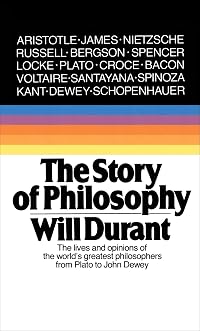
After reading [b:The Story of Philosophy: The Lives and Opinions of the World's Greatest Philosophers|31795|The Story of Philosophy The Lives and Opinions of the World's Greatest Philosophers|Will Durant|https://i.gr-assets.com/images/S/compressed.photo.goodreads.com/books/1438471992l/31795._SY75_.jpg|32011] by Will Durant, I was excited to begin my journey of wisdom with Plato. Socrates lays down the foundation of western thought and from here I plan to move throughout history with the philosophers that came thereafter.
This edition contains seven of Plato's greatest works and they are translated by W.H.D. Rouse. I have yet to read other translations, but I found this one to be superb and readable if this is your first time reading show more Plato. Plato was a splendid author and I didn't find myself dragging through verbosity or flowery poetics.
Of all the works I enjoyed The Republic and The Symposium the most. Initially Phaedo defeated me and I couldn't finish, but I came back at it with a clearer mind and finished it, and it was excellent. I felt I got to know Socrates throughout the book and I fell in love with the Socratic Method. Following the dialogue from beginning to end and seeing how he and the other interlocutors came to a conclusion through questioning was inspiring, and I plan to incorporate that into my thinking. show less
This edition contains seven of Plato's greatest works and they are translated by W.H.D. Rouse. I have yet to read other translations, but I found this one to be superb and readable if this is your first time reading show more Plato. Plato was a splendid author and I didn't find myself dragging through verbosity or flowery poetics.
Of all the works I enjoyed The Republic and The Symposium the most. Initially Phaedo defeated me and I couldn't finish, but I came back at it with a clearer mind and finished it, and it was excellent. I felt I got to know Socrates throughout the book and I fell in love with the Socratic Method. Following the dialogue from beginning to end and seeing how he and the other interlocutors came to a conclusion through questioning was inspiring, and I plan to incorporate that into my thinking. show less
This volume contains the complete texts of: The Republic, Apology, Crito, Phaedo, Ion, Meno, and the Symposium.
Phaedo is the classic text describing the death of Socrates. Plato's Phaedo (pronounced /ˈfiːdoʊ/, Greek: Φαίδων, Phaidon, gen.: Φαίδωνος) is one of the great dialogues of his middle period, along with the Republic and the Symposium. The Phaedo, which depicts the death of Socrates, is also Plato's seventh and last dialogue to detail the philosopher's final days.
Cf. http://users.hartwick.edu/burringtond/phaedo.html
Phaedo is the classic text describing the death of Socrates. Plato's Phaedo (pronounced /ˈfiːdoʊ/, Greek: Φαίδων, Phaidon, gen.: Φαίδωνος) is one of the great dialogues of his middle period, along with the Republic and the Symposium. The Phaedo, which depicts the death of Socrates, is also Plato's seventh and last dialogue to detail the philosopher's final days.
Cf. http://users.hartwick.edu/burringtond/phaedo.html
I read The Republic, Phaedo and The Apology I believe. It's been a while
William Henry Denham (W. H. D.) Rouse (30 May 1863 – 10 February 1950) was a pioneering British teacher who advocated the use of the Direct Method of teaching Latin and Greek.
http://www.librarything.com/author/warmingtoneh
http://www.goodreads.com/author/show/2096012.Philip_G_Rouse
http://www.librarything.com/author/warmingtoneh
http://www.goodreads.com/author/show/2096012.Philip_G_Rouse
Book Description: NY Mentor 1956. vg/paperback. Minor shelf rubbing. Corners slightly rubbed. Binding is PB. Regular.
16th printing
16th printing
Members
- Recently Added By
Lists

Tom's Bookstore
346 works; 2 members

Book Titles Mentioned In Newberry Medal And Honor Books
884 works; 3 members
Author Information

2,741+ Works 100,840 Members
Plato was born c. 427 B.C. in Athens, Greece, to an aristocratic family very much involved in political government. Pericles, famous ruler of Athens during its golden age, was Plato's stepfather. Plato was well educated and studied under Socrates, with whom he developed a close friendship. When Socrates was publically executed in 399 B.C., Plato show more finally distanced himself from a career in Athenian politics, instead becoming one of the greatest philosophers of Western civilization. Plato extended Socrates's inquiries to his students, one of the most famous being Aristotle. Plato's The Republic is an enduring work, discussing justice, the importance of education, and the qualities needed for rulers to succeed. Plato felt governors must be philosophers so they may govern wisely and effectively. Plato founded the Academy, an educational institution dedicated to pursuing philosophic truth. The Academy lasted well into the 6th century A.D., and is the model for all western universities. Its formation is along the lines Plato laid out in The Republic. Many of Plato's essays and writings survive to this day. Plato died in 347 B.C. at the age of 80. (Bowker Author Biography) show less
Some Editions
Series
Belongs to Publisher Series
Work Relationships
Contains
Common Knowledge
- Canonical title
- Great Dialogues of Plato
- People/Characters
- Plato; Socrates; Ion; Meno; Crito; Phaedo
- Important places
- Ancient Greece; Athens, Greece; Greece
- Important events
- Classical Antiquity; 4th century BCE
- First words
- Good morning, Ion. Where have you now come from in your travels?
- Last words
- (Click to show. Warning: May contain spoilers.)"This was the end of our comrade, Echecrates, a man, as we would say, of all then living we had ever met, the noblest and the wisest and most just."
- Blurbers
- Fitts, Dudley
- Disambiguation notice
- This edition of Plato's dialogues includes The Republic, Apology, Crito, Phaedo, Ion, Meno and Symposium.
Classifications
Statistics
- Members
- 2,744
- Popularity
- 6,710
- Reviews
- 8
- Rating
- (4.00)
- Languages
- English, Russian, Spanish
- Media
- Paper, Ebook
- ISBNs
- 22
- ASINs
- 42