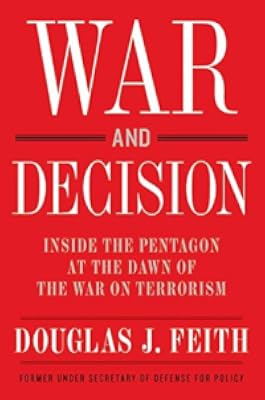
War and Decision: Inside the Pentagon at the Dawn of the War on Terrorism
by Douglas J. Feith
On This Page
Description
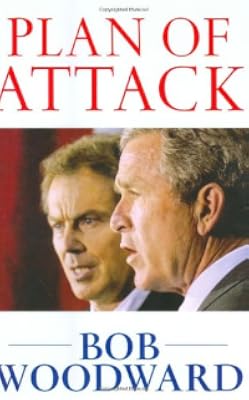
Of all the players in the planning and evolution of the Bush Administration's war on terrorism, few were more integral--or more controversial--than Douglas Feith, the chief strategist on Donald Rumsfeld's Pentagon policy team. A highly influential international policy analyst for more than a quarter century, Feith worked closely with Rumsfeld, Paul Wolfowitz, Colin Powell, Condoleezza Rice, Vice President Cheney, and President Bush in defining the U.S. response to the attacks of 9/11--from show more the successful war on Afghanistan to the more challenging invasion of Iraq and its aftermath. Now, in this candid and revealing memoir, Feith--a charter member of the neoconservative movement and an architect of the administration's preventive strategy in the war on terrorism--offers the most in-depth and authoritative account yet of the Pentagon's evolving stance during one of the most controversial eras of American history. Drawing upon a unique trove of documents and records, this extraordinary chronicle will put the reader in the room for scores of previously unreported senior-level meetings, showing how hundreds of critical decisions were made in defense of American interests during and after the crisis of 9/11--decisions both successful and controversial. Where journalists like Bob Woodward could only speculate, Feith is the first inside player to reveal the inner workings of the Pentagon, at a time when history hung in the balance.--From publisher description. show lessTags
Recommendations




Member Reviews
Feith as a high-placed aide in Rumsfeld's Dept. of Defense had an insider's view on the birth and execution of the War on Terror. Overtly, he claims a balanced view: Bush and company made mistakes, even enormous once yet the approach was basically sound. I get it; a woodchuck destroys my garden, I wage war on all woodchucks that could possibly wreak such havoc, I don't go on a personal vendetta against a single, criminal chucker. However, Feith fails to convince that the war on Saddam was a natural step in the War on Terror following laid out foreign policy (why not the rest of the Axis of Evil, or other nation-states?) and not Bush's misguided vendetta at a time when the resources and focus should have been on Al Qaeda and The Taliban show more in Afghanistan. show less
I'm certainly not an apologist for the Bush Administration. Nor am I one of the rabid Bush-haters. I remember very clearly what the debate was on going to war against Iraq. Feith does too and retells it in detail. And in the process he reveals the hypocrisy of those who now oppose the war, but at the time of decision didn't, and demonstrates how the Bush Administration let its critics frame the debate.
The old saw is, "He who wins the war, writes the history." Well, maybe not. Because President Bush has won this war, but he's still letting others write the history.
The old saw is, "He who wins the war, writes the history." Well, maybe not. Because President Bush has won this war, but he's still letting others write the history.
Doug Feith's book, "War and Decision: Inside the Pentagon at the Dawn of the War on Terrorism" is slightly dated now, having been written at the end of George W. Bush's presidency, but it provides an interesting look back at what the insiders of the Afghanistan & Iraq war planning were thinking at that time, and how those plans were formulated. Over the past ten years, many have criticized the the Bush Administration's war planning (or lack thereof) efforts, especially for Iraq, and the Administration's blind desire to remove Saddam Hussain from power, regardless of evidence of weapons of mass destruction (WMD's). The likelihood of success for a subsequent stable Iraq, and show more the likely resultant changes to the balance of power in the Middle Eastwere not clearly foreseen. But Feith stands up to this criticism, and tries to correct some of the misunderstandings common among the public.
Feith is not necessarily defensive in his writing, but he is presenting HIS view and rationalizing them through his eyes. Clearly there was tension between the State Department and the Defense Department, and between CIA and Defense, and that reinforces the idea that the wars in Afghanistan, and especially Iraq, were not as well thought out and needed, nor necessarily based on the best information available. If Feith didn't use cherry-picked data in support of his views, he certainly used data which supported the position of the Administration, and especially the Dept of Defense. He maintains that the invasions of Afghanistan and Iraq were well thought out, although admitting that plans could have been better and not everything worked out as hoped. Nonetheless, after several years, it's good to hear from one of the key men behind the scenes, and get an answer to the question "What Were They Thinking?" show less
Feith is not necessarily defensive in his writing, but he is presenting HIS view and rationalizing them through his eyes. Clearly there was tension between the State Department and the Defense Department, and between CIA and Defense, and that reinforces the idea that the wars in Afghanistan, and especially Iraq, were not as well thought out and needed, nor necessarily based on the best information available. If Feith didn't use cherry-picked data in support of his views, he certainly used data which supported the position of the Administration, and especially the Dept of Defense. He maintains that the invasions of Afghanistan and Iraq were well thought out, although admitting that plans could have been better and not everything worked out as hoped. Nonetheless, after several years, it's good to hear from one of the key men behind the scenes, and get an answer to the question "What Were They Thinking?" show less
Having just gotten this book, I haven't had time to read it but can already see that, unlike the typical "insider" memoir, it backs up its arguments with contemporary documents. (The author has posted all of the unclassified and declassified ones on-line to help readers evaluate his analyses.) The reviews in the Wall Street Journal and National Review make it clear that Mr. Feith has written an account that everyone who wants to think seriously about the war in Iraq and, more broadly, the War on Terror will have to read and digest.
Update: Reading the book confirmed my favorable impression. For some comments, and a contrast with a lesser "insider's account", see http://stromata.typepad.com/stromata_blog/2008/05/feith-vs-mcclel.html
Update: Reading the book confirmed my favorable impression. For some comments, and a contrast with a lesser "insider's account", see http://stromata.typepad.com/stromata_blog/2008/05/feith-vs-mcclel.html
Ratings
Members
- Recently Added By
Published Reviews
ThingScore 92
This book, an analytical description of a dysfunctional National Security Council and disloyal senior officials, will be studied for years by journalists, historians, and aspiring political appointees. Sharp insights are scattered through its more than 600 pages — which are structured as a careful legal brief, forcing the reader to sift for the many nuggets.
Former undersecretary of defense show more Douglas Feith comes across as a serious policy wonk, both highly educated and dedicated to the proposition that the internal logic of a theory or policy position should persuade the reader and guide government. Not for him the breezy style of books where sources who remember conversations from years past slyly offer juicy gossip. Instead, half of the book is a convincing refutation of unfair allegations about the author. The other half presents a balanced analysis of policy debates about Iraq inside the administration between mid-2001 and mid-2004, including copious footnotes and copies of documents. show less
Former undersecretary of defense show more Douglas Feith comes across as a serious policy wonk, both highly educated and dedicated to the proposition that the internal logic of a theory or policy position should persuade the reader and guide government. Not for him the breezy style of books where sources who remember conversations from years past slyly offer juicy gossip. Instead, half of the book is a convincing refutation of unfair allegations about the author. The other half presents a balanced analysis of policy debates about Iraq inside the administration between mid-2001 and mid-2004, including copious footnotes and copies of documents. show less
added by TomVeal
Feith’s book brings the reader into the deliberative process to observe, as he notes early on, that “policy making often involves choosing to accept one set of likely problems over another.” On issue after issue — the quality and interpretation of prewar intelligence on weapons of mass destruction, the desired constitution of post-war Iraqi governance, Iraq-al-Qaeda/terrorist show more relations, and many others — Feith has laid out the most well-documented explanation of how decisions were made.
Feith’s book is no less than a reference publication for the deconstruction of the myths and assertions promoted by those who either oppose or have become disenchanted with the Iraq invasion and, more broadly, the Bush counterattack on Islamic terror. show less
Feith’s book is no less than a reference publication for the deconstruction of the myths and assertions promoted by those who either oppose or have become disenchanted with the Iraq invasion and, more broadly, the Bush counterattack on Islamic terror. show less
added by TomVeal
[T]he best account to date of how the administration debated, decided, organized and executed its military responses to the attacks of Sept. 11, 2001. . . .
Mr. Feith's book does not lack for criticism of how the administration handled itself or even, at times, of how he handled himself. But . . . most of the received wisdom about the dynamics of the first Bush term -- pitting "warmongering show more neocons" and democracy fantasists such as Mr. Feith against more sober-minded realists such as then-Secretary of State Colin Powell and his deputy, Richard Armitage -- is bunk, and demonstrably so. show less
Mr. Feith's book does not lack for criticism of how the administration handled itself or even, at times, of how he handled himself. But . . . most of the received wisdom about the dynamics of the first Bush term -- pitting "warmongering show more neocons" and democracy fantasists such as Mr. Feith against more sober-minded realists such as then-Secretary of State Colin Powell and his deputy, Richard Armitage -- is bunk, and demonstrably so. show less
added by TomVeal
Lists

Radical Islam/Islamism
75 works; 6 members
Author Information
3+ Works 176 Members
Douglas J. Feith served as U.S. Under Secretary of Defense for Policy from 2001 to 2005. He is the Director of the Center for National Security Strategies at the Hudson Institute and a Belfer Center Adjunct Visiting Scholar at Harvard's Kennedy School of Government. He lives near Washington, D.C., with his family.
Classifications
- Genres
- Nonfiction, History, General Nonfiction, Politics and Government, Biography & Memoir
- DDC/MDS
- 973.931 — History & geography History of North America United States 1901- New Millennium, Post 9/11 (2001-Present) George W. Bush (2001-2009) Sept 11 Attacks, Iraq War, Patriot Act
- LCC
- HV6432 .F44 — Social sciences Social pathology. Social and public welfare. Criminology Social pathology. Social and public welfare. Criminology Crimes and offenses
- BISAC
Statistics
- Members
- 173
- Popularity
- 189,233
- Reviews
- 4
- Rating
- (3.50)
- Languages
- English
- Media
- Paper, Audiobook, Ebook
- ISBNs
- 5
- UPCs
- 1
- ASINs
- 2