On This Page
Description
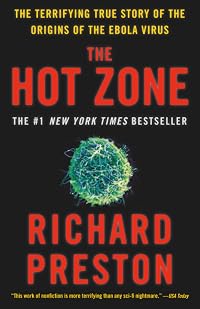
A highly infectious, deadly virus from the central African rain forest suddenly appears in the suburbs of Washington, D.C. There is no cure. In a few days 90 percent of its victims are dead. A secret military SWAT team of soldiers and scientists is mobilized to stop the outbreak of this virus. The book tells this dramatic story, giving an account of the appearance of rare and lethal viruses and their "crashes" into the human race.Tags
Recommendations
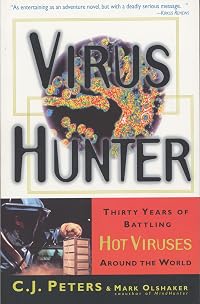
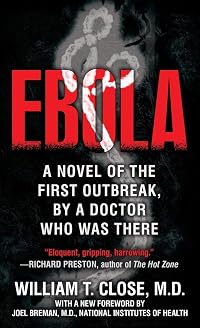
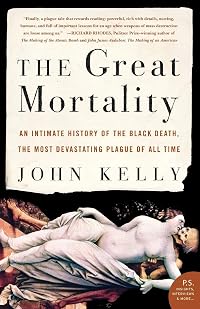
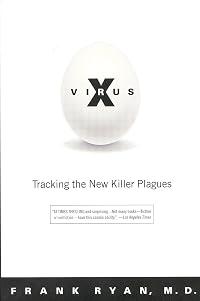


Member Recommendations
Member Reviews
Wow, what a fantastic book. Maybe because of recent events, maybe because of the writing style, but all things being equal this was one that I read in about 2 days. It was really that gripping.
Stephen King wrote one of the book blurbs on the back and he may have said it best: "The first chapter of "The Hot Zone" is one of the most horrifying things I've read in my whole life . . . and then it gets worse." And really, he's not kidding. Richard Preston details the journey that Charles Monet makes from his home in Western Kenya where he was one of the managers of a sugar factory. A Frenchman by birth, he decided one Christmas week to explore Kitum Cave, an innocent enough adventure. Then he goes home, totally unknowing that he was carrying show more a very quick and lethal virus called Ebola. What makes the chapter that ends in his death so horrifying, as King writes, is the great amount of suffering he endured, his physical changes, and how quickly he succumbed to it. Preston writes this chapter like a good mystery, providing minute details on the physical suffering Monet endured drawn from victims of Ebola. He speculates on the mental anguish Monet must have suffered, not knowing what was wrong with him but knowing he was horribly sick.
As the Ebola virus is explored, starting with the Marburg strain and moving into the Reston strain that is the bulk of this story, Preston expands his storytelling abilities. He describes in a matter-of-fact manner the use of monkeys in medical research; the horror is in their capture from the wild and their imprisonment into cages to face certain death one way or another. The numbers are staggering. And whether or not their use is justified, theirs is a story that needs to be told.
In late 1989, a shipment of macaques from the Philippines came to a clearing house of research monkeys in Reston, VA, outside of Washington, DC. They were not injected with any virus, as they were destined to various simian research facilities throughout the US. However, a few succumbed to an illness whose virus had the same look under the microscope as the Ebola virus. And through a series of events, the humans who were caring for the monkeys or performing the necropsies carried this virus into the greater DC area by interacting with others over the Thanksgiving weekend. The only reason there was no mass outbreak was that this particular strain of Ebola does not jump from monkeys to humans. The Ebola vaccination was only licensed in November, 2019, ironically enough.
Having emerged from the COVID protocols and lockdown and masks, knowing what words like "super spreader event" mean, and finding out just how quickly a virus can jump from one person to another without either party knowing, adds another layer of realism to events from 30 years ago. It is extremely detailed and well-written and absolutely horrifying. show less
Stephen King wrote one of the book blurbs on the back and he may have said it best: "The first chapter of "The Hot Zone" is one of the most horrifying things I've read in my whole life . . . and then it gets worse." And really, he's not kidding. Richard Preston details the journey that Charles Monet makes from his home in Western Kenya where he was one of the managers of a sugar factory. A Frenchman by birth, he decided one Christmas week to explore Kitum Cave, an innocent enough adventure. Then he goes home, totally unknowing that he was carrying show more a very quick and lethal virus called Ebola. What makes the chapter that ends in his death so horrifying, as King writes, is the great amount of suffering he endured, his physical changes, and how quickly he succumbed to it. Preston writes this chapter like a good mystery, providing minute details on the physical suffering Monet endured drawn from victims of Ebola. He speculates on the mental anguish Monet must have suffered, not knowing what was wrong with him but knowing he was horribly sick.
As the Ebola virus is explored, starting with the Marburg strain and moving into the Reston strain that is the bulk of this story, Preston expands his storytelling abilities. He describes in a matter-of-fact manner the use of monkeys in medical research; the horror is in their capture from the wild and their imprisonment into cages to face certain death one way or another. The numbers are staggering. And whether or not their use is justified, theirs is a story that needs to be told.
In late 1989, a shipment of macaques from the Philippines came to a clearing house of research monkeys in Reston, VA, outside of Washington, DC. They were not injected with any virus, as they were destined to various simian research facilities throughout the US. However, a few succumbed to an illness whose virus had the same look under the microscope as the Ebola virus. And through a series of events, the humans who were caring for the monkeys or performing the necropsies carried this virus into the greater DC area by interacting with others over the Thanksgiving weekend. The only reason there was no mass outbreak was that this particular strain of Ebola does not jump from monkeys to humans. The Ebola vaccination was only licensed in November, 2019, ironically enough.
Having emerged from the COVID protocols and lockdown and masks, knowing what words like "super spreader event" mean, and finding out just how quickly a virus can jump from one person to another without either party knowing, adds another layer of realism to events from 30 years ago. It is extremely detailed and well-written and absolutely horrifying. show less
This is the bestselling non-fiction account of the mysterious history of the Ebola virus and of an outbreak of what appeared to be an airborne variant among monkeys in a facility outside Washington DC, which scared the pants off pretty much everybody when it was first published back in the early 90s. Everybody but me, that is, because for some reason it took me this long to finally get around to reading the thing.
Well, I can report that it's still really freaking scary. It is, in fact, terrifying and horrific and deeply fascinating, and so gripping that I truly had difficulty putting it down to go to bed (and not just because I was mildly worried that it might give me nightmares). And now I don't think I'm ever going to be able to look show more at any of those plague-wipes-out-humanity post-apocalyptic science fiction stories the same way again. That scenario is way, way more plausible than I really want to think about. show less
Well, I can report that it's still really freaking scary. It is, in fact, terrifying and horrific and deeply fascinating, and so gripping that I truly had difficulty putting it down to go to bed (and not just because I was mildly worried that it might give me nightmares). And now I don't think I'm ever going to be able to look show more at any of those plague-wipes-out-humanity post-apocalyptic science fiction stories the same way again. That scenario is way, way more plausible than I really want to think about. show less
Holy shit this was a good book. Riveting tale of emerging diseases like Ebola and AIDS in the modern world. It's basically a cautionary tale of reproduction. If we keep reproducing and overpopulating the world, we will eventually destroy the places where dangerous organisms live. That's when they adapt. Most of what exists in nature are not a sentient beings. Most of these beings do not have reason or ethics. Those things simply find the best ways to survive. If that means killing humans, so be it. So, uh, yeah, I'm childfree and old. Good luck with that, people of the future!
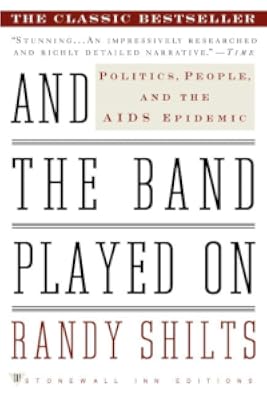
I've been thinking a lot lately about how much I like reading medical history books like And the Band Played On: Politics, People, and the AIDS Epidemic and The Fever Trail: In Search of the Cure for Malaria, so I pulled this book off the shelf. And could not. put. it. down. A true story that reads like a Michael Crichton thriller, I stayed up way past my bedtime because I was so heavily invested in the lives and well-being of some of the people in this book.
One of those books you can't stop talking about for weeks and keep telling other people to read.
One of those books you can't stop talking about for weeks and keep telling other people to read.
"Perhaps the biosphere does not like the idea of 5 billion humans....Nature has interesting ways to balance itself"
I absolutely LOVE this book as terrifying as it is to read about killer virus Ebola. The book with all its detail was much scarier than the mini series, The Hot Zone on National Geographic channel. I'm shocked at how the virus was handled and surprised that many experts cut themselves while studying an infected liver or other organs. Poke yourself with a bloody needle ...
I absolutely LOVE this book as terrifying as it is to read about killer virus Ebola. The book with all its detail was much scarier than the mini series, The Hot Zone on National Geographic channel. I'm shocked at how the virus was handled and surprised that many experts cut themselves while studying an infected liver or other organs. Poke yourself with a bloody needle ...
Panicky sort of doomsday fare that passes for popular information today. True tales of prospective [a:Stephen King|3389|Stephen King|http://d.gr-assets.com/authors/1362814142p2/3389.jpg] [b:The Stand|149267|The Stand|Stephen King|http://d.gr-assets.com/books/1213131305s/149267.jpg|1742269]-like plagues. Journalistic writing tries to pass off as scientifically based but anecdotes are the main fare here and there is precious little science. The various plagues enumerated within: Anthrax, Ebola, West Nile, Bird Flu, etc. just have not shown an ability, in the 16 years since the book was written, to jump to a form that is going to become more epidemic for humans. In the process journalists like Mr. Preston red-herring us into taking our show more eyes off the real, largely preventable, Third World killers: good ol' Malaria, Cholera, HIV. The total fatal cases of all the diseases enumerated in The Hot Zone in 10 years only add up to a fraction of the Malaria deaths each year.
The danger in this kind of reportage is it takes our eye off the real problems of things like breast cancer, HIV, car crashes, gun violence, substance abuse, diabetes, and other various things that need work to prevent the far more numerous fatalities. show less
The danger in this kind of reportage is it takes our eye off the real problems of things like breast cancer, HIV, car crashes, gun violence, substance abuse, diabetes, and other various things that need work to prevent the far more numerous fatalities. show less
This may be the scariest book I've ever read. Seriously.
By comparison, it makes [b:House of Leaves|24800|House of Leaves|Mark Z. Danielewski|https://images.gr-assets.com/books/1403889034s/24800.jpg|856555] read like a fairy tale. Because this book is actually true, the hypotheses within could actually happen. It doesn't take much imagination to envision the consequences of a contagious killer virus.
Preston enumerates the initial case of Ebola and then traces forward to an outbreak of it in a monkey research facility in Reston, Virginia. Part horror, part medical mystery, and all true, The Hot Zone makes you realize how vulnerable the human race really could be. Imagine an illness that kills like the black plague and spreads like the show more flu. What happens if a virus like that gets out in the population?
This book definitely is written with dramatic flair, and perhaps at points is a little over the top, but that is what makes it such a fantastic and accessible read. show less
By comparison, it makes [b:House of Leaves|24800|House of Leaves|Mark Z. Danielewski|https://images.gr-assets.com/books/1403889034s/24800.jpg|856555] read like a fairy tale. Because this book is actually true, the hypotheses within could actually happen. It doesn't take much imagination to envision the consequences of a contagious killer virus.
Preston enumerates the initial case of Ebola and then traces forward to an outbreak of it in a monkey research facility in Reston, Virginia. Part horror, part medical mystery, and all true, The Hot Zone makes you realize how vulnerable the human race really could be. Imagine an illness that kills like the black plague and spreads like the show more flu. What happens if a virus like that gets out in the population?
This book definitely is written with dramatic flair, and perhaps at points is a little over the top, but that is what makes it such a fantastic and accessible read. show less
Members
- Recently Added By
Lists

Best Books About Plagues and Epidemics
99 works; 17 members

Non-Fiction Worth Reading
1,015 works; 261 members

Top Five Books of 2020
982 works; 348 members

Best Horror Books
281 works; 84 members

Read These Too
458 works; 9 members

Books That Go Bump in the Night
42 works; 6 members

Independent Reading Suggestions
69 works; 3 members

Blue Pyramid 1,276 Best Books of All Time
1,248 works; 32 members
Page Turners
185 works; 11 members

Reader's Digest 50 Best Horror Books to Read
50 works; 3 members

Books Read in 2024
4,623 works; 126 members

Penguin Random House
458 works; 4 members
Author Information

12+ Works 13,611 Members
Richard Preston graduated summa cum laude from Pomona College in California and received a Ph.D. in English from Princeton University. He began his career as a journalist writing for the New York Times, Washington Post, National Geographic Traveler and Blair & Ketchum's Country Journal. He has also been a contributor to The New Yorker since 1985. show more One of Preston's earlier novels, "First Light," was a book on astronomy that won him the American Institute of Physics Award, and he has an asteroid the size of Mount Everest named after him. He also wrote "The Hot Zone," which is a true story about an outbreak of the Ebola virus near Washington, D.C. and inspired the movie Outbreak that starred Dustin Hoffman. "The Cobra Event" is a thriller about biological weapons and terrorism. He spent three years researching biological weapons and his sources included high-ranking government officials, and the scientists who invented and tested these weapons. The story tells of a medical doctor who works with the FBI to stop an act of bio-terrorism in New York City. Preston is now considered an expert in the areas of disease and biotechnology; and the FBI and President Clinton, in regards to disease and bio-warfare, have sought out his opinion. Preston has won several awards that include the McDermott Award in the Arts from the Massachusetts Institute of Technology, and the Overseas Press Club of America's Whitman Basso Award for the best reporting in any medium on environmental issues for "The Hot Zone." His title Micro with Michael Crichton made the New York Times Best Seller list for 2011. (Bowker Author Biography) show less
Some Editions
Awards and Honors
Awards
Distinctions
Series

Work Relationships
Has the adaptation
Common Knowledge
- Canonical title*
- Zona caliente
- Original title
- The Hot Zone
- Alternate titles
- The Hot Zone: The Terrifying True Story of the Origins of the Ebola Virus
- Original publication date
- 1994
- People/Characters
- Ebola; Marburg; Charles Monet
- Important places
- Reston, Virginia, USA; Mount Elgon, Kenya; Sudan; Uganda; Kitum Cave (Mount Elgon National Park, Kenya)
- Important events
- Ebola Reston discovery (1989)
- Related movies
- The Hot Zone (IMDb); Outbreak (1995 | IMDb)
- Epigraph
- The second angel poored his bowl into the sea, and it became like the blood of a dead man. --Apocalypse
- Dedication
- To Frederic Delano Grant, Jr., admired by all who knew him.
- First words
- 1980 New Year's Day: Charles Monet was a loner.
- Quotations
- The kill rate in humans infected with Ebola Zaire is nine out of ten. Ninety percent of the people who come down with Ebola Zaire die of it. Ebola Zaire is a slate wiper in humans.
You can't fight off Ebola the way you fight off a cold. - Last words
- (Click to show. Warning: May contain spoilers.)It will be back.
- Blurbers
- McKibben, Bill; Clarke, Arthur C.; Redford, Robert; King, Stephen
- Original language
- Inglés; English
- Canonical DDC/MDS
- 614.57
- Canonical LCC
- RC140.P74
- Disambiguation notice
- Be careful when combining a book titled Virus with the author's last name of Preston. Both Douglas Preston/Lincoln Child AND Richard Preston have a book with this title.
ISBN 9024537193 is actually by Douglas Preston/Lincoln Child; not Richard Preston.
*Some information comes from Common Knowledge in other languages. Click "Edit" for more information.
Classifications
- Genres
- General Nonfiction, Nonfiction
- DDC/MDS
- 614.57 — Applied science & technology Medicine & health Epidemics, Poisons, Alternative Medicine Incidence of and public measures to prevent specific diseases and kinds of diseases Bacterial diseases
- LCC
- RC140 .P74 — Medicine Internal medicine Internal medicine Infectious and parasitic diseases
- BISAC
Statistics
- Members
- 6,799
- Popularity
- 1,763
- Reviews
- 120
- Rating
- (4.04)
- Languages
- 16 — Czech, Danish, Dutch, English, Finnish, French, German, Greek, Italian, Japanese, Norwegian (Bokmål), Serbian, Slovenian, Spanish, Swedish, Portuguese (Portugal)
- Media
- Paper, Audiobook, Ebook
- ISBNs
- 66
- ASINs
- 21