On This Page
Description
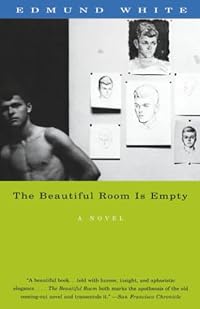
When the narrator of White's poised yet scalding autobiographical novel first embarks on his sexual odyssey, it is the 1950s, and America is "a big gray country of families on drowsy holiday." That country has no room for a scholarly teenager with guilty but insatiable stirrings toward other men. Moving from a Midwestern college to the Stonewall Tavern on the night of the first gay uprising--and populated by eloquent queens, butch poseurs, and a fearfully incompetent shrink--The Beautiful show more Room is Empty conflates the acts of coming out and coming of age. "With intelligence, candor, humor--and anger--White explores the most insidious aspects of oppression.... An impressive novel."--Washington Post book World show lessTags
Recommendations





















Member Reviews
Sometimes it seems nothing changes and at other times everything does. In this novel we are confronted with these two realities: the comforting illusion of the States in the 50s and the gross and terrible ways homosexuality was treated. Through the lens of Bunny we see the tension growing up as a gay boy in a heteronormative society where all his impulses will be denatured and criminalised. The gentle slope that we see him climb is a testimony to how far gay rights have come. A shining, raw light onto an epoch.
Edmund White's semi-autobiographical book "The Beautiful Room Is Empty" chronicles the experiences of a young gay man growing up in the 1950s and 1960s, leading up to the Stonewall Riots in 1969.
The narrative follows the protagonist from his preparatory school days through his college years and into the burgeoning gay culture of New York City. It's a journey of self-discovery, marked by the protagonist's struggle with his sexual identity in a repressive society, his attempts at psychoanalysis to "cure" his homosexuality, and his eventual acceptance and celebration of his identity.
The narrative focuses on themes of identity, alienation, the search for belonging, and the transformation of gay culture during a pivotal time in American show more history. The novel paints a vivid picture of the era's social constraints and the personal and collective liberation that followed.
White's prose is often eloquent, with a particular emphasis on the richness of language and the emotional depth of the narrative. His storytelling has candor, intelligence, and humor, even when addressing the painful aspects of oppression and self-acceptance.
White has an ability to convey the loneliness and subsequent fulfillment of coming out. The book is lauded for its literary quality and its honest portrayal of gay life in mid-20th century America. As part of White's autobiographical trilogy, "The Beautiful Room Is Empty" is often compared to "A Boy's Own Story," its predecessor. While both are celebrated, some find "The Beautiful Room Is Empty" slightly less engaging due to its different stylistic choices and the protagonist's more introspective, sometimes self-conscious, narrative voice.
"The Beautiful Room Is Empty" stands as a significant work in the landscape of American literature, particularly within the context of gay narratives. It offers not only a historical snapshot of gay life before and during the Stonewall era but also a compelling personal journey through the complexities of identity. For those interested in literature that explores themes of self-discovery, societal change, and the nuances of love and sexuality, this book is highly recommended. However, readers should be prepared for a narrative that is both introspective and, at times, self-critical, reflecting the protagonist's internal struggle with the external world. show less
The narrative follows the protagonist from his preparatory school days through his college years and into the burgeoning gay culture of New York City. It's a journey of self-discovery, marked by the protagonist's struggle with his sexual identity in a repressive society, his attempts at psychoanalysis to "cure" his homosexuality, and his eventual acceptance and celebration of his identity.
The narrative focuses on themes of identity, alienation, the search for belonging, and the transformation of gay culture during a pivotal time in American show more history. The novel paints a vivid picture of the era's social constraints and the personal and collective liberation that followed.
White's prose is often eloquent, with a particular emphasis on the richness of language and the emotional depth of the narrative. His storytelling has candor, intelligence, and humor, even when addressing the painful aspects of oppression and self-acceptance.
White has an ability to convey the loneliness and subsequent fulfillment of coming out. The book is lauded for its literary quality and its honest portrayal of gay life in mid-20th century America. As part of White's autobiographical trilogy, "The Beautiful Room Is Empty" is often compared to "A Boy's Own Story," its predecessor. While both are celebrated, some find "The Beautiful Room Is Empty" slightly less engaging due to its different stylistic choices and the protagonist's more introspective, sometimes self-conscious, narrative voice.
"The Beautiful Room Is Empty" stands as a significant work in the landscape of American literature, particularly within the context of gay narratives. It offers not only a historical snapshot of gay life before and during the Stonewall era but also a compelling personal journey through the complexities of identity. For those interested in literature that explores themes of self-discovery, societal change, and the nuances of love and sexuality, this book is highly recommended. However, readers should be prepared for a narrative that is both introspective and, at times, self-critical, reflecting the protagonist's internal struggle with the external world. show less
When we rejoin our nameless narrator he is now seventeen years old and exploring deeper relationships, sexual and platonic. He has moved from the Midwest to the culturally explosive Greenwich Village of New York to pursue college and a career. There he keeps his relationships in different compartments. The fraternity brothers do not mingle with the bohemians and the bohemians do not know the Chinese. And no one knows of the anonymous hairy legs and hard penises of grimy bathrooms. There is a lot more descriptive sex in The Beautiful Room is Empty. Our narrator is less concerned with "going straight" then he is finding a handsome man with whom to link arms and entwine legs. The shame of homosexuality burns with a smaller flame but is show more always there. show less
The semi-autobiographical novel of a young man in Detroit and Chicago in the 1950s and 60s, and who is gay . . . couldn't sound less interesting, unless they made it a baseball or football story. I really didn't think I'd find the interest to finish it until I got to the paragraph on page 19 where the narrator talks about how he wishes he lived in the "lurid decadence of nineteenth-century Europe, with its mauve glasses and moth-eaten velvets . . . " and said "I felt nausea whenever I faced America's frumpy cuteness." Suddenly, the book had promise--he didn't like his world any more than I do.
. . . And this just showed me how good writing can make an otherwise distasteful and boring book come to life. It was a quick, compelling read. show more For my tastes, there were too many scenes of cruising and sex in public bathrooms, but otherwise it was enjoyable. I'm glad I read it and will definitely read Edmund White again. show less
. . . And this just showed me how good writing can make an otherwise distasteful and boring book come to life. It was a quick, compelling read. show more For my tastes, there were too many scenes of cruising and sex in public bathrooms, but otherwise it was enjoyable. I'm glad I read it and will definitely read Edmund White again. show less
Summary:
The Beautiful Room is Empty picks up shortly after where White's earlier memoir, A Boy's Own Story, leaves off. This work discusses not just the growth of boy-into-man, but also gives a historical account of the period. The 1950s and 1960s – the rise and fall of the Beatniks. The advent of hipsters. The strain for one man to understand what being homosexual means, and for one nation – one culture – to begin approaching a similar question. What is “gay?” A disease? A malady? A psychological disturbance or a physical perversity? White seamlessly weaves the individual and the populous struggle and turmoil. There is the question in general, and the answers as approached through different lenses: class, education, region. show more How do the Midwestern intellectuals, mundane and suburban, treat homosexual? What about the artsy, edgy New York City high-rollers? The rich? The destitute? What’s the difference between a “trick,” his “john,” and day-life versus night-life? This novel attempts to answer these questions, and more. Really, though, it’s a novel of questions. It’s a memoir of life, as lead by the author – someone still obviously affected by the pain, the struggles, the joys, and the many, many questions of his youth.
The Good:
White’s prose is beautiful, almost musical. The pages turn rapidly because sentences and paragraphs flow richly and uninterrupted. Ideas, encounters, and the (many) literary references are approached with caution, but also with a shy confidence. Personal experiences, like the narrator’s experiences in a prep school – guarded from the subversive Art College just across the way- conveniently and realistically mime moments in time, the greater American sentiment. The psychological fascination with homosexuality as something to be cured, the insecurity of the gay men and lesbian women, so totally aware of who they are, yet still trying to cope with the realization that society around them will not accept their own reality, all wrapped in the narrator’s concession that what he does he knows to be wrong (the consumption of anonymous, meaningless sex, night after night – not being gay in general) and that, though he comes from a dysfunctional family, it is not the family that makes the man. It is both the personal touches, the narrator’s struggle to find meaningful love – and to lose it – friendships, loss, embarrassment, shame, self-consciousness and body image, coupled with the bigger ideas of society, religion, and law (the many references to gender laws, some of which included laws that banned women from wearing more than three articles of “manly” clothing, and a law which required that in each group of men at a night-club, at least one female must be present) which makes this story so impactful, so believable and so important. The personal struggle is terribly hard, but White also wants us to remember that, there was a bigger struggle. Yes, the “Pink Panthers” at the Stonewall Riots found themselves to be a bit ridiculous, yet they were, for the first time, standing up for a certain right being denied them, singing “We Shall Overcome” and, upon waking up the next morning, are crushed in spirit when they find that no mention of the riot, the movement, the importance of their presence can be found in any newspaper. It was a painful time in America, and that strife and clawing-struggle is purposefully and powerfully represented by White in The Beautiful Room is Empty.
The Bad:
There is an uncomfortable amount of time and attention paid to the many sexual exploits of the narrator. Certainly, I understand the inclusion and, admittedly, believe it to be entirely necessary if the novel is to be truly honest. Still, I did oftentimes find it distracting. How could White have remained honest without the repeated, saturated references to prostitution, glory-holes, bathroom orgies? I can’t say – and for this reason, I understand the necessity. Still, I find myself wishing a bit more attention had been paid to the personal relationships, the professional growth, the assimilation of the narrator into “normal” culture, and his feelings in these situations. This is my only gripe, and it is a minor one, because despite my need to find fault with any novel, there’s little to find here. I believe the work could have been strengthened, certainly, by more attention to the late-blooming, loving relationship between the narrator and Sean, which is quickly ended but obviously important to the narrator and his personal growth. The novel also might be more enjoyable if a closer connection could have been made between reader and the narrator. Though White makes an effort to open up the narrator to observation and examination by exposing inner thoughts & feelings, by placing his narrator in the darkest depths of his own embarrassment and making the reader bear witness, yet we don’t ever really get to know the narrator. Not even his name. We know that writing and artistic appreciation drive him, but we don’t ever see any prowess or success in this - in fact, very little time or attention is even paid to the task of writing. Perhaps the novel itself is the writing, the final outcome, the “what” that had been developing from all of these experiences. If that’s the case – I missed the hint.
The Final Verdict: 4.5/5.0
The Beautiful Room is Empty is quite an accomplishment, despite White’s guardedness over his narrator. I can understand if the story was too personal to disclose anything more than what was disclosed and perhaps, to White, the most sensitive nerves truly were exposed. Ultimately, the development in plot and in prose & style from A Boy’s Own Story to The Beautiful Room is Empty makes me believe, as I seldom do, that the author’s every concealment and revelation was intentional. There are later works in this “series” and I can only imagine that the work continues to grow and improve. That the honesty will continue to be more honest, the writing will continue to run fluid and the self-realization will continue to occur in tandem with the greater growth and understanding of a people. Truly enjoyable, if at times uncomfortable. show less
The Beautiful Room is Empty picks up shortly after where White's earlier memoir, A Boy's Own Story, leaves off. This work discusses not just the growth of boy-into-man, but also gives a historical account of the period. The 1950s and 1960s – the rise and fall of the Beatniks. The advent of hipsters. The strain for one man to understand what being homosexual means, and for one nation – one culture – to begin approaching a similar question. What is “gay?” A disease? A malady? A psychological disturbance or a physical perversity? White seamlessly weaves the individual and the populous struggle and turmoil. There is the question in general, and the answers as approached through different lenses: class, education, region. show more How do the Midwestern intellectuals, mundane and suburban, treat homosexual? What about the artsy, edgy New York City high-rollers? The rich? The destitute? What’s the difference between a “trick,” his “john,” and day-life versus night-life? This novel attempts to answer these questions, and more. Really, though, it’s a novel of questions. It’s a memoir of life, as lead by the author – someone still obviously affected by the pain, the struggles, the joys, and the many, many questions of his youth.
The Good:
White’s prose is beautiful, almost musical. The pages turn rapidly because sentences and paragraphs flow richly and uninterrupted. Ideas, encounters, and the (many) literary references are approached with caution, but also with a shy confidence. Personal experiences, like the narrator’s experiences in a prep school – guarded from the subversive Art College just across the way- conveniently and realistically mime moments in time, the greater American sentiment. The psychological fascination with homosexuality as something to be cured, the insecurity of the gay men and lesbian women, so totally aware of who they are, yet still trying to cope with the realization that society around them will not accept their own reality, all wrapped in the narrator’s concession that what he does he knows to be wrong (the consumption of anonymous, meaningless sex, night after night – not being gay in general) and that, though he comes from a dysfunctional family, it is not the family that makes the man. It is both the personal touches, the narrator’s struggle to find meaningful love – and to lose it – friendships, loss, embarrassment, shame, self-consciousness and body image, coupled with the bigger ideas of society, religion, and law (the many references to gender laws, some of which included laws that banned women from wearing more than three articles of “manly” clothing, and a law which required that in each group of men at a night-club, at least one female must be present) which makes this story so impactful, so believable and so important. The personal struggle is terribly hard, but White also wants us to remember that, there was a bigger struggle. Yes, the “Pink Panthers” at the Stonewall Riots found themselves to be a bit ridiculous, yet they were, for the first time, standing up for a certain right being denied them, singing “We Shall Overcome” and, upon waking up the next morning, are crushed in spirit when they find that no mention of the riot, the movement, the importance of their presence can be found in any newspaper. It was a painful time in America, and that strife and clawing-struggle is purposefully and powerfully represented by White in The Beautiful Room is Empty.
The Bad:
There is an uncomfortable amount of time and attention paid to the many sexual exploits of the narrator. Certainly, I understand the inclusion and, admittedly, believe it to be entirely necessary if the novel is to be truly honest. Still, I did oftentimes find it distracting. How could White have remained honest without the repeated, saturated references to prostitution, glory-holes, bathroom orgies? I can’t say – and for this reason, I understand the necessity. Still, I find myself wishing a bit more attention had been paid to the personal relationships, the professional growth, the assimilation of the narrator into “normal” culture, and his feelings in these situations. This is my only gripe, and it is a minor one, because despite my need to find fault with any novel, there’s little to find here. I believe the work could have been strengthened, certainly, by more attention to the late-blooming, loving relationship between the narrator and Sean, which is quickly ended but obviously important to the narrator and his personal growth. The novel also might be more enjoyable if a closer connection could have been made between reader and the narrator. Though White makes an effort to open up the narrator to observation and examination by exposing inner thoughts & feelings, by placing his narrator in the darkest depths of his own embarrassment and making the reader bear witness, yet we don’t ever really get to know the narrator. Not even his name. We know that writing and artistic appreciation drive him, but we don’t ever see any prowess or success in this - in fact, very little time or attention is even paid to the task of writing. Perhaps the novel itself is the writing, the final outcome, the “what” that had been developing from all of these experiences. If that’s the case – I missed the hint.
The Final Verdict: 4.5/5.0
The Beautiful Room is Empty is quite an accomplishment, despite White’s guardedness over his narrator. I can understand if the story was too personal to disclose anything more than what was disclosed and perhaps, to White, the most sensitive nerves truly were exposed. Ultimately, the development in plot and in prose & style from A Boy’s Own Story to The Beautiful Room is Empty makes me believe, as I seldom do, that the author’s every concealment and revelation was intentional. There are later works in this “series” and I can only imagine that the work continues to grow and improve. That the honesty will continue to be more honest, the writing will continue to run fluid and the self-realization will continue to occur in tandem with the greater growth and understanding of a people. Truly enjoyable, if at times uncomfortable. show less
I appreciate being allowed the intimacy of reading this book. The tale is about coming of age and coming to terms with oneself and one's sexuality. This books takes the reader on a graphic, poignant, and challenging journey alongside a young homosexual teen as he becomes an adult. The reader is able to feel the deep levels of ambivalence of growing up gay in the 1960s and 1970s, when being homosexual was considered an illness, even by the homosexuals, and also the burgeoning joy as being homosexual might "constitute being part of a community rather than a diagnosis."
Just a note.....graphic sexual content......
Just a note.....graphic sexual content......
While they were behaving indecorously, our neurotic, white, middle-class gay narrator tried to distance himself from those unruly "Latinos" and "queens" who made the Stonewall riots, but once it was over it was his revolution too. A highly typical book that has little to say to modern queers, but there is some interesting language and funny characters.
Members
- Recently Added By
Lists

1001 Books You Must Read Before You Die
1,448 works; 1,132 members

Publishing Triangle 100 Best Lesbian and Gay Novels
97 works; 6 members

Shaking a Leg
111 works; 3 members

Good LGBT fiction for LGBT folk and friends
537 works; 54 members

Books With the Most Memorable Titles
478 works; 158 members
Author Information

68+ Works 13,043 Members
Author Edmund White was born in Cincinnati, Ohio on January 13, 1940. He majored in Chinese at the University of Michigan. Before spending a year in Rome, he worked for Time-Life Books from 1962 until 1970. Upon his return, he became an editor for The Saturday Review and Horizon. He lived in France from 1983 until 1990. His works have chronicled show more gay life with such books as A Boy's Own Story, The Beautiful Room Is Empty, and The Farewell Symphony. (Bowker Author Biography) show less
Awards and Honors
Series

Work Relationships
Is contained in
Is abridged in
Has as a commentary on the text
Common Knowledge
- Canonical title
- The Beautiful Room Is Empty
- Original title
- The Beautiful Room Is Empty
- Original publication date
- 1988
- Important events*
- Stonewall Riots
- Epigraph
- "Ah! Do you have to be sensual to be human?"
"Certainly, Madame. Pity is in the guts, just as tenderness is on the skin."
~ Anatole France, 'The Red Lily' - Dedication
- To Stanley Redfern
- First words
- I met Maria during my next-to-last year in prep school.
- Last words
- (Click to show. Warning: May contain spoilers.)But we couldn't find a single mention in the press of the turning point of our lives.
- Original language*
- Engels
*Some information comes from Common Knowledge in other languages. Click "Edit" for more information.
Classifications
Statistics
- Members
- 1,060
- Popularity
- 24,086
- Reviews
- 15
- Rating
- (3.75)
- Languages
- 7 — Catalan, Dutch, English, German, Italian, Portuguese, Spanish
- Media
- Paper, Audiobook, Ebook
- ISBNs
- 18
- ASINs
- 6