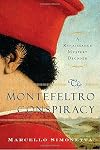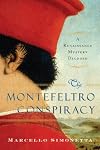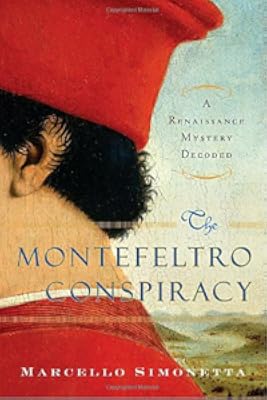
The Montefeltro Conspiracy: A Renaissance Mystery Decoded
by Marcello Simonetta
On This Page
Description
The Italian Renaissance is remembered as much for intrigue as it is for art, with papal politics and infighting among Italy's many city-states. The attempted assassination of the Medici brothers in Florence in 1478 is one of the best-known examples of the machinations of the age. While the assailants were the Medici's rivals, the Pazzi family, questions have always lingered about who really orchestrated the attack. Five centuries later, Marcello Simonetta, working in a private archive in show more Italy, stumbled upon a coded letter written by Federico da Montefeltro, the Duke of Urbino, to Pope Sixtus IV, containing proof of a power grab by the Pope for control of Florence. Montefeltro, long believed a close friend of Lorenzo de Medici, was in fact conspiring with the Pope to unseat the Medici. Their failure changed the course of Italian and papal history.--From publisher description. show lessTags
Recommendations














Member Reviews
Marcello Simonetta's The Montefeltro Conspiracy revolves around the so-called Pazzi conspiracy of 1478; an attempt on the lives of Lorenzo de' Medici ("the Magnificent") and his brother Giuliano. Simonetta uses newly decoded documents to show the conspiracy was not driven by the Pazzi clan, but by the ambitious Duke of Urbino, Federico da Montefeltro. Given this newfound evidence, the author reconstructs the reasons behind the conspiracy and its effects on Renaissance Italy, which includes a new understanding of some of the greatest works of art.
While Simonetta's discovery is compelling and has important implications for our understanding of these Renaissance figures, the historical narrative is lacking. There is tremendous potential show more here, including Simonetta's personal connection to one of the players in the story. However, rather than filling out the narrative with historical details to enrich one's grasp of the times, his approach is spartan and rigid. I can't help think what an amazing story this would have been in another writer's hands. show less
While Simonetta's discovery is compelling and has important implications for our understanding of these Renaissance figures, the historical narrative is lacking. There is tremendous potential show more here, including Simonetta's personal connection to one of the players in the story. However, rather than filling out the narrative with historical details to enrich one's grasp of the times, his approach is spartan and rigid. I can't help think what an amazing story this would have been in another writer's hands. show less
A light but compelling history of the effort, generally known as the Pazzi Conspiracy, to bring down the Medici in April 1478. Simonetta argues that the Duke of Urbino played a more important role in the conspiracy than others have claimed, after decoding a letter found in a private Italian archive. The argument is somewhat interesting but may perhaps be a bit overdrawn, and the narrative doesn't stand out very well. Readable, but unremarkable.
This is a short, readable account of the so-called Pazzi conspiracy to kill Lorenzo de Medici and his brother, and to change the balance of power in the Italian peninsula.
The author, Marcello Simonetta, argues that the Duke of Urbino, Federico Montefeltro, was more heavily involved in the plot than previously thought. Simonetta bases his argument on a Montefeltro letter he found and then decoded.
Because the Duke of Urbino has long been suspected of being a part of the conspiracy, Mr. Simonetta's discovery, and therefore his book, is certainly not groundbreaking; but his book is an open window into the shifting, and often delicate, power struggle between the Italian states (and the pope), and into the personalities of the men who show more shaped Renaissance history: Lorenzo de Medici and Federico Montefeltro.
To bring these characters to life, the author republishes some of their letters; so we see first-hand their dilemmas and motivations.
The book also serves as a reminder that on one side of the Italian Renaissance is great art, great human achievement, but on the other side, are dark plots, conspiracies, power struggles and vendettas; so in a sense, the book offers a view of mankind as being divided between black and white.
Or maybe the book's perspective is that often there is no division between black and white, and that instead, much of the human experience is colored gray.
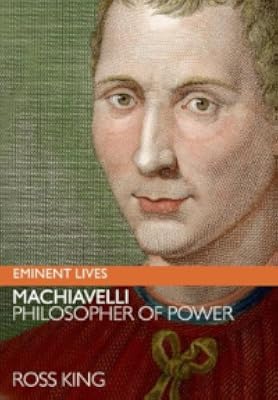
(As I read this book I couldn't help but see the origins of Machiavelli's political philosophy.)
It's quite remarkable, IMHO, that Lorenzo, through it all, retained many of his Renaissance ideals, so to me he is a symbol of a man having to overcome external obstacles and yet remain true to himself.
Or is he? The author briefly mentions that Lorenzo became a more repressive politician, but Mr. Simonetta doesn't explore how the assassination may have changed him.
(The most interesting history, I believe, is where we see how events change characters for better or worse.)
Also, I find this book lacking in that it tells only part of the Pazzi conspiracy: the roles and motivations of the Pazzis are hardly mentioned. Finally, Mr. Simonetta doesn't offer a unique or deep theory on the causes and forces of history, but then again, most historical authors don't.
Overall, this is an entertaining, well-written book that shines a somewhat narrow light on the history of Fifteenth century Italy. show less
The author, Marcello Simonetta, argues that the Duke of Urbino, Federico Montefeltro, was more heavily involved in the plot than previously thought. Simonetta bases his argument on a Montefeltro letter he found and then decoded.
Because the Duke of Urbino has long been suspected of being a part of the conspiracy, Mr. Simonetta's discovery, and therefore his book, is certainly not groundbreaking; but his book is an open window into the shifting, and often delicate, power struggle between the Italian states (and the pope), and into the personalities of the men who show more shaped Renaissance history: Lorenzo de Medici and Federico Montefeltro.
To bring these characters to life, the author republishes some of their letters; so we see first-hand their dilemmas and motivations.
The book also serves as a reminder that on one side of the Italian Renaissance is great art, great human achievement, but on the other side, are dark plots, conspiracies, power struggles and vendettas; so in a sense, the book offers a view of mankind as being divided between black and white.
Or maybe the book's perspective is that often there is no division between black and white, and that instead, much of the human experience is colored gray.
(As I read this book I couldn't help but see the origins of Machiavelli's political philosophy.)
It's quite remarkable, IMHO, that Lorenzo, through it all, retained many of his Renaissance ideals, so to me he is a symbol of a man having to overcome external obstacles and yet remain true to himself.
Or is he? The author briefly mentions that Lorenzo became a more repressive politician, but Mr. Simonetta doesn't explore how the assassination may have changed him.
(The most interesting history, I believe, is where we see how events change characters for better or worse.)
Also, I find this book lacking in that it tells only part of the Pazzi conspiracy: the roles and motivations of the Pazzis are hardly mentioned. Finally, Mr. Simonetta doesn't offer a unique or deep theory on the causes and forces of history, but then again, most historical authors don't.
Overall, this is an entertaining, well-written book that shines a somewhat narrow light on the history of Fifteenth century Italy. show less
This book relates the factual story of the 1478 plot to kill Lorenzo and Giuliano DiMedici, and its aftermath. It gives excellent insight into the political machinations, papal politics, and intrigue of Renaissance Italy that gave rise to Machiavelli.
Since this was a real conspiracy, there are lots of characters to keep track of; but for those interested in the Italian Renaissance, it's definitely a good read. Simonetta brings history, art, and papal intrigue to life with great descriptions and a compelling narrative.
Since this was a real conspiracy, there are lots of characters to keep track of; but for those interested in the Italian Renaissance, it's definitely a good read. Simonetta brings history, art, and papal intrigue to life with great descriptions and a compelling narrative.
I guess this is a "popular history" book, but even a non-historian like me would have liked a little more scholarship. Simonetta effectively builds to an anticlimax about halfway through, then spends the rest of this light volume watching the old men of Tuscany decay and die. I don't want to spoil it, in case anyone is interested, but the author's "discovery" doesn't really add much to our understanding of the murder of Giuliano de Medici.
For the serious student of the Italian Renaissance, the Medici Family, and the Pazzi Conspiracy, there is not much new information here. Try instead the excellent book The Pazzi Conspiracy: the Plot Against the Medici by Harold Acton.
I started reading this but I realized that I really know nothing about Italian History and didn't have enough background to get alot from this. It's going to the work bookshelf for a while.
Members
- Recently Added By
Lists

Books set in Firenze (Florence, Italy)
35 works; 1 member
Author Information
10 Works 208 Members
Marcello Simonetta has taught at Wesleyan University.
Common Knowledge
- Original publication date
- 2008
- People/Characters
- Federico da Montefeltro, Duke of Urbino; Giuliano de' Medici; Lorenzo de' Medici; Cicco Simonetta; Galeazzo Maria Sforza; Sixtus IV, Pope (show all 8); Sandro Botticelli; Ferrante of Aragon
- Important places
- Florence, Tuscany, Italy; Milan, Lombardy, Italy; Urbino, Marche, Italy; Rome, Italy; Marche, Italy
- Important events
- Renaissance; Pazzi Conspiracy (1478)
- First words
- On April 26, 1478, during Ascension Sunday mass, Lorenzo De' Medici and his brother, Giuliano, the young leaders of the Florentine city-state, were attacked in the Duomo.
- Last words
- (Click to show. Warning: May contain spoilers.)This is just one of the reasons why the fame of the heroes and antiheroes of this story rings out "to the ends of the earth."
Classifications
Statistics
- Members
- 159
- Popularity
- 206,095
- Reviews
- 8
- Rating
- (3.75)
- Languages
- English, Italian
- Media
- Paper, Ebook
- ISBNs
- 5
- ASINs
- 2