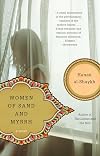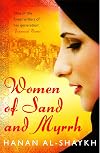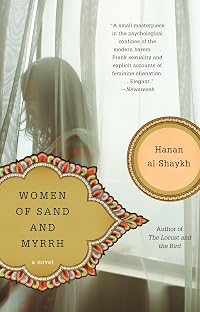
Women of Sand and Myrrh
by Hanan Al-Shaykh
On This Page
Description
Fiction. Literature. HTML:A powerful and moving novel, by the Arab worlds leading woman novelist, about four women coping with the insular, oppressive society of an unnamed desert state.Tags
Recommendations
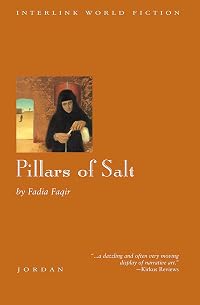

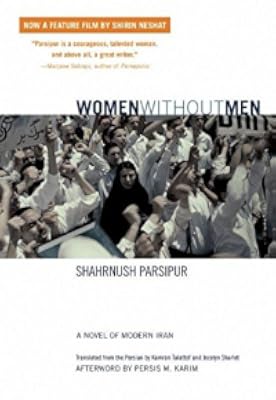
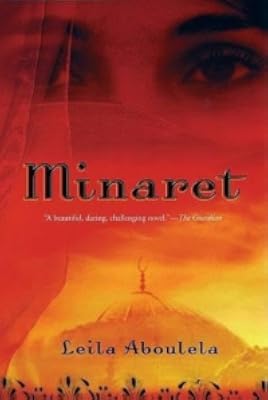
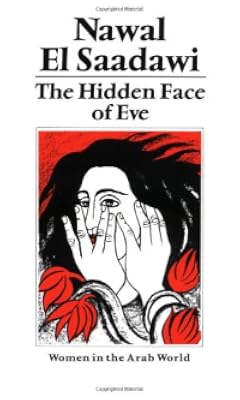






Member Reviews
Four linked stories about women living in an unnamed desert country. Shuha is a Lebanese expat, and Suzanne American, whilst Tamr and Nur are both locals, one from a fairly ordinary middle-class background and the other a member of the jet-setting petrolearchy. The traditional restrictions on women’s lives in the country, crudely mapped onto its newly-rich, internationalised lifestyle, affect each of them in different ways. Long experience, guile, money, and shameless confrontation can get them around a lot of the barriers to living normal, independent lives, but sooner or later each of them hits a brick wall of misogyny, and their dreams of happiness evaporate. For the expats the solution is to give up and leave, but Tamr and Nur are show more stuck there, whether they like it or not.
The message seems to be clear: an appeal to tradition, law, or religion is not sufficient to convince women in one place that their needs for self-determination and sexual fulfilment are any less than those of women who happen to live elsewhere in the world. Maintaining otherwise is quite simply cruel, repressive and wasteful of women’s capacity to contribute to society. show less
The message seems to be clear: an appeal to tradition, law, or religion is not sufficient to convince women in one place that their needs for self-determination and sexual fulfilment are any less than those of women who happen to live elsewhere in the world. Maintaining otherwise is quite simply cruel, repressive and wasteful of women’s capacity to contribute to society. show less
The book combines overlapping narratives from different women leading shadowy existences in an unnamed desert Islamic state with complete erasure of women from public life. Profound unease, boredom, sexual mania press on everyone. It's like the whole place is insane.
A scathing, cruel book--but no more cruel than what women are made to endure.
A scathing, cruel book--but no more cruel than what women are made to endure.
An intimate look into a world little-understood in the West. This is not an easy read but it is an engaging one.
Set in an unnamed country in the Mid East, this novel follows the lives of four women: Suha, Nur, Suzanne, and Tamr. Each woman is affected by the conservative Muslim culture they live in, but react in four distinctly different ways. Suha--Lebanese born and educated--chafes at the restrictions she faces and acts out by entering into a dangerous sexual relationship with Nur. Wealthy and pampered Nur uses sex to break up the boredom of her life as does American Suzanne. Unsurprising, both women do not find the happiness they seek, but with different results. Finally, mousy Tamr risks family ire by attending classes and opening up her own business.
I found this novel striking but difficult: Al-Shaykh's characters are fleshy and realistic, show more often acting in ways challenging to the reader to like or admire. I was surprised to realize that even in the Mid East, local mores vary; Lebanese Suha in particular, struggles to show the reader that Islamic doesn't have to equal repressive. show less
I found this novel striking but difficult: Al-Shaykh's characters are fleshy and realistic, show more often acting in ways challenging to the reader to like or admire. I was surprised to realize that even in the Mid East, local mores vary; Lebanese Suha in particular, struggles to show the reader that Islamic doesn't have to equal repressive. show less
I really wanted to like but but the writing style was too confusing for me. However, i learned more about the situations these women are facing. It is more or less a prison. Horrible that this can still be happening!
Misk al-ghazal (1989, Women of Sand and Myrrh) was chosen as one of the 50 Best Books of 1992 by Publishers Weekly. The story was set primarily in an expatriate community in an anonymous Middle-Eastern country. Al-Shaykh tells of four women, each from her own perspective. Two of the women, Nur and Tamr, are Arabs from the unnamed country in question, one is Lebanese, and the fourth is American. Each woman has chosen a different path that reveals their struggle with the patriarchal order. Suha has a degree in Management Studies from the American University of Beirut. She feels disillusioned: "this wasn't the desert that I'd seen from the aircraft, nor the one I'd read about or imagined myself". Suha longs for the freedoms she had in show more Beirut and has a lesbian relationship; Tamr's success in opening a beauty shop is not easy; Nur is not allowed to travel alone; and the unhappily married Suzanne has a multitude of affairs. "The elaborate network of first-person narrative, in which the text allows the four women to speak in turn giving voice to the voiceless, reflects in its structure the compartmentalization of women and their struggle to break out of all forms of social confinement. The very structure of the novel in which each section conveys a sense of independence while at the same time being an integral part of the whole reflects the degree of sophistication in the authors feminist vision." (Sabry Hafez in Contemporary World Writers, ed. by Tracy Chevalier, 1993) The book was banned in several Middle Eastern countries. show less
Fascinating. A rare window into the lives of women in an extremely conservative Middle East country. Highly recommended for anyone interested in that kind of thing.
Members
- Recently Added By
Lists

Best of World Literature
434 works; 51 members

500 Great Books by Women
507 works; 60 members

Middle East Fiction
179 works; 16 members

Middle Eastern Literature & Non-Fiction
99 works; 3 members

Arab and Arab Diaspora Literature We Recommend
112 works; 53 members
Author Information

22+ Works 1,987 Members
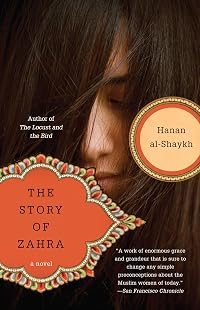
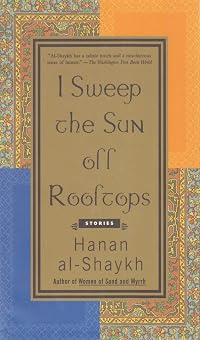
Hanan al-Shaykh was born & raised in Lebanon. She is the author of three novels - "Women of Sand & Myrrh", "The Story of Zahra" & "Beirut Blues" - as well as a collection of short stories, "I Sweep the Sun off Rooftops". She currently lives in London with her husband & two children. (Bowker Author Biography)
Some Editions
Awards and Honors
Notable Lists
Series
Belongs to Publisher Series
Common Knowledge
- Canonical title
- Women of Sand and Myrrh
- Original title
- Mask al-ġazāl : riwāya.
- Original publication date
- 1988 (Arabic) (Arabic); 1992 (English) (English)
- People/Characters
- Suha; Tamr; Suzanne; Nur
- Important places
- Lebanon
- First words
- Ik liet me op de bank neervallen en de kanarie ging kwetterend op mijn schouder zitten.
I dropped on to the couch and the canary landed on my shoulder, chirping. - Last words
- (Click to show. Warning: May contain spoilers.)The desert came into view, looking as it had done the first time I saw it: sand and palm trees, a way of life that revolved around human beings without possessions or skills, who had to rely on their imaginations to contrive a way of making their hearts beat faster or even to keep them at a normal pace; to search unaided for a hidden gleam of light, and to live with two seasons a year instead of four.
Classifications
- Genres
- Fiction and Literature, General Fiction
- DDC/MDS
- 892.736 — Literature & rhetoric Literatures of other languages Afro-Asiatic literatures Arabic (Egypt, Lebanon, Palestine, Saudi Arabia, Sudan) Arabic fiction 1945–2000
- LCC
- PJ7862 .H356 .W66 — Language and Literature Oriental languages and literatures Oriental philology and literature Arabic Arabic literature Individual authors or works
- BISAC
Statistics
- Members
- 572
- Popularity
- 51,614
- Reviews
- 12
- Rating
- (3.29)
- Languages
- 5 — Dutch, English, French, Italian, Spanish
- Media
- Paper, Ebook
- ISBNs
- 18
- ASINs
- 6