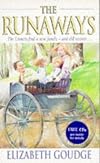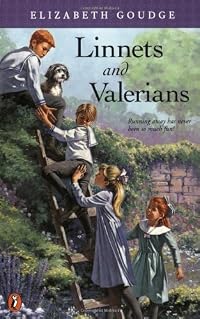
Linnets and Valerians
by Elizabeth Goudge
On This Page
Description
Four young siblings embark on a fantastical adventure in this classic children's story by the Carnegie Medal-winning author of The Little White Horse. When their father goes off traveling, Nan, Robert, Timothy, and Betsy Linnet are sent to stay with their grandmother. Unfortunately, their new caretaker doesn't care much for children-let alone their dog. So they run away to stay with their Uncle Ambrose. A retired schoolteacher, Ambrose is determined to give the Linnet children an education. show more But in addition to Greek, Latin, and Literature, they learn about nature and magic, the power of the past, and, of course, the importance of the bees. Armed with their new knowledge, they set off on a fantastical adventure to find the lost Valerians, undo some wicked spells, and reunite a divided family. Linnets and Valerians is filled with Elizabeth Goudge's trademark mixture of realism and magic. Much like The Little White Horse, it is set in Devon and inspired by local folklore and legends. show lessTags
Recommendations

















Member Recommendations

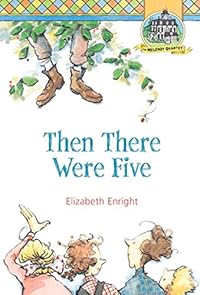
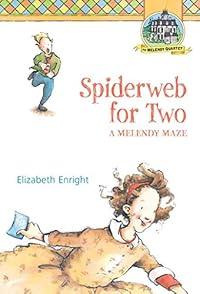
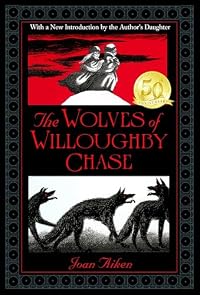
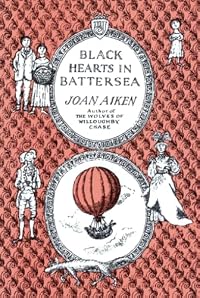
bmlg English country setting, the threat of witchcraft, rambunctious children and themes of family, loss and reunion
Member Reviews
So many of my friends seem to have read and loved this book, that when I first chucked it on Mt. TBR, I wrote: "All right, all right, enough already! Everyone seems to love this, and I trust Sherri, Bunny, Lisa, Jackie, Felicity, Melody, Emily, and Constance!" How right I was to trust these wonderful literary guides!
Linnets and Valerians is one of those books that would have been a five-star favorite, if I had encountered it as a child, and I have no doubt that I would have revisited it perennially, along with such beloved classics as Little Women and The Secret Garden. It is the story of the four Linnets siblings - Nan, Robert, Timothy and Betsy - who, in the course of running away from their grandmother's house, inadvertently find show more their way to their Uncle Ambrose's home in High Barton. Here they stay, cared for by their stern but loving uncle and his good-fairy factotum, Ezra Oakes.
Between the classical education their uncle is determined to give them, their adventures in the nearby woods beneath Lion Tor, their confrontations with the local witch, Emma Cobley, and their role in solving the mystery surrounding the reclusive Lady Alicia Valerian and her missing husband and son, the children find their new lives exciting and eventful. Goudge is an engaging storyteller, and an accomplished writer, with a perceptive appreciation for the child's view of the world, and an ability to paint an immensely appealing scene. Her description of the kitchen at Uncle Ambrose's house, with the cats sleeping in the sink, and the dishes on the table, made me feel as if I were right there. Her many references to the world and literature of classical antiquity - Hector the owl, Andromache the cat, the Great God Pan - thrilled the Classicist in me. Finally, the significance of the bees - their role as protectors and guides - has made me very curious about the folklore surrounding these creatures, and curious to learn more.
All in all, this was a fantastic book, and might - but for one thing - have won one of my rare five-star ratings. But the sad truth is, despite its engaging narrative and lovely prose, this adult reader was conscious of some very ugly class ideas running just beneath the surface, and as much as I tried to ignore it, I simply couldn't. I found myself rather disturbed by some of the assumptions behind the Emma Cobley/Lady Alicia rivalry, from the idea that one should marry within one's own class, to the notion that evil results from those who step "out of their place." It's not that I sympathized with Emma Cobley as an individual woman, or found her unbelievable as a villain. But in a very real sense, this is a book about how a working class woman got above herself, and had to be humbled and put back in her place by a group of children. I enjoyed Linnets and Valerians, and will probably revisit it, at some point, but the class issues here do make it a problematic narrative for me.
Addendum: It is also worth noting that there are some parallels between the story of Emma Cobley, and that of Merope Gaunt, mother of Tom Riddle in the Harry Potter books. Given that Rowling has listed Goudge's The Little White Horse as one of her favorite books, it is reasonable to suppose that she has read this title as well. Perhaps Linnets and Valerians was an influence? show less
Linnets and Valerians is one of those books that would have been a five-star favorite, if I had encountered it as a child, and I have no doubt that I would have revisited it perennially, along with such beloved classics as Little Women and The Secret Garden. It is the story of the four Linnets siblings - Nan, Robert, Timothy and Betsy - who, in the course of running away from their grandmother's house, inadvertently find show more their way to their Uncle Ambrose's home in High Barton. Here they stay, cared for by their stern but loving uncle and his good-fairy factotum, Ezra Oakes.
Between the classical education their uncle is determined to give them, their adventures in the nearby woods beneath Lion Tor, their confrontations with the local witch, Emma Cobley, and their role in solving the mystery surrounding the reclusive Lady Alicia Valerian and her missing husband and son, the children find their new lives exciting and eventful. Goudge is an engaging storyteller, and an accomplished writer, with a perceptive appreciation for the child's view of the world, and an ability to paint an immensely appealing scene. Her description of the kitchen at Uncle Ambrose's house, with the cats sleeping in the sink, and the dishes on the table, made me feel as if I were right there. Her many references to the world and literature of classical antiquity - Hector the owl, Andromache the cat, the Great God Pan - thrilled the Classicist in me. Finally, the significance of the bees - their role as protectors and guides - has made me very curious about the folklore surrounding these creatures, and curious to learn more.
All in all, this was a fantastic book, and might - but for one thing - have won one of my rare five-star ratings. But the sad truth is, despite its engaging narrative and lovely prose, this adult reader was conscious of some very ugly class ideas running just beneath the surface, and as much as I tried to ignore it, I simply couldn't. I found myself rather disturbed by some of the assumptions behind the Emma Cobley/Lady Alicia rivalry, from the idea that one should marry within one's own class, to the notion that evil results from those who step "out of their place." It's not that I sympathized with Emma Cobley as an individual woman, or found her unbelievable as a villain. But in a very real sense, this is a book about how a working class woman got above herself, and had to be humbled and put back in her place by a group of children. I enjoyed Linnets and Valerians, and will probably revisit it, at some point, but the class issues here do make it a problematic narrative for me.
Addendum: It is also worth noting that there are some parallels between the story of Emma Cobley, and that of Merope Gaunt, mother of Tom Riddle in the Harry Potter books. Given that Rowling has listed Goudge's The Little White Horse as one of her favorite books, it is reasonable to suppose that she has read this title as well. Perhaps Linnets and Valerians was an influence? show less
A new all time favorite book! If you’re a fan of Hagrid from the Harry Potter series, it’s obvious to me that Ezra, guardian of magical bees, is who Hagrid is based on! I can’t seem to find anything verifying it, but after reading, I’m certain he’s the original inspiration.
Linnets and Valerians was published in 1964 and set in 1912. It follows a group of four children; Nan, Robert, Timothy, and Betsy, who decide to run away from their grandmother’s home and end up moving in with their Uncle Ambrose. Uncle Ambrose lives with his faithful owl companion, Hector, as well as his servant Ezra, in a beautiful house in the English countryside. Ambrose takes it upon himself to care for and educate the children, and they get up to all show more sorts of adventures, meeting other interesting characters and getting involved in all manner of magical goings on!
Elizabeth Goudge’s writing is unspeakably beautiful. Her character descriptions are some of the best I’ve ever read. The thread of magic, represented by the presence of the bees, running through the story is delightful, and made me feel affection for bees for the first time in my life. I’ll never look at them the same way again! And while, as an adult reader, I could see where the storyline was headed, it didn’t detract from my enjoyment in the slightest. Highly recommend! show less
Linnets and Valerians was published in 1964 and set in 1912. It follows a group of four children; Nan, Robert, Timothy, and Betsy, who decide to run away from their grandmother’s home and end up moving in with their Uncle Ambrose. Uncle Ambrose lives with his faithful owl companion, Hector, as well as his servant Ezra, in a beautiful house in the English countryside. Ambrose takes it upon himself to care for and educate the children, and they get up to all show more sorts of adventures, meeting other interesting characters and getting involved in all manner of magical goings on!
Elizabeth Goudge’s writing is unspeakably beautiful. Her character descriptions are some of the best I’ve ever read. The thread of magic, represented by the presence of the bees, running through the story is delightful, and made me feel affection for bees for the first time in my life. I’ll never look at them the same way again! And while, as an adult reader, I could see where the storyline was headed, it didn’t detract from my enjoyment in the slightest. Highly recommend! show less
(Known as 'The Runaways' in the USA)
Four children, in 1912, run away from their strict grandmother and find their uncle. He undertakes their education which is not entirely what they expected. They become involved in superstitious practises and meet a sad elderly and reclusive lady, eventually releasing her from her troubles and finding happiness themselves.
Beautifully written as with all this author's books, and slightly mystical in places. Not a typical children's book; yet there's an underlying good vs evil storyline as well as the family adventure plot. The children are nicely drawn, very different from each other, and I've enjoyed it very much each time I have read it.
Recommended for fluently reading older children who don't mind show more a bit of fantasy mixed up with real-life people in the early part of the 20th century, and for adults like me who remember this book from their childhood! show less
Four children, in 1912, run away from their strict grandmother and find their uncle. He undertakes their education which is not entirely what they expected. They become involved in superstitious practises and meet a sad elderly and reclusive lady, eventually releasing her from her troubles and finding happiness themselves.
Beautifully written as with all this author's books, and slightly mystical in places. Not a typical children's book; yet there's an underlying good vs evil storyline as well as the family adventure plot. The children are nicely drawn, very different from each other, and I've enjoyed it very much each time I have read it.
Recommended for fluently reading older children who don't mind show more a bit of fantasy mixed up with real-life people in the early part of the 20th century, and for adults like me who remember this book from their childhood! show less
(duplicates what's up on LJ)
I read Linnets and Valerians because I was intrigued and entranced by Sonya Taaffe's description about the gold-hearted, black-hearted, and silver people (quotation here), especially the silver people, descended from fairy folk.
That turned out to be a wrong reason to read the book, or maybe what I should say is, whatever nebulous concept, and therefore hope for the story, that I had, based on that description, it was misguided. Those concepts didn’t really figure in the story the way I imagined they would. There’s genuine magic, both good and wicked, but its actions are almost all entirely congruent with everyday reality as ordinary people experience it. (Almost. There are some exceptions.)
But the show more immanent presence of magic that those words suggest is definitely present in the book, and if you adjust your eyes to see it, and turn your ears toward it, to hear it (like the singing of the bees), then it’s there, and its wonderful. Magic like this moment, when mist rolls in over Weeping Marsh (which I can’t help but associate with Marshwood Vale, which I recall seeing shrouded in mist when we lived in Dorset, one county over from the Devonshire setting of Linnets and Valerians):
As much as by that magic, though, I was moved by the characters. When Betsy, the younger of the two Linnet girls (there are two girls and two boys), meets the reclusive Lady Alicia, two things happen that I love. First, we get a child’s eye view of a situation that the child can’t comprehend, but that the reader can (even if the reader’s simply an older child, which is likely the case for most readers of the book—I’m far above the target audience age). I find this style of unreliable narrator very effective:
Second, we get a very touching, and yet to my mind unsentimental description of generosity. Betsy has burst in on Lady Alicia in pursuit of a monkey who has stolen her doll. Lady Alicia explains that the monkey, Abednego, only wanted the doll because he hasn’t been able to nurture children of his own. The wheels turn in Betsy’s head, and she decides to give the doll to Abednego:
That just about captures my every battle to be generous!
But it’s not all solemn moments. There’s plenty of humor, too. For example, Robert, the oldest boy, is always imagining himself the hero of the moment:
Upon meeting Lady Alicia:
The plot of Linnets and Valerians centers around Lady Alicia’s missing son and husband and a village woman, Emma Cobley, who also happens to practice black magic and who was in love with Lady Alicia’s husband (and, in fact, essentially thrown over by him). She’s made harmful spells; those spells must be dissolved for the story to reach its happy end.
Which brings me to my only dissatisfaction with the story.
It’s a strange dissatisfaction for me to have, since it has to do with something that usually makes me very happy—namely, the redemption of a story’s evil characters. In this case, the evil in Emma Cobley is eradicated by three factors:
I think it may be that I kind of liked Emma and her spells. In fact, the more I think about it, the more I think that I had more sympathy for her, and interest in her, than I did in Lady Alicia. It’s not that I disliked Lady Alicia. I liked her well enough, and I felt sorry for her. But I liked Emma too, as a kind of an outlaw, impetuous, amoral type. And for all that Emma practiced vindictive magic, designed to ruin others’ happiness while not securing anything good for herself (except satisfaction at destroying the happiness of those who have gotten in the way of her own happiness, which is hardly what we can call a good, in any case), Lady Alicia herself wasn’t without flaws (she stole Emma’s book, for one thing) and is rather on the old pattern of a woman who is to be liked because we’re told she’s to be liked, and who’s a victim without any apparent ability to improve her situation on her own. So while I can accept that things have to be made right for Lady Alicia, I guess I wanted a different sort of end for Emma, something that would allow her to retain some of the power that she had as an oppositional figure, rather than simply being neutered into a pleasant village character.
But this dissatisfaction is minor. I loved the book overall. show less
I read Linnets and Valerians because I was intrigued and entranced by Sonya Taaffe's description about the gold-hearted, black-hearted, and silver people (quotation here), especially the silver people, descended from fairy folk.
That turned out to be a wrong reason to read the book, or maybe what I should say is, whatever nebulous concept, and therefore hope for the story, that I had, based on that description, it was misguided. Those concepts didn’t really figure in the story the way I imagined they would. There’s genuine magic, both good and wicked, but its actions are almost all entirely congruent with everyday reality as ordinary people experience it. (Almost. There are some exceptions.)
But the show more immanent presence of magic that those words suggest is definitely present in the book, and if you adjust your eyes to see it, and turn your ears toward it, to hear it (like the singing of the bees), then it’s there, and its wonderful. Magic like this moment, when mist rolls in over Weeping Marsh (which I can’t help but associate with Marshwood Vale, which I recall seeing shrouded in mist when we lived in Dorset, one county over from the Devonshire setting of Linnets and Valerians):
When they turned and faced the other way the sunlit moor had vanished in a moving pall of gloom. There was no wind but the air that touched their faces was clammy and cold.
“The sea is coming in over the moor!” gasped Nan.
“And there are devils on horseback riding over the waves,” said Timothy. He spoke calmly but with a sort of despair, as well he might, for the sight was truly frightening. The waves that were rolling in were the high gray waves of storm but they made no sound and the terrible tossing riders made no sound either. It would have been less terrifying if they could have heard the crash of waves or the neighing of the horses.”
“Don’t yee be feared, children,” said Ezra. “ ‘Tis naught but mist rolling in over Weepin’ Marsh. It can come very sudden and take queer forms. But us’d best be going and quick too.” (239-240)
As much as by that magic, though, I was moved by the characters. When Betsy, the younger of the two Linnet girls (there are two girls and two boys), meets the reclusive Lady Alicia, two things happen that I love. First, we get a child’s eye view of a situation that the child can’t comprehend, but that the reader can (even if the reader’s simply an older child, which is likely the case for most readers of the book—I’m far above the target audience age). I find this style of unreliable narrator very effective:
“A long time ago I had one little boy, called Francis,” said Lady Alicia, and her blue eyes were hooded again and once more her hands looked as though she would never be able to lift them from the carved birds.
“Did you lose him?” inquired Betsy with interest.
“Yes,” said Lady Alicia.
“Where did you lose him?”
“On Lion Tor,” said Lady Alicia in a voice dry as dust. “Thirty years ago. He was eight years old.”
“Timothy is eight,” said Betsy.
She was sorry Lady Alicia had this habit of losing things because she could see it made her unhappy, but she did not know how to say so …
“Did you lose your husband too?” asked Betsy.
“No, he lost himself. He was an explorer. He used to travel all over the world digging up vanished cities. And then he also vanished.”
“Perhaps he’ll turn up,” said Betsy hopefully.
“Not, I think after twenty-seven years,” said Lady Alicia. She sounded sad but Betsy thought she had got over her husband losing himself in foreign parts a good deal better than she had got over herself mislaying her little boy on Lion Tor. (92-93)
Second, we get a very touching, and yet to my mind unsentimental description of generosity. Betsy has burst in on Lady Alicia in pursuit of a monkey who has stolen her doll. Lady Alicia explains that the monkey, Abednego, only wanted the doll because he hasn’t been able to nurture children of his own. The wheels turn in Betsy’s head, and she decides to give the doll to Abednego:
Now Betsy was not an unselfish or even an outstandingly loving child, but she suddenly remembered her father saying good-bye to her before he went away. He had picked her up, holding her with her cheek against his face, and then had put her on Grandmama’s lap and gone out of the room without saying a single word. And then there was the old lady, so heavy and dusty because she had lost her little boy. And now there was Abednego. Three times now this strange adult thing had touched her. She was well aware that her feeling for Gertrude [the doll] was not this thing but something far less admirable, and looking up into Abednego’s face she fought a battle inside herself wit the thing that it was, a sort of grabbing thing, and then she held Gertrude out to him. “You have her,” she said. (94)
That just about captures my every battle to be generous!
But it’s not all solemn moments. There’s plenty of humor, too. For example, Robert, the oldest boy, is always imagining himself the hero of the moment:
Robert found he was sweating profusely and trembling like an aspen leaf. He did not know what an aspen leaf was but he knew it was what you trembled like when a moment of supreme crisis was safely past. (13)
Upon meeting Lady Alicia:
It was obvious that she did not like being visited and Robert bowed very humbly indeed, sweeping his feathered hat from his head. Sir Walter Raleigh could not lay his cloak at the feet of Gloriana, since she showed no signs of wishing to leave her chair, but his burning glance told her of his deep devotion.
“Is this histrionic gentleman your elder brother?” [Lady Alicia] asked Betsy. (116-117)
The plot of Linnets and Valerians centers around Lady Alicia’s missing son and husband and a village woman, Emma Cobley, who also happens to practice black magic and who was in love with Lady Alicia’s husband (and, in fact, essentially thrown over by him). She’s made harmful spells; those spells must be dissolved for the story to reach its happy end.
Which brings me to my only dissatisfaction with the story.
[Her] change of heart was astonishing … and the villagers were at a loss to explain it. Of course they did not know what a hard fight the goodwill of the children and Uncle Ambrose and Ezra had put up against the ill will that had opposed them, and they did not know about Ezra’s good spells or the labor of the bees. Least of all did they know how Lady Alicia had forgiven Emma from the bottom of her heart. (281)
I think it may be that I kind of liked Emma and her spells. In fact, the more I think about it, the more I think that I had more sympathy for her, and interest in her, than I did in Lady Alicia. It’s not that I disliked Lady Alicia. I liked her well enough, and I felt sorry for her. But I liked Emma too, as a kind of an outlaw, impetuous, amoral type. And for all that Emma practiced vindictive magic, designed to ruin others’ happiness while not securing anything good for herself (except satisfaction at destroying the happiness of those who have gotten in the way of her own happiness, which is hardly what we can call a good, in any case), Lady Alicia herself wasn’t without flaws (she stole Emma’s book, for one thing) and is rather on the old pattern of a woman who is to be liked because we’re told she’s to be liked, and who’s a victim without any apparent ability to improve her situation on her own. So while I can accept that things have to be made right for Lady Alicia, I guess I wanted a different sort of end for Emma, something that would allow her to retain some of the power that she had as an oppositional figure, rather than simply being neutered into a pleasant village character.
But this dissatisfaction is minor. I loved the book overall. show less
I remembered liking this book as a child--though even then I remembered the last quarter being less compelling than the earlier parts of the book. Re-reading it, I would agree with my childhood self, plus I identified some further problems for contemporary readers.
Goudge's descriptions of nature and insights into the children's minds are lovely (though probably boring--at least the nature descriptions--for kids) but the first part is an engaging tale of family conflict and resolution as they find their delightfully erudite and well-spoken uncle whom they warm to, in a classic kids' fantasy world of kids running away, no parents, freedom to roam but with two guardian-figure of protective and wisdom-dispensing qualities. When the book show more entered into into the fantasy realm of witchcraft and voodoo it lost me, NOT because I'm religiously opposed like some reviewers (I couldn't care less) but perhaps because I'm not at all interested in fantasy stories (and wasn't, even as a child), and I feel it's a shortcut to an unecessary "plot," as are they are not delved into in any interesting way.
The major issue is, however, the book's dated view of class. I mean, Goudge was born in 1900, so it's hardly surprising! Interestingly, the racism isn't a so much a problem (though certainly the black servant Moses is a stereotype, tho sympathetically depicted), but classism certainly is.
The main conflict in the book is not only problematic because of the tired good/evil fantasy-fiction tropes of witchcraft but because of the underlying theme that the "evil" characters are all lower class: they need to be brought into line with the upper-class, patriarchal hierarchy (the Clergyman, the Lady) or else chased from town, or be shown their "proper place" in society (when they realize that, they become good).
Barely worth mentioning for a book of that era, but naturally the two main "guardians" are not only male, but predictable in their hierarchy: the main one an elderly clergyman, the secondary one, though congenial and entertaining, is a "wise-old" servant. The "Lady" (hierarchically the highest female character) is basically only--literally-- a Lady, and is only there as a romantic interest. The children are well-rounded and engaging characters; the most interesting female heroine in the book is that of the eldest sister, Nan, but even she refers to her brother as "the eldest" and of course her business is housekeeping and caretaking (literally and figurativey) plus at the end she's married off to someone 28 years her senior!!!
Ugh, leaves a rather bad taste in my mouth. show less
Goudge's descriptions of nature and insights into the children's minds are lovely (though probably boring--at least the nature descriptions--for kids) but the first part is an engaging tale of family conflict and resolution as they find their delightfully erudite and well-spoken uncle whom they warm to, in a classic kids' fantasy world of kids running away, no parents, freedom to roam but with two guardian-figure of protective and wisdom-dispensing qualities. When the book show more entered into into the fantasy realm of witchcraft and voodoo it lost me, NOT because I'm religiously opposed like some reviewers (I couldn't care less) but perhaps because I'm not at all interested in fantasy stories (and wasn't, even as a child), and I feel it's a shortcut to an unecessary "plot," as are they are not delved into in any interesting way.
The major issue is, however, the book's dated view of class. I mean, Goudge was born in 1900, so it's hardly surprising! Interestingly, the racism isn't a so much a problem (though certainly the black servant Moses is a stereotype, tho sympathetically depicted), but classism certainly is.
The main conflict in the book is not only problematic because of the tired good/evil fantasy-fiction tropes of witchcraft but because of the underlying theme that the "evil" characters are all lower class: they need to be brought into line with the upper-class, patriarchal hierarchy (the Clergyman, the Lady) or else chased from town, or be shown their "proper place" in society (when they realize that, they become good).
Barely worth mentioning for a book of that era, but naturally the two main "guardians" are not only male, but predictable in their hierarchy: the main one an elderly clergyman, the secondary one, though congenial and entertaining, is a "wise-old" servant. The "Lady" (hierarchically the highest female character) is basically only--literally-- a Lady, and is only there as a romantic interest. The children are well-rounded and engaging characters; the most interesting female heroine in the book is that of the eldest sister, Nan, but even she refers to her brother as "the eldest" and of course her business is housekeeping and caretaking (literally and figurativey) plus at the end she's married off to someone 28 years her senior!!!
Ugh, leaves a rather bad taste in my mouth. show less
A peculiar but rather lovely book in the vein of Edith Nesbit or Diana Wynne Jones. The plot is not strong but it doesn't need to be - the point of this book is its atmosphere and spiritual truth.
I found this book quite charming, just barely on the sweet side of the sweet/treacly line. The four Linnet children, Nan, Robert, Timothy, and Betsy, run away from their overbearing grandmother and end up living with their eccentric Uncle Ambrose, who provides them a wonderful home with a few mysteries.
If this book and Goudge's Little White Horse had been written by a South American, they’d be shelved under Magic Realism. The magic is there, but very light; it’s 95% prosaic English life and 5% weirdness.
It’s interesting that I can point to several things in this book that ought to punch my treacle-buttons — the childrens’ immediate love of Uncle Ambrose, to start with, and even more things as the plot progresses — and yet show more they don’t. This is true of Little White Horse as well, and I’m not sure why these books work for me. It’s not childhood nostalgia — I read them for the first time in my late twenties. Perhaps it’s just that the characters are such individuals, all with virtues and faults.
One high point of this book for me is where Uncle Ambrose presents Nan with her own parlor, and tells her that this room is hers alone and off-limits to all the rest of the household, including himself, because he knows that she needs a retreat where she can go to be quiet. And then he leaves her to herself, and Nan, who as the eldest of four children rarely gets time alone, suddenly discovers that she likes solitude. I know the feeling exactly.
Overall, a good book for when I’m in a sweet mode. show less
If this book and Goudge's Little White Horse had been written by a South American, they’d be shelved under Magic Realism. The magic is there, but very light; it’s 95% prosaic English life and 5% weirdness.
It’s interesting that I can point to several things in this book that ought to punch my treacle-buttons — the childrens’ immediate love of Uncle Ambrose, to start with, and even more things as the plot progresses — and yet show more they don’t. This is true of Little White Horse as well, and I’m not sure why these books work for me. It’s not childhood nostalgia — I read them for the first time in my late twenties. Perhaps it’s just that the characters are such individuals, all with virtues and faults.
One high point of this book for me is where Uncle Ambrose presents Nan with her own parlor, and tells her that this room is hers alone and off-limits to all the rest of the household, including himself, because he knows that she needs a retreat where she can go to be quiet. And then he leaves her to herself, and Nan, who as the eldest of four children rarely gets time alone, suddenly discovers that she likes solitude. I know the feeling exactly.
Overall, a good book for when I’m in a sweet mode. show less
Members
- Recently Added By
Lists

Favorite Childhood Books
1,646 works; 517 members

1960s, Best books published therein
254 works; 22 members

Summer Reads 2014
207 works; 70 members
Author Information

63+ Works 12,420 Members
Some Editions
Awards and Honors
Distinctions
Common Knowledge
- Original title
- Linnets and Valerians
- Alternate titles
- The Runaways
- Original publication date
- 1964
- People/Characters
- Nan Linnet; Robert Linnet; Timothy Linnet; Betsy Linnet; Absolom (dog); Uncle Ambrose (show all 8); Ezra; Emma Cobley
- Important places
- High Barton, England, UK (fictional); Dartmoor, Devon, England, UK
- First words
- "Robert gave the box-room door a resounding kick, merely for his own satisfaction, for he knew that only the kick of a giant would have made any impression on its strong oak panels, and sat down cross-legged on the floor to c... (show all)onsider the situation."
- Last words
- (Click to show. Warning: May contain spoilers.)"Uncle Ambrose also visited him, and the greatest pride and joy of his old age was to walk down the Oxford High Street arm in arm with his brilliant nephew with Hector, who appeared to be gifted with eternal life, sitting proud and erect upon his shoulder." - epilogue
(Click to show. Warning: May contain spoilers.)"You will join us, I beg, while we drink the toast of happy ever after!" - Original language
- English
- Disambiguation notice
- 'Linnets and Valerians' was also published under the title 'The Runaways'
Classifications
- Genres
- Children's Books, Fiction and Literature, Kids, Fantasy
- DDC/MDS
- 823.912 — Literature & rhetoric English & Old English literatures English fiction 1900- 1901-1999 1901-1945
- LCC
- PZ7 .G71 .L — Language and Literature Fiction and juvenile belles lettres Fiction and juvenile belles lettres Juvenile belles lettres
- BISAC
Statistics
- Members
- 667
- Popularity
- 42,905
- Reviews
- 25
- Rating
- (4.15)
- Languages
- English, French, German
- Media
- Paper, Ebook
- ISBNs
- 14
- ASINs
- 15