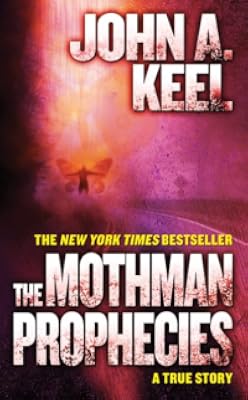
The Mothman Prophecies
by John A. Keel
On This Page
Description
Translated into over thirteen languages, John Keel's The Mothman Prophecy is an unsettling true story of the paranormal that has long been regarded as a classic in the literature of the unexplained. West Virginia, 1966. For thirteen months the town of Point Pleasant is gripped by a real-life nightmare culminating in a tragedy that makes headlines around the world. Strange occurrences and sightings, including a bizarre winged apparition that becomes known as the Mothman, trouble this ordinary show more American community. Mysterious lights are seen moving across the sky. Domestic animals are found slaughtered and mutilated. And journalist John Keel, arriving to investigate the freakish events, soon finds himself an integral part of an eerie and unfathomable mystery. The Mothman Prophecy is the basis of the 2002 film starring Richard Gere. At the Publisher's request, this title is being sold without Digital Rights Management Software (DRM) applied. show lessTags
Recommendations








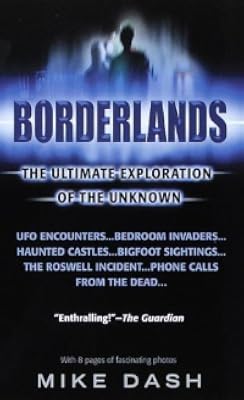

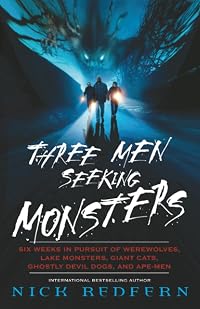
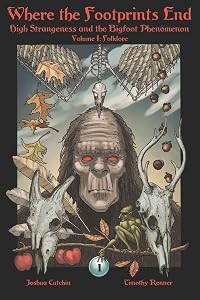

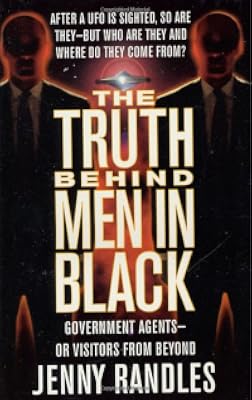

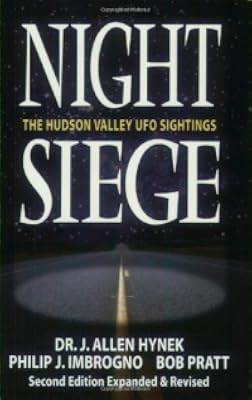
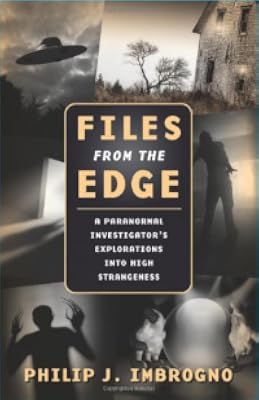
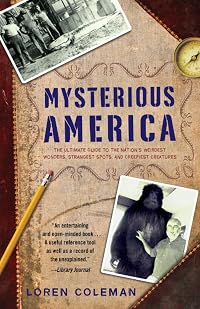
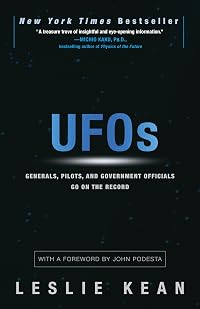





Member Recommendations
Member Reviews
This is a mixed bag, in terms of its reading value. Keel calls himself a Fortean writer and one can see that in this book. Forteanism purports to be anti-theory. It presents itself as an even more objective account of facts than Big Science, and certainly more so than the various competing paranormalist factions. The basic worldview, to degree that it owns up to one, is that the world is a strange place that, for some reason, is populated both by all the “normal” stuff we experience, but also by UFOs, monsters, psychic phenomena, etc. etc.
Thing is, I found Keel to be all-too-willing to conclude something like “this person’s report illustrates the existence of another oddball entity or phenomena.” Nearly everyone's dotty show more beliefs and "unexplained" experiences are taken at face value, with little attempt to think about them critically. There’s objectivity and then there’s naiveté. Or, then again, perhaps one could see a willingness to posit monsters as having less innocent origins, there being the temptation of filthy lucre and all...
The positive side of it involves the horror movie value of it all. I still consider Strieber’s "Communion" to be the masterstroke of a horror writer, with its claims to nonfictionhood. With "Mothman," too, I found myself looking at the sky more often, peering at shadows more closely in the middle of the night, and so on. A nice helping of creep-out value, here. Plus, it helped me come up with an idea for a novel, so it will always have THAT going for it. show less
Thing is, I found Keel to be all-too-willing to conclude something like “this person’s report illustrates the existence of another oddball entity or phenomena.” Nearly everyone's dotty show more beliefs and "unexplained" experiences are taken at face value, with little attempt to think about them critically. There’s objectivity and then there’s naiveté. Or, then again, perhaps one could see a willingness to posit monsters as having less innocent origins, there being the temptation of filthy lucre and all...
The positive side of it involves the horror movie value of it all. I still consider Strieber’s "Communion" to be the masterstroke of a horror writer, with its claims to nonfictionhood. With "Mothman," too, I found myself looking at the sky more often, peering at shadows more closely in the middle of the night, and so on. A nice helping of creep-out value, here. Plus, it helped me come up with an idea for a novel, so it will always have THAT going for it. show less
Not really sure what I expected with this one. My daughter and I had become entertained by the idea of West Virginia's "Mothman" (neither of us is a believer in such things, but we really enjoy these kind of tales) and so I thought I would go as close to the "source" as I could on this one and read a book by a man who was in Point Pleasant, West Virginia around the time of many of the Mothman sightings. I was also intrigued because this is thought of in some quarters as a seminal work in the field. One of those foundational "paranormal" books that birthed a thousand more. Keel, in fact, is credited with coining the term "Men in Black," and talks at length about them in this book.
The book is really well-written on a literature show more level--Keel knows how to write good sentences and paragraphs. What he's less adept at--or doesn't even attempt--is to write a thorough narrative with a beginning, middle, and end. Worked in among his tales of his visits to Point Pleasant are all the OTHER weird things he took note of happening toward the end of the 1960s, both in the United States and around the world. What's left is a real jumble of events that don't really seem to add up to anything--or at least nothing that Keel even attempts to put together.
As another review here on LT said, he considered himself a Fortean, and Forteans are apparently less concerned with explanations as with documentation. In that regard, it's a fascinating book filled with collected documents--for as much as you can believe any of them. As noted before, he recounts MANY stories of "Men in Black" following up on UFO and cryptid sightings...but never once tries to explain (or even guess) who they really are and why they are here. There are plenty of times he tells us what they AREN'T (real officers from the US Air Force, for example), but not once does he even suggest who or what they might really be--other than a menace.
What's more mysterious to me is that I could never tell what side of the fence Keel really fell on. In one breath, he will talk about how you can definitely, without a doubt, tell someone's experience with a UFO is real because of the effect on their eyes and skin (the "actinic rays" cause mild sunburn and red, swollen eyes...). Then, in the next breath, he will refute the account of an alien visitation by another "contactee." How he deems one story to be legit and the next to be hokum is never truly explained. Is his doubt of SOME stories supposed to prove his belief in the others is scientific and genuine? But then, later, he expresses his disbelief in the idea that the universe is filled with habitable planets and alien life--just about the one thing modern science HAS put its faith in among all the other wild claims he makes in the book!
And his descriptions of the "Mothman" of West Virginia--at times, the evidence in the BOOK seems pretty clear that it was nothing supernatural, but instead a large bird (some people suggest a wayward Sandhill Crane, or something similar) or a flock of birds that surprised and scared a small mountain town not used to seeing such creatures. In the last chapter he even refers to the "Mothman" as a large bird, as though that's what he believes it is--yet he also presents the accounts of those who saw the mythical "Mothman" as though they saw something genuinely chthonic.
At one point early on, Keel proposes the idea that all of these strange phenomena--West Virginia's Mothman, UFOs, spacemen, ancient visitations from angels and demons--are not EXTRAterrestrial, but instead ULTRAterrestrial, a term he defines along the lines of energy from outside of space and time that manifests itself in the form of whatever things people of the contemporary era are able to interpret as. So ancients see angels, and we modern folks in the space race era saw spaceships and aliens. It's an interesting idea, and definitely not your run-of-the-mill explanation of UFOs and cryptids...but it's as unsubstantiated as the rest of it. So while the book might make an interesting film or an episode of the X-Files, as a treatise on Mothman, or UFOs, or ultraterrestrials, or anything else he presents here, "The Mothman Prophecies" ultimately reads like the rambling notes of a man who spent his adult life writing down every strange story he heard. show less
The book is really well-written on a literature show more level--Keel knows how to write good sentences and paragraphs. What he's less adept at--or doesn't even attempt--is to write a thorough narrative with a beginning, middle, and end. Worked in among his tales of his visits to Point Pleasant are all the OTHER weird things he took note of happening toward the end of the 1960s, both in the United States and around the world. What's left is a real jumble of events that don't really seem to add up to anything--or at least nothing that Keel even attempts to put together.
As another review here on LT said, he considered himself a Fortean, and Forteans are apparently less concerned with explanations as with documentation. In that regard, it's a fascinating book filled with collected documents--for as much as you can believe any of them. As noted before, he recounts MANY stories of "Men in Black" following up on UFO and cryptid sightings...but never once tries to explain (or even guess) who they really are and why they are here. There are plenty of times he tells us what they AREN'T (real officers from the US Air Force, for example), but not once does he even suggest who or what they might really be--other than a menace.
What's more mysterious to me is that I could never tell what side of the fence Keel really fell on. In one breath, he will talk about how you can definitely, without a doubt, tell someone's experience with a UFO is real because of the effect on their eyes and skin (the "actinic rays" cause mild sunburn and red, swollen eyes...). Then, in the next breath, he will refute the account of an alien visitation by another "contactee." How he deems one story to be legit and the next to be hokum is never truly explained. Is his doubt of SOME stories supposed to prove his belief in the others is scientific and genuine? But then, later, he expresses his disbelief in the idea that the universe is filled with habitable planets and alien life--just about the one thing modern science HAS put its faith in among all the other wild claims he makes in the book!
And his descriptions of the "Mothman" of West Virginia--at times, the evidence in the BOOK seems pretty clear that it was nothing supernatural, but instead a large bird (some people suggest a wayward Sandhill Crane, or something similar) or a flock of birds that surprised and scared a small mountain town not used to seeing such creatures. In the last chapter he even refers to the "Mothman" as a large bird, as though that's what he believes it is--yet he also presents the accounts of those who saw the mythical "Mothman" as though they saw something genuinely chthonic.
At one point early on, Keel proposes the idea that all of these strange phenomena--West Virginia's Mothman, UFOs, spacemen, ancient visitations from angels and demons--are not EXTRAterrestrial, but instead ULTRAterrestrial, a term he defines along the lines of energy from outside of space and time that manifests itself in the form of whatever things people of the contemporary era are able to interpret as. So ancients see angels, and we modern folks in the space race era saw spaceships and aliens. It's an interesting idea, and definitely not your run-of-the-mill explanation of UFOs and cryptids...but it's as unsubstantiated as the rest of it. So while the book might make an interesting film or an episode of the X-Files, as a treatise on Mothman, or UFOs, or ultraterrestrials, or anything else he presents here, "The Mothman Prophecies" ultimately reads like the rambling notes of a man who spent his adult life writing down every strange story he heard. show less
When writing the Mothman prophecies, John Keel was definitely scared and he handled the fear with anger and contempt for the 'enemy'. This contempt colors the text with an arrogance toward all who are against him - including various UFO investigators. Some readers will find this provoking - I found it refreshing and understandable as I devoured this creepy, entertaining and very interesting book. Let us look at these two aspects of this story:
Entertainment
The Mothman Prophecies is excellent thrilling entertainment. I found the movie (2002) scarier than the book, but it's still creepy enough, and it's slowly dragging you into a world where consensus reality is gradually replaced by a grim place where we all can become victims to the show more forces who act behind the guise of the UFO phenomena (according to Keels hypothesis) and be dragged into a nightmare world. The story covers the thirteen months (1966-67) of UFO activity and monster sightings (mainly the Mothman) leading up to the collapse of the Silver Bridge in Point Pleasant. Keel investigates the UFOs and the Mothman and his only weapons are his intelligence and sarcasm. As he reports the weird events he connects them to similar weirdness in ancient as well as then recent history. Keel builds an hypothesis of what's really going on while giving you even more paranormal events to process. Depending on how sensitive you are, this book could make it a bit hard to fall asleep.
Keel's hypothesis
The world seems to be a place not so far from H.P. Lovecraft's Cthulhu Mythos universe. It's a cold and uncaring universe, but instead of the menace of the Great Old Ones, mankind has been harassed since its beginnings by a malevolent force that has in different guises toyed with humanity. The guise seems to be determined by the age and culture the human interacting with these forces belong to. Once they were little people or dragons, since the late 1940s they have appeared as UFOs, aliens, and of course the Mothman. More specifically, Keel labels the winged creatures 'the Garudas' (after Hindu legends I believe) and tells us they're associated with 'luminous phenomena'. He also connects them and the other manifestations to occult phenomena.
Other interesting findings are Keel's observation (based on UFO reports) that you're likelier to see a UFO on an Wednesday at 10 P.M. Alarmingly, children between ages of seven to eighteen are likelier to witness paranormal activity and that the events are often concentrated around schools. Also a majority of those who find their car chased by UFOs or winged horrors are said to be schoolteachers. Especially dangerous is being a teacher of abnormal children - bright or mentally deficient. One can only speculate what the reason for this could be.
It's refreshing that Keel is convinced that USAF and other government agencies are not guilty of being in an unholy alliance with the UFO-entities, nor are their agents the creepy Men in Black (term coined by Keel). The government seems as confused as the rest of the investigators.
I recommend the Mothman Prophecies to all readers who are interested in the UFO phenomena, the paranormal in general, or just want to to read an entertaining creepy story. It's a quick read if you like the subject, but as said before, beware if you're the sensitive type. This stuff gets under your skin to an extent. show less
Entertainment
The Mothman Prophecies is excellent thrilling entertainment. I found the movie (2002) scarier than the book, but it's still creepy enough, and it's slowly dragging you into a world where consensus reality is gradually replaced by a grim place where we all can become victims to the show more forces who act behind the guise of the UFO phenomena (according to Keels hypothesis) and be dragged into a nightmare world. The story covers the thirteen months (1966-67) of UFO activity and monster sightings (mainly the Mothman) leading up to the collapse of the Silver Bridge in Point Pleasant. Keel investigates the UFOs and the Mothman and his only weapons are his intelligence and sarcasm. As he reports the weird events he connects them to similar weirdness in ancient as well as then recent history. Keel builds an hypothesis of what's really going on while giving you even more paranormal events to process. Depending on how sensitive you are, this book could make it a bit hard to fall asleep.
Keel's hypothesis
The world seems to be a place not so far from H.P. Lovecraft's Cthulhu Mythos universe. It's a cold and uncaring universe, but instead of the menace of the Great Old Ones, mankind has been harassed since its beginnings by a malevolent force that has in different guises toyed with humanity. The guise seems to be determined by the age and culture the human interacting with these forces belong to. Once they were little people or dragons, since the late 1940s they have appeared as UFOs, aliens, and of course the Mothman. More specifically, Keel labels the winged creatures 'the Garudas' (after Hindu legends I believe) and tells us they're associated with 'luminous phenomena'. He also connects them and the other manifestations to occult phenomena.
Other interesting findings are Keel's observation (based on UFO reports) that you're likelier to see a UFO on an Wednesday at 10 P.M. Alarmingly, children between ages of seven to eighteen are likelier to witness paranormal activity and that the events are often concentrated around schools. Also a majority of those who find their car chased by UFOs or winged horrors are said to be schoolteachers. Especially dangerous is being a teacher of abnormal children - bright or mentally deficient. One can only speculate what the reason for this could be.
It's refreshing that Keel is convinced that USAF and other government agencies are not guilty of being in an unholy alliance with the UFO-entities, nor are their agents the creepy Men in Black (term coined by Keel). The government seems as confused as the rest of the investigators.
I recommend the Mothman Prophecies to all readers who are interested in the UFO phenomena, the paranormal in general, or just want to to read an entertaining creepy story. It's a quick read if you like the subject, but as said before, beware if you're the sensitive type. This stuff gets under your skin to an extent. show less
Entertaining and challenging. Convinces one that strange things exist and they might just have an agenda. But there is no narrative here, no explanation, no answers, no testable predictions. An ever growing list of frustrations, questions and theories. Does not yield to easy deduction.
uh...this is a ridiculous bunch of tripe. i have no idea why this even came to be on my to-be-read list, but i suspect that if i wasn't listening to it, it would have been the first book i ever stopped reading. (listening was more passive and i sped it up so it didn't take too long and i didn't have to pay too close attention.) i do think i could be made to be interested in these things, although i'm not a believer, but this book didn't do it.
keel seems to go back and forth with his theories, where he says that some people are obviously crazy and are unreliable, so their visitations with creatures aren't true. but then other people (who sound an awful lot like the first unreliable people) are totally reliable and their accounts are show more true. as, of course, are his own. (nope, he doesn't sound crazy at all. eye roll.) i assume this is supposed to build his credibility, to make us think that he doesn't just accept all of these stories at face value. it is unclear what criterion he uses to differentiate between the ones that he calls crazy and the ones that he believes.
i actually could be made to believe in the existence of extraterrestrials (or ultraterrestrials, as he wants to call them) but i have a pretty hard time believing they'd appear the way he describes them in this book. it's a super american-centered, kind of racist description of these beings. (they're all "oriental" looking or "negroid" and either outright malicious or scary or just weird and discomfiting.) why would beings from another world care about our phone lines or a car accident in a random city in america? why would they not want to be discovered if they're trying to affect goodness in the world? (why would they interfere with electrical signals and jam cameras and video/recording equipment?) why would they know how to speak english? why would they not be obviously in existence with the technology we have now to detect them? it's just utterly ludicrous from beginning to end. show less
keel seems to go back and forth with his theories, where he says that some people are obviously crazy and are unreliable, so their visitations with creatures aren't true. but then other people (who sound an awful lot like the first unreliable people) are totally reliable and their accounts are show more true. as, of course, are his own. (nope, he doesn't sound crazy at all. eye roll.) i assume this is supposed to build his credibility, to make us think that he doesn't just accept all of these stories at face value. it is unclear what criterion he uses to differentiate between the ones that he calls crazy and the ones that he believes.
i actually could be made to believe in the existence of extraterrestrials (or ultraterrestrials, as he wants to call them) but i have a pretty hard time believing they'd appear the way he describes them in this book. it's a super american-centered, kind of racist description of these beings. (they're all "oriental" looking or "negroid" and either outright malicious or scary or just weird and discomfiting.) why would beings from another world care about our phone lines or a car accident in a random city in america? why would they not want to be discovered if they're trying to affect goodness in the world? (why would they interfere with electrical signals and jam cameras and video/recording equipment?) why would they know how to speak english? why would they not be obviously in existence with the technology we have now to detect them? it's just utterly ludicrous from beginning to end. show less
[b: The Mothman Prophecies|567682|The Mothman Prophecies|John A. Keel|https://images.gr-assets.com/books/1312043841s/567682.jpg|33011] is the book that inspired one of my favorite films. It's one I've seen countless times, but never get tired of watching if it happens to come on TV, or someone mentions having just seeing it... It delves into endless discussions. Did you know that this happened? This is why when I happened to see a documentary titled "Eyes of the Mothman" on Netflix I couldn't resist giving it a watch. There was so much I had no idea about that happened... I knew I needed to get my hands on this book.
[b: The Mothman Prophecies|567682|The Mothman Prophecies|John A. show more Keel|https://images.gr-assets.com/books/1312043841s/567682.jpg|33011] is a very strange read. It was originally meant to be titled "The Year of the Garuda," and in many ways that would have been a more appropriate title to such an odd book. There isn't so much a linear story as a collection of anecdotes and encounters, increasingly confused speculation and madness that abounded in Point Pleasant and [a: John A. Keel|18452|John A. Keel|https://images.gr-assets.com/authors/1247843969p2/18452.jpg]'s home throughout the period of the Mothman's sightings. There are UFOs and aliens, Men in Black (this was one of the first two books that recorded their presence) and a million other bizarre and otherworldly things. It's difficult to summarize, and while the movie cut out a lot they did a fantastic job of creating a linear narrative that still encompassed many of the vital points in Keel's book.
"What do you look like?" Richard Gere's character asks Indrid Cold at one point in the film.
"It depends on who's looking." Cold replies.
I would be curious to read more studies about what happened during that time period. If the Mothman was thought to be more of a giant bird, a winged humanoid, or something else entirely. I've been deeply curious about Indrid Cold, and the nature of those encounters with Woody Derenberger, but there don't seem to be too many texts going into that... Overall, it's frustrating how few answers exist to the Point Pleasant phenomena. Then again, perhaps we're all just looking at it the wrong way, after all? Maybe letting the mystery exist, in the end, is the joy of it all. show less
[b: The Mothman Prophecies|567682|The Mothman Prophecies|John A. show more Keel|https://images.gr-assets.com/books/1312043841s/567682.jpg|33011] is a very strange read. It was originally meant to be titled "The Year of the Garuda," and in many ways that would have been a more appropriate title to such an odd book. There isn't so much a linear story as a collection of anecdotes and encounters, increasingly confused speculation and madness that abounded in Point Pleasant and [a: John A. Keel|18452|John A. Keel|https://images.gr-assets.com/authors/1247843969p2/18452.jpg]'s home throughout the period of the Mothman's sightings. There are UFOs and aliens, Men in Black (this was one of the first two books that recorded their presence) and a million other bizarre and otherworldly things. It's difficult to summarize, and while the movie cut out a lot they did a fantastic job of creating a linear narrative that still encompassed many of the vital points in Keel's book.
"What do you look like?" Richard Gere's character asks Indrid Cold at one point in the film.
"It depends on who's looking." Cold replies.
I would be curious to read more studies about what happened during that time period. If the Mothman was thought to be more of a giant bird, a winged humanoid, or something else entirely. I've been deeply curious about Indrid Cold, and the nature of those encounters with Woody Derenberger, but there don't seem to be too many texts going into that... Overall, it's frustrating how few answers exist to the Point Pleasant phenomena. Then again, perhaps we're all just looking at it the wrong way, after all? Maybe letting the mystery exist, in the end, is the joy of it all. show less
John Keel follows that rather dangerous path of conspiracy theorists - calling out and explaining the shenanigans and trickery of the fakers, explaining the logical explanation behind things incorrectly attributed to paranormal activity and even a few self-deprecating stories involving himself all designed to explain why he MUST be telling you the truth about the theories he's about to explain. Of course, it doesn't help that establishing all that doubt upfront taints everything he says.
One has to give Keel credit. When he tells his story, he is convinced of his facts. At one point, he claims that American Indians refused to inhabit West Virginia and that a map he used identified West Virginia as "uninhabited." Yet West Virginia shows show more as being formally inhabited by the Shawnee, Cherokee, Tutelo and Saponi tribes with tribe descendants being relocated to Kansas and Oklahoma to reservations during the Indian removals of the 1800s. See how easy it is to twist history to fit your conspiracy? This is what the whole book feels like - Keel debunks other's facts and then clings to his own. He admits that his witnesses are unreliable, but wants to show that this is why they must be telling the truth. It's a confusing non-logic square wheel of truth or something...
It's a compelling myth that appeals to a lot of people - after all, we wouldn't have all of these shows on cable television devoted to the hunting of monsters, ghosts, aliens and the uncovering of conspiracies if it wasn't, would we? But I guess I'm just wondering when all the technology we have and all the individuals willing to be open to this thing - even Stephen Hawking is open to alien life! - why we're still stuck in the world of the fringe, the vague, the blurry and having to look at things in some sort of 3D-hidden-picture filter to get at the truth? After 40 years, shouldn't John Keel's Mothman epilogue had been about more than getting a movie made? show less
One has to give Keel credit. When he tells his story, he is convinced of his facts. At one point, he claims that American Indians refused to inhabit West Virginia and that a map he used identified West Virginia as "uninhabited." Yet West Virginia shows show more as being formally inhabited by the Shawnee, Cherokee, Tutelo and Saponi tribes with tribe descendants being relocated to Kansas and Oklahoma to reservations during the Indian removals of the 1800s. See how easy it is to twist history to fit your conspiracy? This is what the whole book feels like - Keel debunks other's facts and then clings to his own. He admits that his witnesses are unreliable, but wants to show that this is why they must be telling the truth. It's a confusing non-logic square wheel of truth or something...
It's a compelling myth that appeals to a lot of people - after all, we wouldn't have all of these shows on cable television devoted to the hunting of monsters, ghosts, aliens and the uncovering of conspiracies if it wasn't, would we? But I guess I'm just wondering when all the technology we have and all the individuals willing to be open to this thing - even Stephen Hawking is open to alien life! - why we're still stuck in the world of the fringe, the vague, the blurry and having to look at things in some sort of 3D-hidden-picture filter to get at the truth? After 40 years, shouldn't John Keel's Mothman epilogue had been about more than getting a movie made? show less
Members
- Recently Added By
Lists

West Virginia
1 work; 2 members

Mythical Monsters of the World
199 works; 79 members

Weirdo Nonfiction
138 works; 3 members

Fiction: Supernatural Horror
97 works; 1 member
Author Information

42+ Works 2,096 Members
Some Editions
Common Knowledge
- Canonical title
- The Mothman Prophecies
- Original publication date
- 1975
- People/Characters
- John Keel; Mary Hyre; Mothman
- Important places
- Point Pleasant, West Virginia, USA; Mount Misery, Long Island, New York, USA
- Important events
- Collapse of the Silver Bridge (1967)
- Related movies
- The Mothman Prophecies (2002 | IMDb)
- Epigraph
- There was no mistake. The leathery wings, the little horns, the barbed tail - all were there. the most terrible of all legends had come to life, out of the unknown past. Yet now it stood smiling, in ebon majesty, with the ... (show all)sunlight gleaming upon its tremendous body, and with a human child resting trustfully on either arm.
- Arthur C. Clarke, Childhood's End, 1953 - Dedication
- To Mary Hyre and the people of West Virginia
- First words
- Fingers of lightening tore holes in the black skies as an angry cloudburst drenched the surrealistic landscape.
- Last words
- (Click to show. Warning: May contain spoilers.)But the truth is always the most difficult thing to sell
- Original language
- English US
Classifications
- Genre
- General Nonfiction
- DDC/MDS
- 001.942 — Computer science, information & general works Computer science, knowledge & systems Knowledge and learning in general Aliens/UFOs Mysteries (Atlantis, Bermuda Triangle) Unidentified flying objects (UFOs)
- LCC
- TL789 .K37 — Technology Motor vehicles. Aeronautics. Astronautics Motor vehicles. Aeronautics. Astronautics Astronautics. Space travel
- BISAC
Statistics
- Members
- 1,035
- Popularity
- 25,118
- Reviews
- 23
- Rating
- (3.35)
- Languages
- English, French, German, Italian
- Media
- Paper, Audiobook, Ebook
- ISBNs
- 14
- ASINs
- 6