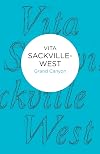
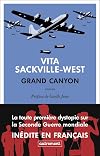
Grand Canyon
by Vita Sackville-West
On This Page
Description
The Second World War has been won - by the Germans. Only America still stands protected by a precarious promise of peace from the Reich. Lester and Helen, strangers staying at the Grand Canyon Hotel in Arizona are united by their memories of a lost England. When the fragile peace shatters, only Lester and Helen can take charge and lead their fellow guests into an uncertain future.Tags
Recommendations





























Member Reviews
This is definitely a book with a purpose, as declared in Vita's "Author's Note" at the start. I almost wish I hadn't read that, or had gone into this knowing nothing, because I think I would have enjoyed the worldbuilding a good deal more. For me the greatest value of this was its historicity-- this was published in 1942, which makes the alternate history scenario much more terrifying, because it was written by someone who literally didn't know how the war was going to end! That also may be why this book never became a "classic" and is so hard to find, too. It's definitely intended for a contemporary audience rather than enduring.
"Grand Canyon" is divided into two parts, at the hotel and in the canyon. I actually found the first part show more more interesting, where nothing happened. I could honestly see Kazuo Ishiguro writing something like this, with all the themes of reminiscing on a bygone era and all. (Maybe this is what happens if Lord Darlington's plan in Remains of the Day actually worked out! lmao). It's very very British, and kind of funny to read about the Southwest from such a British voice, but I did kind of like the comedy of manners that she plays with.
The actual attack is more than halfway through the book, and while not exactly anticlimactic I found the second section less interesting than the psychological novel bits in the first. The worldbuilding went from subtle to lazy, and at this point I got kind of sick of the rambling conversations which seemed more like vessels for philosophical jargon. Needless to say yes there is a twist and I'll mention it down here... it's a massive spoiler!
So, I read a first edition copy I got from UT's library, and in my copy part 1 ends with "She carried his poor little naked corpse carefully down into Bright Angel Trail. A bird’s body is very light."
However, the version on Project Gutenberg ends part 1 with:
"She carried his poor little naked corpse carefully down into Bright Angel Trail. A bird’s body is very light. What Madame de Retz did not realise and what the others did not realise, was that they had all been killed on their way to the head of the trail. Grigori had died outright because he had no soul.
The others went on. They had to go on. They had to complete their fate in spite of their apparent death."
The version I read keeps the literal M. Night Shyamalan plot twist until the very end, and just drops it in a really jarring way that I'll admit did shock me, though I saw it coming with all the miraculous healing. I'm really glad I didn't read the digital edition of this, because I would have liked the book a lot less if that had been spoiled for me before even getting to part 2. show less
"Grand Canyon" is divided into two parts, at the hotel and in the canyon. I actually found the first part show more more interesting, where nothing happened. I could honestly see Kazuo Ishiguro writing something like this, with all the themes of reminiscing on a bygone era and all. (Maybe this is what happens if Lord Darlington's plan in Remains of the Day actually worked out! lmao). It's very very British, and kind of funny to read about the Southwest from such a British voice, but I did kind of like the comedy of manners that she plays with.
The actual attack is more than halfway through the book, and while not exactly anticlimactic I found the second section less interesting than the psychological novel bits in the first. The worldbuilding went from subtle to lazy, and at this point I got kind of sick of the rambling conversations which seemed more like vessels for philosophical jargon. Needless to say yes there is a twist and I'll mention it down here... it's a massive spoiler!
However, the version on Project Gutenberg ends part 1 with:
"She carried his poor little naked corpse carefully down into Bright Angel Trail. A bird’s body is very light. What Madame de Retz did not realise and what the others did not realise, was that they had all been killed on their way to the head of the trail. Grigori had died outright because he had no soul.
The others went on. They had to go on. They had to complete their fate in spite of their apparent death."
The version I read keeps the literal M. Night Shyamalan plot twist until the very end, and just drops it in a really jarring way that I'll admit did shock me, though I saw it coming with all the miraculous healing. I'm really glad I didn't read the digital edition of this, because I would have liked the book a lot less if that had been spoiled for me before even getting to part 2.
Grand Canyon: A Novel by Vita Sackville-West is the author’s only science fiction novel. Vita Sackville-West was a British poet, writer, critic, and gardener. She is well known for her affairs with women while married to British diplomat Harold Nicholson. She traveled widely and to many places where white women usually did not venture. Her fiction and her life intertwined in much of her writing.
Published in 1942 with the Battle of Britain firmly in the minds of the English and war still raging in Europe, Sackville-West writes of A Nazi-controlled Europe and peace between the US and the Reich. British exiles are staying at a hotel at the Grand Canyon and they mix with the Americans. Lester Dale and Helen Temple, both British, are the show more lead characters. Strangers at first they become closer reminiscing about their lost London.
The descriptions of the canyon are wonderfully done and play polar opposites to the destruction of war. The Indian civilization and the wonder of nature compete with the manmade hotel which tries in a very American way to compliment the scenery with capitalism and artificialness. America itself is seen as big from the description of the canyons dimensions to the towers in New York. Its geographical isolation has lead to a youthful acting, fun-loving population isolated from Europes fighting. The American people and military remain innocent in the idea of total war.
The German betrayal of the treaty with America comes as a complete surprise to the United States (much like the invasion of the Soviet Union in 1941). The war and attack are portrayed as evil. There is a far greater evil in the world than Hitler alone; he merely personifies it. The contrasts are clear: nature and war, innocents and evil. The book, however, does not age well. Much like how the 1984 movie Red Dawn seems ridiculous today (and maybe back then too), the Nazi invasion of the US is far fetched and the invasion goes as smoothly as for the enemy as Red Dawn. By the time this book was published, however, the US had already declared war on Germany.
Sackville-West writes an interesting alternative history with a few surprises in people and the plot. As for the science-fiction, it is there, late in the story, and is subdued. Sackville-West is concerned with the writing as much as anything else in the story. It seems old and decades behind the contemporary writing of the time. It’s formal and much of the action is conveyed in the writing style, conversation, stiffness, and plot. Perhaps what one would call “very English.”
I enjoyed it from the historical perspective of a writer writing war fiction while a war was raging in Europe and her home country the victim of air raids on a scale not seen before. Much of this shows through in writing about the sirens and the bombing in America. A cautionary tale is what she calls it, but perhaps it was meant to be more shock and awe to the American public. show less
Published in 1942 with the Battle of Britain firmly in the minds of the English and war still raging in Europe, Sackville-West writes of A Nazi-controlled Europe and peace between the US and the Reich. British exiles are staying at a hotel at the Grand Canyon and they mix with the Americans. Lester Dale and Helen Temple, both British, are the show more lead characters. Strangers at first they become closer reminiscing about their lost London.
The descriptions of the canyon are wonderfully done and play polar opposites to the destruction of war. The Indian civilization and the wonder of nature compete with the manmade hotel which tries in a very American way to compliment the scenery with capitalism and artificialness. America itself is seen as big from the description of the canyons dimensions to the towers in New York. Its geographical isolation has lead to a youthful acting, fun-loving population isolated from Europes fighting. The American people and military remain innocent in the idea of total war.
The German betrayal of the treaty with America comes as a complete surprise to the United States (much like the invasion of the Soviet Union in 1941). The war and attack are portrayed as evil. There is a far greater evil in the world than Hitler alone; he merely personifies it. The contrasts are clear: nature and war, innocents and evil. The book, however, does not age well. Much like how the 1984 movie Red Dawn seems ridiculous today (and maybe back then too), the Nazi invasion of the US is far fetched and the invasion goes as smoothly as for the enemy as Red Dawn. By the time this book was published, however, the US had already declared war on Germany.
Sackville-West writes an interesting alternative history with a few surprises in people and the plot. As for the science-fiction, it is there, late in the story, and is subdued. Sackville-West is concerned with the writing as much as anything else in the story. It seems old and decades behind the contemporary writing of the time. It’s formal and much of the action is conveyed in the writing style, conversation, stiffness, and plot. Perhaps what one would call “very English.”
I enjoyed it from the historical perspective of a writer writing war fiction while a war was raging in Europe and her home country the victim of air raids on a scale not seen before. Much of this shows through in writing about the sirens and the bombing in America. A cautionary tale is what she calls it, but perhaps it was meant to be more shock and awe to the American public. show less
https://nwhyte.livejournal.com/2973364.html
Sackville-West tells us in her foreword:
"In Grand Canyon I have intended a cautionary tale. In it I have contemplated the dangers of a world in which Germany, by the use of an unspecified method of attack, is assumed to have defeated Great Britain in the present war. Peace terms have been offered on the basis of the status quo of 1939 and the Germans have made a plausible appeal to the United States Government (who have meanwhile satisfactorily concluded their own war with Japan) to mediate in the name of humanity to prevent a prolongation of human suffering. For the purposes of my story I have allowed the United States Government to fall into the Nazi trap and to be deluded into making this show more intervention as "the nation which, in its hour of victory, brought peace to the world." The terrible consequences of an incomplete conclusion or indeed of any peace signed by the Allies with an undefeated Germany are shown. Such a supposition is by no means intended as a prophecy and indeed bears no relation at all to my own views as to the outcome of the present war."
The setting is, surprise surprise, the Grand Canyon, where a tourist hotel hosts a number of European exiles have ended up fleeing the devastation of the other side of the Atlantic. The first half of the book sets the scene of a sedate romance between Helen Temple and Lester Dale; but the inevitable German attack happens, and in the second half of the book, the hotel guests flee to the bottom of the canyon, on a journey that is not at all what it seems to be at first. The metaphors are obvious but not laboured, and the situation of Helen, Lester and the other characters is rather well conveyed. show less
Sackville-West tells us in her foreword:
"In Grand Canyon I have intended a cautionary tale. In it I have contemplated the dangers of a world in which Germany, by the use of an unspecified method of attack, is assumed to have defeated Great Britain in the present war. Peace terms have been offered on the basis of the status quo of 1939 and the Germans have made a plausible appeal to the United States Government (who have meanwhile satisfactorily concluded their own war with Japan) to mediate in the name of humanity to prevent a prolongation of human suffering. For the purposes of my story I have allowed the United States Government to fall into the Nazi trap and to be deluded into making this show more intervention as "the nation which, in its hour of victory, brought peace to the world." The terrible consequences of an incomplete conclusion or indeed of any peace signed by the Allies with an undefeated Germany are shown. Such a supposition is by no means intended as a prophecy and indeed bears no relation at all to my own views as to the outcome of the present war."
The setting is, surprise surprise, the Grand Canyon, where a tourist hotel hosts a number of European exiles have ended up fleeing the devastation of the other side of the Atlantic. The first half of the book sets the scene of a sedate romance between Helen Temple and Lester Dale; but the inevitable German attack happens, and in the second half of the book, the hotel guests flee to the bottom of the canyon, on a journey that is not at all what it seems to be at first. The metaphors are obvious but not laboured, and the situation of Helen, Lester and the other characters is rather well conveyed. show less
Ratings
Members
- Recently Added By
Lists

1943 Retro-Hugo Eligible Novels
18 works; 2 members
Author Information

99+ Works 7,284 Members
Poet and novelist Vita Sackville-West began writing as a child. Born at elegant Knole Castle, scene of Virginia Woolf's novel Orlando (1928), Sackville-West was educated in that 365-room dwelling. In 1913 she married Harold Nicolson (see Vol. 3), journalist, diplomat, and biographer. Despite Nicolson's homosexuality and her own lesbian affair with show more Violet Trefusis, this marriage survived. Poems of East and West, her first book, was published in 1917. She remained unknown except by a small group of literary connoisseurs until 1927, when she received the Hawthornden Prize for a second volume of poetry. At this time she lived in London and was part of the Bloomsbury group, which also included Lytton Strachey (see Vol. 3), E. M. Forster, John Maynard Keynes (see Vol. 3), and Woolf. Sackville-West published many novels and volumes of poetry, biography, and family history, and several books on gardening, as well as book reviews and criticism. All of her writings reflect the same unhurried approach, deep reflection, and brilliantly polished style. Her influence on other writers, especially Woolf, was perhaps greater than her own individual achievement. The Edwardians (1930) and All Passion Spent (1931) are her best-known novels. Sackville-West's son, Nigel Nicholson, recounted the close, but unconventional relationship of his parents in the memoir Portrait of a Marriage, published in 1973. (Bowker Author Biography) show less
Common Knowledge
- Original publication date
- 1942
Classifications
- Genres
- Fiction and Literature, General Fiction, Science Fiction
- DDC/MDS
- 823.912 — Literature & rhetoric English & Old English literatures English fiction 1900- 1901-1999 1901-1945
- LCC
- PZ3 .S123 — Language and Literature Fiction and juvenile belles lettres Fiction and juvenile belles lettres Fiction in English
- BISAC
Statistics
- Members
- 24
- Popularity
- 1,110,681
- Reviews
- 3
- Rating
- (3.50)
- Languages
- English, French
- Media
- Paper, Ebook
- ISBNs
- 5
- ASINs
- 5