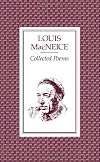
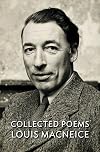
Collected Poems
by Louis MacNeice, E. R. Dodds (Editor)
On This Page
Description
In the decades since his death in 1963, Louis MacNeice's reputation as a poet (and, indeed, amongst poets) has grown steadily, and there are now several generations of readers in Ireland, Britain, and beyond, for whom he is one of the essential poets of the twentieth century. His work has also received increasing attention from academic writers and students. For both readers and critics, the nature of MacNeice's poetic work as a whole is a matter of importance, and the second posthumous show more Collected Poems, entirely re-edited by Peter McDonald, attempts, for the first time, to print MacNeice's poetry in groupings corresponding closely to the collections published by Faber between 1935 and 1963. This makes it easier to read the poet in the published forms in which he was read by his contemporaries. In choosing to re-create the environments of MacNeice's individual volumes of poetry, moreover, this new Collected reflects the opinion that MacNeice works best in and through those separate volumes, particularly so in the brilliant return to form - and unique kinds of return on lyric form itself - of the last three collections. The texts of the poems in the new edition are based on a comparison of all printed versions, as revised in the light of the poet's later thoughts. This has resulted in a large number of changes. It is hoped that the present edition presents MacNeice's poetry more accurately, as well as more fully, than all previous collections. The new Collected Poems also includes, as appendices, The Last Ditch - the short book of poems which MacNeice published with the Cuala Press in 1940 - and The Revenant, a cycle of songs written for MacNeice's wife, the singer Hedli Anderson, a selection of uncollected early poems, and from Blind Fireworks, MacNeice's first published book of verse. show lessTags
Recommendations








Member Reviews
From 16 August to 22 December, this has been a four month journey. And a bit of a slog (610 pages). The first 1/3 was by far the most interesting:
- Poems (1935)
- from: Out of the Picture (1937)
- from: Letters from Iceland (1937)
- The Earth Compels (1938)
- Autumn Journal (1939)
From here – almost half the book – until the final 1/6, there was little of interest and very little memorable. Coincidentally, this coincides with MacNeice joining the BBC.
- Plant and Phantom (1941)
- Springboard (1944)
- Holes in the Sky (1948)
- from: Collected Poems (1949)
- Ten Burnt Offerings (1952)
- Autumn Sequel (1954)
- Visitations (1957)
The final part (1/6) see him regain his voice:
- Solstices (1961)
- The Burning Perch (1963)
(There are an additional two show more hundred pages of appendices: poems from pre-university and undergraduate days, plus some others, a some textual notes.)
The early poems benefit from his early life experiences, WWII, and the breakdown of his marriage as source material. He's also experimenting with forms. Thereafter, he doesn't seem to develop much, and he becomes stuck in this Oxford classics world – a problem that recurs today with a certain element of society.
I was surprised at MacNeice's seeming inability to extend his interests, even to explore – a kind of absence of curiosity. The poems are mainly descriptions of what surrounds him and, frankly, not very poetic.
This is clearly a solid collection of MacNeice's poems, so five stars for that. In terms of quality and content, I found little of interest or particularly memorable; so two stars. Overall, three stars. show less
- Poems (1935)
- from: Out of the Picture (1937)
- from: Letters from Iceland (1937)
- The Earth Compels (1938)
- Autumn Journal (1939)
From here – almost half the book – until the final 1/6, there was little of interest and very little memorable. Coincidentally, this coincides with MacNeice joining the BBC.
- Plant and Phantom (1941)
- Springboard (1944)
- Holes in the Sky (1948)
- from: Collected Poems (1949)
- Ten Burnt Offerings (1952)
- Autumn Sequel (1954)
- Visitations (1957)
The final part (1/6) see him regain his voice:
- Solstices (1961)
- The Burning Perch (1963)
(There are an additional two show more hundred pages of appendices: poems from pre-university and undergraduate days, plus some others, a some textual notes.)
The early poems benefit from his early life experiences, WWII, and the breakdown of his marriage as source material. He's also experimenting with forms. Thereafter, he doesn't seem to develop much, and he becomes stuck in this Oxford classics world – a problem that recurs today with a certain element of society.
I was surprised at MacNeice's seeming inability to extend his interests, even to explore – a kind of absence of curiosity. The poems are mainly descriptions of what surrounds him and, frankly, not very poetic.
This is clearly a solid collection of MacNeice's poems, so five stars for that. In terms of quality and content, I found little of interest or particularly memorable; so two stars. Overall, three stars. show less
Macneice is better in theory than actuality. I think that these poems are rather dated and have a slightly dusty feel of something once fashionble and now rather faded. Still, they are redeemed by Music for Bagpipes and Autumn Journal.
Collection of poetry of Louis Macniece
Ratings
Members
- Recently Added By
Lists

Harold Bloom - The Western Canon: D. The Chaotic Age
833 works; 24 members
Author Information

54+ Works 1,413 Members
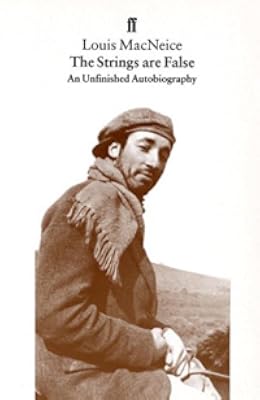
Born in Belfast and raised in Carrickfergus, MacNeice was the son of an Anglican clergyman who became a bishop. His education in English schools and Oxford University made him ill at ease with his Puritan upbringing, but it never caused him to lose his sense of northern Irish roots. At Oxford, MacNeice became friends with Stephen Spender and show more later, W. H. Auden, with whom he collaborated on "Letters from Iceland" (1937). After graduating with a double first, MacNeice accepted a lectureship in the classics at Birmingham University and, after the traumatic elopement of his first wife, at Bedford College of the University of London. He joined the BBC as scriptwriter and producer in 1941 and remained with it for the remainder of his career. He also did an admired translation of Aeschylus's "Agamemnon" and the well-known book "The Poetry of W. B. Yeats" (1941). MacNeice defended his own poetry and that of Auden, Spender, and C. Day Lewis in his book "Modern Poetry" (1938). There he called for an "impure poetry" that would react against the giants of the previous generation by embracing the partisanship that he missed in W. B. Yeats and involvement with life that he found lacking in T. S. Eliot, both of whom had otherwise influenced him. While engaged with personal and political issues of the 1930's, MacNeice maintained a more skeptical stance than many of his contemporaries. His best verse---such as "Valediction" or "Bagpipe Music"---brings wit and strong rhythms to bear on contemporary life and often harks back to scenes of his youth. After joining the BBC, he also wrote more than 150 scripts, of which a dozen radio dramas have been published. An autobiography, "The Strings Are False," was published posthumously in 1966. During his lifetime, MacNeice was overshadowed by Auden, but in recent years, reevaluation of his work has regarded him as a major literary figure. (Bowker Author Biography) show less

E.R. Dodds (1893-1979) was born in Belfast and educated at Campbell College, Belfast, and Balliol College, Oxford. He was Regius Professor of Greek at Oxford from 1936 to 1960 and President of the Society for Psychical Research from 1961 to 1963.
Classifications
Statistics
- Members
- 243
- Popularity
- 133,373
- Reviews
- 3
- Rating
- (3.66)
- Languages
- English
- Media
- Paper, Ebook
- ISBNs
- 7
- ASINs
- 9