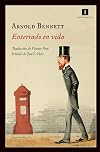
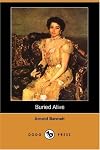
Buried Alive: A Tale of These Days
by Arnold Bennett
On This Page
Description
Need a good laugh? Immerse yourself in this delightfully dark tale from Arnold Bennett. Buried Alive recounts the trials and triumphs of one Priam Farll, a world-famous artist who is deeply uncomfortable with his own fame and whose crippling shyness makes it difficult to navigate. Fed up with his unsatisfying existence, Priam comes up with a highly unusual solution. Will he be able to pull off this far-fetched scheme?.
Tags
Recommendations



















Member Reviews
This delightful book is far too short, though according to the Preface of The Old Wives' Tale (see my review HERE), it "was received with majestic indifference by the British public"!
* No spoilers below: Comments that may look like spoilers actually tell you less than the blurb on the back of the book.
* The title is entirely metaphorical: This is not a book for lovers of the macabre. It is a tragi-comic satire about identity, inhibition, love, the meaning and value of art, and the institutions of state, church, media and courts. It is whimsical, but not merely that; there is a decent plot as well. It's superficially absurd, and certainly funny, but there's much truth smuggled beneath that guise.
The setup
Priam Farll is a wealthy, show more successful Edwardian artist (shortly before WW1) who is cripplingly shy. He lives the life of a recluse, mainly in Europe, with his valet, Henry Leek. He is not, initially, a sympathetic character, but he rapidly became one.
The story opens quixotically:
"The peculiar angle of the earth's axis to the plan of the ecliptic - that angle which is chiefly responsible for our geography and therefore our history - had caused the phenomenon known in London as summer."
The power of destiny is reinforced by other astronomical analogies, including:
"Up in the corners of the ceiling, obscure in the eclipse of the cardboard shade, was a complicated system of cobwebs."
Switching identity
Priam accidentally takes on the identity of Leek, and finds that although he gains some liberation, there are problems too (some unpleasant, and others comic).
Image: Kitten seeing lion in mirror (Source.)
"He had wanted to be free, and free he was... But it appeared to him very remarkable that so much could happen, in so short a time, as the result of a momentary impulsive prevarication."
Shyness is painful, "There were moments with him when he could not speak lest his should should come out of his mouth and flit irrevocably away", but not simple: "Like all shy people he had fits of amazing audacity", but not necessarily when he most needs them, and his audacious side can create situations that his shy side then struggles to overcome.
Nevertheless, love, anonymity and ordinary middle class common sense come to his rescue. When things get tricky, he catches "a disconcerting glimpse of the depths of utter unscrupulousness that sometimes disclose themselves in the mind of a good and loving woman".
The meaning, value, and purpose of art
Priam's art is distinctive, but what is the value of the art itself, or is it the name of the artist that creates the value?
Does it even matter, and if so, to whom?
And can a great artist cease to create or else change their style to an unrecognisable degree?
"An imitation that no one can distinguish from the original is naturally as good as the original" - or is it?
Revelation
One assumes Priam's true identity will be revealed, and there are several ways it could happen. Even when it becomes a cause celebre in court, it is not clear what will be believed. Bennett has fun with this stage of the story, combining grand theatricality with raw economics. Cases drag on because "actors engaged at a hundred a day for the run of the piece do not crack whips behind experts engaged at ten or twenty a day". Only one person is immune to intimidation of the occasion (and it's not Priam).
"All that he [Priam] demanded from the world was peace and quietness, and the world would not grant him these inexpensive commodities".
But there is always art.
"He could neither talk well nor read well... He could only express himself at the end of a brush... In minor ways he may have been, upon occasion, a fool. But he was never a fool on canvass... Why expect more of him? One does not expect a wire-walker to play fine billiards."
I would love to take him under my wing, nourish his genius, and protect him from the world - except that I wouldn't manage to overthrow the indomitable Alice.
Quotes
Lines that captured my imagination:
* A house of "perfect inconvenience" with lights that "were silently proving that man's ingenuity can outwit Nature" (i.e. night).
* The down of a dressing gown was "warm as the smile of a kind heart".
* The role of a doctor is "curing imaginary ailments by means of medicine and suggestion, and leaving real ailments to nature aided by coloured water".
* "A magnificent woman whose youth was slipping off her polished shoulders like a cloak." "She was a woman who, as it were, ran out to meet you when you started to cross the dangerous roadway which separated the two sexes."
* There are wonderful descriptions of Priam's first encounter with the Underground (metro) and its lifts (elevators): "another cage rose into the tunnel... vomited its captives, and descended quickly... and threw him [Priam] and the rest out into a white mine consisting of numberless galleries. He ran about these interminable galleries... at the bidding of painted hands... and occasionally magic trains without engines swept across his vision."
* "Waiters who were trying to force them to depart by means of thought transference and uneasy hovering around their table."
* "The room was ugly in a pleasant Putneyish way... a too realistic wallpaper... a carpet with the characteristics of a retired governess who has taken to drink."
* Smart trousers had a crease "which seemed more than mortal".
* "He said this with a very agreeable mingling of sincerity, deference, and mercantile directness."
* Shades of Wilde: "To cultivate and nourish a grievance when you have five hundred pounds in your pocket, in cash, is the most difficult thing in the world."
* "It nettled him [lawyer], too, merely to see a witness standing in the box just as if she were standing in her kitchen talking to a tradesman at the door." show less
* No spoilers below: Comments that may look like spoilers actually tell you less than the blurb on the back of the book.
* The title is entirely metaphorical: This is not a book for lovers of the macabre. It is a tragi-comic satire about identity, inhibition, love, the meaning and value of art, and the institutions of state, church, media and courts. It is whimsical, but not merely that; there is a decent plot as well. It's superficially absurd, and certainly funny, but there's much truth smuggled beneath that guise.
The setup
Priam Farll is a wealthy, show more successful Edwardian artist (shortly before WW1) who is cripplingly shy. He lives the life of a recluse, mainly in Europe, with his valet, Henry Leek. He is not, initially, a sympathetic character, but he rapidly became one.
The story opens quixotically:
"The peculiar angle of the earth's axis to the plan of the ecliptic - that angle which is chiefly responsible for our geography and therefore our history - had caused the phenomenon known in London as summer."
The power of destiny is reinforced by other astronomical analogies, including:
"Up in the corners of the ceiling, obscure in the eclipse of the cardboard shade, was a complicated system of cobwebs."
Switching identity
Priam accidentally takes on the identity of Leek, and finds that although he gains some liberation, there are problems too (some unpleasant, and others comic).
Image: Kitten seeing lion in mirror (Source.)
"He had wanted to be free, and free he was... But it appeared to him very remarkable that so much could happen, in so short a time, as the result of a momentary impulsive prevarication."
Shyness is painful, "There were moments with him when he could not speak lest his should should come out of his mouth and flit irrevocably away", but not simple: "Like all shy people he had fits of amazing audacity", but not necessarily when he most needs them, and his audacious side can create situations that his shy side then struggles to overcome.
Nevertheless, love, anonymity and ordinary middle class common sense come to his rescue. When things get tricky, he catches "a disconcerting glimpse of the depths of utter unscrupulousness that sometimes disclose themselves in the mind of a good and loving woman".
The meaning, value, and purpose of art
Priam's art is distinctive, but what is the value of the art itself, or is it the name of the artist that creates the value?
Does it even matter, and if so, to whom?
And can a great artist cease to create or else change their style to an unrecognisable degree?
"An imitation that no one can distinguish from the original is naturally as good as the original" - or is it?
Revelation
One assumes Priam's true identity will be revealed, and there are several ways it could happen. Even when it becomes a cause celebre in court, it is not clear what will be believed. Bennett has fun with this stage of the story, combining grand theatricality with raw economics. Cases drag on because "actors engaged at a hundred a day for the run of the piece do not crack whips behind experts engaged at ten or twenty a day". Only one person is immune to intimidation of the occasion (and it's not Priam).
"All that he [Priam] demanded from the world was peace and quietness, and the world would not grant him these inexpensive commodities".
But there is always art.
"He could neither talk well nor read well... He could only express himself at the end of a brush... In minor ways he may have been, upon occasion, a fool. But he was never a fool on canvass... Why expect more of him? One does not expect a wire-walker to play fine billiards."
I would love to take him under my wing, nourish his genius, and protect him from the world - except that I wouldn't manage to overthrow the indomitable Alice.
Quotes
Lines that captured my imagination:
* A house of "perfect inconvenience" with lights that "were silently proving that man's ingenuity can outwit Nature" (i.e. night).
* The down of a dressing gown was "warm as the smile of a kind heart".
* The role of a doctor is "curing imaginary ailments by means of medicine and suggestion, and leaving real ailments to nature aided by coloured water".
* "A magnificent woman whose youth was slipping off her polished shoulders like a cloak." "She was a woman who, as it were, ran out to meet you when you started to cross the dangerous roadway which separated the two sexes."
* There are wonderful descriptions of Priam's first encounter with the Underground (metro) and its lifts (elevators): "another cage rose into the tunnel... vomited its captives, and descended quickly... and threw him [Priam] and the rest out into a white mine consisting of numberless galleries. He ran about these interminable galleries... at the bidding of painted hands... and occasionally magic trains without engines swept across his vision."
* "Waiters who were trying to force them to depart by means of thought transference and uneasy hovering around their table."
* "The room was ugly in a pleasant Putneyish way... a too realistic wallpaper... a carpet with the characteristics of a retired governess who has taken to drink."
* Smart trousers had a crease "which seemed more than mortal".
* "He said this with a very agreeable mingling of sincerity, deference, and mercantile directness."
* Shades of Wilde: "To cultivate and nourish a grievance when you have five hundred pounds in your pocket, in cash, is the most difficult thing in the world."
* "It nettled him [lawyer], too, merely to see a witness standing in the box just as if she were standing in her kitchen talking to a tradesman at the door." show less
Priam Farll is an artist who wishes to remain invisible. He is an enormously shy man who is shielded from the rigours of social interaction by wealth and his valet. When the valet is suddenly taken ill and dies, Farll sees an opportunity to adopt his identity.
Farll has been abroad for a number of years and is taken aback when he realises the extent of his fame. He eavesdrops as the media and the public debate hotly over whether ‘his’ funeral should be in Westminster Abbey, hears a starlet fabricate a story of their meeting, and is aghast at plans for his legacy. Meanwhile he has to live and to find his way around the social milieu of his late valet. Predictably, there are complications.
Bennett’s writing style is wonderful, rich show more with arch observation and satire – of the art world, of the media, of class. But beyond that there is a moving story. Farll’s change of circumstances brings opportunities, in the way he relates to people, in what he values, in his appreciation of his creativity.
Farll finds that while he can act like another person, he can’t fake his painting, whatever the consequences. Bennett nicely carries this tension – between the potential for change and the essential nature of who we are – to the end. And he shows how our obsession with the towering persona of the artist burdens the life-sized human behind it who just makes great art.
A version of this review first appeared on my blog https://katevane.wordpress.com show less
Farll has been abroad for a number of years and is taken aback when he realises the extent of his fame. He eavesdrops as the media and the public debate hotly over whether ‘his’ funeral should be in Westminster Abbey, hears a starlet fabricate a story of their meeting, and is aghast at plans for his legacy. Meanwhile he has to live and to find his way around the social milieu of his late valet. Predictably, there are complications.
Bennett’s writing style is wonderful, rich show more with arch observation and satire – of the art world, of the media, of class. But beyond that there is a moving story. Farll’s change of circumstances brings opportunities, in the way he relates to people, in what he values, in his appreciation of his creativity.
Farll finds that while he can act like another person, he can’t fake his painting, whatever the consequences. Bennett nicely carries this tension – between the potential for change and the essential nature of who we are – to the end. And he shows how our obsession with the towering persona of the artist burdens the life-sized human behind it who just makes great art.
A version of this review first appeared on my blog https://katevane.wordpress.com show less
I had expected Arnold Bennett to be somewhat dark and full of "life is nasty, brutish and short" so this pleasantly suprised me. It was an odd tale, to be sure, but was mostly satirical (much of that went past me) and took a few odd tuns but was very enjoyable. Also another excellent reading onLIbriVox by Simon Evers, I'm looking for more of his readings.
Listened to this after seeing the Monty Woolley movie based on the book, which is fabulous. I was afraid it was only fabulous because of Monty Woolley, but no, the book is pretty great, too. It helped that the Librivox reader did a passable substitution for Woolley's accent and affectations. Recommend.
Unique.
Priam Farll es el más reputado pintor de Inglaterra: célebre por sus cuadros sobre policías y pingüinos, es adorado por el público y la crítica. Tímido como un cervatillo, nadie conoce su aspecto, pues lleva años viviendo en el extranjero junto con su criado Henry Leek, un granuja de tomo y lomo. Un día regresa a Londres de incógnito, y Leek tiene el mal detalle con su amo de fallecer súbitamente de pulmonía. El doctor que certifica la muerte confunde a Leek con Priam Farll, y pronto la noticia corre como la pólvora: el gran pintor ha muerto. Farll ve el cielo abierto y decide no sacar al mundo de su error: finge que es Henry Leek, y hasta asiste a su propio entierro en la abadía de Westminster. Es entonces cuando entra en show more escena una pizpireta viuda de Putney, Alice Challice, que estaba prometida en matrimonio por correspondencia con Leek, y con quien Farll se aliará para luchar contra las adversidades de la vida moderna. show less
Jul 20, 2022Spanish
Priam Farll es el más reputado pintor de Inglaterra: célebre por sus cuadros sobre policías y pingüinos, es adorado por el público y la crítica. Tímido como un cervatillo, nadie conoce su aspecto, pues lleva años viviendo en el extranjero junto con su criado Henry Leek, un granuja de tomo y lomo. Un día regresa a Londres de incógnito, y Leek tiene el mal detalle con su amo de fallecer súbitamente de pulmonía. El doctor que certifica la muerte confunde a Leek con Priam Farll, y pronto la noticia corre como la pólvora: el gran pintor ha muerto. Farll ve el cielo abierto y decide no sacar al mundo de su error: finge que es Henry Leek, y hasta asiste a su propio entierro en la abadía de Westminster. Es entonces cuando entra en show more escena una pizpireta viuda de Putney, Alice Challice, que estaba prometida en matrimonio por correspondencia con Leek, y con quien Farll se aliará para luchar contra las adversidades de la vida moderna. show less
Jan 30, 2014 (Edited)Spanish
Members
- Recently Added By
Lists

Trinity College Booklist (1951): Class Ten, English Literature
358 works; 5 members

Books Read in 2018
4,360 works; 110 members

Books Read in 2021
5,361 works; 114 members
Author Information

193+ Works 6,838 Members
Arnold Bennett was born on May 27, 1867 in Hanley, Staffordshire, England. He began his working career as a law clerk and later he left the legal field and became an editor for the magazine Woman. His first novel was "A Man from the North." He wrote several novels set in Hanley, the town where he was born. These are known as the Five Town novels. show more Other titles include "The Babylon Hotel," "The Truth about an Author," and "How to Live on 24 Hours a Day." Bennett won the 1923 James Tait Black Memorial Prize for his novel "Riceyman Steps." "The Journal of Arnold Bennett" was published posthumously in three volumes. Bennett was also the author of "Hugo" which was made into a major motion picture in 2011 starring Jude law and Ben Kingsley, directed by Martin Scorsese. During WWI, Bennett was Director of Propaganda for France at the Ministry of Information. (At that time "propaganda" did not have the negative connotations it would have later in the twentieth century.) This appointment was based on the recommendation of Lord Beaverbrook, who also recommended him as Deputy Minister of that department at the end of the war. Bennett refused a knighthood in 1918. He died in London of typhoid fever on March 27, 1931. (Bowker Author Biography) show less
Awards and Honors
Notable Lists
Series
Belongs to Publisher Series
Common Knowledge
- Canonical title
- Buried Alive: A Tale of These Days
- Original title
- Buried Alive
- Original publication date
- 1908
- People/Characters
- Priam Farrel; Henry Leek; Alice Chalice
- Important places
- Putney, England, UK; London, England, UK
- Related movies
- Holy Matrimony (1943 | IMDb); The Great Adventure (1921 | IMDb); His Double Life (1933 | IMDb)
- First words
- The peculiar angle of the earth's axis to the plane of the ecliptic--that angle which is chiefly responsible for our geography and therefore for our history--had caused the phenomenon known in London as summer.
Classifications
Statistics
- Members
- 170
- Popularity
- 193,474
- Reviews
- 7
- Rating
- (3.74)
- Languages
- 6 — English, German, Greek, Russian, Spanish, Swedish
- Media
- Paper, Audiobook, Ebook
- ISBNs
- 55
- ASINs
- 14