On This Page
Tags
Recommendations


















Member Reviews
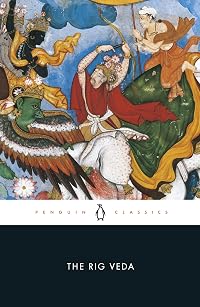
The Rigveda (Sanskrit: ऋग्वेद rgveda, a compound of rc "praise, verse" and veda "knowledge") is an ancient Indian sacred collection of Vedic Sanskrit hymns. It is counted among the four canonical sacred texts (śruti) of Hinduism known as the Vedas.[2] Some of its verses are still recited as Hindu prayers, at religious functions and other occasions, putting these among the world's oldest religious texts in continued use. The Rigveda contains several mythological and poetical accounts of the origin of the world, hymns praising the gods, and ancient prayers for life, prosperity, etc.
It is one of the oldest extant texts in any Indo-European language. Philological and linguistic evidence indicate that the Rigveda was composed show more in the north-western region of the Indian subcontinent, roughly between 1700–1100 BC (the early Vedic period). show less
It is one of the oldest extant texts in any Indo-European language. Philological and linguistic evidence indicate that the Rigveda was composed show more in the north-western region of the Indian subcontinent, roughly between 1700–1100 BC (the early Vedic period). show less
The Rigveda (Sanskrit: ऋग्वेद ṛgvedá, a compound of ṛc "praise, verse" and veda "knowledge") is an ancient Indian sacred collection of Vedic Sanskrit hymns. It is counted among the four canonical sacred texts (śruti) of Hinduism known as the Vedas. Some of its verses are still recited as Hindu prayers, at religious functions and other occasions, putting these among the world's oldest religious texts in continued use.
It is one of the oldest extant texts of any Indo-European language. Philological and linguistic evidence indicate that the Rigveda was composed in the north-western region of the Indian subcontinent, roughly between 1700–1100 BC (the early Vedic period). There are strong linguistic and cultural show more similarities with the early Iranian Avesta, deriving from the Proto-Indo-Iranian times, often associated with the early Andronovo (Sintashta-Petrovka) culture of ca. 2200-1600 BC.
The Rigvedic hymns are dedicated to various deities, chief of whom are Indra, a heroic god praised for having slain his enemy Vrtra; Agni, the sacrificial fire; and Soma, the sacred potion or the plant it is made from. Equally prominent gods are the The Adityas, Vasus, Rudras, Sadhyas, Ashvins, Maruts, Rbhus, and the Vishvadevas ("all-gods") as well as the "thirty-three gods" are the groups of deities mentioned.
The hymns mention various further minor gods, persons, concepts, phenomena and items, and contain fragmentary references to possible historical events, notably the struggle between the early Vedic people (known as Vedic Aryans, a subgroup of the Indo-Aryans) and their enemies, the Dasa or Dasyu and their mythical prototypes, the Paṇi (the Bactrian Parna). show less
It is one of the oldest extant texts of any Indo-European language. Philological and linguistic evidence indicate that the Rigveda was composed in the north-western region of the Indian subcontinent, roughly between 1700–1100 BC (the early Vedic period). There are strong linguistic and cultural show more similarities with the early Iranian Avesta, deriving from the Proto-Indo-Iranian times, often associated with the early Andronovo (Sintashta-Petrovka) culture of ca. 2200-1600 BC.
The Rigvedic hymns are dedicated to various deities, chief of whom are Indra, a heroic god praised for having slain his enemy Vrtra; Agni, the sacrificial fire; and Soma, the sacred potion or the plant it is made from. Equally prominent gods are the The Adityas, Vasus, Rudras, Sadhyas, Ashvins, Maruts, Rbhus, and the Vishvadevas ("all-gods") as well as the "thirty-three gods" are the groups of deities mentioned.
The hymns mention various further minor gods, persons, concepts, phenomena and items, and contain fragmentary references to possible historical events, notably the struggle between the early Vedic people (known as Vedic Aryans, a subgroup of the Indo-Aryans) and their enemies, the Dasa or Dasyu and their mythical prototypes, the Paṇi (the Bactrian Parna). show less
Ratings
Members
- Recently Added By
Author Information

109+ Works 15,832 Members
Jaroslav Pelikan (1923-2006) was Sterling Professor of History Emeritus at Yale University. He authored many books, including Whose Bible Is It? A History of the Scriptures through the Ages and Credo: Historical and Theological Guide to Creeds and Confessions of Faith in the Christian Tradition.
All Editions
Series

Common Knowledge
- Canonical title
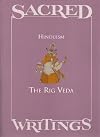
- Hinduism: The Rig Veda
- Original publication date
- 1992
- People/Characters
- Indra
- Disambiguation notice
- Please distinguish this work, Hinduism: The Rig Veda (being Volume 5 of Jaroslav Pelikan's series, "Sacred Writings") from the text of that original work, The Rig Veda. Thank you.
Classifications
Statistics
- Members
- 260
- Popularity
- 124,325
- Reviews
- 3
- Rating
- (4.60)
- Languages
- English
- Media
- Paper, Ebook
- ASINs
- 12