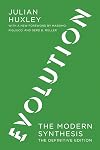
Evolution: The Modern Synthesis
by Julian Huxley
91 Members (3.50)
On This Page
Description
The definitive edition of one of the most important scientific books of the twentieth century, setting out the conceptual structure underlying evolutionary biology. This classic work by Julian Huxley, first published in 1942, captured and synthesized all that was then known about evolutionary biology and gave a name to the Modern Synthesis, the conceptual structure underlying the field for most of the twentieth century. Many considered Huxley's book a popularization of the ideas then show more emerging in evolutionary biology, but in fact Evolution: The Modern Synthesis is a work of serious scholarship that is also accessible to the general educated public. It is a book in the intellectual tradition of Charles Darwin and Thomas Henry Huxley--Julian Huxley's grandfather, known for his energetic championing of Darwin's ideas. A contemporary reviewer called Evolution: The Modern Synthesis "the outstanding evolutionary treatise of the decade, perhaps the century." This definitive edition brings one of the most important and successful scientific books of the twentieth century back into print. It includes the entire text of the 1942 edition, Huxley's introduction to the 1963 second edition (which demonstrates his continuing command of the field), and the introduction to the 1974 third edition, written by nine experts (many of them Huxley's associates) from different areas of evolutionary biology. show lessTags
Recommendations















Member Reviews
Members
- Recently Added By
Lists

The Well-Educated Mind, Susan Wise Bauer, 2016
179 works; 3 members

Writers In Public Domain 2026
90 works; 1 member
Author Information

154+ Works 1,921 Members
Sir Julian Huxley, elder brother of novelist Aldous Huxley, was born in London, the eldest son of Leonard Huxley, biographer and historian; "the nephew of Mrs. Humphrey Ward"; the grand nephew of Matthew Arnold; and the grandson of the great scientist Thomas Henry Huxley. Julian Huxley began gathering honors while at Balliol College, and Oxford show more University, where he lectured on zoology for two years (1910--1912). One of the leading popularizers of science, he was a gifted master of lucid prose and wrote innumerable articles and books, many on science for the layperson on subjects ranging from "the evolutionary conception of God to the politics of ants." Huxley is credited with coining the term ethology to indicate the science of animal behavior. He advocated a scientific humanism as a substitute for the mysticism of the past. Huxley was interested in politics, as well as science, serving as the first director-general of UNESCO (1946--48). In January 1960, Huxley received the New York University Medal following his lecture entitled "Evolution in Our Time." "My final belief is life," was his stated philosophy. . show less
Common Knowledge
- Original publication date
- 1942
Classifications
Statistics
- Members
- 91
- Popularity
- 353,460
- Rating
- (3.50)
- Languages
- English, Spanish
- Media
- Paper
- ISBNs
- 3
- ASINs
- 7