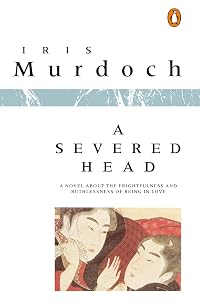
A Severed Head
by Iris Murdoch 
On This Page
Description
A novel about the frightfulness and ruthlessness of being in love, from the author of the Booker Prize-winning novel The Sea, The Sea Martin Lynch-Gibson believes he can possess both a beautiful wife and a delightful lover. But when his wife, Antonia, suddenly leaves him for her psychoanalyst, Martin is plunged into an intensive emotional reeducation. He attempts to behave beautifully and sensibly. Then he meets a woman whose demonic splendor at first repels him and later arouses a consuming show more and monstrous passion. As his Medusa informs him, "this is nothing to do with happiness." A Severed Head was adapted for a successful stage production in 1963 and was later made into a film starring Claire Bloom, Lee Remick, Richard Attenborough, and Ian Holm. show lessTags
Recommendations








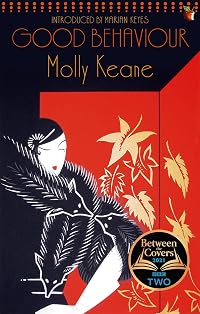
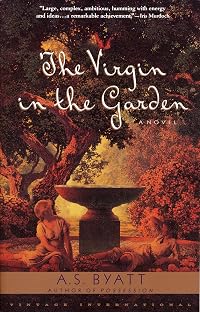
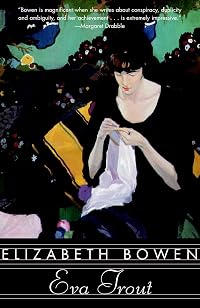

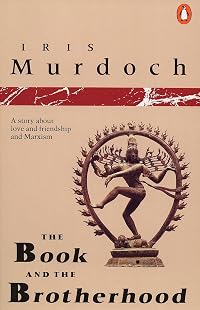
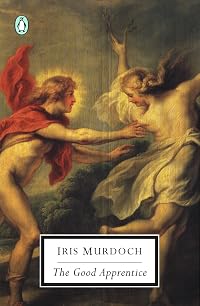
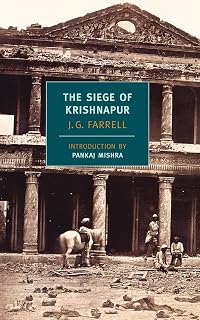
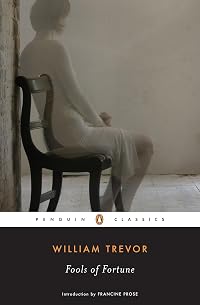
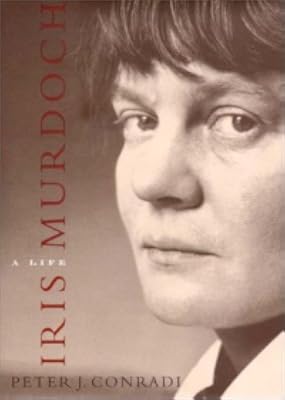

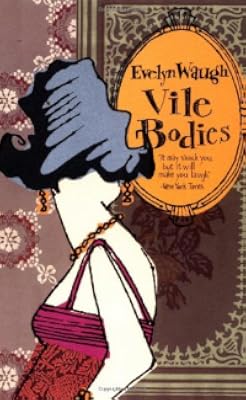

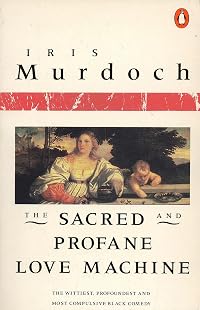
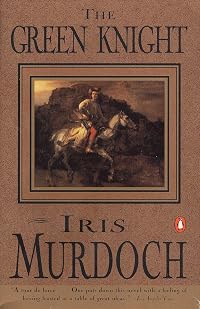
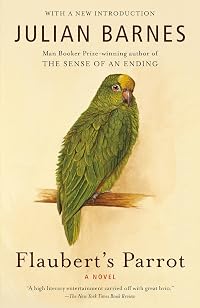




Member Recommendations
Member Reviews
Martin Lynch-Gibbon is perfectly satisfied with his wife, Antonia, and his young mistress, Georgie...until his wife suddenly announces that she is leaving him for Palmer Anderson, her psychoanalyst. Reeling from the wtf moment, the pain of betrayal, and infuriation by Antonia and Palmer's insistence at his inclusion in their relationship, and constant treatment of him as an overgrown child, he finds himself repelled but drawn to the most unlikely source of desire - Anderson's sallow-cheeked, greasy-haired laconic sister Honor Klein, whose existence seems to mock and expose his painfully male mistakes. As Martin stumbles through the fog of anxiety, anger and tears, he soon realizes the true depths of his self-deception, and who he really show more loves.
Thought the Main Character Trying To Lead His Own Life Without Interference trope was all she had? Wrong!! Iris makes another long running Murdochian trope the centre of attention: The Complicated Love Triangle (where friends suddenly become lovers, lovers turn into strangers and acquaintances suddenly become lovers). Iris's depiction of love is intense and consuming, but diffused and confused. Everything is shrouded in possibility, waiting for the chance of a mere encounter. Seemingly logical decisions and rational behaviour, once stripped away, are often exposed for elements of emotional involvement - and each character has different instruments to cheat themselves. Martin tries to rationally justify his decision for a mistress. Antonia beseeches Martin to be reasonable and kind, after she elopes with Palmer. The only character that seems to withstand the self-bullshit is Honor, who lurks in the novel as some cloaked sceptre of truth - apparently nobody can lie to her because they're compelled into honesty by forces beyond.
⠀⠀⠀⠀⠀⠀⠀⠀⠀
The dryer Iris is, the more dramatic she turns, and this was so much fun to read!! I'm just glad that she left behind such a prolific amount of work. show less
Thought the Main Character Trying To Lead His Own Life Without Interference trope was all she had? Wrong!! Iris makes another long running Murdochian trope the centre of attention: The Complicated Love Triangle (where friends suddenly become lovers, lovers turn into strangers and acquaintances suddenly become lovers). Iris's depiction of love is intense and consuming, but diffused and confused. Everything is shrouded in possibility, waiting for the chance of a mere encounter. Seemingly logical decisions and rational behaviour, once stripped away, are often exposed for elements of emotional involvement - and each character has different instruments to cheat themselves. Martin tries to rationally justify his decision for a mistress. Antonia beseeches Martin to be reasonable and kind, after she elopes with Palmer. The only character that seems to withstand the self-bullshit is Honor, who lurks in the novel as some cloaked sceptre of truth - apparently nobody can lie to her because they're compelled into honesty by forces beyond.
⠀⠀⠀⠀⠀⠀⠀⠀⠀
The dryer Iris is, the more dramatic she turns, and this was so much fun to read!! I'm just glad that she left behind such a prolific amount of work. show less
This was the first Murdoch I've read and will probably also be the last. The blurbs all said this was a comedy of manners, funny, witty, etc. Maybe I'm the only one who doesn't find a man slapping his women around and having them fall in love with him because of it utterly hilarious. It was neither funny nor particularly interesting, unless you find middle-aged Brits acting out a violent drunken precursor to polyamory fascinating.
To quote Martin Lynch-Gibbon, the main character, "Oh, Christ." A Severed Head by Iris Murdoch is considered satire, but be forewarned, it's not humorous satire... the satire is in the exaggeration of situations. And boy, are you in for it. I rarely read books that have me exclaiming out loud, "Are you serious???," but A Severed Head had me doing just that. Along with gasping, face-palming, and shaking my head. What a crazy ride. Unpredictable and outrageous, with touches of gothic suspense and atmosphere. And I would be remiss not to point out Murdoch's exquisite prose, which is so full of vivid details that I could see the scenes played out as a movie in my mind's eye. Yes, there will be more Iris Murdoch in my future.
This was brilliant. Described by my local bookseller as 'one of her more operatic books', he was not wrong. The narrator is a bit of a proto version of the protagonist from The Sea, The Sea, he's a complete idiot with no emotional intelligence at all. The book gets increasingly farcical and ludicrous as relationships crumble and reform, at some points making me laugh with delight and disbelief.
I’m a big fan of Murdoch but this one just didn’t come up to her usual standards. To be fair to her, what I should say is that it doesn’t reach the standards that her later novels show (The Black Prince and The Sea, The Sea in particular).
This isn’t unusual for great novelists though; just look at the difference between Woolf’s The Voyage Out and The Waves. In the same way, Murdoch starts out with Under the Net, moves on to The Bell and then A Severed Head. It’s definitely a step in the right direction. The characters are more sinister, more complex and more in need of a good hard slap in the face.
For a start, any protagonist with a double-barrelled surname in a Murdoch novel probably lacks a bit of perspective on anyone show more except himself. And so it proves. Martin Lynch-Gibbon is jilted in love and spends the rest of the novel attempting to come to terms with this, blind to the fact that his hypocrisy is laid bare by the fact that he was already having an affair at the time his wife confessed her own to him.
Events overtake him though (another theme that dominates later Murdoch novels) and he finds his wife, her lover and his own lover in alliance against him. At the same time, her lover’s enigmatic sister Honor Klein appears more and more frequently to lend a gothic air to everything.
It’s not hard to see what will happen in the end, but there are some twists along the way, notably in Cambridge (which, ironically, I have some personal experience of). The book moves at a fair pace, but it’s not the frenetic dash of The Sea, The Sea. Thus, we have an important Murdoch that shows traces of her later greatness. show less
This isn’t unusual for great novelists though; just look at the difference between Woolf’s The Voyage Out and The Waves. In the same way, Murdoch starts out with Under the Net, moves on to The Bell and then A Severed Head. It’s definitely a step in the right direction. The characters are more sinister, more complex and more in need of a good hard slap in the face.
For a start, any protagonist with a double-barrelled surname in a Murdoch novel probably lacks a bit of perspective on anyone show more except himself. And so it proves. Martin Lynch-Gibbon is jilted in love and spends the rest of the novel attempting to come to terms with this, blind to the fact that his hypocrisy is laid bare by the fact that he was already having an affair at the time his wife confessed her own to him.
Events overtake him though (another theme that dominates later Murdoch novels) and he finds his wife, her lover and his own lover in alliance against him. At the same time, her lover’s enigmatic sister Honor Klein appears more and more frequently to lend a gothic air to everything.
It’s not hard to see what will happen in the end, but there are some twists along the way, notably in Cambridge (which, ironically, I have some personal experience of). The book moves at a fair pace, but it’s not the frenetic dash of The Sea, The Sea. Thus, we have an important Murdoch that shows traces of her later greatness. show less
[n.b. A ‘no star’ rating for books I review does not imply criticism—I rarely give ratings, as giving stars is an unhelpfully blunt instrument and all too often involves comparing apples with oranges.]
Having tried once to get to grips with Iris Murdoch via 'Henry and Cato' (left aside after initial enthusiasm turned to a sense that it was all too over-indulgent), 'A Severed Head' was my next attempt. It is a comedy of sorts, though it does call to mind an observation about Susan Hayward that “her lightest touch as a comedienne could stun a horse”. The narrator, Martin Lynch-Gibbon, starts off in a state of over-privileged bliss, having both a beautiful, motherly wife, Antonia, and a beautiful mistress, Georgie, to whom he can show more be comfortably condescending as she is the younger by a significant degree, and loves him deeply. Even on his own admission, Martin is not expected to pay for his emotional and sexual shenanigans.
Then Antonia starts the ball rolling by announcing she is in love with someone else, and like dominoes falling, everyone turns out to be in love with, or at least sleeping with, everyone else. Martin spends the novel drunk and being plunged into barely-controllable reactions to a series of almost contradictory revelations, as his circle of intimates engage in a sort of sexual musical chairs. Antonia loves Anderson, then he is “a demon”; Antonia loves Alexander, Martin’s brother; Palmer is in bed, if not love, with his half-sister Honor, with whom Martin finally… and then Georgie… then Alexander… It all happens at a cracking, Benny-Hill-chase speed; every time Martin sobers up, there is some new revelation to send him spinning away.
There is a sort of Molly Keane-esque grotesquerie about the whole business (and an Anglo-Irish connection: Martin feels a sentimental attachment to “that poor bitch of a country” in which both he and the author were born). Honor is an anthropologist, and is the severed head of the title (though happily, only metaphorically). Martin, having once attacked Honor in a cellar, later literally prostrates himself in front of her; I am still unsure if this was intended to be as funny as it was. Georgie makes the wonderfully Gothic gesture of sending her hair to Martin, signalling a suicide attempt. The characters take themselves terribly seriously, and are very deftly made believable, despite being on a spectrum careening between Bertie Wooster and some hyper-articulate character from a Jacobean tragedy. Martin is bearable because he at least admits that he wants nothing more than to have his cake and eat it. Georgie is the best of the bunch, and puts an unerring finger on aspects of Martin’s character that he has the grace to acknowledge he had hoped she would not notice.
That Honor is Jewish seems to be mentioned at every hand’s turn, particularly when describing how ugly she is, with her “sallow Jewish mask” of a face, and black greasy hair, an emphasis that is unpleasant and startling. It seems a shame, too, that Georgie, who seems a decent sort of person, is caught up in this farago with these selfish, emotionally unstable people. She is incapable of being without a man for more than two minutes at a stretch but unlike Antonia, does not seem happy with any of them. Taken as a singularity, rather than as part of the cast, Georgie is less on a merry-go-round and more circling the drain.
Despite the tortuous intertwinings of dreadful characters, the prose is very clear and lovely, and it makes for an unexpectedly enjoyable read. It is a short book, too, which stands it in good stead since a lengthy account of the inner lives of this charmless crew would pall quickly. Despite all of the psychoanalytical talk, and Martin’s repeated attempts to understand and articulate himself and his reactions—and, in fairness, to behave well—no-one seems to understand anything new by the end of it all; they return to the same old posturings, just in someone else’s bed. show less
Having tried once to get to grips with Iris Murdoch via 'Henry and Cato' (left aside after initial enthusiasm turned to a sense that it was all too over-indulgent), 'A Severed Head' was my next attempt. It is a comedy of sorts, though it does call to mind an observation about Susan Hayward that “her lightest touch as a comedienne could stun a horse”. The narrator, Martin Lynch-Gibbon, starts off in a state of over-privileged bliss, having both a beautiful, motherly wife, Antonia, and a beautiful mistress, Georgie, to whom he can show more be comfortably condescending as she is the younger by a significant degree, and loves him deeply. Even on his own admission, Martin is not expected to pay for his emotional and sexual shenanigans.
Then Antonia starts the ball rolling by announcing she is in love with someone else, and like dominoes falling, everyone turns out to be in love with, or at least sleeping with, everyone else. Martin spends the novel drunk and being plunged into barely-controllable reactions to a series of almost contradictory revelations, as his circle of intimates engage in a sort of sexual musical chairs. Antonia loves Anderson, then he is “a demon”; Antonia loves Alexander, Martin’s brother; Palmer is in bed, if not love, with his half-sister Honor, with whom Martin finally… and then Georgie… then Alexander… It all happens at a cracking, Benny-Hill-chase speed; every time Martin sobers up, there is some new revelation to send him spinning away.
There is a sort of Molly Keane-esque grotesquerie about the whole business (and an Anglo-Irish connection: Martin feels a sentimental attachment to “that poor bitch of a country” in which both he and the author were born). Honor is an anthropologist, and is the severed head of the title (though happily, only metaphorically). Martin, having once attacked Honor in a cellar, later literally prostrates himself in front of her; I am still unsure if this was intended to be as funny as it was. Georgie makes the wonderfully Gothic gesture of sending her hair to Martin, signalling a suicide attempt. The characters take themselves terribly seriously, and are very deftly made believable, despite being on a spectrum careening between Bertie Wooster and some hyper-articulate character from a Jacobean tragedy. Martin is bearable because he at least admits that he wants nothing more than to have his cake and eat it. Georgie is the best of the bunch, and puts an unerring finger on aspects of Martin’s character that he has the grace to acknowledge he had hoped she would not notice.
That Honor is Jewish seems to be mentioned at every hand’s turn, particularly when describing how ugly she is, with her “sallow Jewish mask” of a face, and black greasy hair, an emphasis that is unpleasant and startling. It seems a shame, too, that Georgie, who seems a decent sort of person, is caught up in this farago with these selfish, emotionally unstable people. She is incapable of being without a man for more than two minutes at a stretch but unlike Antonia, does not seem happy with any of them. Taken as a singularity, rather than as part of the cast, Georgie is less on a merry-go-round and more circling the drain.
Despite the tortuous intertwinings of dreadful characters, the prose is very clear and lovely, and it makes for an unexpectedly enjoyable read. It is a short book, too, which stands it in good stead since a lengthy account of the inner lives of this charmless crew would pall quickly. Despite all of the psychoanalytical talk, and Martin’s repeated attempts to understand and articulate himself and his reactions—and, in fairness, to behave well—no-one seems to understand anything new by the end of it all; they return to the same old posturings, just in someone else’s bed. show less
A Severed Head is a book about relationships. Dysfunctional relationships, and the dysfunctional people who have them. And the dysfunctional psychologist who encourages everyone's dysfunctions (including his own) by overlaying it all with a veneer of rationalizations. Reading books like this makes me realize that the impact of psychoanalysis was pretty deep - it was parodied and poked and prodded from every angle in literature for quite a while. This particular version involves our narrator, a man named Martin, who is cheating on his wife with a young woman named Georgie. The wife, Antonia, in short order is revealed to be having an affair with her psychoanalyst, Palmer (this is widely hinted at from the first pages, so I don't consider show more it a spoiler). From that point, things just get stranger.
For a book so focused on romantic entanglements, the characters rarely seem to be in love. They are codependent, vengeful, distant, enigmatic, hurtful, obsessive about/to/with each other, but they don't seem to be in any form of love that would be recommended. It's an odd little story, and one where the writing kept me going more than the plot.
Recommended for: romantic cynics, bitter divorcees, people who suspect everyone is a little bit crazy.
Quote: "To lose somebody is to lose not only their person but all those modes and manifestations into which their person has flowed outwards; so that in losing a beloved one may find so many things, pictures, poems, melodies, places lost too: Dante, Avignon, a song of Shakespeare's, the Cornish sea." show less
For a book so focused on romantic entanglements, the characters rarely seem to be in love. They are codependent, vengeful, distant, enigmatic, hurtful, obsessive about/to/with each other, but they don't seem to be in any form of love that would be recommended. It's an odd little story, and one where the writing kept me going more than the plot.
Recommended for: romantic cynics, bitter divorcees, people who suspect everyone is a little bit crazy.
Quote: "To lose somebody is to lose not only their person but all those modes and manifestations into which their person has flowed outwards; so that in losing a beloved one may find so many things, pictures, poems, melodies, places lost too: Dante, Avignon, a song of Shakespeare's, the Cornish sea." show less
Members
- Recently Added By
Lists

1001 Books You Must Read Before You Die
1,448 works; 1,134 members

1,001 BYMRBYD Concensus
723 works; 27 members

2024. Nuestro año literario (Faustino Sánchez)
20 works; 1 member

Michael Dirda's 100 Best Comic Novels
100 works; 1 member
Talk Discussions
Past Discussions
A Severed Head in Iris Murdoch readers (May 2013)
Author Information

100+ Works 29,311 Members
Iris Murdoch was one of the twentieth century's most prominent novelists, winner of the Booker Prize for The Sea. She died in 1999. (Publisher Provided) Iris Murdoch was born in Dublin, Ireland on July 15, 1919. She was educated at Badminton School in Bristol and Oxford University, where she read classics, ancient history, and philosophy. After show more several government jobs, she returned to academic life, studying philosophy at Newnham College, Cambridge. In 1948, she became a fellow and tutor at St. Anne's College, Oxford. She also taught at the Royal College of Art in London. A professional philosopher, she began writing novels as a hobby, but quickly established herself as a genuine literary talent. She wrote over 25 novels during her lifetime including Under the Net, A Severed Head, The Unicorn, and Of the Nice and the Good. She won several awards including the James Tait Black Memorial Prize for The Black Prince in 1973 and the Booker Prize for The Sea, The Sea in 1978. She died on February 8, 1999 at the age of 79. (Bowker Author Biography) show less
Iris Murdoch has a Legacy Library. Legacy libraries are the personal libraries of famous readers, entered by LibraryThing members from the Legacy Libraries group.
Some Editions
Awards and Honors
Notable Lists
Series
Belongs to Publisher Series
Work Relationships
Common Knowledge
- Canonical title
- A Severed Head
- Original title
- A Severed Head
- Alternate titles*
- Ein abgetrennter Kopf
- Original publication date
- 1961
- People/Characters
- Martin Lynch-Gibbon; Georgie; Honor Klein
- Important places
- London, England, UK
- Related movies
- A Severed Head (1970 | IMDb)
- First words
- 'You're sure she doesn't know?' said Georgie.
'Antonia? About us? Certain.'
Georgie was silent for a moment and then said, 'Good.' That court 'Good' was characteristic of her, typical of a toughness which had, to my ... (show all)mind, more to do with honesty than with ruthlessness. I liked the dry way in which she accepted our relationship. Only with a person so eminently sensible could I have deceived my wife. - Last words
- (Click to show. Warning: May contain spoilers.)[...] 'Could we be happy?'
She said, 'This has nothing to do with happiness, nothing whatever.'
That was true. I took in the promise of her words. I said, 'I wonder if I shall survive it.'
She said, smiling splendidly, 'You must take your chance!'
I gave her back the bright light of the smile, now softening at last out of irony. 'So must you, my dear!' - Blurbers
- Howard, Elizabeth Jane; Toynbee, Philip
- Original language*
- Engels
- Disambiguation notice
- Iris Murdoch's novel 'A Severed Head' (1961) was adapted for the stage with the same title. The published play (1964) is co-credited to Murdoch and the playwright J.B. Priestly. Please distinguish between this novel and the ... (show all)play adaptation. Thank you.
*Some information comes from Common Knowledge in other languages. Click "Edit" for more information.
Classifications
Statistics
- Members
- 1,691
- Popularity
- 13,205
- Reviews
- 51
- Rating
- (3.66)
- Languages
- 11 — Czech, Danish, Dutch, English, Estonian, French, German, Italian, Portuguese, Russian, Spanish
- Media
- Paper, Audiobook, Ebook
- ISBNs
- 33
- ASINs
- 24