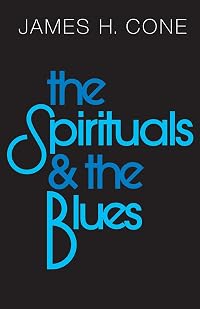
The Spirituals and the Blues: An Interpretation
by James H. Cone
On This Page
Description
"How two forms of song helped sustain slaves and their children in the midst of tribulation. With a new introduction by Cheryl Townsend Gilkes"--Tags
Recommendations




Member Reviews
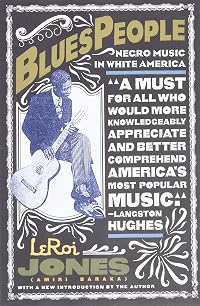
This revised edition of Cone's book about the meaning and impact of African-American music focuses on spirituals but his chapter on the blues is as perceptive if not as comprehensive as his treatment of the spirituals. (Cone considers the older, acoustic blues and does not reference the electric blues that grew out of the Great Migration.) I found the songs he quotes echoing in my head as I read and I was deeply affected by what Cone has to say about the experiences and injustice that produced both kinds of music. Although Cone does not deal with either gospel music or jazz, he does, in this updated edition, note that those genres and rap, are contemporary expressions of the harsh conditions under which many African-Americans still live.
'Black history is the stuff out of which the black sprituals were created...to understand it is to know the being of a people who had to feel their way along the course of American slavery.' The best-selling masterpiece shows how two forms of song-the sprituals and the blues-helped sustain slaves and their chidren in the midst of a 'a powerful lot of tribulation.' The sprituals spoke 'about the rupture of black lives,' about a 'people in the land of bondage.' The blues were secular sprituals, telling about love and sex and black life and the 'gut capacity to survive.' In the words of Memphis Willie B., 'A blues is about something that's real.' 'A cogent analysis of the spirituals and the blues as African-American cultural show more expressions...remains on the must-read self.-The Christian Century 'Argues that black history itself is a spiritual, a song of testament sung between human hearts.'-Books & Religion 'Highly recommended.'-Library Journal James H. Cone is Charles A. Briggs Professor of Systematic Theology at Union Theological Seminary, New York City. His many books, include: A Black Theology of Liberation, Martin & Malcolm & America, For My People, My Soul Looks Back, and Speaking the Truth. Cover Design: Gina Peters
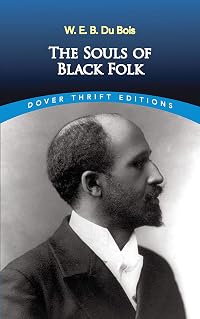
Contents Preface Introduction 1 Interpretations of he black spirituals The debate about black music The souls of black folk Social and historical perspectives Religion in the spirituals 2 The black spirituals and black experience 3 God and Jesus Christ in the black spirituals The meaning of God: God as liberator The meaning of God: Jesus Christ 4 God and black suffering Faith and suffering in the Bible Black faith and suffering The meaning of death The meaning of Satan The meaning of sin 5 The meaning of heaven in the black sprituals Heaven and black existence The transcendent present The transcendent future Judgment and the righteousness of God 6 The blues: A secular spiritual The rise of the blues Toward a definiton of the blues The blues and black suffering The blues and sex The blues and social protest The blues and hope A concluding reflection show less
Contents Preface Introduction 1 Interpretations of he black spirituals The debate about black music The souls of black folk Social and historical perspectives Religion in the spirituals 2 The black spirituals and black experience 3 God and Jesus Christ in the black spirituals The meaning of God: God as liberator The meaning of God: Jesus Christ 4 God and black suffering Faith and suffering in the Bible Black faith and suffering The meaning of death The meaning of Satan The meaning of sin 5 The meaning of heaven in the black sprituals Heaven and black existence The transcendent present The transcendent future Judgment and the righteousness of God 6 The blues: A secular spiritual The rise of the blues Toward a definiton of the blues The blues and black suffering The blues and sex The blues and social protest The blues and hope A concluding reflection show less
"The power of song in the struggle for black survival--that is what the spirituals and blues are about."
One of the best books on the subject of the spirituals and the blues and their relation to the soul. Highly recommended.
One of the best books on the subject of the spirituals and the blues and their relation to the soul. Highly recommended.
Ratings
Members
- Recently Added By
Lists

Mo's Reading List
218 works; 1 member

Art & Spirituality Books
22 works; 1 member
Author Information

22+ Works 3,907 Members
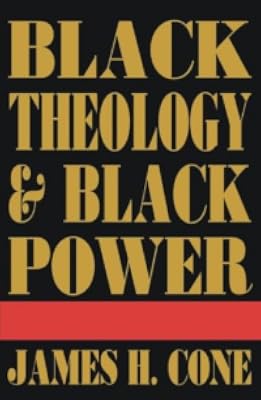
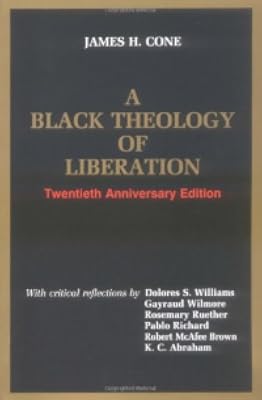
James Hal Cone was born in Fordyce, Arkansas on August 5, 1938. He received a bachelor of divinity degree from Garrett Theological Seminary and a master's degree and a Ph.D. from Northwestern University. He became a central figure in the development of black liberation theology in the 1960s and 1970s. He spoke about racial inequalities that show more persisted in the form of economic injustice, mass incarceration, and police shootings. He joined the faculty of Union Theological Seminary in 1969 and was appointed to the distinguished Charles A. Biggs chair of systematic theology in 1977. He wrote several books including Black Theology and Black Power, A Black Theology of Liberation, Crosscurrents, and The Cross and the Lynching Tree, which received the Grawemeyer Award in Religion in 2018. He died on April 28, 2018 at the age of 79. (Bowker Author Biography) show less
Classifications
- Genres
- Music, Nonfiction, Religion & Spirituality, History
- DDC/MDS
- 781.62 — Arts & recreation Music General principles and musical forms Traditions of music Folk music {equally instrumental and vocal}
- LCC
- ML3556 .C66 — Music Literature on music Literature on music History and criticism Folk, national, and ethnic music
- BISAC
Statistics
- Members
- 251
- Popularity
- 129,813
- Reviews
- 3
- Rating
- (4.41)
- Languages
- English
- Media
- Paper, Ebook
- ISBNs
- 8
- ASINs
- 2