On This Page
Description
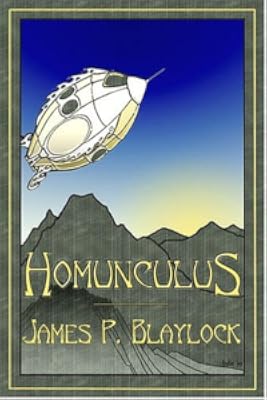
A mysterious airship orbits through the foggy skies?above Victorian London. Its terrible secrets are sought by many, including: the Royal Society, a fraudulent evangelist,?a fiendish vivisectionist, an evil millionaire and an assorted group led by the scientist and explorer Professor Langdon St. Ives. Can St. Ives keep the alien homunculus out of the claws of the villainous Ignacio Narbondo?
Tags
Recommendations




















Member Reviews
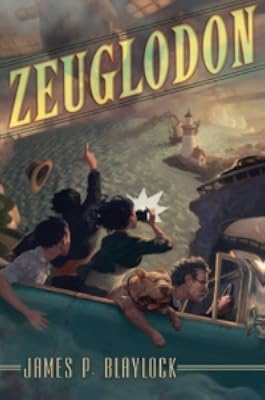
Oh wow I do love that cover.
Chaotic but carefully orchestrated characters clash and chase and sneak and yell their way round London after a multiplying number of beautifully made boxes with different contents which are are stolen, retrieved, lost, pursued and fought over by scientists, vivsectionists and millenial cultists, all in the shadow of the impossible blimp piloted for ten years across the skies by a dead man, and due to make its final landfall, carrying as it does yet another of the boxes, which may or may not contain the amazing Homonculus itself.
A gleeful frolic through the wonders and horrors of mad science.
Chaotic but carefully orchestrated characters clash and chase and sneak and yell their way round London after a multiplying number of beautifully made boxes with different contents which are are stolen, retrieved, lost, pursued and fought over by scientists, vivsectionists and millenial cultists, all in the shadow of the impossible blimp piloted for ten years across the skies by a dead man, and due to make its final landfall, carrying as it does yet another of the boxes, which may or may not contain the amazing Homonculus itself.
A gleeful frolic through the wonders and horrors of mad science.
La trama se desarrolla de manera frenética, siempre están pasando cosas, lo que hace que quieras volver a la lectura una y otra vez. Esto es lo primero que atrae de ‘Homúnculo’, una novela precursora del steampunk, aunque en aquella época no se hablaba de este subgénero, era simplemente literatura fantástica. Me ha hecho gracia la mención de William Ashbless, un poeta inventado por Tim Powers y el propio Blaylock, que hay que decir que son amiguetes. Al tal Ashbless ya lo conocí en esa obra maestra que es ‘Las puertas de Anubis’, que recomiendo encarecidamente. Y ‘Homúnculo’ tiene algo de aquélla, esa velocidad en la trama y ese enlazar situaciones, aunque Las puertas me dejó mucha más huella, por lo loco de la show more trama.
¿Y de qué va ‘Homúnculo’? Londres, finales del siglo XIX. Un extraño dirigible, pilotado por un esqueleto, sobrevuela la ciudad. Tenemos a Langdon St. Ives, inventor y más cosas, que va tras este dirigible, y su contenido, tal vez un alienígena y una posible nave extraterrestre. Se habla de una rara caja con un hombrecito en su interior con poderes. ¿Quizá un alienígena? Pero hay más cajas de estas, lo que llevará a más de un equívoco. También anda por ahí un tal doctor Narbondo, capaz de resucitar a los muertos con una glándula de las carpas. Hay más personajes excéntricos, a cuál más atractivo. Como se puede apreciar, la historia es un puro y maravilloso locurón. show less
¿Y de qué va ‘Homúnculo’? Londres, finales del siglo XIX. Un extraño dirigible, pilotado por un esqueleto, sobrevuela la ciudad. Tenemos a Langdon St. Ives, inventor y más cosas, que va tras este dirigible, y su contenido, tal vez un alienígena y una posible nave extraterrestre. Se habla de una rara caja con un hombrecito en su interior con poderes. ¿Quizá un alienígena? Pero hay más cajas de estas, lo que llevará a más de un equívoco. También anda por ahí un tal doctor Narbondo, capaz de resucitar a los muertos con una glándula de las carpas. Hay más personajes excéntricos, a cuál más atractivo. Como se puede apreciar, la historia es un puro y maravilloso locurón. show less
3.5 stars
ORIGINALLY POSTED AT Fantasy Literature.
"Does the night seem uncommonly full of dead men and severed heads to you?"
Langdon St. Ives is a man of science and a member of the Royal Society. With the help of his dependable and discreet manservant, St. Ives prefers to spend his time secretly building a spaceship in his countryside silo. But currently heƒ??s in London to help his friend Jack Owlesby recover a wooden box containing the huge emerald JackÂ??s father left him for an inheritance. Things get confusing when itÂ??s discovered that there are several of these boxes that all look the same and all contain something somebody wants. Soon St. Ives, Jack, and a host of other friends and enemies become embroiled in a madcap show more adventure featuring a toymaker and his lovely daughter, a captain with a smokable peg leg, the scientists of the Royal Society, an evil millionaire, a dirigible steered by a skeleton, a tiny little man in a jar who may be an alien, a cult evangelist who wants to bring his mother back to life, a love-spurned alchemist who keeps trying home remedies to cure his acne, and a lot of carp and zombies.
As you may have guessed, Homunculus is zany and completely over-the-top in the right kind of way. The villains are meant to be caricatures Â?? one of them is hunchbacked and another sneakily lurches around England with his head wrapped in unraveling bandages. They do stupid things such as leaving the curtains open while animating corpses for the evangelist to claim as converts, and tip-toeing up dark staircases carrying bombs with lit fuses. BlaylockÂ??s bizarre but deadpan humor, in the absurdist British style (though Blaylock is American), was my favorite part of the novel. Even though Homunculus is packed with action and very funny when itÂ??s in its farcical mode, the pace sometimes lags and the shallow characters canÂ??t make up for it when that happens. Fortunately, thatÂ??s not often. The final scene is a screwball melee as all the heroes and villains, and thousands of LondonÂ??s citizens, turn out to witness the storyÂ??s climax.
I listened to Audible FrontiersÂ?? version of Homunculus which was narrated by Nigel Carrington who was a brilliant choice. There are a lot of similar characters in Homunculus, but Mr. Carrington made them distinguishable. He also hit exactly the right tone with the humor which ranged from deadpan to black comedy to zany farce. In fact, I would specifically recommend the audio version of Homunculus just because Nigel CarringtonÂ??s performance was a large factor in my enjoyment of the book.
If youÂ??re in the mood for a surreal British comedy in the vein of Monty Python or Fawlty Towers, James P. BlaylockÂ??s Homunculus will fit the bill nicely. Published in 1986, this is one of the earlier steampunk novels. In fact, Blaylock, along with friends K.W. Jeter and Tim Powers, all of whom studied with Philip K. Dick, are considered fathers of modern steampunk, and it was Jeter who coined the term to describe their work.
Homunculus won the Philip K. Dick Award in 1986. show less
ORIGINALLY POSTED AT Fantasy Literature.
"Does the night seem uncommonly full of dead men and severed heads to you?"
Langdon St. Ives is a man of science and a member of the Royal Society. With the help of his dependable and discreet manservant, St. Ives prefers to spend his time secretly building a spaceship in his countryside silo. But currently heƒ??s in London to help his friend Jack Owlesby recover a wooden box containing the huge emerald JackÂ??s father left him for an inheritance. Things get confusing when itÂ??s discovered that there are several of these boxes that all look the same and all contain something somebody wants. Soon St. Ives, Jack, and a host of other friends and enemies become embroiled in a madcap show more adventure featuring a toymaker and his lovely daughter, a captain with a smokable peg leg, the scientists of the Royal Society, an evil millionaire, a dirigible steered by a skeleton, a tiny little man in a jar who may be an alien, a cult evangelist who wants to bring his mother back to life, a love-spurned alchemist who keeps trying home remedies to cure his acne, and a lot of carp and zombies.
As you may have guessed, Homunculus is zany and completely over-the-top in the right kind of way. The villains are meant to be caricatures Â?? one of them is hunchbacked and another sneakily lurches around England with his head wrapped in unraveling bandages. They do stupid things such as leaving the curtains open while animating corpses for the evangelist to claim as converts, and tip-toeing up dark staircases carrying bombs with lit fuses. BlaylockÂ??s bizarre but deadpan humor, in the absurdist British style (though Blaylock is American), was my favorite part of the novel. Even though Homunculus is packed with action and very funny when itÂ??s in its farcical mode, the pace sometimes lags and the shallow characters canÂ??t make up for it when that happens. Fortunately, thatÂ??s not often. The final scene is a screwball melee as all the heroes and villains, and thousands of LondonÂ??s citizens, turn out to witness the storyÂ??s climax.
I listened to Audible FrontiersÂ?? version of Homunculus which was narrated by Nigel Carrington who was a brilliant choice. There are a lot of similar characters in Homunculus, but Mr. Carrington made them distinguishable. He also hit exactly the right tone with the humor which ranged from deadpan to black comedy to zany farce. In fact, I would specifically recommend the audio version of Homunculus just because Nigel CarringtonÂ??s performance was a large factor in my enjoyment of the book.
If youÂ??re in the mood for a surreal British comedy in the vein of Monty Python or Fawlty Towers, James P. BlaylockÂ??s Homunculus will fit the bill nicely. Published in 1986, this is one of the earlier steampunk novels. In fact, Blaylock, along with friends K.W. Jeter and Tim Powers, all of whom studied with Philip K. Dick, are considered fathers of modern steampunk, and it was Jeter who coined the term to describe their work.
Homunculus won the Philip K. Dick Award in 1986. show less
My reaction to reading this novel in 2002. Spoilers follow.
I can see, after reading this book, why Tim Powers says many of the funny bits of his books are just notes from his talks with his friend Blaylock.
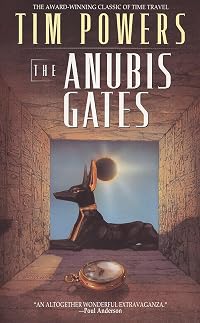
Blaylock is funny. He gives many of his characters endearing quirks. Captain Powers, no doubt named for Tim Powers who, in his The Anubis Gates, had a ship named the Blaylock, has a fondness for objects which double as flasks, including his peg leg. His friend William Keeble, a toymaker, despises the Utilitarian notions of philosopher Jeremy Benthem, in marked contrast to evil industrialist Drake, symbol of rapacious practicality. Langdon St. Ives is a brilliant scientist with a rocket ship in his silo. However, he can't get into the show more Royal Academy of Sciences and likes the whimsy of poetry over the stiff requirements of science. Hasbro is his unflappable, practical gentleman's gentleman. Bill Kraken is a lowborn man of a criminal past who now helps the Trismegistus Club, and he is sort of self-educated though his readings in science and philosophy, including a work by William Ashbless which stops a bullet from killing him, has left him with some strange notions. Willis Pule is a hapless, acne plagued villain who harbors constant fantasies of revenge and destruction against those who offend his dignity though none of his plans come out right. Hunchback Ignacio Narbondo is his boss. Shiloh the New Messiah is the putative son of Joanna Southcote, a real religious figure of the late 18th and early 19th century who, when she died, claimed she was pregnant with Shiloh who would rule nations with a rod of iron. (The modern Panacea Society, according to the Fortean Times continues her teachings.)
I liked some of the plot elements of this novel: stealing carps from a public aquarium to use their glands in immortality and reanimation experiments; reanimating the dead and using them as followers for Shiloh, the attempted reanimation of Joanna Southcote's skeleton, feeding the resurrected dead with literal blood pudding, Maxwell's Demon turning out not to be an analogy but a literal being -- in this case the stranded alien homunculus.
The novel is funny in parts -- Blaylock even works in a playful reference to Samuel Delany with St. Ives' thought experiments on time as a corridor viewed through translucent doors: "Time Considered as a Succession of Semi-closed Doors".
I liked the Victorian gentlemanliness that inhibits all the heroes from resorting to lethal violence. Indeed, at novel's end, villains Pule and Drake and Narbondo are still alive. I liked St. Ives stealing the alien spaceship out of a London brothel of Drake's. I liked the mysteriousness and playful macabre imagery of the skeletal Birdlip aloft in his dirigible for years and how, at novel's end, his animated skeleton goes off in the spaceship with the alien homunculus, its desire, and life, and the nature of its decade long aerial quest unrevealed.
I did not like the rather screwball comedy aspects of the novel's end with a giant emerald, the homunculus, an oxygenator for St. Ives' rocket, an entropy-reversing engine all hidden in identical toy boxes built by Keeble. I don't think screwball comedy plots work well on the page, and this one specifically reminded me of the identical suitcases in the movie What's Up, Doc?. show less
I can see, after reading this book, why Tim Powers says many of the funny bits of his books are just notes from his talks with his friend Blaylock.
Blaylock is funny. He gives many of his characters endearing quirks. Captain Powers, no doubt named for Tim Powers who, in his The Anubis Gates, had a ship named the Blaylock, has a fondness for objects which double as flasks, including his peg leg. His friend William Keeble, a toymaker, despises the Utilitarian notions of philosopher Jeremy Benthem, in marked contrast to evil industrialist Drake, symbol of rapacious practicality. Langdon St. Ives is a brilliant scientist with a rocket ship in his silo. However, he can't get into the show more Royal Academy of Sciences and likes the whimsy of poetry over the stiff requirements of science. Hasbro is his unflappable, practical gentleman's gentleman. Bill Kraken is a lowborn man of a criminal past who now helps the Trismegistus Club, and he is sort of self-educated though his readings in science and philosophy, including a work by William Ashbless which stops a bullet from killing him, has left him with some strange notions. Willis Pule is a hapless, acne plagued villain who harbors constant fantasies of revenge and destruction against those who offend his dignity though none of his plans come out right. Hunchback Ignacio Narbondo is his boss. Shiloh the New Messiah is the putative son of Joanna Southcote, a real religious figure of the late 18th and early 19th century who, when she died, claimed she was pregnant with Shiloh who would rule nations with a rod of iron. (The modern Panacea Society, according to the Fortean Times continues her teachings.)
I liked some of the plot elements of this novel: stealing carps from a public aquarium to use their glands in immortality and reanimation experiments; reanimating the dead and using them as followers for Shiloh, the attempted reanimation of Joanna Southcote's skeleton, feeding the resurrected dead with literal blood pudding, Maxwell's Demon turning out not to be an analogy but a literal being -- in this case the stranded alien homunculus.
The novel is funny in parts -- Blaylock even works in a playful reference to Samuel Delany with St. Ives' thought experiments on time as a corridor viewed through translucent doors: "Time Considered as a Succession of Semi-closed Doors".
I liked the Victorian gentlemanliness that inhibits all the heroes from resorting to lethal violence. Indeed, at novel's end, villains Pule and Drake and Narbondo are still alive. I liked St. Ives stealing the alien spaceship out of a London brothel of Drake's. I liked the mysteriousness and playful macabre imagery of the skeletal Birdlip aloft in his dirigible for years and how, at novel's end, his animated skeleton goes off in the spaceship with the alien homunculus, its desire, and life, and the nature of its decade long aerial quest unrevealed.
I did not like the rather screwball comedy aspects of the novel's end with a giant emerald, the homunculus, an oxygenator for St. Ives' rocket, an entropy-reversing engine all hidden in identical toy boxes built by Keeble. I don't think screwball comedy plots work well on the page, and this one specifically reminded me of the identical suitcases in the movie What's Up, Doc?. show less
In 1870s London, a city of contradictions and improbabilities, a dead man pilots an airship, and living men are willing to risk all to steal a carp. Here, a night of bangers and ale at the local pub can result in an eternity at the Blood Pudding with the rest of the reanimated dead.
Professor Langdon St. Ives and his friends try to keep a homunculus, a tiny, alien creature, out of the hands of the evil Ignacio Narbondo, a hunchbacked vivisectionist working for a fraudulent evangelist.
Notable characters include the drunkard Bill Kraken, the toymaker Keeble, and the evil millionaire Drake, who is seeking to steal a perpetual motion machine.
Professor Langdon St. Ives and his friends try to keep a homunculus, a tiny, alien creature, out of the hands of the evil Ignacio Narbondo, a hunchbacked vivisectionist working for a fraudulent evangelist.
Notable characters include the drunkard Bill Kraken, the toymaker Keeble, and the evil millionaire Drake, who is seeking to steal a perpetual motion machine.
I found this book in a search for steampunk novels. The book fits the genre - set in Victorian England with the apparent presence of technology not known in that era. So far, so good. But the story telling failed. The author plays with the reader - some information is given, some is withheld. Fairly normal, but in this case it just comes across as artificial and annoying. After 70 pages I gave up. I think there may have been a good book here, but sadly it has been murdered by the author.
There's an airship that's been travelling the skies for many a year in a Flying Dutchman kind of way. A skeleton tied to the wheel seems to be the only crew. It's circumnavigations have seemed to be getting lower and looks like it's due to land in the very near future. Various people want to get hold of some of its rumoured contents and will do just about anything to get their hands on what they believe is there. Millionaire, Kelso Drake, is interested as is Narbondo, the mad hunchback who re-animates the dead with his assistant Willis Pule who also has plans of his own. Then there's the Trismegistus Club, a disparate group of scientists and philosophers of which Langdon St Ives is one such member. He's currently building a rocket-ship show more and wants to learn the secrets of the dirigible's engine. So who can thwart who's plans and what is really on board the airship? Some even say there's a little man inside a box that's behind it all.
This is supposedly a fun, early steampunk romp but I had real trouble ploughing through the first half of this book. Cardboard cut-out characters and confusing plot (is there one?) didn't endear me from the outset. This is a shame as I had high hopes of this winner of the PKD memorial award and with the author being generally regarded as a forerunner of the genre I came away with a big case of the let-downs. It does pick up somewhat in the second half of the book and builds to an action-packed finale but by then I really couldn't care less who survived, who didn't, who came away with the prize and what that prize actually was. It's probably not quite as bad as this review suggests and could actually be a case of wrong book/wrong time as there are some elements that I would usually enjoy and there are moments of humour which did have some appeal but I guess this is one series that I don't feel inclined to continue. show less
This is supposedly a fun, early steampunk romp but I had real trouble ploughing through the first half of this book. Cardboard cut-out characters and confusing plot (is there one?) didn't endear me from the outset. This is a shame as I had high hopes of this winner of the PKD memorial award and with the author being generally regarded as a forerunner of the genre I came away with a big case of the let-downs. It does pick up somewhat in the second half of the book and builds to an action-packed finale but by then I really couldn't care less who survived, who didn't, who came away with the prize and what that prize actually was. It's probably not quite as bad as this review suggests and could actually be a case of wrong book/wrong time as there are some elements that I would usually enjoy and there are moments of humour which did have some appeal but I guess this is one series that I don't feel inclined to continue. show less
Members
- Recently Added By
Lists

Gaslamp Fantasy
87 works; 15 members

Readers Guide to Steampunk
65 works; 1 member

Read These Too
458 works; 9 members

Jones & Newman: Best Horror Books Further Recommended Reading
577 works; 4 members
Author Information

68+ Works 6,068 Members
Some Editions
Awards and Honors
Awards
Series


Work Relationships
Is contained in
Has as a commentary on the text
Common Knowledge
- Canonical title
- Homunculus
- Original publication date
- 1986
- People/Characters
- Langdon St. Ives; Bill Kraken; Jack Owlesby; Captain Powers; Ignacio Narbondo; Kelso Drake (show all 8); William Keeble; Theophilus Goodall
- First words
- Above the St. Georges Channel clouds thick as shorn wool arched like a bent bow from Cardigan Bay round Strumble head and Milford Haven, and hid the stars from Swansea and Cardiff.
- Last words
- (Click to show. Warning: May contain spoilers.)And it seemed as if the strange craft had never been more than a ghostly will o' the wisp, a bit of sleepy enchantment woven out of nothing, that whirled and faded now across the back of his closed eyes until he seemed to be sailing with it above the clouded landscape of a dream.
- Original language
- English
- Canonical DDC/MDS
- 813.087627
Classifications
- Genres
- Fiction and Literature, Science Fiction, Fantasy
- DDC/MDS
- 813.087627 — Literature & rhetoric American literature in English American fiction in English By type Genre fiction Adventure fiction Speculative fiction Science fiction Steampunk
- LCC
- PS3552 .L3966 — Language and Literature American literature American literature Individual authors 1961-
- BISAC
Statistics
- Members
- 498
- Popularity
- 60,924
- Reviews
- 18
- Rating
- (3.62)
- Languages
- 6 — English, French, German, Italian, Spanish, Turkish
- Media
- Paper, Audiobook, Ebook
- ISBNs
- 14
- ASINs
- 7