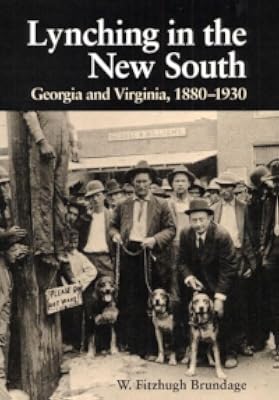
Lynching in the New South: Georgia and Virginia, 1880-1930
by W. Fitzhugh Brundage
Blacks in the New World (1993)
On This Page
Description
Lynching was a national crime. But it obsessed the South. W. Fitzhugh Brundage's multidisciplinary approach to the complex nature of lynching delves into the such extrajudicial murders in two states: Virginia, the southern state with the fewest lynchings; and Georgia, where 460 lynchings made the state a measure of race relations in the Deep South. Brundage's analysis addresses three central questions: How can we explain variations in lynching over regions and time periods? To what extent show more was lynching a social ritual that affirmed traditional white values and white supremacy? And, what were the causes of the decline of lynching at the end of the 1920s?A groundbreaking study, Lynching in the New South is a classic portrait of the tradition of violence that poisoned American life. show lessTags
Recommendations















Members
- Recently Added By
Author Information

13+ Works 413 Members
W. Fitzhugh Brundage is William B. Umstead Professor of History at the University of North Carolina at Chapel Hill. He received a Guggenheim Fellowship for his work on torture in American history and has written extensively on racial inequality and violence, from segregation to lynching.
Awards and Honors
Awards
Series

Common Knowledge
- Canonical title
- Lynching in the New South: Georgia and Virginia, 1880-1930
Classifications
- Genres
- Nonfiction, Politics and Government, History
- DDC/MDS
- 364.1 — Society, government, & culture Social problems and social services Crime Criminal offenses
- LCC
- HV6465 .G4 .B78 — Social sciences Social pathology. Social and public welfare. Criminology Social pathology. Social and public welfare. Criminology Crimes and offenses
- BISAC
Statistics
- Members
- 49
- Popularity
- 617,810
- Languages
- English
- Media
- Paper, Ebook
- ISBNs
- 3