On This Page
Description
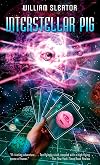
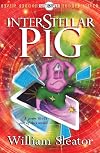
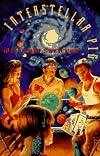
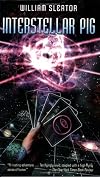
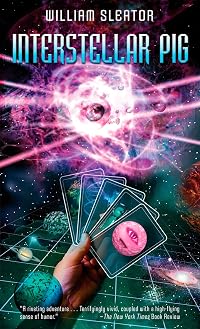
Barney's boring seaside vacation suddenly becomes more interesting when the cottage next door is occupied by three exotic neighbors who are addicted to a game they call "Interstellar Pig."Tags
Recommendations
























Member Recommendations
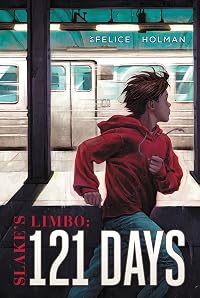
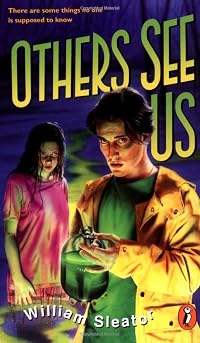
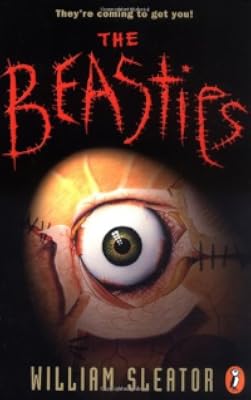
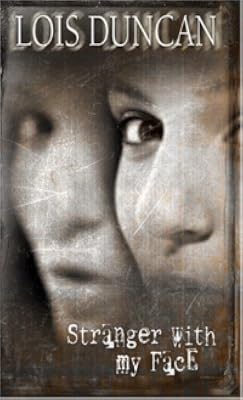
atimco These books share a wacky sense of fantasy set in the real world. Quirky and fun!
Member Reviews
I just had a horrible flashback to highschool. This was a class read my English teacher made us read. I can not believe all these years later I still remember this horrific book. Some memories are better left covered over with a dark blackness never to be revealed. This is one of them but unfortunately, I wasn't so lucky.
It was horrible then and I don't care what anyone says I'm not about to 'give it a try' now. Some books don't deserve a second chance. This one doesn't deserve a first chance. There are better ways to spend your time than this. You could, for example, scrub the shower or pet an angry porcupine. The most this book deserves is a moment of silence for the book that was murdered on its behalf.
It was horrible then and I don't care what anyone says I'm not about to 'give it a try' now. Some books don't deserve a second chance. This one doesn't deserve a first chance. There are better ways to spend your time than this. You could, for example, scrub the shower or pet an angry porcupine. The most this book deserves is a moment of silence for the book that was murdered on its behalf.
It takes a special book to stick in one's memory for over thirty years. There are some I remember because I read them over and over, but then there are those that I remember because of the sheer ideaness and atmosphere imprinted on my young brain (there's also the category of Awful Things that Happened to Animals genre, which caused a less happy kind of imprinting). I must have read Interstellar Pig shortly after release in 1984, and it has remained one of those books that vividly recall in entire sections now and again. Not the title, of course; but strangely enough, put 'young adult/aliens/pig' into Google, and it comes up with this book in a flash, so it was easy for me to track it down for a wander down memory lane.
It is with show more pleasure that I realized it was still an interesting, engaging read.
Barney is sixteen, and trapped with his parents at a two-week rental college on the coast coast, a beachfront location that does absolutely nothing for his sunburn-prone skin but seems to serve a purpose for his status-hunting parents, but does give him a chance to catch up on his science-fiction reading. The caretaker informs them that the sea captain who built the cottage kept his brother locked in the front room for twenty years. Barney is hoping for more information, perhaps a ghost story or two, when the caretaker has to abandon story-telling to settle in the next-door neighbors who have an obsessive interest in Barney's cottage. Barney's intrigued by their cosmopolitan personalities and by the game they continually reference.
"But they didn't seem to appreciate my wit. Barely moving their heads, their eyes met; three pairs of eyes meeting equally somehow, as though there were only two of them. And I thought of the jagged pits and troughs in the windowsills of my room, and I felt uneasy for the first time. A curtain flapped gently at the window. The others in the room remained as still as reptiles in the sun."
To say much more would enter spoiler territory, as the plot moves quickly and has a couple of interesting twists with an earlier scene providing nice foreshadowing for the climactic event. Slater builds suspense well, and I think that the atmosphere of fear he created might have helped stick this book in my memory. Characterization is perhaps a weaker point, but its more than adequate for the story. I'd say for my 2017 re-read, although Barney's age is supposed to be sixteen, he feels more like twelve or thirteen in modern terms.
The writing is solid, feeling more sophisticated than most of the young adult I've read in recent years. Like many teens, Barney's descriptions of his parents are ruthlessly honest, but there's also a measure of acceptance there, and eventually fondness, that elevates it above the simple sarcastic dismissal. The three people next door have traveled a lot and "seemed exotic, as though English was not their native language." It is cleverly conveyed through their dialogue, though Barney never remarks on it but that once. "Ugh! You let the milk go sour again, Manny,' Zena groaned. 'Can't you learn to recollect the date?'"
At 197 pages, it goes by too quickly. A fun little book with a great finale, and a final flourish of well-earned humor. You just never know who will win the great game.
Four and a half stars. show less
It is with show more pleasure that I realized it was still an interesting, engaging read.
Barney is sixteen, and trapped with his parents at a two-week rental college on the coast coast, a beachfront location that does absolutely nothing for his sunburn-prone skin but seems to serve a purpose for his status-hunting parents, but does give him a chance to catch up on his science-fiction reading. The caretaker informs them that the sea captain who built the cottage kept his brother locked in the front room for twenty years. Barney is hoping for more information, perhaps a ghost story or two, when the caretaker has to abandon story-telling to settle in the next-door neighbors who have an obsessive interest in Barney's cottage. Barney's intrigued by their cosmopolitan personalities and by the game they continually reference.
"But they didn't seem to appreciate my wit. Barely moving their heads, their eyes met; three pairs of eyes meeting equally somehow, as though there were only two of them. And I thought of the jagged pits and troughs in the windowsills of my room, and I felt uneasy for the first time. A curtain flapped gently at the window. The others in the room remained as still as reptiles in the sun."
To say much more would enter spoiler territory, as the plot moves quickly and has a couple of interesting twists with an earlier scene providing nice foreshadowing for the climactic event. Slater builds suspense well, and I think that the atmosphere of fear he created might have helped stick this book in my memory. Characterization is perhaps a weaker point, but its more than adequate for the story. I'd say for my 2017 re-read, although Barney's age is supposed to be sixteen, he feels more like twelve or thirteen in modern terms.
The writing is solid, feeling more sophisticated than most of the young adult I've read in recent years. Like many teens, Barney's descriptions of his parents are ruthlessly honest, but there's also a measure of acceptance there, and eventually fondness, that elevates it above the simple sarcastic dismissal. The three people next door have traveled a lot and "seemed exotic, as though English was not their native language." It is cleverly conveyed through their dialogue, though Barney never remarks on it but that once. "Ugh! You let the milk go sour again, Manny,' Zena groaned. 'Can't you learn to recollect the date?'"
At 197 pages, it goes by too quickly. A fun little book with a great finale, and a final flourish of well-earned humor. You just never know who will win the great game.
Four and a half stars. show less
The beach house Barney’s parents have rented for two weeks is too far from town for him. There’s no one for a sixteen-year-old to hang out with. He’s been staving off boredom by re-reading his old science fiction books, but then the landlord stops by and tells them that people used to say that the house was haunted, but before he finishes his story he rushes off to greet the new tenants of the house next door – tenants that were extremely disappointed when they learned that the house Barney’s staying in was already rented.
They make quite a favorable impression on his parents, who think that Zena, Manny, and Joe, are older and more sophisticated then Barney does; he thinks they may be college students. They’re all in show more excellent physical shape, but all they seem to want to do is play a board game called Interstellar Pig. It’s a science fiction role-laying board game. Each player is dealt a card with an alien character, you might be an arachnoid nymph from the planet Vavoosh or a species of carnivorous lichen from Mbridlengile, or an octopus-like gas bag, or a water-breathing gill man from Thrilb. Once you have your character you travel from planet to planet until the timer signals the end of the game, collecting cards for laser guns or for hyperspace drive, or a card to boost or lower your intelligence, or to force you to land on a poisonous planet. But the most important card is called the Piggy, and if you don’t have it in your hand at the end of the game, your planet is sucked out of existence and your species exterminated. It’s a cool game, with a very realistic board, by Barney doesn’t understand why his new neighbors are so obsessed with it, that is, until they all take a day trip to a nearby island and he finds a small box containing a small pink object. On it is carved a smiling face with one eye. “The vertical iris, inlaid in bright silver, gave the eye a piercing alertness. Crude as it was, the thing seemed alive. And it was the brutal wrongness of it, the mouth smiling with such placid idiocy, noseless, under the solitary eye, that made the face so repellent.”
Interstellar pig is a deliciously creepy read, like the chill you might get from an ice cube drawn down your sunburned back. show less
They make quite a favorable impression on his parents, who think that Zena, Manny, and Joe, are older and more sophisticated then Barney does; he thinks they may be college students. They’re all in show more excellent physical shape, but all they seem to want to do is play a board game called Interstellar Pig. It’s a science fiction role-laying board game. Each player is dealt a card with an alien character, you might be an arachnoid nymph from the planet Vavoosh or a species of carnivorous lichen from Mbridlengile, or an octopus-like gas bag, or a water-breathing gill man from Thrilb. Once you have your character you travel from planet to planet until the timer signals the end of the game, collecting cards for laser guns or for hyperspace drive, or a card to boost or lower your intelligence, or to force you to land on a poisonous planet. But the most important card is called the Piggy, and if you don’t have it in your hand at the end of the game, your planet is sucked out of existence and your species exterminated. It’s a cool game, with a very realistic board, by Barney doesn’t understand why his new neighbors are so obsessed with it, that is, until they all take a day trip to a nearby island and he finds a small box containing a small pink object. On it is carved a smiling face with one eye. “The vertical iris, inlaid in bright silver, gave the eye a piercing alertness. Crude as it was, the thing seemed alive. And it was the brutal wrongness of it, the mouth smiling with such placid idiocy, noseless, under the solitary eye, that made the face so repellent.”
Interstellar pig is a deliciously creepy read, like the chill you might get from an ice cube drawn down your sunburned back. show less
I probably wouldn't have read Interstellar Pig on my own, but it's a childhood favorite of a friend and he recommended it. NOW I know why that friend is the way he is! Wacky, imaginative, and wryly humorous, this book is one of the more memorable YA titles I've read. If you're like me, you have never meditated on the possible connections of pigs, interstellar travel, and aliens. But you're about to.
While enduring a boring vacation at the beach, sixteen-year-old Barney meets some attractive strangers who have an odd fascination with his parents' rented beach house and the tragic legend of the lunatic who died there. They are also obsessed with a board game which they soon teach Barney to play. But when the board game becomes terrifyingly show more real, Barney must use his sub-par human intelligence against his ruthless opponents in order to win the game. Or — must he?
My description makes the book sound like a silly bit of mindless fun, but actually it raises some questions about the nature of reality, deception, manipulation, sexual attraction, and political strategy. And it does all this subtly, without the slightest attempt at being pretentious or profound. Under all the goofiness there is actually some real tension beyond just the exciting events of the plot. A young reader could read the book many times and only start to see the other layers later. But it's those layers of depth would keep that reader coming back to the book. As a child, I thought of books like this as having good bones to them, something real under the characters.
The only quibble I had with the plot was that the Pig's motivation is not entirely convincing. And Barney is disconcertingly perceptive of his parents' insecurities, though I suppose he is sixteen and old enough to really start noticing. It just seemed a little overdone to me. When Barney is looking at his mom's fleshy face and body, her pathetic attempts to get a tan and look attractive, I just cringed. Perhaps that was Sleator's intent.
Reading this book was doubly fun because without knowing anything about the book's beach-vacation setting, I read it during my beach vacation this year. It's a quick read, and I enjoyed this little trip through an alternate reality. I would recommend it to fans of Douglas Adams and Terry Pratchett looking for a light YA read that nevertheless carries some philosophical weight — but only if you want to pick it up. show less
While enduring a boring vacation at the beach, sixteen-year-old Barney meets some attractive strangers who have an odd fascination with his parents' rented beach house and the tragic legend of the lunatic who died there. They are also obsessed with a board game which they soon teach Barney to play. But when the board game becomes terrifyingly show more real, Barney must use his sub-par human intelligence against his ruthless opponents in order to win the game. Or — must he?
My description makes the book sound like a silly bit of mindless fun, but actually it raises some questions about the nature of reality, deception, manipulation, sexual attraction, and political strategy. And it does all this subtly, without the slightest attempt at being pretentious or profound. Under all the goofiness there is actually some real tension beyond just the exciting events of the plot. A young reader could read the book many times and only start to see the other layers later. But it's those layers of depth would keep that reader coming back to the book. As a child, I thought of books like this as having good bones to them, something real under the characters.
The only quibble I had with the plot was that the Pig's motivation is not entirely convincing. And Barney is disconcertingly perceptive of his parents' insecurities, though I suppose he is sixteen and old enough to really start noticing. It just seemed a little overdone to me. When Barney is looking at his mom's fleshy face and body, her pathetic attempts to get a tan and look attractive, I just cringed. Perhaps that was Sleator's intent.
Reading this book was doubly fun because without knowing anything about the book's beach-vacation setting, I read it during my beach vacation this year. It's a quick read, and I enjoyed this little trip through an alternate reality. I would recommend it to fans of Douglas Adams and Terry Pratchett looking for a light YA read that nevertheless carries some philosophical weight — but only if you want to pick it up. show less
Oops, forgot to review as I read it the day before packing for a trip. I remember it fairly well, and I do like and recommend it. Among Sleator's best. But why? Hmm... because it's truly exciting, in that it's mostly plot-driven and despite the fact that I don't particularly care for straight-up adventures I had a hard time putting this down? Because I admired Barney's persistent curiosity, the fact that he'll take risks just because he wonders what's going on? The interesting way the parents were worked into the story? The creativity & originality of the SF element? The fact that a week, many books, and a vacation later I still remember it pretty well?
Too bad I don't remember the exact ending....
I bet the sequel isn't nearly as good, show more but in any case I probably won't be able to find a copy.,.. this was hard enough to find (in a number of different libraries). show less
Too bad I don't remember the exact ending....
I bet the sequel isn't nearly as good, show more but in any case I probably won't be able to find a copy.,.. this was hard enough to find (in a number of different libraries). show less
One of my children has asked me to read all of William Sleator's books. So far they are great. Interstellar Pig is innovative and entertaining story-telling, and it reminds me of what books for young people could be like, before "YA" became a category.
I have a feeling that all my ratings of Sleator's books are going to be 5 stars, both because my kids love them, and because I'm rating them in relation to other middle-school popular reads being published recently, such as the execrable books of the GONE series, which in comparison make William Sleator books sound like William Shakespeare.
I have a feeling that all my ratings of Sleator's books are going to be 5 stars, both because my kids love them, and because I'm rating them in relation to other middle-school popular reads being published recently, such as the execrable books of the GONE series, which in comparison make William Sleator books sound like William Shakespeare.
A great concept, and after a slow beginning I was absolutely hooked. The characters were a little flat and dull, but after I finished it, I was thinking about it for hours... The ending questions violence, IQ, survival instincts... and whether or not earth is going to blow up in the next thirty minutes.
Members
- Recently Added By
Lists

Stories Featuring Games or Contests
28 works; 9 members

al.vick-wishlist-YA
127 works; 3 members
Talk Discussions
Past Discussions
Found: Sci-fi fiction book about alien tournament looking for a stone in Name that Book (April 2022)
Author Information

34+ Works 6,408 Members
William Sleator was born on February 13, 1945 in Harve de Grace, Maryland. In 1967, he received a BA in English from Harvard University. He mainly wrote science fiction novels for young adults. His first novel, Blackbriar, was published in 1972. He wrote more than 30 books including House of Stairs, Interstellar Pig, The Green Futures of Tycho, show more Strange Attractors, The Spirit House, The Boy Who Couldn't Die, and The Phantom Limb. His picture book, The Angry Moon, won a Caldecott Award in 1971. He died on August 3, 2011 at the age of 66. (Bowker Author Biography) show less
Awards and Honors
Awards
Distinctions
Notable Lists
Series

Work Relationships
Has as a commentary on the text
Common Knowledge
- Canonical title
- Interstellar Pig
- Original publication date
- 1984
- People/Characters
- Barney; Zena; Manny; Joe; Zulma; Moyna (show all 8); Jrlb; Ted Martin
- Dedication
- This book is dedicated to my parents, Esther and Bill Sleator. Though a doctor and a scientist, with similar expectations for me, they bore my decision to make a living as a writer with extraordinary fortitude--and have even,... (show all) at times, encouraged me.
- First words
- I'm telling you, there's more history to this house than any other place on Indian Neck, and that's the truth.
- Last words
- (Click to show. Warning: May contain spoilers.)The lichen were confused.
Classifications
- Genres
- Fiction and Literature, Tween, Teen, Science Fiction, Young Adult
- DDC/MDS
- 813.54 — Literature & rhetoric American literature in English American fiction in English 1900-1999 1945-1999
- LCC
- PZ7 .S6313 .I — Language and Literature Fiction and juvenile belles lettres Fiction and juvenile belles lettres Juvenile belles lettres
- BISAC
Statistics
- Members
- 773
- Popularity
- 36,163
- Reviews
- 25
- Rating
- (3.76)
- Languages
- Danish, English, Finnish, Italian
- Media
- Paper
- ISBNs
- 19
- ASINs
- 6