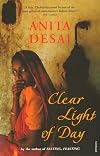
Clear Light of Day
by Anita Desai
On This Page
Description
Bimla is a dissatisfied but ambitious teacher at a women's college who lives in her childhood home, where she cares for her mentally challenged brother, Baba. Tara is her younger, unambitious sister, married and with children of her own. Raja is their popular, brilliant, and successful brother. When Tara returns for a visit with Bimla and Baba, old memories and tensions resurface, blending into a domestic drama that leads to beautiful and profound moments of self-understanding.Tags
Recommendations


























Member Reviews
Desai eloquently describes a dysfunctional Hindu Indian family, and what becomes of the children as they grow up.
Raised solidly middle class, in their own home, their parents spend all of their free time at their club playing bridge. Their mother is diabetic and occasionally has bouts of illness, keeping her at home. The children are essentially ignored. When the youngest's disabilities begin to be obvious, they call for Aunt Mira to come assist, as the elderly nurse cannot do it all.
Mira brings fun, predicatability, and love to the children's lives. Each in his own way appreciates her: Bimla, the eldest, learns caregiving from her, and goes to college to be a teacher. She takes over her role as family carer--and much of the book is show more through Bim's eyes. Raja, the elder son, spends much time with the Muslim neighbors, learning Urdu and poetry. Aunt Mira permits this, though his own father is not supportive. Tara, the younger sister, loves Mira with all her heart, and as a newly married woman is sad but overwhelmed with her own life in Ceylon as Mira's illness takes her life. Baba, the younger disabled son, can only communicate with his carers, and Bim takes that role.
As much as the 4 children jostle for heir parents' attention and to meet their own dreams, this book is also about love, and how the siblings struggle to honor their love for each other and that for their own families and responsibilities. show less
Raised solidly middle class, in their own home, their parents spend all of their free time at their club playing bridge. Their mother is diabetic and occasionally has bouts of illness, keeping her at home. The children are essentially ignored. When the youngest's disabilities begin to be obvious, they call for Aunt Mira to come assist, as the elderly nurse cannot do it all.
Mira brings fun, predicatability, and love to the children's lives. Each in his own way appreciates her: Bimla, the eldest, learns caregiving from her, and goes to college to be a teacher. She takes over her role as family carer--and much of the book is show more through Bim's eyes. Raja, the elder son, spends much time with the Muslim neighbors, learning Urdu and poetry. Aunt Mira permits this, though his own father is not supportive. Tara, the younger sister, loves Mira with all her heart, and as a newly married woman is sad but overwhelmed with her own life in Ceylon as Mira's illness takes her life. Baba, the younger disabled son, can only communicate with his carers, and Bim takes that role.
As much as the 4 children jostle for heir parents' attention and to meet their own dreams, this book is also about love, and how the siblings struggle to honor their love for each other and that for their own families and responsibilities. show less
This is my final book from the 1980 Booker shortlist and possibly the one that surprised me most. Its strengths are quiet ones - at heart it is a family story in which very little happens - indeed the Hindu family at its heart is part of the Old Delhi owning class, for whom work was not always a necessity. The book deals with siblings orphaned and parted at the time of the partition of India, and specifically the relationship between Bim, who has remained at home partly to look after a younger brother Baba who has learning difficulties, and Tara, who married a diplomat when very young and spends most of her life abroad.
In the first part of the story we meet Tara as she returns to her decaying childhood home with her husband, who would show more rather be with his own family in new Delhi. This section is slow moving but necessary to establish the situation, and the tensions within the divided family gradually appear. Bim is educated and works as a teacher, and is contrasted with the younger sister Tara, who was an apathetic dreamer as a child but has moved on to better things unlike her more ambitious sister. Much of the story concerns the elder brother Raja, who has moved away to Hyderabad and married the daughter of their Muslim landlord and former neighbour, creating resentment in Bim who is left looking after the house and what is left of the family. The middle two parts are set further back during their shared childhood, and the moving final section (which for me moved it into the five star bracket) brings them back to the present with a kind of incomplete resolution.
Music is a recurring theme - Baba spends much of his time listening to old records on a wind-up gramophone, the doctor who failed in his courtship of Bim is a violinist who plays western classical music with a mother who sings Tagore's Bengali songs, and a neighbour is an aspiring singer of Indian classical music. Poetry is another theme - Raja aspired to write Urdu poetry as a teenager and shared his interest in Eliot, Byron and Tennyson with Bim - their works are often quoted.
Desai's writing is often very powerful - she often returns to themes mentioned in passing, for example a cow that drowned by falling into a well, and she draws you into the story mesmerically.
A very enjoyable book. show less
In the first part of the story we meet Tara as she returns to her decaying childhood home with her husband, who would show more rather be with his own family in new Delhi. This section is slow moving but necessary to establish the situation, and the tensions within the divided family gradually appear. Bim is educated and works as a teacher, and is contrasted with the younger sister Tara, who was an apathetic dreamer as a child but has moved on to better things unlike her more ambitious sister. Much of the story concerns the elder brother Raja, who has moved away to Hyderabad and married the daughter of their Muslim landlord and former neighbour, creating resentment in Bim who is left looking after the house and what is left of the family. The middle two parts are set further back during their shared childhood, and the moving final section (which for me moved it into the five star bracket) brings them back to the present with a kind of incomplete resolution.
Music is a recurring theme - Baba spends much of his time listening to old records on a wind-up gramophone, the doctor who failed in his courtship of Bim is a violinist who plays western classical music with a mother who sings Tagore's Bengali songs, and a neighbour is an aspiring singer of Indian classical music. Poetry is another theme - Raja aspired to write Urdu poetry as a teenager and shared his interest in Eliot, Byron and Tennyson with Bim - their works are often quoted.
Desai's writing is often very powerful - she often returns to themes mentioned in passing, for example a cow that drowned by falling into a well, and she draws you into the story mesmerically.
A very enjoyable book. show less
This beautifully written, perceptive, and compassionate novel has been on my shelves for nearly 35 years, and I am very happy that the Reading Globally theme read on the Indian subcontinent led me to take it off the shelf and read it. It is the story of a middle class family in Old Delhi and their interrelationships, focusing on three points in time. It starts when the younger daughter, Tara, who is married to Bakul, a diplomat, returns to her family home, then switches to the children's adolescence at the time of Indian independence and the partition with Pakistan, then goes back to their earlier childhood, and finally returns to the time of Tara's visit, presumably in the 70s.
In addition to Tara, the family consists of older son Raja, show more who is attracted to the Urdu literary world of their neighbor and landlord, a Muslim; older daughter Bim, who is interested in history, becomes a school teacher, and ends up taking care of the house and the younger son, Baba, who is what would have been called mentally retarded at the time this book was written. Various other characters enliven the book, including their parents, who are largely absent, spending most of their time at the club; an elderly aunt, Mira, who comes to live with the family; the neighbor/landlord family, the Hyder Alis, including their daughter Benazir who Raja ends up marrying after they flee to Hyderabad during the partition troubles; and their other neighbors, the big Misra family.
The beauty of this novel lies mostly in Desai's ability, similar to Chekhov's, to portray each character and his or her interests, strengths, flaws, gripes and grudges about others, and more so the reader can understand and sympathize with them and feel for their problems with the others even while feeling for the others as well. Among the issue they face are feelings of responsibility or irresponsibility, including caring for others, staying put versus moving, what one does with an education, escape and the inability to escape, and old feelings that harden with time. The issues of colonialism, independence, and post-colonialism are in the background, felt but only rarely directly expressed.
Some examples of Desai's writing.
"Oh, Bim," Tara said helplessly. Whenever she saw a tangle, an emotional tangle of this kind, rise up before her, she wanted only to turn and flee into that neat, sanitary, disinfected land in which she lived with Bakul, with its set of rules and regulations, its neatness and orderliness. And seemliness too --seemliness." p.28
"No one," said Bim, slowly and precisely, "comprehends better than children do. No one feels the atmosphere more keenly -- or catches all the nuances, all the insinuations in the air -- or notes those details that escape elders because their senses have atrophied, or calcified. . . .
"Or we lay on our backs at night, and stared up at the stars," Bim went on, more easily now. "Thinking. Wondering. Oh, we thought and we felt all right. Yes, Bakul, in our family at least we had the time. We felt everything in the air -- Mira-masi's insignificance and her need to apologize for it, mother's illness and father's preoccupation -- only we did nothing about it. Nothing." p. 149
The end of the novel reaches the sort of inconclusive resolution that it is so typical of real life. show less
In addition to Tara, the family consists of older son Raja, show more who is attracted to the Urdu literary world of their neighbor and landlord, a Muslim; older daughter Bim, who is interested in history, becomes a school teacher, and ends up taking care of the house and the younger son, Baba, who is what would have been called mentally retarded at the time this book was written. Various other characters enliven the book, including their parents, who are largely absent, spending most of their time at the club; an elderly aunt, Mira, who comes to live with the family; the neighbor/landlord family, the Hyder Alis, including their daughter Benazir who Raja ends up marrying after they flee to Hyderabad during the partition troubles; and their other neighbors, the big Misra family.
The beauty of this novel lies mostly in Desai's ability, similar to Chekhov's, to portray each character and his or her interests, strengths, flaws, gripes and grudges about others, and more so the reader can understand and sympathize with them and feel for their problems with the others even while feeling for the others as well. Among the issue they face are feelings of responsibility or irresponsibility, including caring for others, staying put versus moving, what one does with an education, escape and the inability to escape, and old feelings that harden with time. The issues of colonialism, independence, and post-colonialism are in the background, felt but only rarely directly expressed.
Some examples of Desai's writing.
"Oh, Bim," Tara said helplessly. Whenever she saw a tangle, an emotional tangle of this kind, rise up before her, she wanted only to turn and flee into that neat, sanitary, disinfected land in which she lived with Bakul, with its set of rules and regulations, its neatness and orderliness. And seemliness too --seemliness." p.28
"No one," said Bim, slowly and precisely, "comprehends better than children do. No one feels the atmosphere more keenly -- or catches all the nuances, all the insinuations in the air -- or notes those details that escape elders because their senses have atrophied, or calcified. . . .
"Or we lay on our backs at night, and stared up at the stars," Bim went on, more easily now. "Thinking. Wondering. Oh, we thought and we felt all right. Yes, Bakul, in our family at least we had the time. We felt everything in the air -- Mira-masi's insignificance and her need to apologize for it, mother's illness and father's preoccupation -- only we did nothing about it. Nothing." p. 149
The end of the novel reaches the sort of inconclusive resolution that it is so typical of real life. show less
International boundaries don't keep out dysfunctional and estranged families. Not that that's news but we do have the fantasy that it must be better somewhere other than here. Desai shows us that's not true. Even in India where family seems much more central than here families can grow apart. What might have worked in an earlier age does not seem to prevent things from spinning out of control. With India there are even more questions. How does their history of control by Britain, their history of Hindu and Muslim clashing, and their overwhelming heat add to the picture. Are they causal or just coincidental? They are all over every aspect of this story and ever present but Desai does not seem to see a connection. Or did I miss something? show more What Desai never mentions is the caste system but the servants are ever present and definitely looked down on upon from what is apparently a middle class situation. The central character is the sister who in her younger days seemed like the one most likely to take off on her own but now is the one who never leaves. Her brother and sister have fled in different directions but she stays behind to care for the developmentally challenged younger brother. She resents her older brother leaving her behind and her sister who opted, as expected, for her dream of getting married and having kids. Can they all get it together and bury the hatchets. That's the entire story. If you enjoy reading about that this book will show how that can happen even in another culture. Learning about the Indian culture was the part that made this interesting. show less
This Indian novel is a postcolonial tale (but then, aren't they all?); I liked it. It's about a woman who returns home to the brothers and sister she left for a husband so long ago; there's a sad, lyric quality to her homecoming-- it's both bad and good that she left, but things wouldn't have been any better if she'd stayed. It starts in the "present", then there's a backwards jump, then there's another backwards jump, then it goes back to the present. The nested structure worked well, each time putting events into a new light. The final section in the present was a little limp, though; it seemed to be there because a "wrap up" was obligatory more than that Desai had something to say at that point. Hm, that's perhaps a little unkind, show more but I still didn't feel like it added a lot to the novel. show less
I have to admit from the outset that I love Desai's sentence structure. It is quite possible that she could write a novel of complete gibberish, and that, because I am so in love with the way she forms her phrases, I would still like it.
That said, I found this novel to be the epitome of post-colonial literature. One cannot help but wonder about what exactly the characters have lost in English colonisation. At the end, I was left with littie more than hope, something I had not experienced at the end of any other novel. Or, anyway, at the end of any novel I had enjoyed.
Desai's structure is deep and murky, but the mud seems to be something desireable, something worthwhile. From beginning to end, the voice of the narrator, the ambience-- show more the whole damn thing-- it reached out, pulled me in, slowed me down, and made me think and feel things I never had before.
Don't be put off by the thinness of this novel-- there is much thought-provoking literature between the covers. show less
That said, I found this novel to be the epitome of post-colonial literature. One cannot help but wonder about what exactly the characters have lost in English colonisation. At the end, I was left with littie more than hope, something I had not experienced at the end of any other novel. Or, anyway, at the end of any novel I had enjoyed.
Desai's structure is deep and murky, but the mud seems to be something desireable, something worthwhile. From beginning to end, the voice of the narrator, the ambience-- show more the whole damn thing-- it reached out, pulled me in, slowed me down, and made me think and feel things I never had before.
Don't be put off by the thinness of this novel-- there is much thought-provoking literature between the covers. show less
Tara’s visit to her childhood home in Old Delhi triggers memories of the past for both Tara and her older sister, Bim. The sisters’ different personalities different life choices have set them at odds, but by the end of Tara’s visit they will work through their painful memories to find forgiveness, acceptance, and peace.
This novel transcends the genre of domestic fiction in ways that remind me of authors like Jane Austen. The family home in Old Delhi and the family circle are central to the plot. The action travels no farther than next door, except in memory. The social milieu is confined to the small Old Delhi neighborhood. However, the neighborhood was irrevocably changed with India’s partition in 1947, and the effects of show more change reverberate in the novel’s present. show less
This novel transcends the genre of domestic fiction in ways that remind me of authors like Jane Austen. The family home in Old Delhi and the family circle are central to the plot. The action travels no farther than next door, except in memory. The social milieu is confined to the small Old Delhi neighborhood. However, the neighborhood was irrevocably changed with India’s partition in 1947, and the effects of show more change reverberate in the novel’s present. show less
Members
- Recently Added By
Lists

Female Author
1,235 works; 65 members

Booker Prize
491 works; 62 members

500 Great Books by Women
507 works; 60 members

Big Jubilee List
70 works; 3 members

Man Booker Prize Longlist 1980
7 works; 2 members

Booker Prize Shortlist: Titles Not Yet Read
161 works; 4 members

University literature
145 works; 5 members

Unmarried women
66 works; 6 members

My TBR
371 works; 3 members

Mustich's 1000 Books to Read Before You Die: A Life Changing List
1,001 works; 19 members

Books You Read For University
184 works; 3 members

1980 great books
63 works; 1 member
Author Information

39+ Works 4,743 Members
Anita Desai was born in Mussoorie, India, in 1937 of Indian and German parentage. Her works focus on relationships and family life in India, particularly the problems of women in Indian society. She has written for both adults and children, winning the Winifred Holtby Prize from the Royal Society of Literature for Fire on the Mountain (1977) and show more the Guardian Prize for Children's Fiction for her novel The Village by the Sea (1982). Among her numerous other honors is a Literary Lion Award from the New York Public Library in 1993. Desai came to America in 1987. She has taught at Mount Holyoke College, Baruch College, and Smithe College. Desai is currently Emeritus John E. Burchard Professor of Humanities at MIT. (Bowker Author Biography) Anita Desai was born & educated in India. Among her many published works are "Fasting, Feasting" (a finalist for the 1999 Booker Prize), "Baumgartner's Bombay," "In Custody," "Games at Twilight," & "Diamond Dust." Her awards & honors include the Alberto Moravia Award, the National Academy of Letters Award, & the Winifred Holtby Prize of the Royal Society of Literature. She lives in Cambridge, Massachusetts, where she teaches writing at MIT. (Publisher Provided) show less
Awards and Honors
Work Relationships
Has as a student's study guide
Common Knowledge
- Canonical title
- Clear Light of Day
- Original publication date
- 1980
- Important places
- India
- Epigraph
- Memory is a strange bell--
Jubilee and knell--
Emily Dickinson
See, now they vanish,
The faces and places, with the self which, as
it could, loved them,
To become renewed, transfigured, in another... (show all) pattern.
T. S. Eliot - Dedication
- For Didi and Pip
- First words
- The koels began to call before daylight.
- Last words
- (Click to show. Warning: May contain spoilers.)'Vah! Vah!' someone called out in rapture--it might have been the old man listening alone on the veranda--and the singer lifted a shaking hand in acknowledgment.
- Disambiguation notice
- This work may share an ISBN with Pet Minders (Jugglers) by Robina Beckles Willson.
Classifications
Statistics
- Members
- 791
- Popularity
- 35,157
- Reviews
- 24
- Rating
- (3.61)
- Languages
- 7 — Danish, English, French, German, Italian, Spanish, Swedish
- Media
- Paper, Ebook
- ISBNs
- 27
- UPCs
- 1
- ASINs
- 5