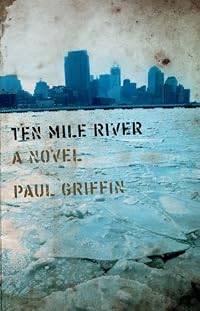
Ten Mile River
by Paul Griffin
On This Page
Description
Having escaped from juvenile detention centers and foster care, two teenaged boys live on their own in an abandoned shack in a New York City park, making their way by stealing, occasionally working, and trying to keep from being arrested.Tags
Recommendations
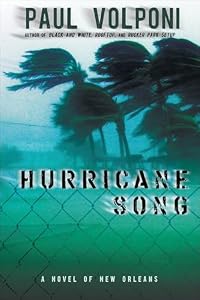
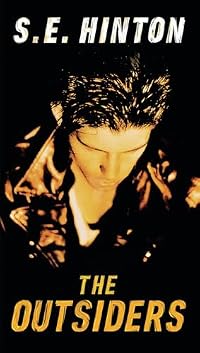
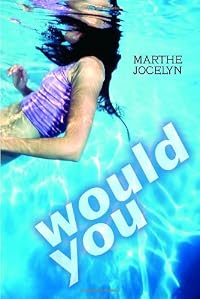
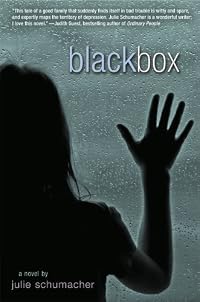



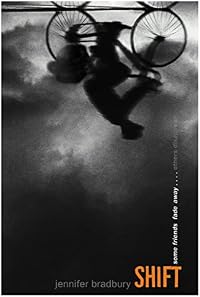
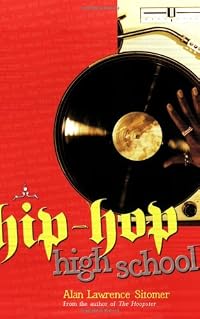
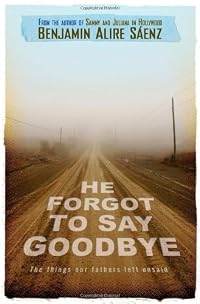
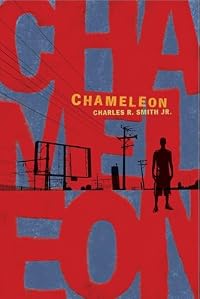



Member Recommendations

by meggyweg

Member Reviews
Paul Griffin’s gritty 2008 young adult debut focuses on 14-year-old Ray and 15-year-old José, a couple of Puerto Rican youths who consider themselves brothers, although unrelated by blood. The two bonded while in juvenile detention and foster care. They’ve been on the lam for some time, hiding out in a run-down old railway station house in West Harlem’s Ten Mile River Park, on the banks of the Hudson River, ten miles up from the southern tip of Manhattan.
While José is the leader—the coordinator of criminal gigs that the two boys carry out for Jerry, the low-life owner of an auto glass repair shop in the Bronx—it is Ray, the 6’ 3”, 260-pound kid who is the moral centre of the novel. Even though he’s addled by the same show more testosterone that surges through his wily and conscience-free friend and just as prone to objectifying and fantasizing about women, the ungainly Ray comes across as inherently virtuous. He’s kind to a pack of abandoned dogs living in the woods; he worries about the poor people whose windshields the boys shatter to bring in business for Jerry, and he seizes any chance to make an honest buck. José regularly calls him “a girl”.
Ray is also extremely bright, evidently gifted, and responsible. He takes advantage of do-it-yourself workshops at Home Depot. These classes allow him to solve multiple practical problems of everyday life. We’re asked to believe, for example, that he knows how to tap into local energy sources to power a couple of old appliances the two have trundled to their shack in the woods. He reads extensively—physics, philosophy, and even Buddhism—and is troubled by the apparent meaninglessness of existence. The only thing he doesn’t seem to have scruples about is stealing the occasional book from Barnes & Noble.
The novel’s plot turns on Ray’s friendship with Trini, a 16-year-old Puerto Rican girl staying with her aunt, who owns a hair-braiding business in Washington Heights, a Latino neighborhood. Trini cuts Ray’s hair, or attempts to, one afternoon and the two have an immediate connection. For Ray, of course, it’s more than that, but he recognizes his disadvantage in the looks and weight department. Trini does indeed fall for José, the charmer. Learning of the boys’ parent-less state and seeing their squalid living conditions—but knowing nothing of their survival by crime—she’s determined to help them. In particular, she would like to see Ray attend school. Further turning points in the novel come when the two are apprehended after a job for Jerry goes very wrong and when an inebriated José is on the brink of sexually assaulting Trini.
One of the strengths of Griffin’s novel—the first of eight young adult titles he’s produced over the years—is the depiction of the relationship between the two young men. Another is that Ray, who is perhaps a little too good to be true, is lovable. The reader ends up willingly suspending disbelief and rooting for him. This is no small feat. The plot is brisk and occasionally tense, which I suspect would keep Griffin’s male high school audience engaged. Having said this, I found a number of plot points improbable. One of the boys’ criminal outings, for example, is foiled by a squirrel on the road at night, a highly unlikely event. I often joke that I live in “Squirrelville”—squirrels are everywhere and one must be ever vigilant when driving. Never but never in my 26 years here have I seen them dashing across roads at night. A further point: in spite of its having an engaging female character in Trini, I cannot see this book working for girls. Finally, based on my experience with adolescent readers, Griffin’s open ending would likely appeal to neither sex. The complete lack of a back story for the boys is another weakness. What events initially pushed both into crime, confrontations with the law, and foster care? We are given no clues whatsoever.
Ten Mile River received critical praise when it was first published. I purchased it back then based on the blurb, thinking it might engage some of the reluctant 14-year old boy readers I taught at the time. Reading the first few chapters years ago and seeing some of the language and mature content, I knew the novel wasn’t suitable for upper middle-school. In spite of my students being quite familiar with the matters within, I was sure I’d see some parents objecting. That’s never a fun thing. Sure I’ll go to bat for some books, but others aren’t worth the energy.
Now I’ve finally completed the novel. My view is that it’s a debut which showed promise but doesn’t quite live up to the accolades. With some reservations, I can recommend it for mature high school students. show less
While José is the leader—the coordinator of criminal gigs that the two boys carry out for Jerry, the low-life owner of an auto glass repair shop in the Bronx—it is Ray, the 6’ 3”, 260-pound kid who is the moral centre of the novel. Even though he’s addled by the same show more testosterone that surges through his wily and conscience-free friend and just as prone to objectifying and fantasizing about women, the ungainly Ray comes across as inherently virtuous. He’s kind to a pack of abandoned dogs living in the woods; he worries about the poor people whose windshields the boys shatter to bring in business for Jerry, and he seizes any chance to make an honest buck. José regularly calls him “a girl”.
Ray is also extremely bright, evidently gifted, and responsible. He takes advantage of do-it-yourself workshops at Home Depot. These classes allow him to solve multiple practical problems of everyday life. We’re asked to believe, for example, that he knows how to tap into local energy sources to power a couple of old appliances the two have trundled to their shack in the woods. He reads extensively—physics, philosophy, and even Buddhism—and is troubled by the apparent meaninglessness of existence. The only thing he doesn’t seem to have scruples about is stealing the occasional book from Barnes & Noble.
The novel’s plot turns on Ray’s friendship with Trini, a 16-year-old Puerto Rican girl staying with her aunt, who owns a hair-braiding business in Washington Heights, a Latino neighborhood. Trini cuts Ray’s hair, or attempts to, one afternoon and the two have an immediate connection. For Ray, of course, it’s more than that, but he recognizes his disadvantage in the looks and weight department. Trini does indeed fall for José, the charmer. Learning of the boys’ parent-less state and seeing their squalid living conditions—but knowing nothing of their survival by crime—she’s determined to help them. In particular, she would like to see Ray attend school. Further turning points in the novel come when the two are apprehended after a job for Jerry goes very wrong and when an inebriated José is on the brink of sexually assaulting Trini.
One of the strengths of Griffin’s novel—the first of eight young adult titles he’s produced over the years—is the depiction of the relationship between the two young men. Another is that Ray, who is perhaps a little too good to be true, is lovable. The reader ends up willingly suspending disbelief and rooting for him. This is no small feat. The plot is brisk and occasionally tense, which I suspect would keep Griffin’s male high school audience engaged. Having said this, I found a number of plot points improbable. One of the boys’ criminal outings, for example, is foiled by a squirrel on the road at night, a highly unlikely event. I often joke that I live in “Squirrelville”—squirrels are everywhere and one must be ever vigilant when driving. Never but never in my 26 years here have I seen them dashing across roads at night. A further point: in spite of its having an engaging female character in Trini, I cannot see this book working for girls. Finally, based on my experience with adolescent readers, Griffin’s open ending would likely appeal to neither sex. The complete lack of a back story for the boys is another weakness. What events initially pushed both into crime, confrontations with the law, and foster care? We are given no clues whatsoever.
Ten Mile River received critical praise when it was first published. I purchased it back then based on the blurb, thinking it might engage some of the reluctant 14-year old boy readers I taught at the time. Reading the first few chapters years ago and seeing some of the language and mature content, I knew the novel wasn’t suitable for upper middle-school. In spite of my students being quite familiar with the matters within, I was sure I’d see some parents objecting. That’s never a fun thing. Sure I’ll go to bat for some books, but others aren’t worth the energy.
Now I’ve finally completed the novel. My view is that it’s a debut which showed promise but doesn’t quite live up to the accolades. With some reservations, I can recommend it for mature high school students. show less
Personal Response: Ten Mile River brings a story of teens who are surviving in the absence of elders, who survive despite people offering to help them. Interesting modern take on the homeless, juvenile delinquency and runaways of today.
Curricular or Programming Connections: The effect of homeless, juvenile delinquents as runaways in society.
Curricular or Programming Connections: The effect of homeless, juvenile delinquents as runaways in society.
The ten mile river is a book about people not an type of people bad people. These people are some of the worst and most dangerous people in the world. These people live in a town out side the city were the river takes them away. The book doesnt put their names beacuse they are so bad you cannt know them. All of them have to have there hair cut has to be red. Also they have to ave dogs and they do things so they can live. They also have to have dogs for some resson.
the ten mile river is are really good book but getting into the middle it becomes really really bad. I mean its just like the book became trash i really liked it but it is bad. Also they all have dog they dont say why i dont get it why do they all have dogs. Also why do they show more all get hair cuts i dont get it are they part of the mafia or what. An why dont they say there name they only said one name just one why. Over all i think it was really good it wasnt bad at all. Even tho it became really bad but it became really good . show less
the ten mile river is are really good book but getting into the middle it becomes really really bad. I mean its just like the book became trash i really liked it but it is bad. Also they all have dog they dont say why i dont get it why do they all have dogs. Also why do they show more all get hair cuts i dont get it are they part of the mafia or what. An why dont they say there name they only said one name just one why. Over all i think it was really good it wasnt bad at all. Even tho it became really bad but it became really good . show less
Ratings
Members
- Recently Added By
Published Reviews
ThingScore 75
FOURTEEN-YEAR-OLD Ray is a boy from the wrong side of the tracks with a passion for reading and a desire to better himself: a familiar figure from a library's worth of books. To his credit, debut author Paul Griffin takes this character and a few other cliches and does some interesting things with them.
The most powerful feature of the book is the friendship between the boys, captured in all show more its contradictions. The loyalty that is so often portrayed as wholly positive has its downfalls here. This and the open ending are just two of the complexities that raise Ten Mile River above the ordinary. show less
The most powerful feature of the book is the friendship between the boys, captured in all show more its contradictions. The loyalty that is so often portrayed as wholly positive has its downfalls here. This and the open ending are just two of the complexities that raise Ten Mile River above the ordinary. show less
added by justjim
Author Information

23+ Works 1,699 Members
Awards and Honors
Awards
Classifications
- Genres
- Fiction and Literature, Teen, Tween, Young Adult
- DDC/MDS
- 813.6 — Literature & rhetoric American literature in English American fiction in English 2000-
- LCC
- PZ7 .G8813594 .T — Language and Literature Fiction and juvenile belles lettres Fiction and juvenile belles lettres Juvenile belles lettres
- BISAC
Statistics
- Members
- 114
- Popularity
- 282,062
- Reviews
- 3
- Rating
- (3.13)
- Languages
- English
- Media
- Paper, Audiobook, Ebook
- ISBNs
- 7
- ASINs
- 3