On This Page
Description
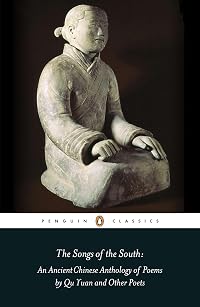
Sources show Qu Yuan (340-278 BCE) was the first person in China to become famous for his poetry, so famous in fact that the Chinese celebrate his life with a national holiday called Poet's Day, or the Dragon Boat Festival. His work, which forms the core of the "The Songs of Chu," the second oldest anthology of Chinese poetry, derives its imagery from shamanistic ritual. Its shaman hymns are among the most beautiful and mysterious liturgical works in the world. The religious milieu show more responsible for their imagery supplies the backdrop for his most famous work, "Li sao," which translates shamanic longing for a spirit lover into the yearning for an ideal king that is central to the ancient philosophies of China. Qu Yuan was as important to the development of Chinese literature as Homer was to the development of Western literature. This translation attempts to replicate what the work might have meant to those for whom it was originally intended, rather than settle for what it was made to mean by those who inherited it. It accounts for the new view of the state of Chu that recent discoveries have inspired. show lessTags
Recommendations
















Member Reviews
It has to be said, really, that considered as poetry, the Songs of the South 楚辭 is exceptionally boring. An anthology of poems from the Warring States period, usually attributed to the poet Qu Yuan, or ‘school of’, it takes its tone from the first poem, Li Sao, the only poem in the collection that modern scholars can confidently attribute to Qu Yuan.
In the Li Sao, the poet bemoans the fact that his loyalty, integrity, knowledge and generally exceptional character has not been recognised by his employer, the Prince of the State. The poet leaves his home (banished or not, it doesn’t matter, he cannot return) and goes on a journey which ends, usually, with the resolve to drown himself. Qu Yuan did in fact drown himself for this show more reason, and his death is celebrated to this day in the Qing Ming festival, or Dragon Boat festival, held all over South China on the 5th day of the 5th lunar month. Thus is born the figure of the lofty Confucian scholar, stubbornly resisting the necessity to taint his soul with the common things of the world, and choosing a lonely, watery martyrdom instead of compromise and socialisation.
The Li Sao spawned a whole genre of Sao poems, all based on the same theme, of the unregarded Confucian scholar (usually but not always Qu Yuan himself) choosing death over compromise. The problem is that the other Sao poets included in the anthology don’t have Qu Yuan’s imagination. Common tropes include flower imagery, the analogy of Prince and servant to lover and beloved, the use of a clearly delineated set of similes, the spirit journeys and real journeys, all are exactly the same. None of the other poets in the anthology are doing anything creative with the elements of the genre: it seems to be enough just to provide a checklist of elements for the reader to recognise. Jade and pebbles are mixed together (jade being the Confucian scholar the man of virtue, pebbles being the common riff raff of the court, his enemies), warlike steeds stabled with nags (ditto), orchids grown alongside millet (ditto) etc etc. One longs to shake the poet and tell him to get over himself.
The problem is not one of translation: David Hawkes miraculously manages to catch differences in tone and style in his translations – his introduction and notes are fascinating and indispensable for students of early Chinese history. But, as he puts it:
The conventions of …the symbolism of plant and flower and the parallels drawn from ancient history and mythology – seem in these poems to have become an end in themselves. The result is a long, almost unrelieved litany of complaint which progresses by mere accumulation and ends only when poet, reader and metaphor are all three exhausted.
An old man here once told me an old Chinese legend about a man on a journey who comes to a mountain he cannot traverse. Unwilling to give up his journey, he decides to remove the mountain stone by stone out of his way, and he spends his life doing so. The story was held up to me as an example of perseverance, patience, dedication to an ideal and the refusal to give up or stray from a path, the classic Confucian virtues, in short. My old man was sure I would regard it as a model to follow, but I was thinking only of the stupidity inherent in the enterprise. Surely it would be more sensible to walk around the mountain than to try to remove it? I get the same feeling from the Sao poems. There’s a point where commitment and dedication become mere stubbornness and inflexibility; and the obverse of stubbornness is not flexibility but inertia. The Chu Ci provides fruitful ground for speculations as to the historical origin of the boneheaded inertia found in the Confucian/Chinese character.
Enough! There are no true men in the state: no one understands me.
Why should I cleave to the city of my birth?
Since none is worthy to work with me in making good government,
I shall go and join Peng Xian (Taoist immortal) in the place where he abides.
There’s something, dare I say it, pubescent in this. It reminds me of an adolescent who is bitter at the world for not recognising his genius, a sense of teenage entitlement. To kill yourself because the world doesn’t recognise your genius, in our culture this is a sign of great immaturity, illness even. (Sylvia Plath anyone?)
The Chu Ci does however, contain seeds of dissent, a hint of an ironic Taoist corrective to the Confucian ideal. The Li Sao itself contains a beautiful description of a spirit journey made by a shaman, and the poem is interesting also for the use it makes of ancient Taoist tales and legends, some of which are now lost and which have only survived here in this anthology. In a poem called Yu Fu, Qu Yuan (Confucian ideal) encounters a fisherman (Taoist recluse). Qu Yuan is bellyaching in his usual manner: “How can I submit my spotless purity to the dirt of others? I would rather cast myself into the waters of the river… than hide my shining light in the dark and dust of the world”. The fisherman can put up with this no longer, smiles faintly, and sings as he paddles away:
When the Cang-Lang’s waters are clear
I can wash my hat-strings in them.
When the Cang-Lang’s waters are muddy
I can wash my feet in them.
The Taoist ideals of adaptability and non-interference in the flow of nature are contrasted beautifully with the Confucian ideals of steadfastness and loyalty. show less
In the Li Sao, the poet bemoans the fact that his loyalty, integrity, knowledge and generally exceptional character has not been recognised by his employer, the Prince of the State. The poet leaves his home (banished or not, it doesn’t matter, he cannot return) and goes on a journey which ends, usually, with the resolve to drown himself. Qu Yuan did in fact drown himself for this show more reason, and his death is celebrated to this day in the Qing Ming festival, or Dragon Boat festival, held all over South China on the 5th day of the 5th lunar month. Thus is born the figure of the lofty Confucian scholar, stubbornly resisting the necessity to taint his soul with the common things of the world, and choosing a lonely, watery martyrdom instead of compromise and socialisation.
The Li Sao spawned a whole genre of Sao poems, all based on the same theme, of the unregarded Confucian scholar (usually but not always Qu Yuan himself) choosing death over compromise. The problem is that the other Sao poets included in the anthology don’t have Qu Yuan’s imagination. Common tropes include flower imagery, the analogy of Prince and servant to lover and beloved, the use of a clearly delineated set of similes, the spirit journeys and real journeys, all are exactly the same. None of the other poets in the anthology are doing anything creative with the elements of the genre: it seems to be enough just to provide a checklist of elements for the reader to recognise. Jade and pebbles are mixed together (jade being the Confucian scholar the man of virtue, pebbles being the common riff raff of the court, his enemies), warlike steeds stabled with nags (ditto), orchids grown alongside millet (ditto) etc etc. One longs to shake the poet and tell him to get over himself.
The problem is not one of translation: David Hawkes miraculously manages to catch differences in tone and style in his translations – his introduction and notes are fascinating and indispensable for students of early Chinese history. But, as he puts it:
The conventions of …the symbolism of plant and flower and the parallels drawn from ancient history and mythology – seem in these poems to have become an end in themselves. The result is a long, almost unrelieved litany of complaint which progresses by mere accumulation and ends only when poet, reader and metaphor are all three exhausted.
An old man here once told me an old Chinese legend about a man on a journey who comes to a mountain he cannot traverse. Unwilling to give up his journey, he decides to remove the mountain stone by stone out of his way, and he spends his life doing so. The story was held up to me as an example of perseverance, patience, dedication to an ideal and the refusal to give up or stray from a path, the classic Confucian virtues, in short. My old man was sure I would regard it as a model to follow, but I was thinking only of the stupidity inherent in the enterprise. Surely it would be more sensible to walk around the mountain than to try to remove it? I get the same feeling from the Sao poems. There’s a point where commitment and dedication become mere stubbornness and inflexibility; and the obverse of stubbornness is not flexibility but inertia. The Chu Ci provides fruitful ground for speculations as to the historical origin of the boneheaded inertia found in the Confucian/Chinese character.
Enough! There are no true men in the state: no one understands me.
Why should I cleave to the city of my birth?
Since none is worthy to work with me in making good government,
I shall go and join Peng Xian (Taoist immortal) in the place where he abides.
There’s something, dare I say it, pubescent in this. It reminds me of an adolescent who is bitter at the world for not recognising his genius, a sense of teenage entitlement. To kill yourself because the world doesn’t recognise your genius, in our culture this is a sign of great immaturity, illness even. (Sylvia Plath anyone?)
The Chu Ci does however, contain seeds of dissent, a hint of an ironic Taoist corrective to the Confucian ideal. The Li Sao itself contains a beautiful description of a spirit journey made by a shaman, and the poem is interesting also for the use it makes of ancient Taoist tales and legends, some of which are now lost and which have only survived here in this anthology. In a poem called Yu Fu, Qu Yuan (Confucian ideal) encounters a fisherman (Taoist recluse). Qu Yuan is bellyaching in his usual manner: “How can I submit my spotless purity to the dirt of others? I would rather cast myself into the waters of the river… than hide my shining light in the dark and dust of the world”. The fisherman can put up with this no longer, smiles faintly, and sings as he paddles away:
When the Cang-Lang’s waters are clear
I can wash my hat-strings in them.
When the Cang-Lang’s waters are muddy
I can wash my feet in them.
The Taoist ideals of adaptability and non-interference in the flow of nature are contrasted beautifully with the Confucian ideals of steadfastness and loyalty. show less
A great anthology for people of worth, seeking consolation against the vulgar business-as-usual and becrying their disuse and aging. When there is no fertile ground, it is better to withdraw into the expanse of Gods and find solace in little things adored for their beauty. Life goes on, anyway.
A collection of ancient Chinese poetry.
The collection seems similar to the Homeric Hymns and, to a lesser extent, Pindar’s Odes. Interesting stuff, and the Penguin text has excellent and extensive notes to help the likes of me, who knows nothing about ancient eastern literature.
The collection seems similar to the Homeric Hymns and, to a lesser extent, Pindar’s Odes. Interesting stuff, and the Penguin text has excellent and extensive notes to help the likes of me, who knows nothing about ancient eastern literature.
Ratings
Members
- Recently Added By
Lists

Philip Ward's Lifetime Reading Plan
592 works; 22 members

Favourite Books
1,820 works; 316 members
Author Information

All Editions
Some Editions
Awards and Honors
Awards
Notable Lists
Series
Belongs to Publisher Series
Common Knowledge
- Canonical title
- Songs of the South: An Anthology of Ancient Chinese Poems by Qu Yuan and Other Poets; The Songs of Chu: An Anthology of Ancient Chinese Poetry by Qu Yuan and Others
- Original title
- 楚辭
- Alternate titles
- Songs of Chu; The Book of Odes
- People/Characters
- Qu Yuan; Chu ci
- Important places
- Chu, China
- First words
- General Introduction: Almost all that we know about the poetry of Ancient China is based on the study of two anthologies, Shih Ching and Ch'u Tz'u.
- Last words
- (Click to show. Warning: May contain spoilers.)With Chi and Hsieh beside him, Yao's works won greatness;
But alas! such choice spirits have no counterparts today. - Original language
- Chinese
Classifications
- Genres
- Poetry, Fiction and Literature
- DDC/MDS
- 895.1 — Literature & rhetoric Literatures of other languages Literatures of East and Southeast Asia Chinese
- LCC
- PL2521 .C524 — Language and Literature Languages and literatures of Eastern Asia, Africa, Oceania Languages of Eastern Asia, Africa, Oceania Chinese language and literature Chinese literature Collections
- BISAC
Statistics
- Members
- 203
- Popularity
- 158,586
- Reviews
- 3
- Rating
- (3.71)
- Languages
- Chinese, Czech, English, French
- Media
- Paper, Ebook
- ISBNs
- 12
- ASINs
- 9