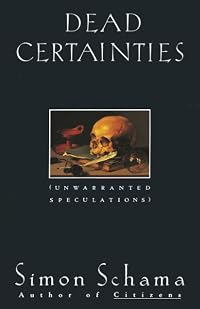
Dead Certainties : Unwarranted Speculations
by Simon Schama
On This Page
Description
This book goes beyond more conventional histories to address the deeper enigmas that confront a student of the past. In order to do so, the author reconstructs--and at times reinvents--two ambiguous deaths: the first, that of General James Wolfe at the battle of Quebec in 1759; the second, in 1849, that of George Parkman, an eccentric Boston brahmin whose murder by an impecunious Harvard professor in 1849 was a grisly reproach to the moral sanctity of his society. Out of these stories--with show more all of their bizarre coincidences and contradictions--the author creates a vital work of historical imagination. show lessTags
Recommendations






Member Reviews
Schama writes an imaginative and illuminating history of two historical events: The death of General Wolfe in the Seven Years War and how it's perceived in popular culture and the murder of George Parkman in Boston leading to America's first celebrity trial. The second story is the more interesting to me, so intriguing that I actually jumped off the subway at one point to visit the scene of the crime (the building is long gone and even the street it's on is buried beneath the modern Mass General Hospital campus). Very exciting stuff about history and how it's perceived in later narratives.
Favorite Passages
"It was that most trying season in Boston: hopes of spring, of the green resurrection of the earth, were deadened by the obstinate show more grip of winter." - p. 251
"The 'Conclusion' that every doctoral adviser urges on his students as a professional obligation has always seemed to my notoriously inconclusive temperament to be so much wishful thinking." p. 321 show less
Favorite Passages
"It was that most trying season in Boston: hopes of spring, of the green resurrection of the earth, were deadened by the obstinate show more grip of winter." - p. 251
"The 'Conclusion' that every doctoral adviser urges on his students as a professional obligation has always seemed to my notoriously inconclusive temperament to be so much wishful thinking." p. 321 show less
Dead Certainties is a bit of a strange book. Simon Schama combines two stories within it: one called The Many Deaths of General Wolfe recounts Wolfe"s demise in battle, and then looks at the mythologising that followed it, in the forms of Benjamin West's famous painting, and the history of Francis Parkman.
The second story, called Death of a Harvard Man, occupies most of the book. It concerns the disappearance and murder of noted Boston capitalist George Parkman (an antecedent of Francis Parkman's) and the subsequent sensational trial of Harvard Professor John Webster for the crime. Schama's somewhat fictionalised account is an engrossing retelling of a quite gruesone and scandalous affair.
I found it a struggle to grasp the point that show more Schama was trying to make in combining these two stories. Despite both a Foreword and an Afterword where Schama tries to explain his idea, I can only see the most tenuous connection between the two, and would have enjoyed the book just as much - if not more - if Schama focused solely on the story of the Webster trial, and left Wolfe out of it. show less
The second story, called Death of a Harvard Man, occupies most of the book. It concerns the disappearance and murder of noted Boston capitalist George Parkman (an antecedent of Francis Parkman's) and the subsequent sensational trial of Harvard Professor John Webster for the crime. Schama's somewhat fictionalised account is an engrossing retelling of a quite gruesone and scandalous affair.
I found it a struggle to grasp the point that show more Schama was trying to make in combining these two stories. Despite both a Foreword and an Afterword where Schama tries to explain his idea, I can only see the most tenuous connection between the two, and would have enjoyed the book just as much - if not more - if Schama focused solely on the story of the Webster trial, and left Wolfe out of it. show less
Schama takes a somewhat unusual approach for a historian in this book. Rather than strictly attributable history, every fact footnoted and cited, here he takes primary and secondary sources (the “Dead Certainties” of the title) and uses them to spin a more accessible, but nonverifiable story, placing ideas, feelings, and motives into the forms of the historical actors (the “Unwarranted Speculations”).
The result is a very readable set of stories, the first dealing with the death of the British General Wolfe on the Heights of Abraham during the successful defeat of the French army; the second relating the murder of a medical-doctor-cum-landlord by a Harvard chemistry professor in the 1840s. The tales are linked by the Parkman show more family—George Parkman is the murder victim in the latter portion of the book; his nephew, Francis Parkman, was a famous historian responsible for excellent work on the French and Indian War. show less
The result is a very readable set of stories, the first dealing with the death of the British General Wolfe on the Heights of Abraham during the successful defeat of the French army; the second relating the murder of a medical-doctor-cum-landlord by a Harvard chemistry professor in the 1840s. The tales are linked by the Parkman show more family—George Parkman is the murder victim in the latter portion of the book; his nephew, Francis Parkman, was a famous historian responsible for excellent work on the French and Indian War. show less
"First, there are the two intriguing stories... one about the triumph and death of James Wolfe at Quebec in 1759, the second an exploration of the murder of the Boston Brahmin George Parkman in 1849. But Schama is after bigger game, and his target is the gap between a 'lived event and its subsequent narration.'"
Intriguing little profiles of several key American deaths and how they've been used/viewed.
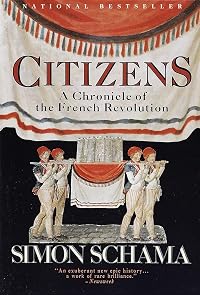
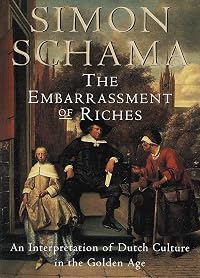
Simon Schama, author of [b:Citizens|706|The Daily Show with Jon Stewart Presents America (The Book)|Jon Stewart|http://photo.goodreads.com/books/1157224104s/706.jpg|1589081] (a history of the French revolution) and [b:Embarrassment of Riches|21073|The Embarrassment of Riches An Interpretation of Dutch Culture in the Golden Age|Simon Schama|http://photo.goodreads.com/books/1167301809s/21073.jpg|965311] (a cultural history of the Dutch), has authored a strange little book entitled Dead Certainties: Unwarranted Speculations . I say strange, because while I've enjoyed it, I can't figure it out. Basically, he describes two historical events from several perspectives, and the link between the two is tenuous indeed. We begin with a fictional show more account of the death of Wolfe on the heights of Abraham in Quebec seen through the eyes of a soldier participating in the battle. Schama then proceeds to describe the accuracy of Benjamin West's famous painting of the event. This is followed by an essay on Francis Parkman, who, of course, is best known for his authoritative work on the [b:French in North America|329424|The French and Indian War Deciding the Fate of North America|Walter R. Borneman|http://photo.goodreads.com/books/1173800862s/329424.jpg|320023] and [b:The Oregon Trail|875643|Across the Wide and Lonesome Prairie The Oregon Trail Diary of Hattie Campbell, 1847 (Dear America Series)|Kristiana Gregory|http://photo.goodreads.com/books/1179107337s/875643.jpg|1361733] Parkman insisted on authenticity for his works and, despite ill health, wandered over all the geography he wrote about; falling into swamps, scaling cliffs, and suffering attacks from hoards of black flies.
The second part of the book is about the murder of George Parkman, Francis' uncle, (this is the gossamer link) by John Webster. George disappeared one afternoon in 1849 while out walking. He was a respected member of the Harvard faculty, as was Webster, who had become well known for his research into more humane methods of institutionalizing the mentally ill. Webster, professor of Chemistry at Harvard, was up to his eyeballs in debt, and it was discovered that he had borrowed money from Parkman and Robert Gould Shaw (uncle to the hero of the movie Glory) using his quite valuable and geologically significant collection of rocks as collateral for both. It was also learned that Parkman was very perturbed by this double use of the collateral and was demanding his money back. Schama then provides a detailed account of the investigation and trial, which became a Boston media event. Ultimately, I suppose, the book is a meditation on distinction between truth and reality. Does art constitute reality? Does literature/fiction recreate history? Does Francis Parkman have a lock on the truth? show less
The second part of the book is about the murder of George Parkman, Francis' uncle, (this is the gossamer link) by John Webster. George disappeared one afternoon in 1849 while out walking. He was a respected member of the Harvard faculty, as was Webster, who had become well known for his research into more humane methods of institutionalizing the mentally ill. Webster, professor of Chemistry at Harvard, was up to his eyeballs in debt, and it was discovered that he had borrowed money from Parkman and Robert Gould Shaw (uncle to the hero of the movie Glory) using his quite valuable and geologically significant collection of rocks as collateral for both. It was also learned that Parkman was very perturbed by this double use of the collateral and was demanding his money back. Schama then provides a detailed account of the investigation and trial, which became a Boston media event. Ultimately, I suppose, the book is a meditation on distinction between truth and reality. Does art constitute reality? Does literature/fiction recreate history? Does Francis Parkman have a lock on the truth? show less
Schama is always wonderful
Members
- Recently Added By
Published Reviews
Mr. Schama has a grand time of it, painting as histrionically in words as Benjamin West did in paint. And the reader happily joins in, even though disappointed that he knows the outcome of the case. Yet the puzzles continue to nag. What is the connection between James Wolfe's death and George Parkman's murder? Why does Mr. Schama turn from artistic analysis to courtroom drama? What is the show more point of the fictionalizing? What are the "dead certainties" of the title? What are the "unwarranted speculations"? In an afterword, Mr. Schama finally steps from behind his many masks, and offers some explanations. He admits that his two histories "are works of the imagination, not scholarship," and that they "play with the teasing gap separating a lived event and its subsequent narration." show less
added by John_Vaughan
Author Information

70+ Works 19,239 Members
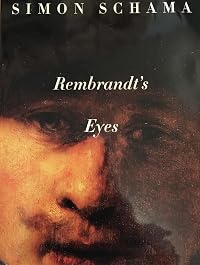
Simon Schama is an historian, educator, and writer. He was born in London, England on February 13, 1945. Schama earned a B.A. in history in 1966 from Cambridge University and later became a fellow of Christ College. Schama was a Fellow and Tutor in Modern History at Brasenose College, Oxford from 1976 to 1980. He also was an Erasmus Lecturer in show more the civilization of the Netherlands at Harvard University in 1978, and from 1980 to 1993 he was Professor of History and Mellon Professor of the Social Sciences and Senior Associate at the Center for European Studies. Schama has been the Old Dominion Professor of Humanities at Columbia University since 1993, teaching in the history, art history and archaeology departments. Schama's 1977 book, Patriots and Liberators: Revolution in the Netherlands, 1780-1813, received the Wolfson Prize for history and the Leo Gershoy Memorial Prize of the American History Association. Another book, Citizens: A Chronicle of the French Revolution, won the NCR Prize for Nonfiction. Schama also worked as an art critic for The New Yorker and has written historical and art documentaries for the BBC. In 2001 he received the CBE. In 2006 Schama earned the National Book Critics Circle Award for Nonfiction for Rough Crossings. His more recent works include A History of Britain and The Sory of the Jews, both written in multiple volumes. (Bowker Author Biography) Simon Schama is the author of The Embarrassment of Riches, Citizens, Landscape and Memory, and most recently, Rembrandt's Eyes. He is currently Old Dominion Professor of the Humanities at Columbia University. The second installment of his epic history of Britain is due to be published in April 2001. (Publisher Provided) show less
Some Editions
Awards and Honors
Notable Lists
Common Knowledge
- Canonical title
- Dead Certainties : Unwarranted Speculations
- Original title
- Dead Certainties : Unwarranted Speculations
- Alternate titles*
- Dodelijke zekerheden : (ongegronde speculaties) (ongegronde speculaties)
- Original publication date
- 1991
- People/Characters*
- James Wolfe; Francis Parkman
- Important places
- Boston, Massachusetts, USA
- Epigraph
- History has to live with what was here,
clutching and close to fumbling all we had -
it is so dull and gruesome how we die,
unlike writing, life never finishes.
-Robert Lowell, "History" - Dedication
- In memory of John Clive for whom history was literature.
- First words
- 'Twas the darkness that did the trick, black as tar, though how the men contriv'd to clamber their way up the cliff with their musket and seventy rounds on their backs, I'm sure I don't know even though I saw it with my own e... (show all)yes and did it myself before very long.
- Original language*
- Engels
*Some information comes from Common Knowledge in other languages. Click "Edit" for more information.
Classifications
- Genres
- History, Nonfiction, General Nonfiction, Biography & Memoir
- DDC/MDS
- 974.461030922 — History & geography History of North America Northeastern United States (New England and Middle Atlantic states) Massachusetts Suffolk County Boston
- LCC
- F73.25 .S33 — Local History of the United States, Canada and Latin America United States local history Massachusetts
- BISAC
Statistics
- Members
- 753
- Popularity
- 37,325
- Reviews
- 8
- Rating
- (3.56)
- Languages
- 7 — Danish, Dutch, English, French, German, Italian, Spanish
- Media
- Paper
- ISBNs
- 17
- ASINs
- 8