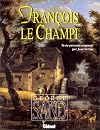
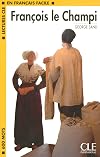
The Country Waif
by George Sand
On This Page
Description
The Country Waif (Françoise le Champi) is the second of the three pastoral novels which rank along with George Sand's autobiographical writing as her finest work. Although simple in themselves, these tales have behind them much of the complex experience of her extraordinary life. As Mrs. Zimmerman writes in the introduction, they reflect Sand's "youthful romanticism, her later championing of the working classes, and her desire to record in fiction that was both poetic and factual the lives show more of the people and the region she knew best." Set in the countryside of the author's native province of Berry, The Country Waif tells the story of François, an orphan boy placed in a rural foster home, and Madeline, the miller's wife who befriends him. Sand's contemporary, Turgenev, wrote that it was "in her best manner, simple, true, affecting." The book has been admired by writers as diverse as Willa Cather (she found it "supremely beautiful") and André Malraux, who considered it a masterpiece. As well as examining the setting, language, and narrative mode of the novel, the introduction looks at Sand's life, in part from the feminist perspective, with attention to the sociopolitical background of the post-Napoleonic era, when Aurore Dudevant felt impelled to rebel against her status as a country wife and to become George Sand. show lessTags
Recommendations































Member Reviews
A very sweet story. However, the ending is a little... awkward.
George Sand a le souci de l'humain. De l'être humain, de ses relations avec les autres, du regard que l'on porte sur les personnes. Elle considère que les êtres naissent bons et ne trahit en cela en rien les idées rousseauistes qui la soutiennent. Avec François le champi (le trouvé), l'auteur voulait faire sans doute un roman de la réhabilitation par la bonté, non pas la réhabilitation de François, qui n'en n'a guère besoin, mais des lecteurs de Sand qui, sans doute à cette époque, avaient une considération assez faible pour les enfants qui n'avaient ni père ni mère ou dont la filiation était plutôt hasardeuse. Par ailleurs, elle voue une admiration à l'état de nature et en particulier à ceux qui sont proche d'elle, show more les paysans, représentants pour l'auteur une sorte de classe sociale authentique que devrait jalouser les représentants des villes. Enfin, elle souhaite donner à son roman un tour familier réconciliant les lecteurs des villes de ceux des campagnes en offrant un langage clair et compréhensible par tous, ce dont elle use avec l'emploi de vieux termes berrichons. De ce qui précède, George Sand en fait les propos liminaires à son récit. Pour le reste, elle laisse dérouler sa plume, laissant le conte se placer et se réfugie ensuite derrière les propos du chanvreur qui prend le relais. Il en résulte un ton familier et de confidence dans une clarté de style que l'on peut encore apprécier aujourd'hui.
Pour le reste, l'histoire tiendrait de l'anecdote de campagne : une femme recueille un enfant trouvé, l'élève. L'enfant part de chez son hôte et revient des années après pour la remercier, l'aime et se marie avec. Bien entendu, ce résumé est assez abrupte et ne tient pas compte des mille et unes nuances apportées par l'auteur mais le propos de l'histoire, si banal soit-il, fait violence aux conventions sociales de l'époque. L'amour de François naît non pas de l'envie mais de la gratitude envers celle qui l'a élevé et accueilli dans sa propre famille. L'amour de François et la simplicité de Madeleine passe au-dessus des mesquineries du village, des envies, des rumeurs et des "qu'en-dira-t-on".
Sans doute moins limpide que "la mare au diable", l'histoire du Champi est tout de même très bonne et ravira celles et ceux qui aiment les belles histoires et les beaux mots utilisés dans les parlers locaux, en l'espèce le berrichon. show less
Pour le reste, l'histoire tiendrait de l'anecdote de campagne : une femme recueille un enfant trouvé, l'élève. L'enfant part de chez son hôte et revient des années après pour la remercier, l'aime et se marie avec. Bien entendu, ce résumé est assez abrupte et ne tient pas compte des mille et unes nuances apportées par l'auteur mais le propos de l'histoire, si banal soit-il, fait violence aux conventions sociales de l'époque. L'amour de François naît non pas de l'envie mais de la gratitude envers celle qui l'a élevé et accueilli dans sa propre famille. L'amour de François et la simplicité de Madeleine passe au-dessus des mesquineries du village, des envies, des rumeurs et des "qu'en-dira-t-on".
Sans doute moins limpide que "la mare au diable", l'histoire du Champi est tout de même très bonne et ravira celles et ceux qui aiment les belles histoires et les beaux mots utilisés dans les parlers locaux, en l'espèce le berrichon. show less
Oct 13, 2013French
Ratings
Members
- Recently Added By
Lists

Trinity College Booklist (1951): Class Nine, Foreign Literatures
161 works; 3 members

French Fiction of the 18th and 19th Centuries in English Translation
169 works; 3 members

Fiction with Men's Given Names in the Title
302 works; 11 members
Author Information

456+ Works 6,457 Members
George Sand began life as Aurore Dupin, the daughter of a count and a dressmaker. Educated both on her aristocratic grandmother's estate and in a Parisian convent, at 18 she married Casimer Dudevant, a provincial gentleman whose rough temperament was the opposite of her own, and from whom she obtained a separation several years later. At 31 she show more moved to Paris, where she changed her name and plunged into the bohemian world of French romanticism. Frequently dressed in men's clothing, she participated actively in literary debates, cultural events, and even the revolution of 1848. Sand was friend and correspondent with many of the major artists and writers of her age, including Balzac, Flaubert, and Liszt. Her love affairs with the poet Musset and the composer Chopin were the stuff of legend, chronicled in her own Story of My Life. Sand's immensely popular novels ranged from sentimental stories of wronged women, to utopian socialist fictions, such as her masterpiece in Consuelo, 1842, to explorations of pastoral themes written when she retired, late in life, to her estate in Berry. Though frequently dismissed as overblown or too sentimental, Sand's fiction has recently undergone a revaluation, emerging as an influential body of women's writing. As both a writer and an intellectual personality, Sand is a central figure in nineteenth-century French cultural life. George Sand died in 1876 (Bowker Author Biography) show less
Some Editions
Series
Belongs to Publisher Series
Bison Books (627)
Gallimard, Folio (738)
Work Relationships
Is contained in
Common Knowledge
- Canonical title
- The Country Waif
- Original title
- François le Champi
- Alternate titles
- François the Waif
- Original publication date
- 1847
- People/Characters
- François; Madeleine Blanchet
- Important places
- Berry, Centre-Val de Loire, France (historic)
- First words
- The moonlight softly silvered the footpaths of the darkening countryside as R---- and I returned from our walk. (Collis translation into English)
- Original language
- French
Classifications
Statistics
- Members
- 206
- Popularity
- 159,115
- Reviews
- 2
- Rating
- (3.40)
- Languages
- English, French, German, Italian
- Media
- Paper, Audiobook, Ebook
- ISBNs
- 31
- ASINs
- 12