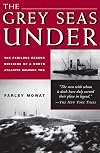
Grey Seas Under
by Farley Mowat
On This Page
Description
In Grey Seas Under, Farley Mowat writes passionately of the courage of men and of a small, ocean-going salvage tug, Foundation Franklin. From 1930 until her final voyage in 1948, the stalwart tug's dangerous mission was to rescue sinking ships, first searching for them in perilous waters and then bringing them back to shore. Battered by towering waves, dwarfed by the great ships she towed, blasted by gale-force winds and frozen by squalls of snow and rain, Foundation Franklin and her brave show more crew saved hundreds of vessels and thousands of lives as they patrolled the North Atlantic, including waters patrolled by U-boats in wartime. Mowat spent two years gathering this material and sailed on some of the missions he describes. The result is a modern epic -- a vigorous, dramatic picture of the eternal battle between men and the cruel sea. show lessTags
Recommendations

















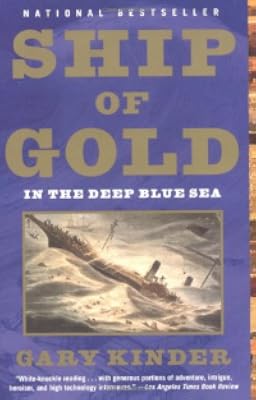


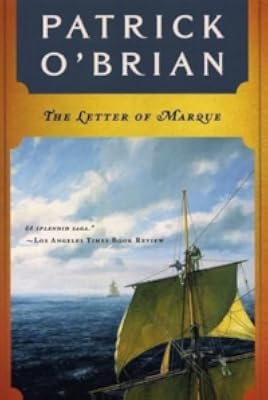
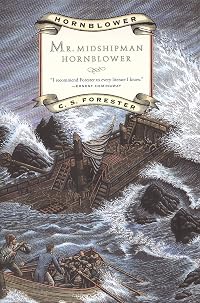

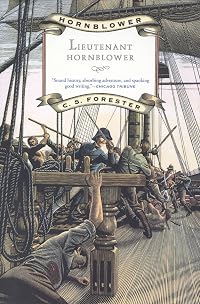


Member Reviews
Tugboats are the dearest little vessels. They are also resilient and intrepid, enduring conditions that would force many larger vessels to turn tail and heave to. Grey Seas Under is the story of one particular tug, the Foundation Franklin (originally known as H.M.S. Frisky), and the many daring rescue missions conducted by the crew as part of salvage operations in the North Atlantic.
Mowat conjures up the ice forming on the rigging, the winds making up to hurricane strength, the waves smashing across the main deck. The ships are lively, imbued with their own personalities, and the crew themselves are almost mythical in their strength and determination. I found this book endlessly fascinating, often funny, and sometimes sad. (Someone was show more cutting an onion nearby when I read the last chapter…) I particularly enjoyed the story of the ship that had the sheep roaming around on deck, and the story of the Dimitrios Englessis had me nearly gnashing my teeth to bits at how frustrating the rescue must have been for the crew of the Franklin.
The only bone I really have to pick with this book is that the blurb reduces the Franklin’s exploits to its time in the north Atlantic during the Second World War. However, the book covers the ship’s entire life as the Franklin, from the first skipper’s rescuing it from the shipyard in Hamburg to the sad day when it was finally decommissioned. You’ll get so much more than you bargained for this one. It’s well worth picking up. show less
Mowat conjures up the ice forming on the rigging, the winds making up to hurricane strength, the waves smashing across the main deck. The ships are lively, imbued with their own personalities, and the crew themselves are almost mythical in their strength and determination. I found this book endlessly fascinating, often funny, and sometimes sad. (Someone was show more cutting an onion nearby when I read the last chapter…) I particularly enjoyed the story of the ship that had the sheep roaming around on deck, and the story of the Dimitrios Englessis had me nearly gnashing my teeth to bits at how frustrating the rescue must have been for the crew of the Franklin.
The only bone I really have to pick with this book is that the blurb reduces the Franklin’s exploits to its time in the north Atlantic during the Second World War. However, the book covers the ship’s entire life as the Franklin, from the first skipper’s rescuing it from the shipyard in Hamburg to the sad day when it was finally decommissioned. You’ll get so much more than you bargained for this one. It’s well worth picking up. show less
Interesting, but not a favorite. Half about the actual rescues which were often fascinating, half about the politics and economics and stupid decisions that limited Franklin's ability to get on with the rescues. A very interesting viewpoint on the Great Depression and WWII, from the Canadian Maritimes - not an angle I'd ever thought of before. But stupid decisions seemed to be the theme throughout - there were a few amusing bits where someone or someones got their comeuppance when a stupid decision came back to roost, but mostly the stupid decisions hurt other people and the decision-makers just kept on going (and deciding). The usual Mowat style - you could feel the hard-driven spray and the ice on the deck and the fug below, and share show more the frustration and triumph of the various salvors. But it's an oddly omniscient view - the author is almost invisible, there are a very few lines of "eager to tell their stories" or "bitter, as they had reason to be" that hinted at his researches. Other than that, it's a retelling of events without sources, as if the author was there throughout her career. And a sad ending, though with a triumph just before - of survival, if nothing else. I'm glad I read it, but I don't particularly want to read it again. show less
This is the story of a Canada-based salvage ship that must have saved hundreds of ships in her lifetime. The Foundation Franklin is very much a character, and her story and that of the insanely brave men who worked her is thrilling. You get a real sense of how astonishingly dangerous the North Atlantic is - and was, during WWII. Mowat's prose isn't his best - there's too much "on March 1, this ship did this, then on March 10, Franklin did that, and on March 15..." You get the picture. But the story of the ship shines through - I think any fan of O'Brien, Forester, or Kipling's Captains Courageous would greatly enjoy this book.
This book is a history of the salvage ship Foundation Franklin, which worked the North Atlantic during the 1930s and 1940s. Although it is an interesting story, the book suffers from a lack of focus (other than the ship, which is difficult to sympathize with). No one character or event seems more important than the others. Many parts of the book read like barely-edited entries from the ship's log.
The stories told herein are of great heroics and brave men. Regrettably, they are told in a dry and uninspiring way that wasn't particularly thrilling to read.
Read this book years ago. Farley Mowat does a wonderful job of portraying the maritime life of a sea-going salvage tug.
A superb book of danger and courage on the high seas. One of the few books about salvage tugs. The tug Foundation Franklin was an important part of Newfoundland and Maritime Canadian History.
Members
- Recently Added By
Author Information

59+ Works 15,254 Members
Farley Mowat's nearly forty books have sold millions of copies & have been published in more than twenty languages. His books include "Never Cry Wolf", "Sea of Slaughter", "The Farfarers", "People of the Deer", "The Dog Who Wouldn't Be", "The Desperate People", & "Ordeal by Ice". (Publisher Provided) He is one of Canada's most popular & show more distinguished writers. Through the past five decades he has recorded his experiences in several highly successful books for both adults & children. He has received scores of literary awards & his works have been translated into more than 30 languages. (Publisher Provided) Farley Mowat was born in Belleville, Ontario, Canada on May 12, 1921. During World War II, he fought in the Allied invasion of Sicily. He was discharged in 1945 with the rank of Captain. He studied at the University of Toronto. Farley was an author, activist, and environmentalist. He wrote more than 40 books during his lifetime including both novels and non-fiction works. His books include Never Cry Wolf, My Father's Son, Otherwise, and Eastern Passage. He received several awards including the Queen Elizabeth II Jubilee Medal in 1956, the Governor General's Award for Lost in the Barrens in 1956, the Leacock Medal for Humour for The Boat Who Wouldn't Float in 1970, and the Order of Canada in 1981. He died on May 6, 2014 at the age of 92. (Bowker Author Biography) show less
Common Knowledge
- Canonical title*
- The Grey Seas Under
- Original title
- The Grey Seas Under
- Original publication date
- 1958
- People/Characters
- Richard Chadwick; James Sutherland; Irwin Power; Tom Nolan; Harry Brushett; Neil McLeod (show all 7); Reginald Poirier
- Important places
- Atlantic Ocean; Newfoundland, Canada
- Important events
- World War II (1939 | 1945); Battle of the Atlantic (1939 | 1945)
- Dedication
- For the stanch little ships and the great-hearted men who struggle with the Western Ocean so that other ships and other men may live.
- First words
- This book is the outcome of two of my happiest of all my years.
- Last words
- (Click to show. Warning: May contain spoilers.)The eternal battle between the rescue ships and the grey seas begins anew--and it is Franklin's voice that sounds the call to arms.
- Blurbers
- Nicholas Monsarrat
*Some information comes from Common Knowledge in other languages. Click "Edit" for more information.
Classifications
Statistics
- Members
- 316
- Popularity
- 100,774
- Reviews
- 7
- Rating
- (3.81)
- Languages
- English, French
- Media
- Paper, Ebook
- ISBNs
- 17
- ASINs
- 11